
Enlargements & Reductions
An enlargement is when the dimensions of a shape or object increases by a constant factor.
Example
This is an enlargement because ALL of the dimension increased by the same factor (we multiplied them by the same number 2)

A reduction is when the dimensions of a shape or object decreases by a constant factor.
Example
This is a reduction because ALL of the dimensions decreased by the same factor (we multiplied them by the same number 0.5)

A scale factor is the constant factor that we increase/decrease (multiply) all the dimensions by.
- Scale factor bigger than 1 → it is an enlargement
- Scale factor smaller than 1 → it is a reduction
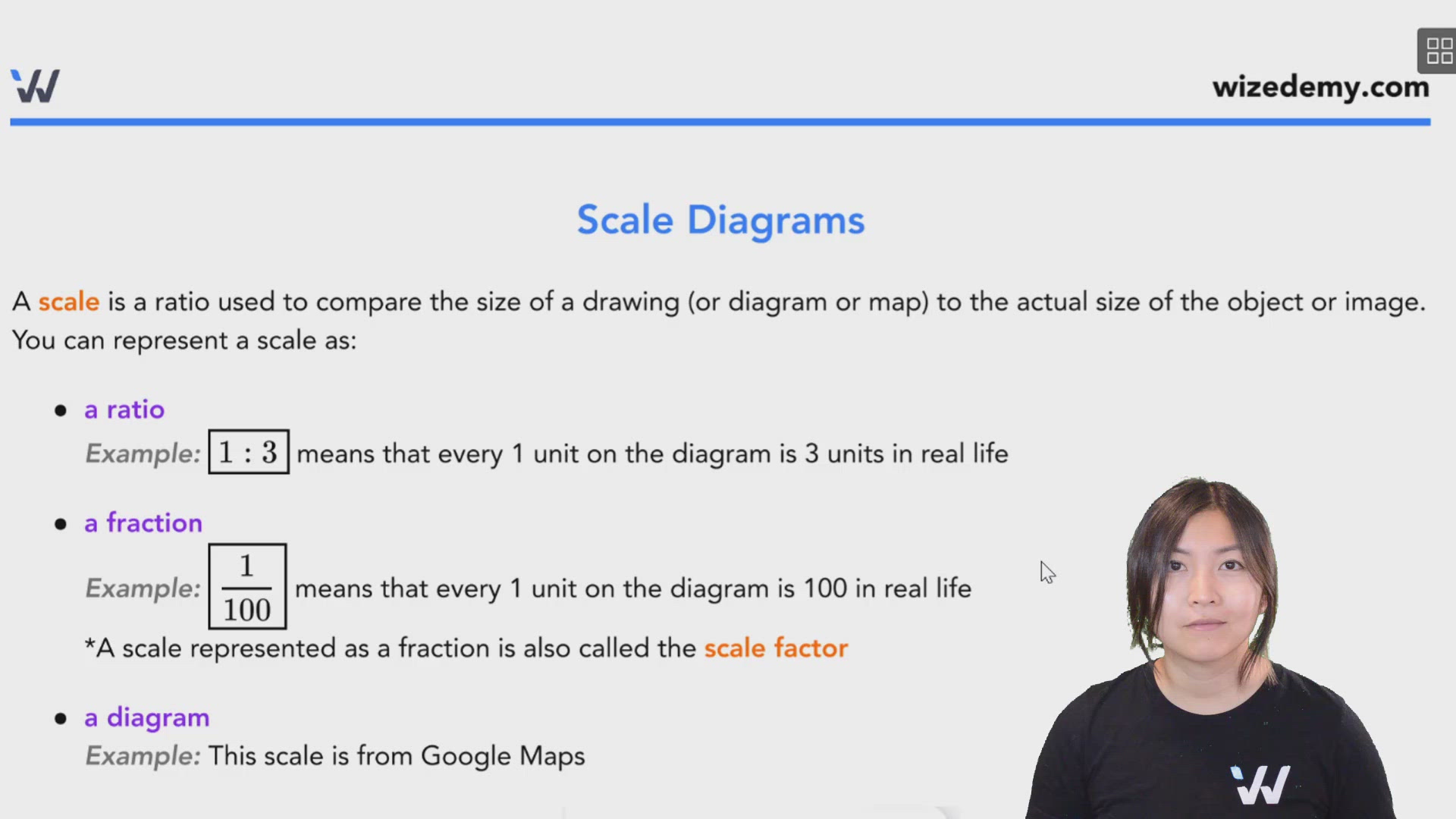
Scale Diagrams
A scale is a ratio used to compare the size of a drawing (or diagram or map) to the actual size of the object or image. You can represent a scale as:
- a ratio Example: means that every 1 unit on the diagram is 3 units in real life
- a fraction Example: means that every 1 unit on the diagram is 100 in real life *A scale represented as a fraction is also called the scale factor
- a diagram Example: This scale is from Google Maps

- in words Example: 1cm on the map is equivalent to 10km
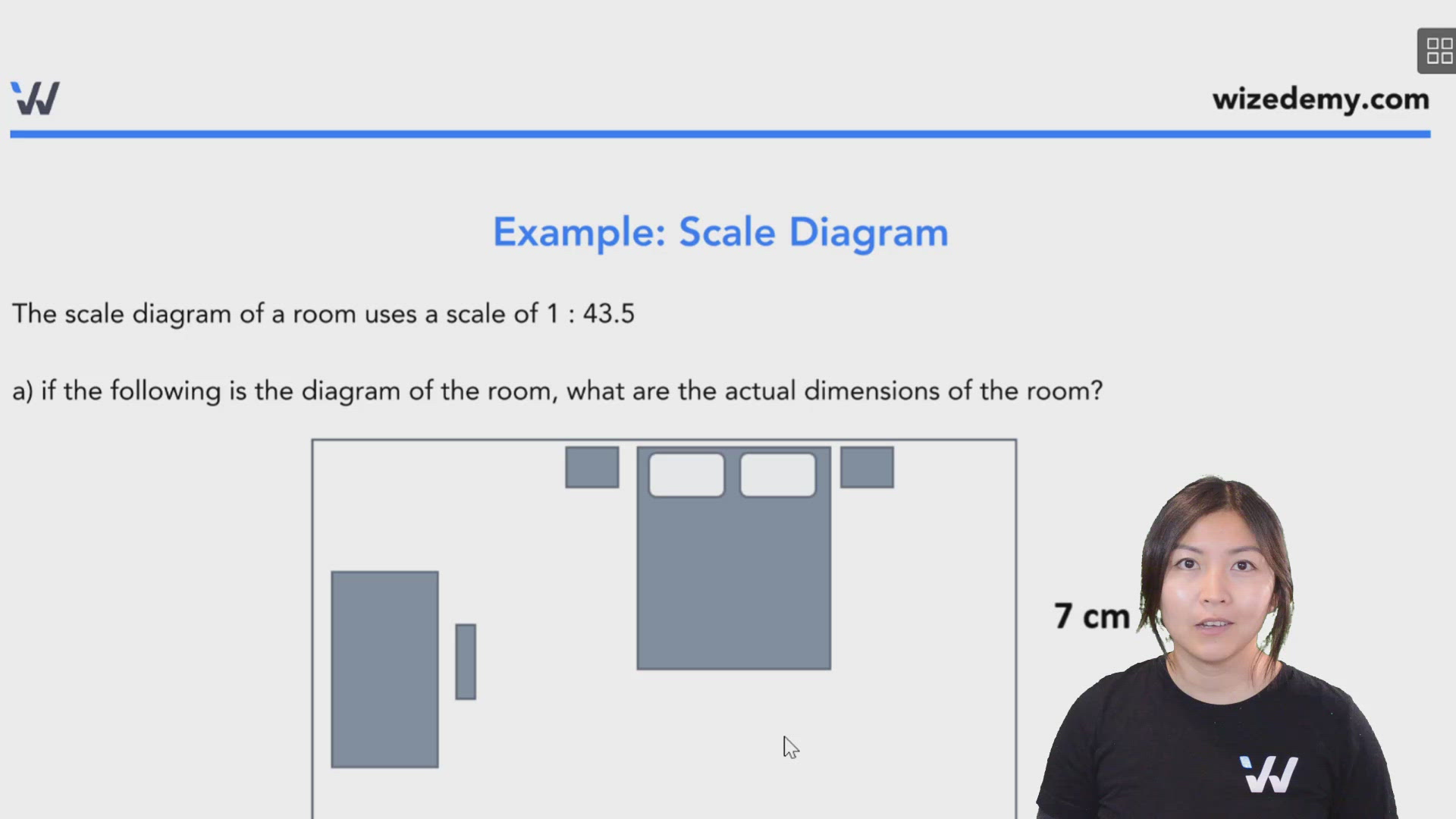
Example: Scale Diagram
The scale diagram of a room uses a scale of 1 : 43.5
a) if the following is the diagram of the room, what are the actual dimensions of the room?
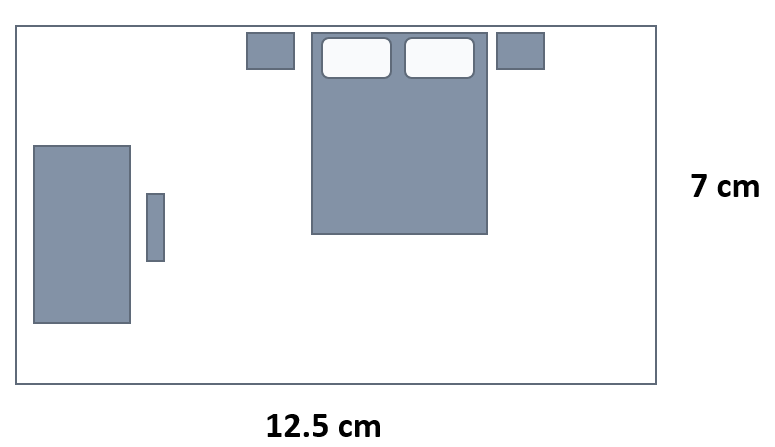
Method 1
- or
- or
So, the actual dimensions of the room are or
Method 2
- In the numerator, we multiplied the 1 in the first fraction by 7 to get to the 7 in the second fraction. So we need to multiply 43.5 by 7 to get to →
- In the numerator, we multiplied the 1 in the first fraction by 12.5 to get to the 12.5 in the second fraction. So we need to multiply 43.5 by 12.5 to get to →
So, the actual dimensions of the room are .
b) if the measurements of the actual room is , what should the dimensions of the diagram of the room be in inches?
(* 1 feet = 12 inches)
The scale factor is .
- So, this measurement in this diagram is approximately 0.2759 feet or .
- So, this measurement in this diagram is approximately 0.2529 feet or .
Therefore, the dimensions on the diagram in inches are .