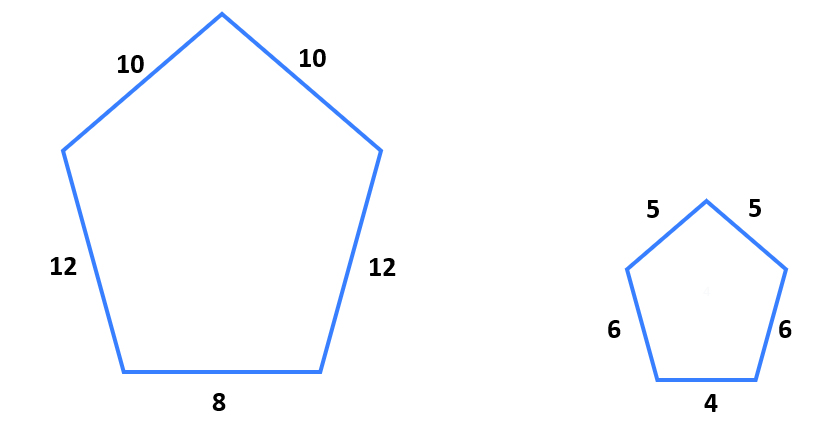
Similar Triangles
Similar triangles are triangles that have the same shape but different sizes.
How can we tell if two triangles are similar?
- Using angles: The corresponding angles (angles in the same relative positions) are all the same Example: , , We say that .

- Using side lengths: The corresponding sides (sides in the same relative positions) have the same proportions Example: We say that .

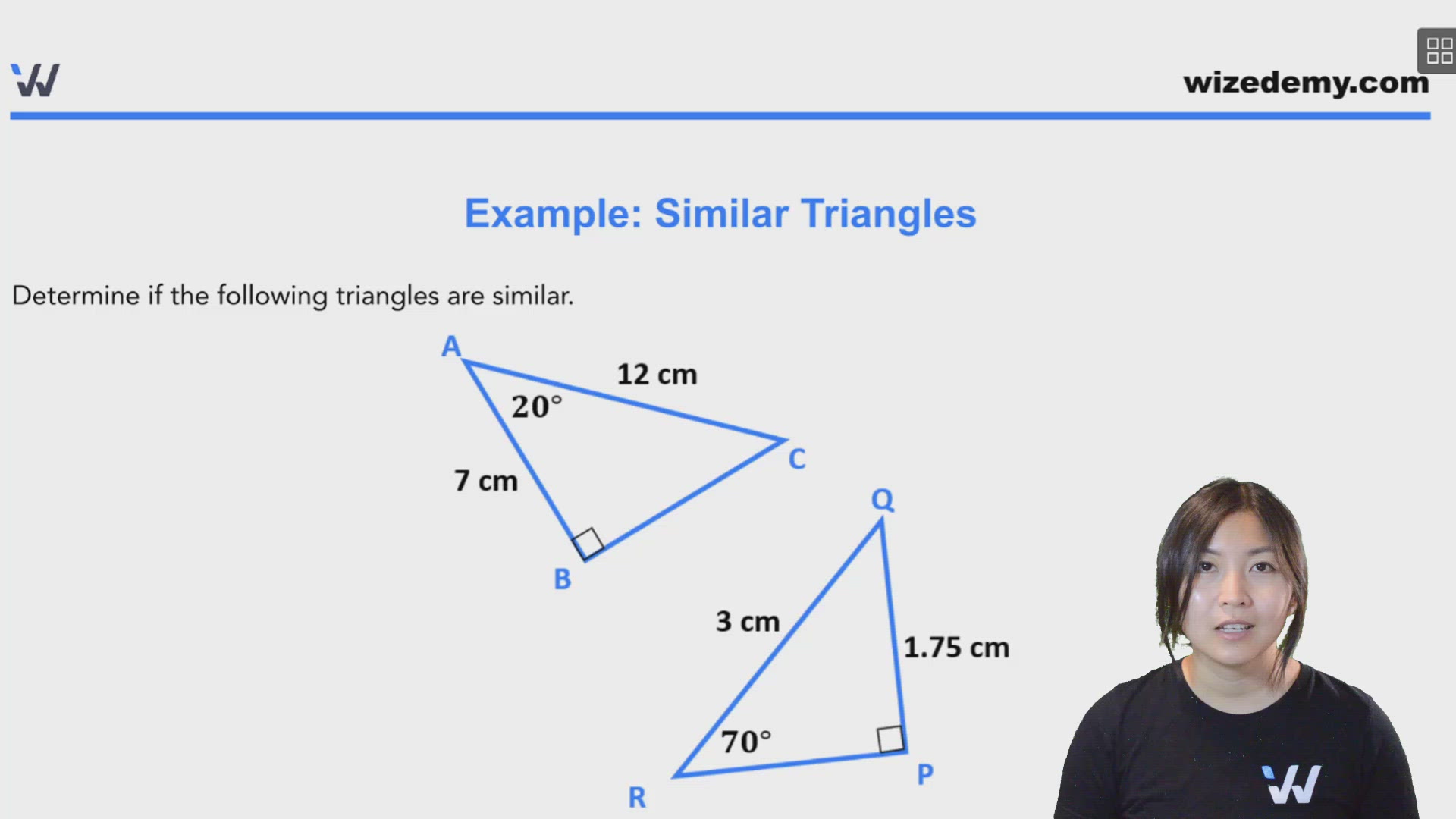
Example: Similar Triangles
Determine if the following triangles are similar.

Using Angles
- Triangle 1: The 2 given angles in the first triangle are and . Since the sum of the interior angles in a triangle is , we know that the missing angle is .
- Triangle 2: The 2 given angles in the second triangle are and . Similar to the first triangle, we know that the missing angle is .
Matching up the same angles, we see that .
Using Sides
- Triangle 1: Using Pythagorean's theorem, we see that
- Triangle 2: Using Pythagorean's theorem, we see that
Matching up the sides:
- longest sides:
- medium sides:
- shortest sides:
Since the corresponding side lengths have the same proportions, we see that .

Similar Polygons
Similar polygons are figures that have the same shape but different sizes.
How can we tell if two polygons are similar?
- Using angles: The corresponding angles (angles in the same relative positions) are all the same Example:
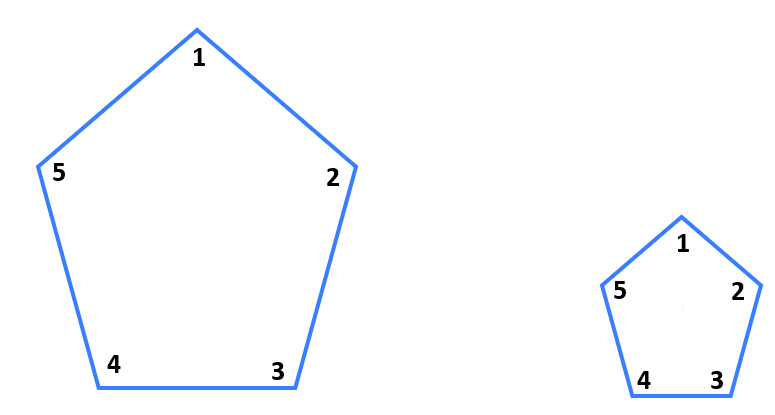
- Using side lengths: The corresponding sides (sides in the same relative positions) have the same proportions Example: