Function Notation
Function Notation
When writing the equation or rule for a function, we can use function notation.
Function notation shows us the
- Name of the function
- Input variable
- Equation or rule that connects the independent and dependent variables

When reading function notation we say "f of x" or "f at x."
Example 1
A cab company charges riders $2 for a ride, plus $1.50 for every mile traveled.
Write an equation that represents the cost of a cab ride using function notation.
where is the number of miles.
Substitution using function notation
If the input variable is replaced by another value, then we can substitute into the equation or graph.
Evaluating this will give us the output of the function.
Example 2
Given that , evaluate the following
1.
2.
Example 3
Give that is represented by the following graph, evaluate the following.
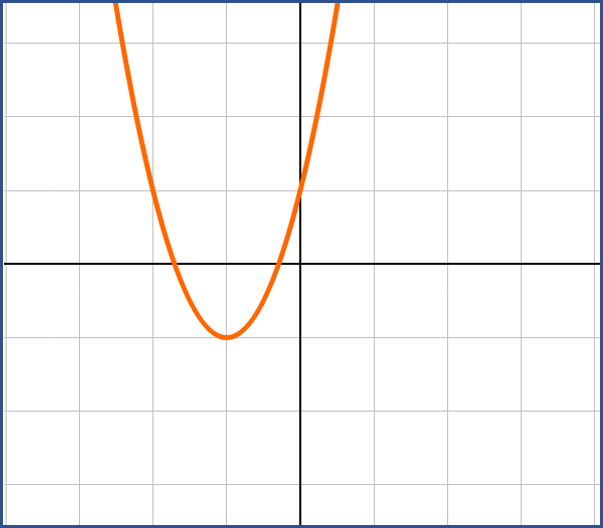
1.
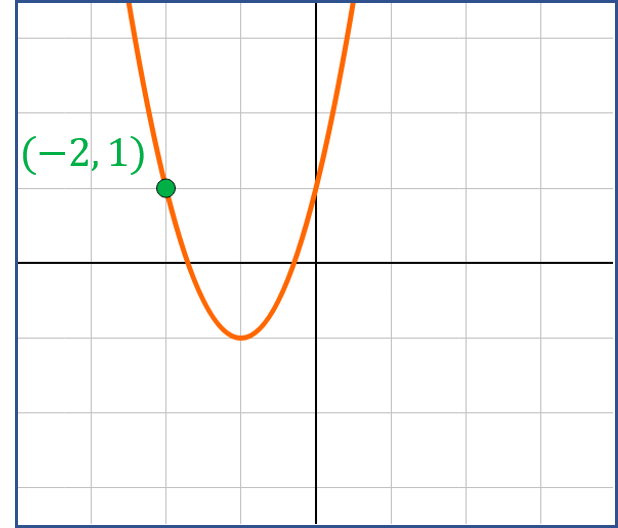
2.
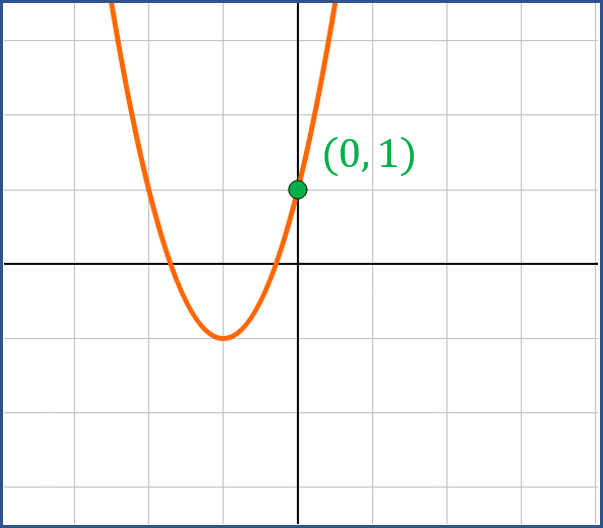

Example Function Notation

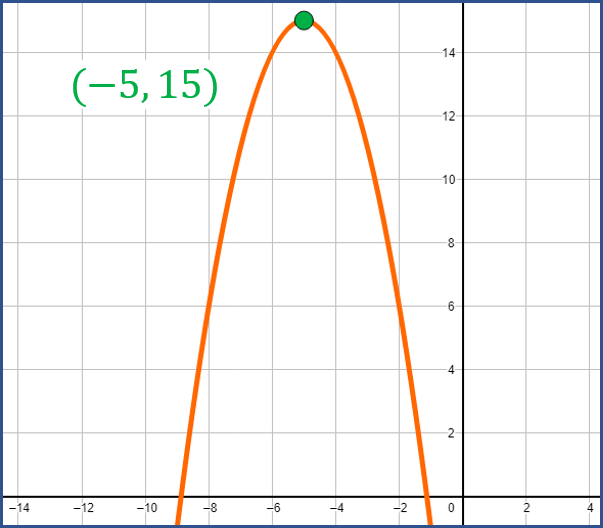
At a carnival game you are asked to pick a number, add 5 to it, square the result, and then subtract this value from 15.
1. Use function notation to describe this process.
2. What number do you end up with if you start with -1,2, or 0?
3. What is the highest number you could get from this process?
From the graph the highest point is at .
This shows that if we pick , we'll get the highest value of .