Wize Grade 11 Mathematics Textbook > Introduction to Functions
Domain and Range of Basic Functions
0:00 / 0:00
Describing intervals of real numbers

To describe the domain and range of functions, we will often need to describe more than just a list of values.
Some of the most common ways to describe an interval of real numbers include
- Inequalities
- Set builder notation
- Interval notation
Inequalities
By putting the variable inside an expression with inequalities, we can describe a continuous interval of numbers.
- Use or to include a value
- Use or to exclude a value
Example 1
Represent the set of all real numbers between 1 and 9, where 1 is included but 9 is not.
Set builder notation
Set builder notation is very similar to using inequalities. More notation is used to clearly mark out the variable and the interval using inequalities.
- Always use curly brackets to start and stop set builder notation
- The first part will describe the variable
- is used to show that is a real number
- The second part will have an inequality or rule that the variable must follow
Example 2
Represent the set of all real numbers between 1 and 9, where 1 is included but 9 is not.
Interval Notation
Interval notation can be used to represent a continuous set of numbers.
- The first value indicates where the interval starts
- The second value indicates where the interval stops
- Use [ or ] to include a value
- Use ( or ) to exclude a value
- and should be used with parenthesis
Example 3
Represent the set of all real numbers between 1 and 9, where 1 is included but 9 is not.
Wize Tip
Think of interval notation as a short hand way to describe the graph of an interval.

Multiple Intervals
To use more than one interval we can use the symbol to connect them.
This symbol stands for the union of two sets.
Example 4
Represent the set of all real numbers between 2 and 3, and also the interval between 8 and 9.
Assume all the values are included in the intervals.
0:00 / 0:00
Domain and Range of Basic Functions
Domain and Range of Basic Functions
The domain and range of a function might include an interval of values rather than a list of values.
This is especially common if the function is expressed using a graph or equation.
Example 1
Write the domain and range of the following functions.
1.
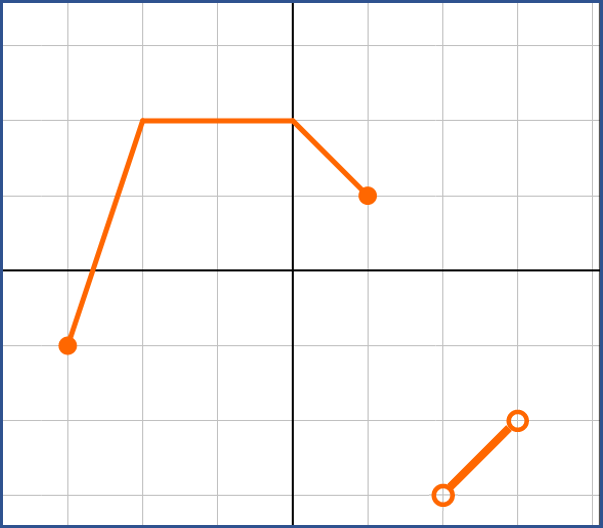
Domain:
Range:
2.
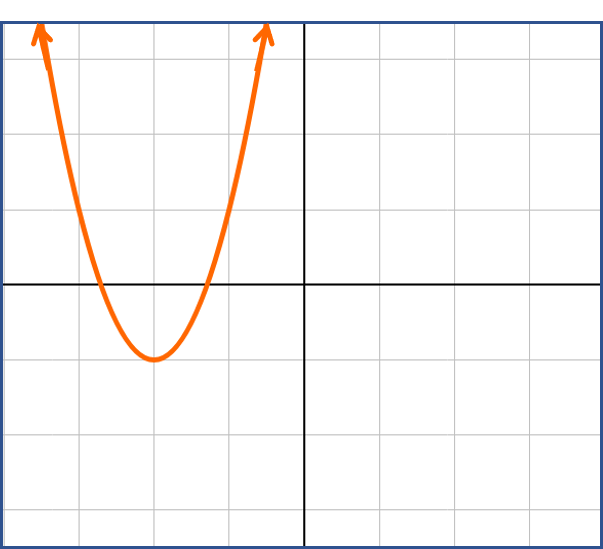
Domain: All real numbers
Range:
3.
Domain: All real numbers
Range:
Wize Concept
Remember that:
- The collection of all the possible inputs for a function is called the domain of a function.
- The collection of all the possible outputs of a function is called the range of a function.
Domain and Range of Common Functions
Each of the basic families of functions have distinctive domains and ranges.
This comes from the shape of their graph, or the values where they are defined.
- Domain: All real numbers
- Range: All real numbers
- Domain: All real numbers
- Range:
- Domain:
- Range:
- Domain:
- Range:
- Domain: All real numbers
- Range:

0:00 / 0:00
Example: Domain and Range of Basic Functions
On a cattle ranch you are tasked with building a pen to fence in both cattle and the sheep like the picture below.
You have 180 meters of fencing available.
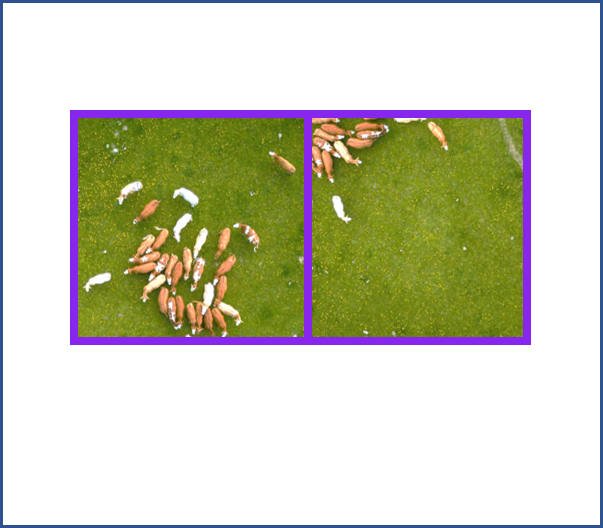
1. Write an equation to describe the area of the pens as a function of the length of a side.
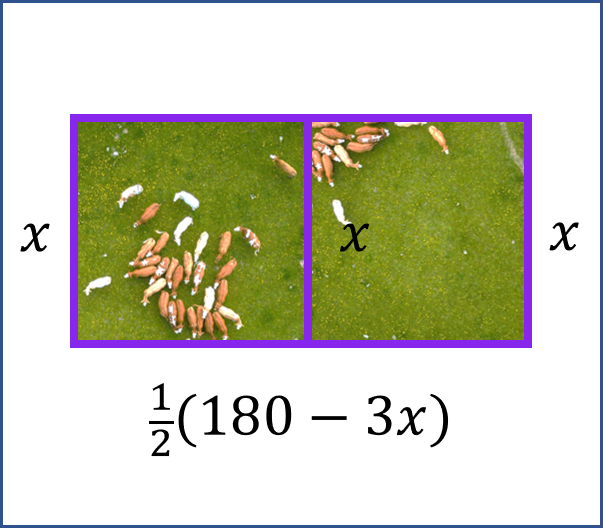
First we can let be the length of a side, and describe the other sides using this .
From this we can describe area as the length times the height. This gives us the function:
2. What is the domain of this function?
We can not have a side that is less than 0 meters long.
We also can not have a side longer than 60 meters long.
Domain:
Practice: Domain and Range of Basic Functions
Match each function with its domain and range.
A.
B.
C.
D.
E.
Domain: All real numbers
Range: All real numbers
Domain: All real numbers
Range:
Domain:
Range:
Domain:
Range:
Domain: All real numbers
Range:
Practice: Domain and Range of Basic Functions
Write out the domain and range for the graph of the following function.
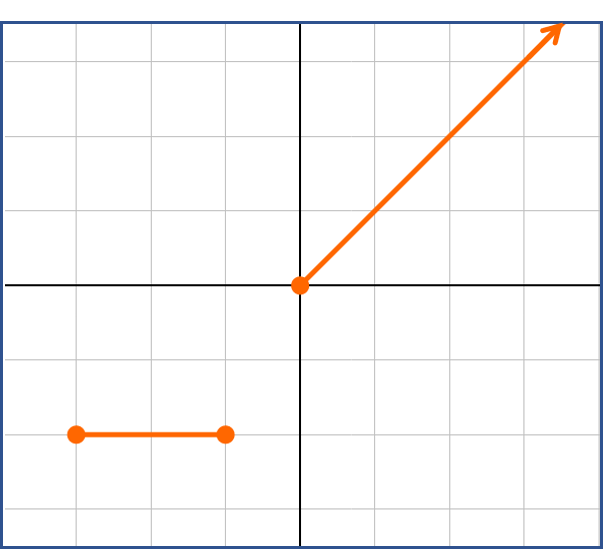

Mark Yourself Question
- Grab a piece of paper and try this problem yourself.
- When you're done, check the "I have answered this question" box below.
- View the solution and report whether you got it right or wrong.
Practice: Domain and Range of Basic Functions
Write out the domain and range for the following functions.
1.
2.
3.