
Antiderivatives (Indefinite Integral) of Trig Functions
Let be a nonzero constant. Then we have the following indefinite integral rules:
Additionally
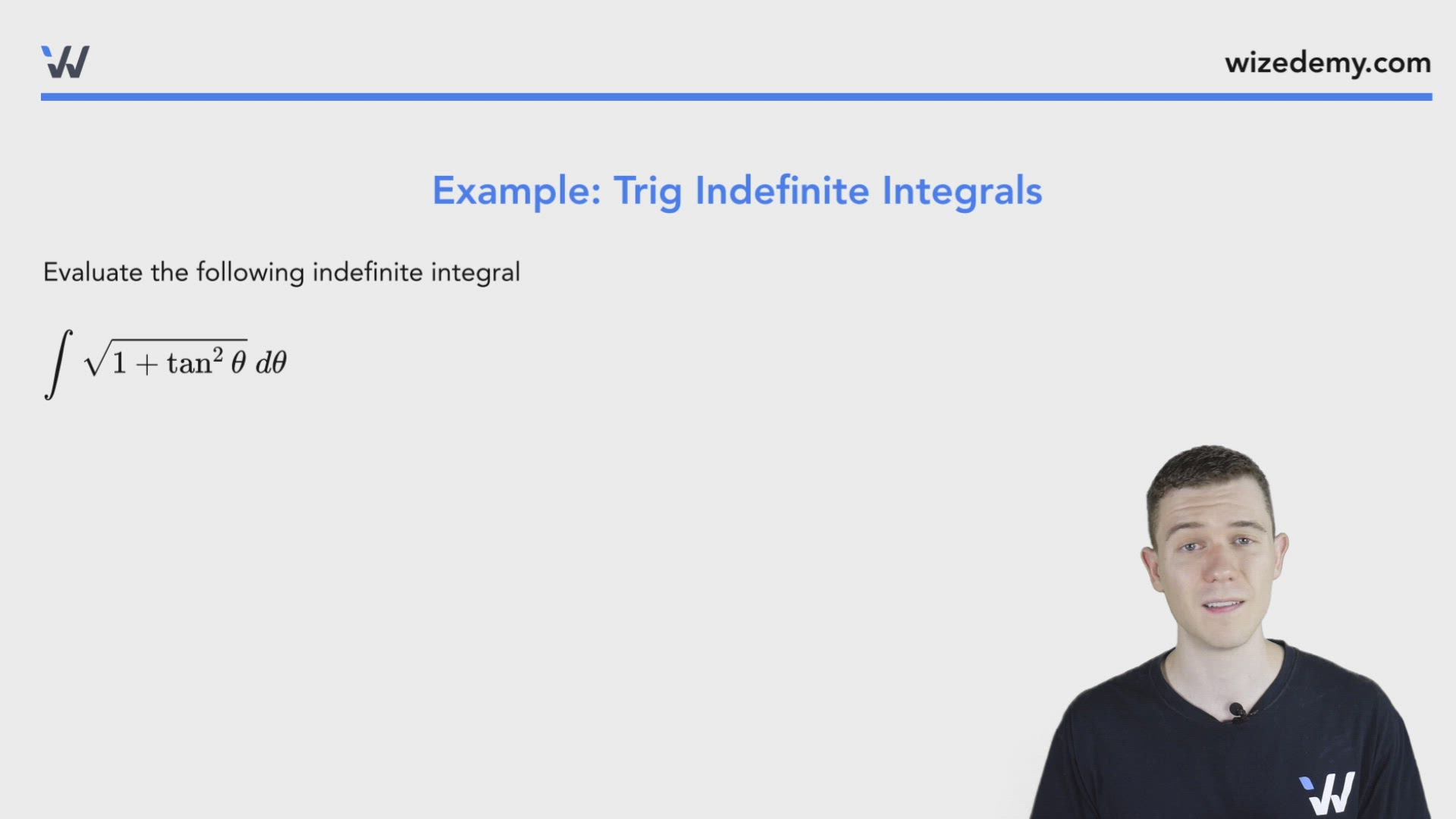
Example: Trig Indefinite Integrals
Evaluate the following indefinite integral
Let be a nonzero constant. Then we have the following indefinite integral rules:
Additionally
Evaluate the following indefinite integral