Wize University Introduction to Finance Textbook > Equity Valuation
Ex-Dividend and Cum-Dividend Price
Popular Courses
Intro to Finance
University Study Guides
Intro to Finance
University Study Guides
MGCR 341
McGill University
FIN 301
University of Alberta
FIN 300
Toronto Metropolitan University
COMM 121
Queen's University
FIN*2000
University of Guelph
FINC 341
Texas A&M University
COMMERCE 2FA3
McMaster University
COMM 2202
Dalhousie University
BU283
Wilfrid Laurier University
FIN 300
Arizona State University - Tempe
BUSFIN 3220
Ohio State University
FIN 301
Pennsylvania State University
BUS-F 255
Indiana University - Bloomington
FIN 3403
University of Central Florida
FIN 3403
University of Florida
FIN 320
California State University - Fullerton
FINC-UB 7
New York University
BUS1 170
San José State University

0:00 / 0:00
Ex-Dividend Price
In most cases, a stock is priced based on all future dividends because the dividend being paid today has already been paid, this is called a stock’s ex-dividend price

Cum-Dividend Price
If a stock has not yet paid its current dividend, the price of the stock is higher because sellers are factoring in the dividend, this is called a stock’s cum-dividend price and is computed by adding the amount of the current dividend to the ex-dividend price.

0:00 / 0:00
Example: Cum-Dividend Price
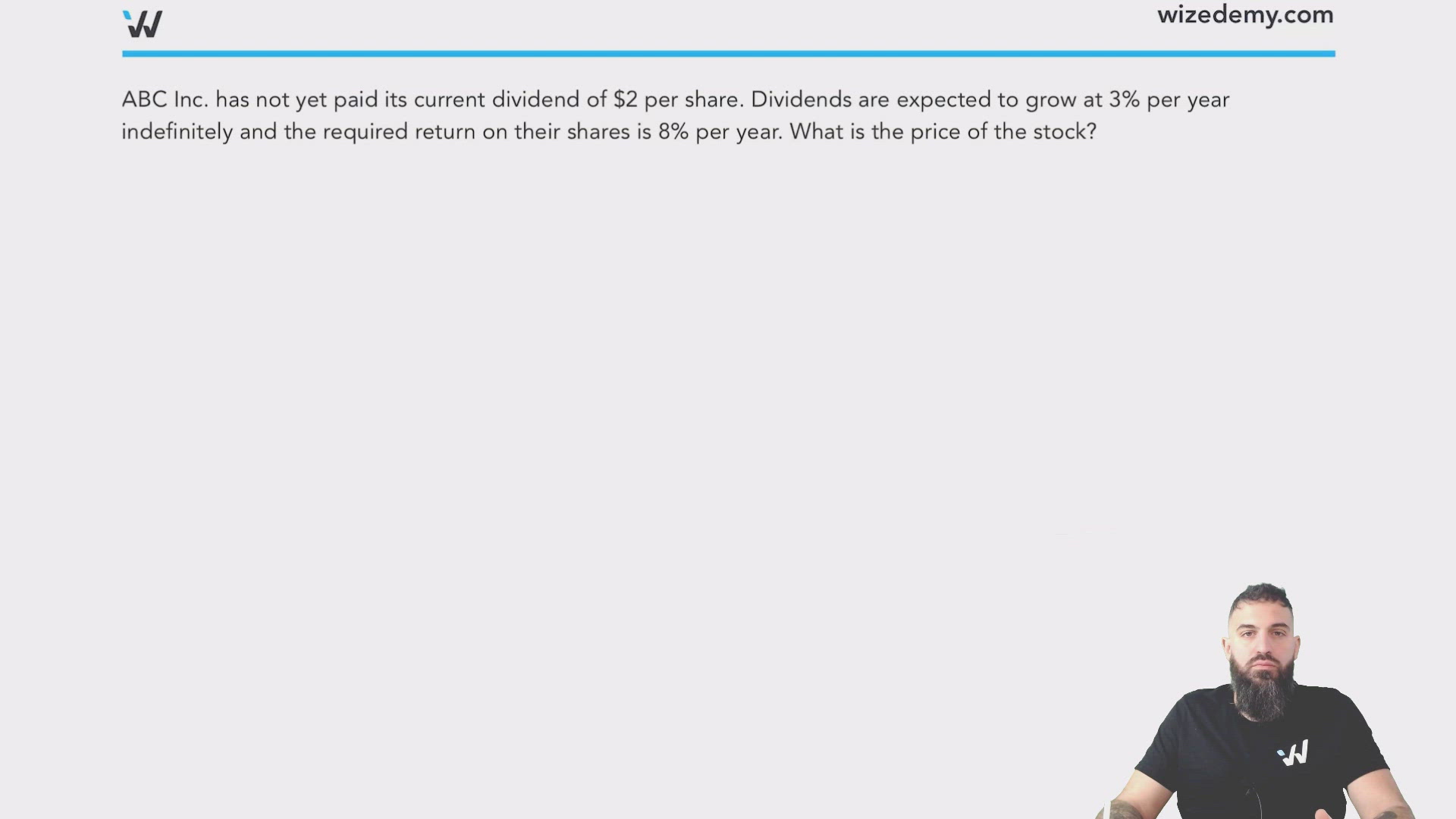
ABC Inc. has not yet paid its current dividend of $2 per share. Dividends are expected to grow at 3% per year indefinitely and the required return on their shares is 8% per year.
What is the ex-dividend price of the stock?
What is the cum-dividend price of the stock?
Practice: Cum-Dividend Price
Last year, Rogers Inc. paid a $3.30 dividend per share and has been increasing their dividend amount by 3% per year, this growth rate is expected to continue indefinitely, and the company has not yet paid its current dividend which is expected in the coming days.
What is the current price of the stock if the required rate of return is 12%?