Wize University Introduction to Finance Textbook > Risk, Return & Portfolio Theory
Ex-Post Risk and Return
Popular Courses
COMM 308
Concordia University
Intro to Finance
University Study Guides
Intro to Finance
University Study Guides
FINA 230
Concordia University
MGCR 341
McGill University
FIN 301
University of Alberta
FIN 300
Toronto Metropolitan University
COMM 121
Queen's University
FIN*2000
University of Guelph
FINC 341
Texas A&M University
COMM 2202
Dalhousie University
BU283
Wilfrid Laurier University
FIN 300
Arizona State University - Tempe
BUSFIN 3220
Ohio State University
SB/FINE 2000 3.00
York University
FIN 301
Pennsylvania State University
BUS-F 255
Indiana University - Bloomington
FIN 3403
University of Central Florida
FIN 3403
University of Florida
FIN 320
California State University - Fullerton
0:00 / 0:00
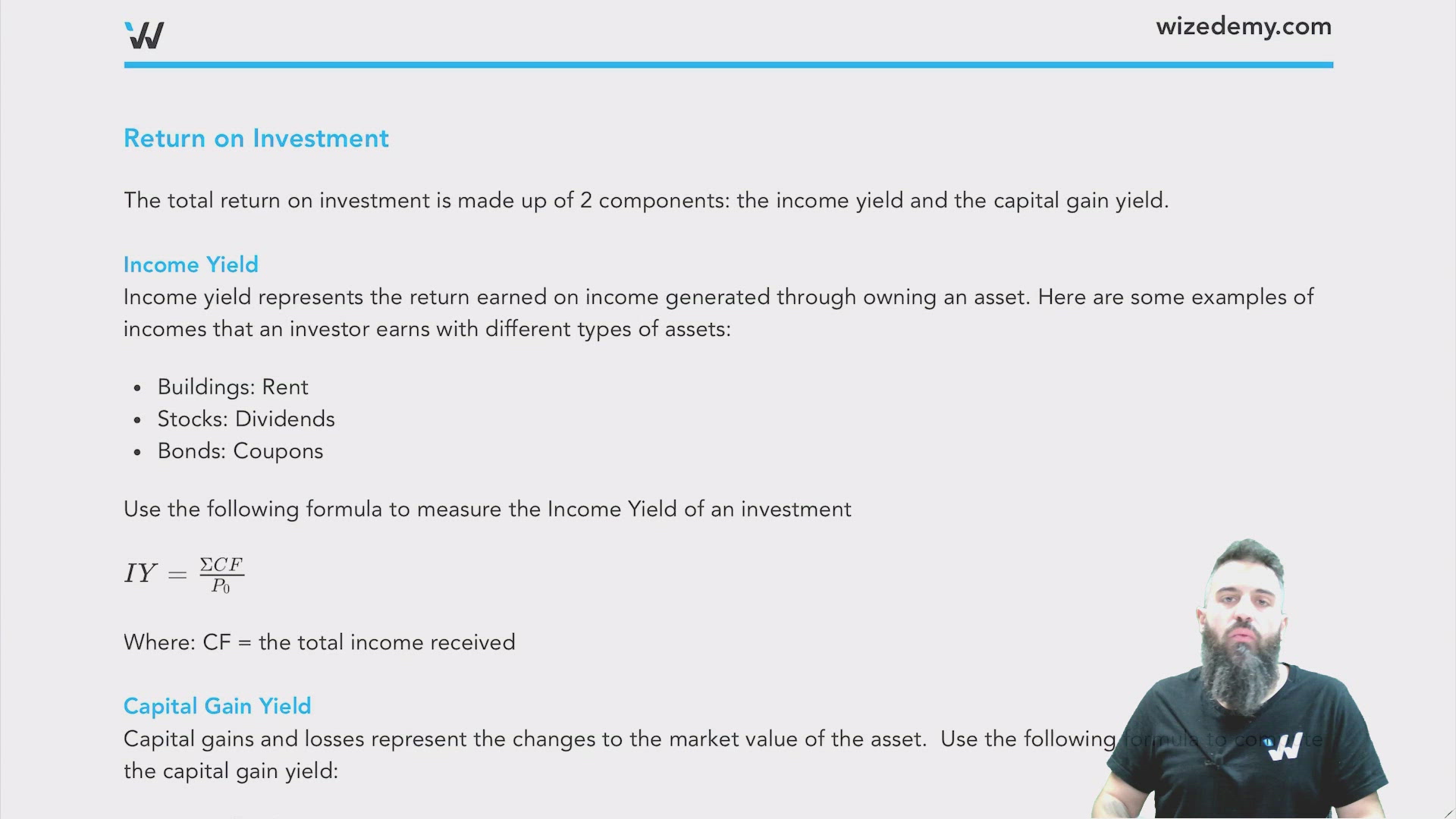
Return on Investment
The total return on investment is made up of 2 components: the income yield and the capital gain yield.
Income Yield
Income yield represents the return earned on income generated through owning an asset. Here are some examples of incomes that an investor earns with different types of assets:
- Buildings: Rent
- Stocks: Dividends
- Bonds: Coupons
Use the following formula to measure the Income Yield of an investment

Where:
CF = Cash flows received (coupons, dividends, rent, etc)
P0= Purchase price
Capital Gain Yield
Capital gains and losses represent the changes to the market value of the asset. Use the following formula to compute the capital gain yield:

Where:
CF = Cash flows received (coupons, dividends, rent, etc)
P0 = Purchase price
P1 = Current price or Selling price
Holding Period Return (Total Return)
The total return is the sum of the income yield and the capital gain yield:

Periodic Average Return (Geometric Average)
- The average return earned period period.
- Considers thats returns compound periodically

Where:
TR = Total return
t = Length of holding period
0:00 / 0:00
Example: Return on Investment
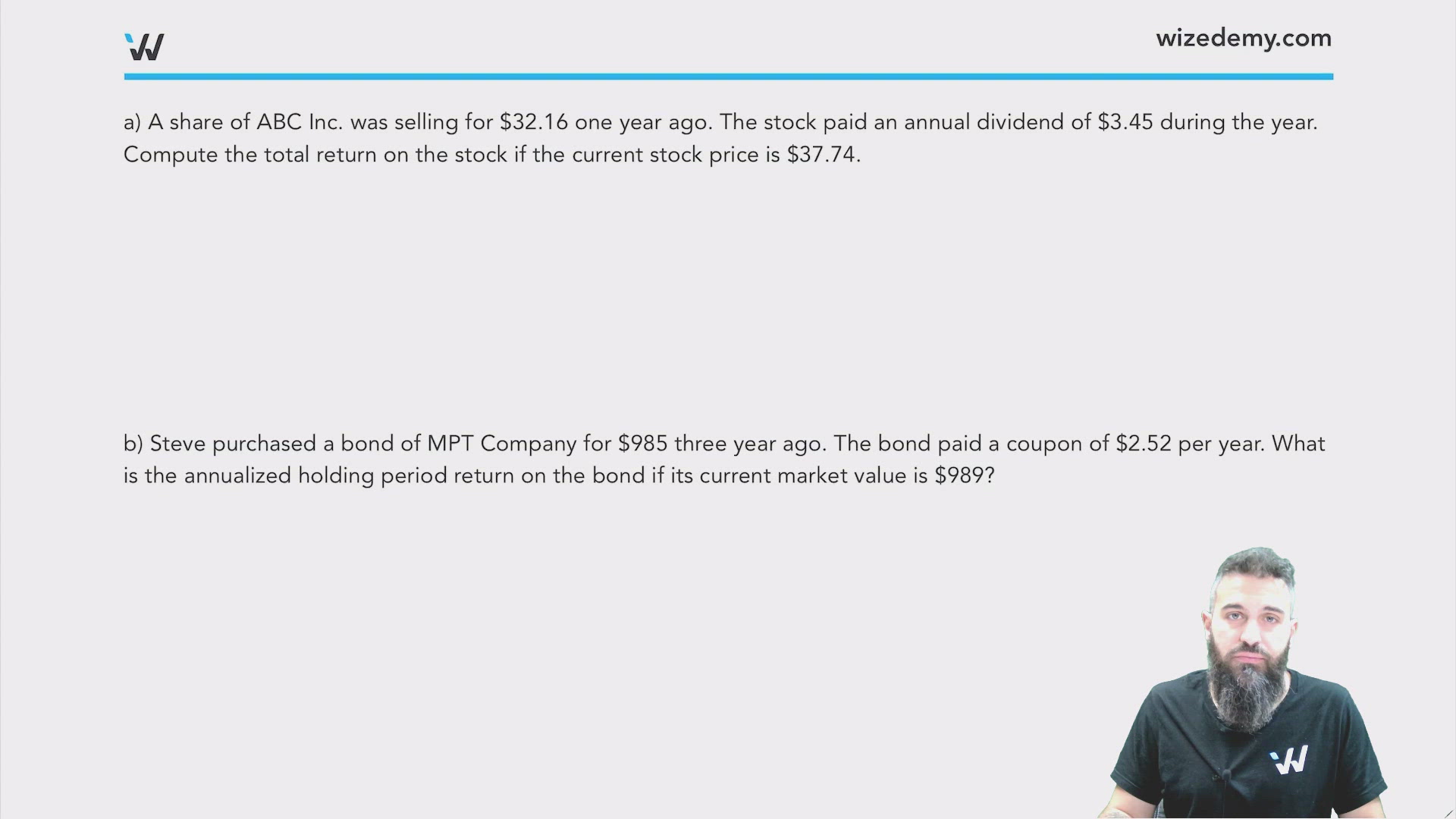
a) A share of ABC Inc. was selling for $32.16 one year ago. The stock paid an annual dividend of $3.45 during the year. Compute the total return on the stock if the current stock price is $37.74.
b) Steve purchased a bond of MPT Company for $985 three years ago. The bond paid a coupon of $2.52 per year. What is the annualized holding period return on the bond if its current market value is $989?
Practice: Return on Investment
You purchased stock in ABC Inc. for $31.44 two years ago and sell today for $43.56. The company issued annual dividends of $2 per share.
Compute the income yield, capital gain yield, holding period return and annualized holding period return.
Round your final answers to 2 decimal places and enter in % form.