Chemical Energy

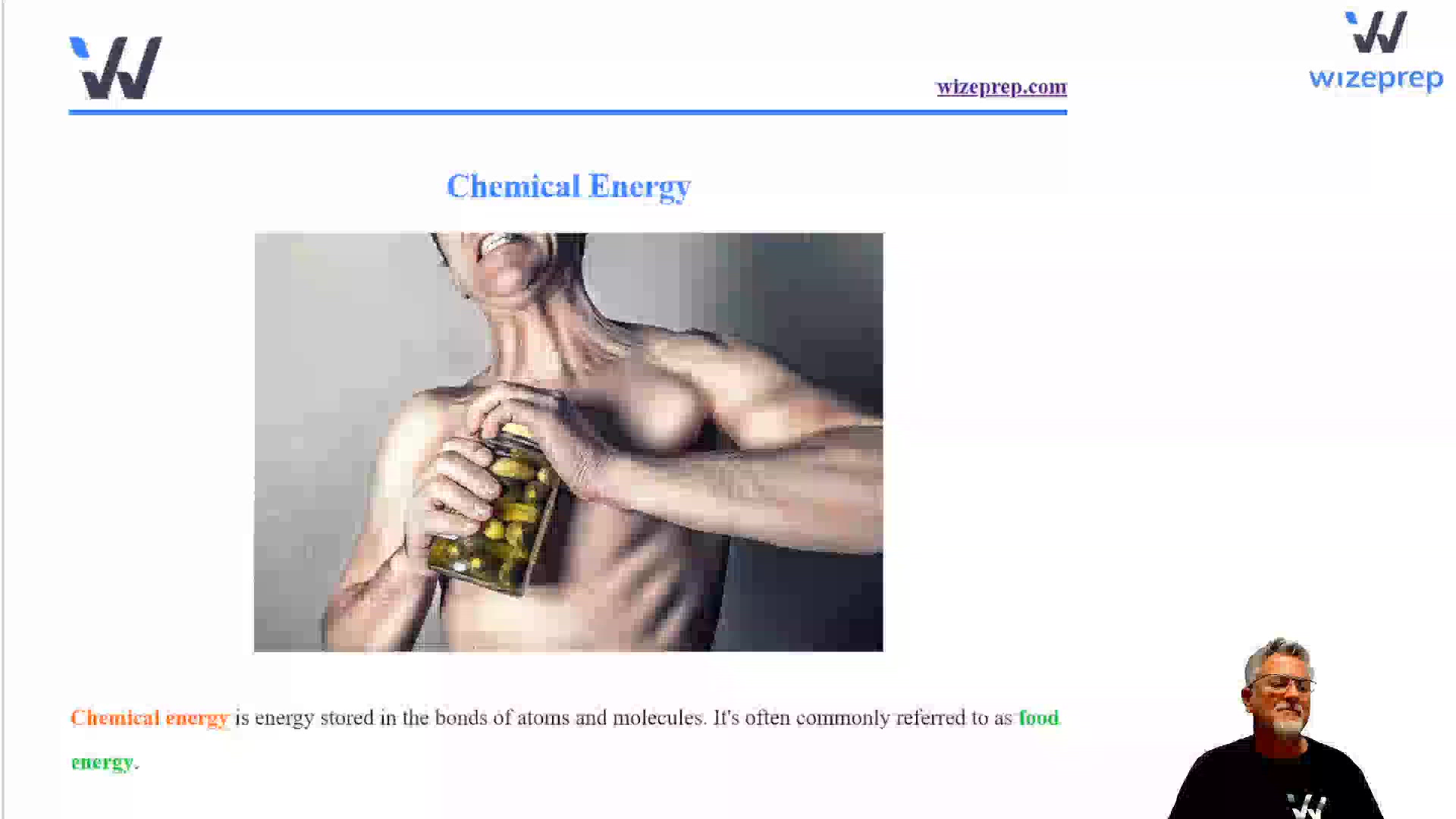
Chemical energy is energy stored in the bonds of atoms and molecules. It's often commonly referred to as food energy.
- Food that we eat is turned into chemical energy by our digestive system and can be expended as mechanical work in our muscles, or released as heat.
- Food energy is often measured in Calories (big "C"), but can be converted into Joules:
Example: Eating a Doughnut
You buy a doughnut, the package says kcal. Assume that you're really hungry and your body needs all the energy it can get from it (the basal metabolic rate is W). After you eat it, to what height can you climb in minute? Assume a mass of kg and an efficiency of %.
First, let's convert the energy to Joules:
The efficiency in using this energy is only % , which means that the total energy available is:
(J)
Now part of this energy is used up by the body. In s, this metabolic energy is:
(J)
The rest of the energy is used to climb to a maximum height related to the potential energy gained.
(m)