Principal Rays
Mirrors:
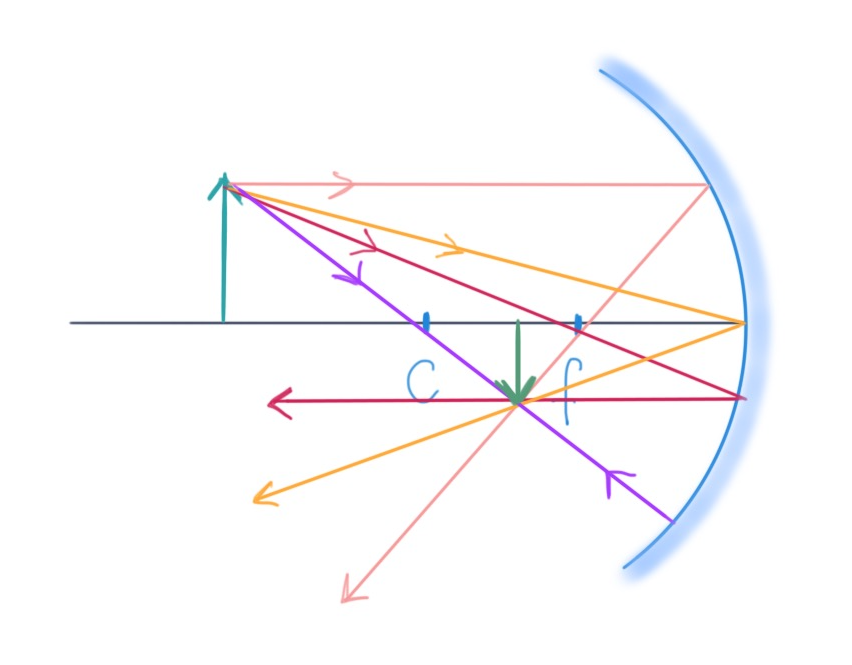
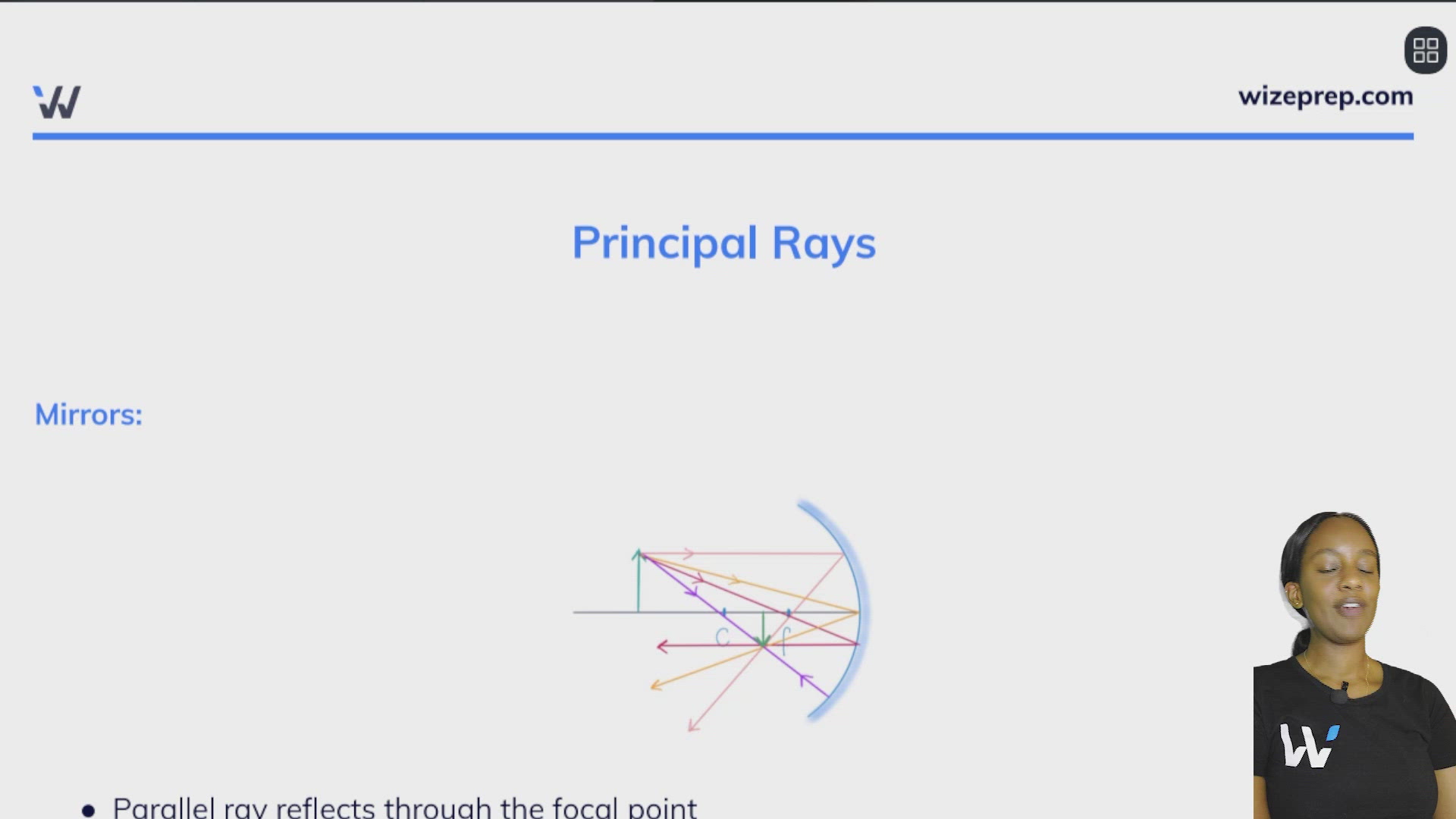
- Parallel ray reflects through the focal point
- Ray through the focal point reflects parallel
- Ray to the center reflects at the same angle below
- Ray through the center reflects back along the same path
Convex (Converging) Lenses:

- Parallel ray refracts through the focal point on the other side
- Ray through the focal point refracts parallel
- Ray through the center refracts straight through
Concave (Diverging) Lenses:

- Parallel ray refracts as if coming from the focal point on the same side
- Ray directed towards the focal point on the other side refracts parallel
- Ray through the center refracts straight through
Real and Virtual Images
Real Images
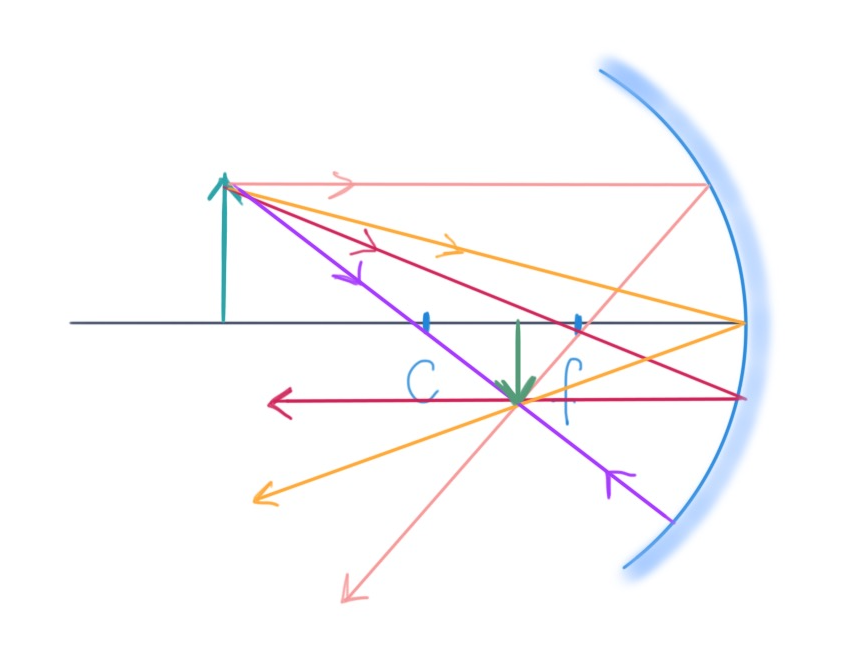
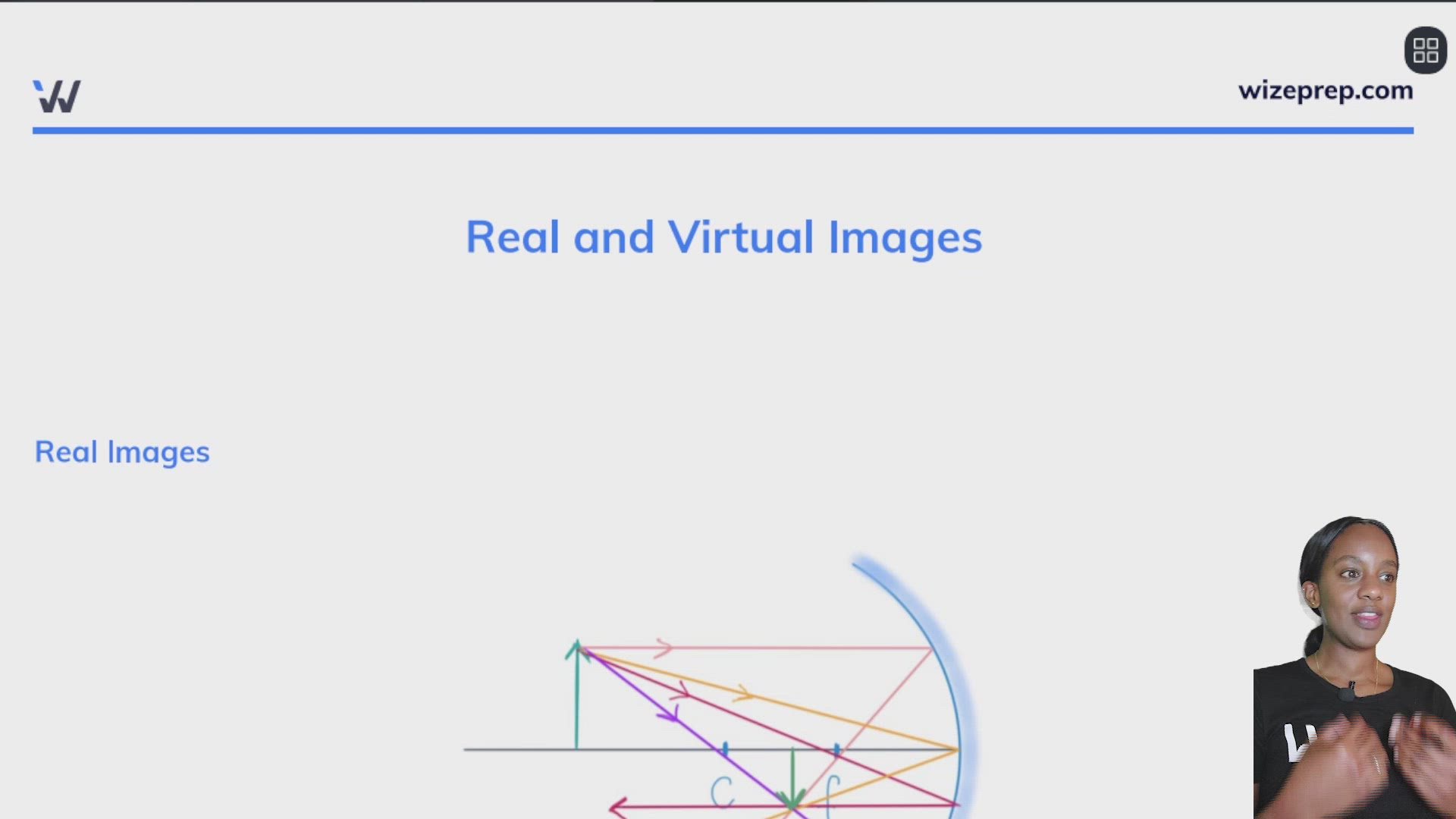
- Real images occur at points where actual light rays intersect.
- They are located at the intersection of solid lines on a ray diagram.
- Real images are always inverted.
- They have a negative magnification.
- The image distance is positive.
- Real images can be captured on a screen.
Virtual Images

- Virtual images occur at points where imaginary light rays intersect: it's where light appears to be coming from, but there are no actual light rays at that location (e.g. behind a mirror)
- They are located at the intersection of dotted lines on a ray diagram.
- Virtual images are always upright.
- They have a positive magnification.
- The image distance is negative.
- Virtual images cannot be captured on a screen. They appear to be formed on the mirror/lens itself.
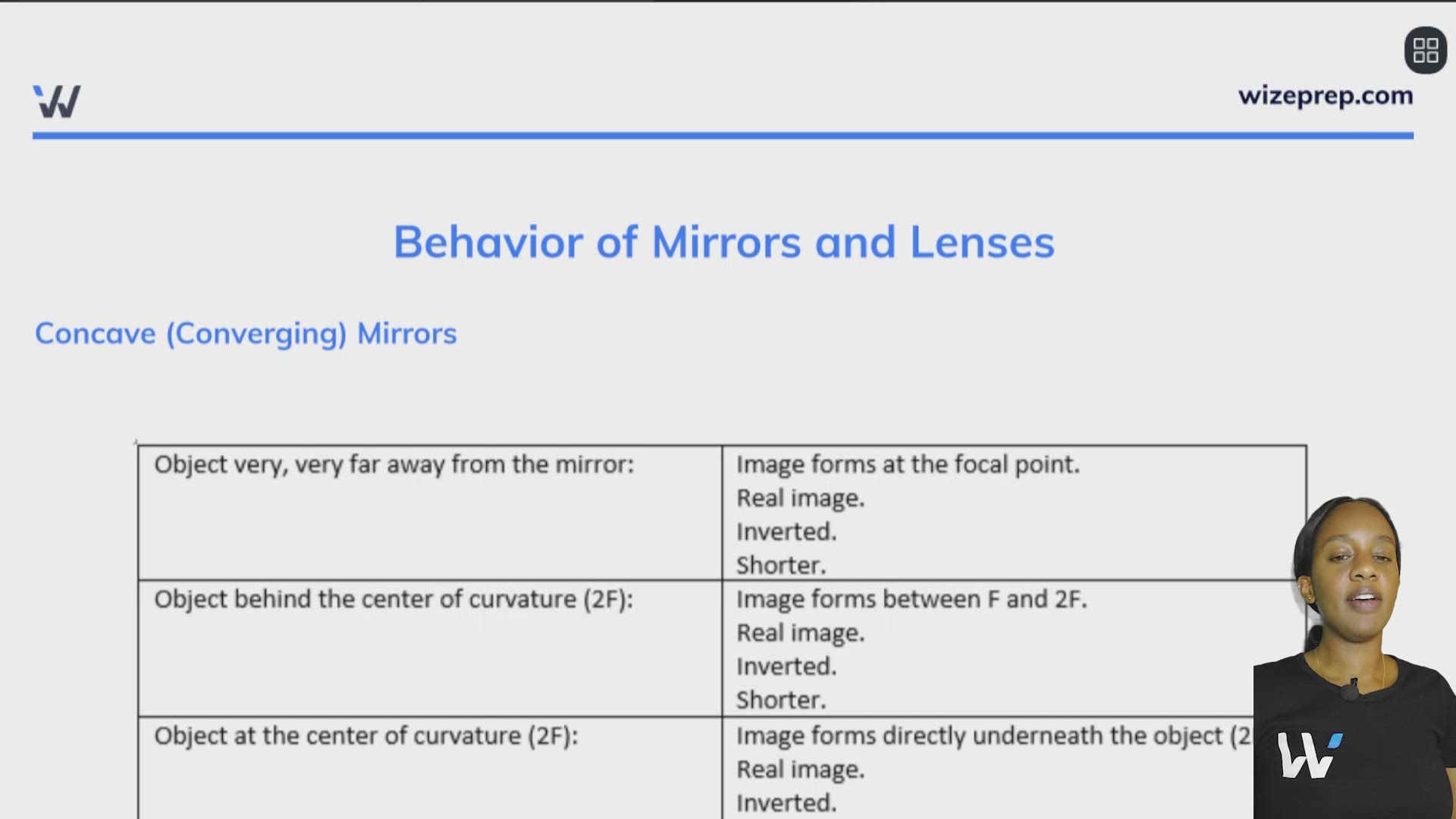
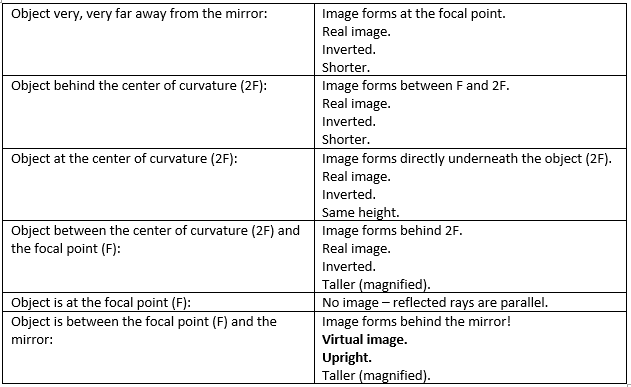
Behavior of Mirrors and Lenses
Concave (Converging) Mirrors
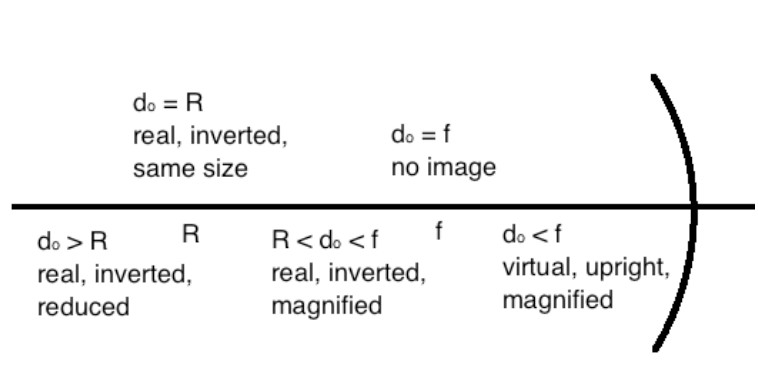
Another way to visualize these rules:
Convex (Diverging) Mirrors
The image is always virtual, upright, smaller than the object, and is formed behind the mirror.
Convex (Converging) Lenses
Same as converging mirrors, except that the image forms on the opposite side.
(For example, for objects between F and the mirror, the image now forms behind the object. For objects behind F, the image now forms on the other side of the lens.)
Concave (Diverging) Lenses
The image is always virtual, upright, smaller than the object, and is formed on the same side of the object between the object and the lens.