Interference and Superposition

Image illustrating Interference and Superposition


The overlapping of waves is called interference. They combine as they pass through each other while traveling in the medium.


Principle of Superposition: When two waves overlap, the actual displacement of any particle in the medium is the algebraic sum of their displacement due to each wave if only that wave were present:

y(x,t)=y1(x,t)+y2(x,t)y\left(x,t\right)=y_1\left(x,t\right)+y_2\left(x,t\right)


Example: Superposition


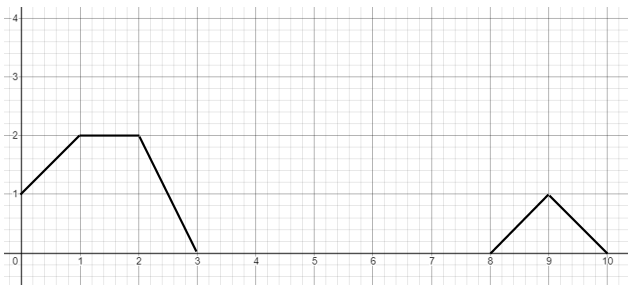
Two waves approach each other, both moving at speed of 11 m/s. What happens at t=4t = 4 s?


Image illustrating Example: Superposition


After 4 seconds of moving towards each other, the waves will overlap like this:
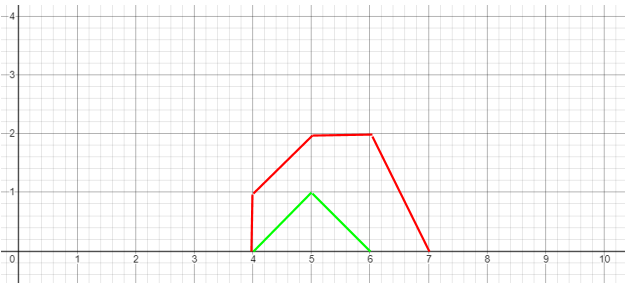

Image illustrating Example: Superposition


For each time value, add the amplitudes of the two waves. The superposition will look like this:
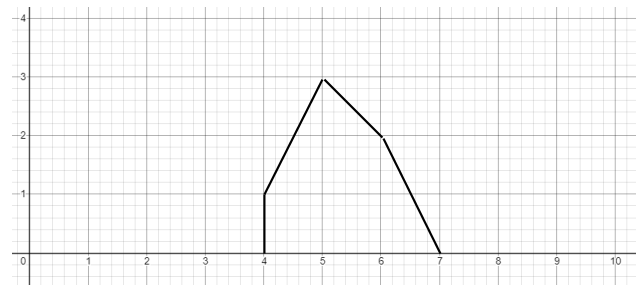

Image illustrating Example: Superposition


Mark Yourself Question

  1. Grab a piece of paper and try this problem yourself.
  2. When you're done, check the "I have answered this question" box below.
  3. View the solution and report whether you got it right or wrong.

Practice: Superposition

You have a snapshot of two waves on a string as shown below, at t=0t = 0s . They are moving towards each other.


The wave on the left is moving at +2.0+ 2.0 m/s. The wave on the right is moving at −1.0-1.0 m/s. Sketch what happens at t=2t = 2s.


Illustration for practice question: Practice: Superposition


Create a free account to get started

Unlock full course notes by signing up

  • Video lessons taught by top educators
  • Practice questions with guided solutions
  • Written review notes for reference
  • Expert answers anytime from course tutors