Drag Force
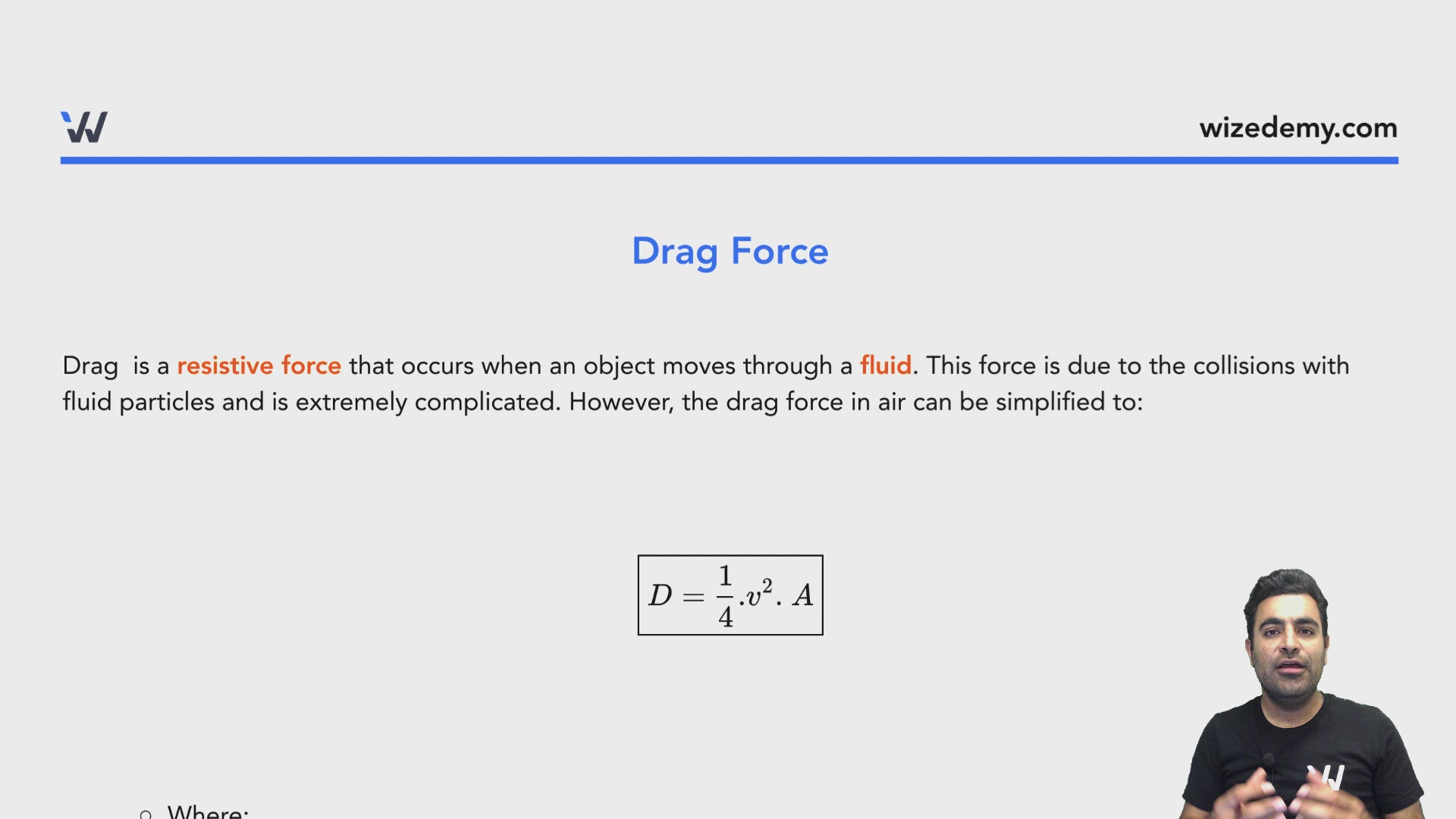
Drag is a resistive force that occurs when an object moves through a fluid. This force is due to the collisions with fluid particles and is extremely complicated. However, the drag force in air can be simplified to:
- Where:
- = surface area of the object experiencing drag
- = speed of the object
- = drag force (also shown by )
Drag Force
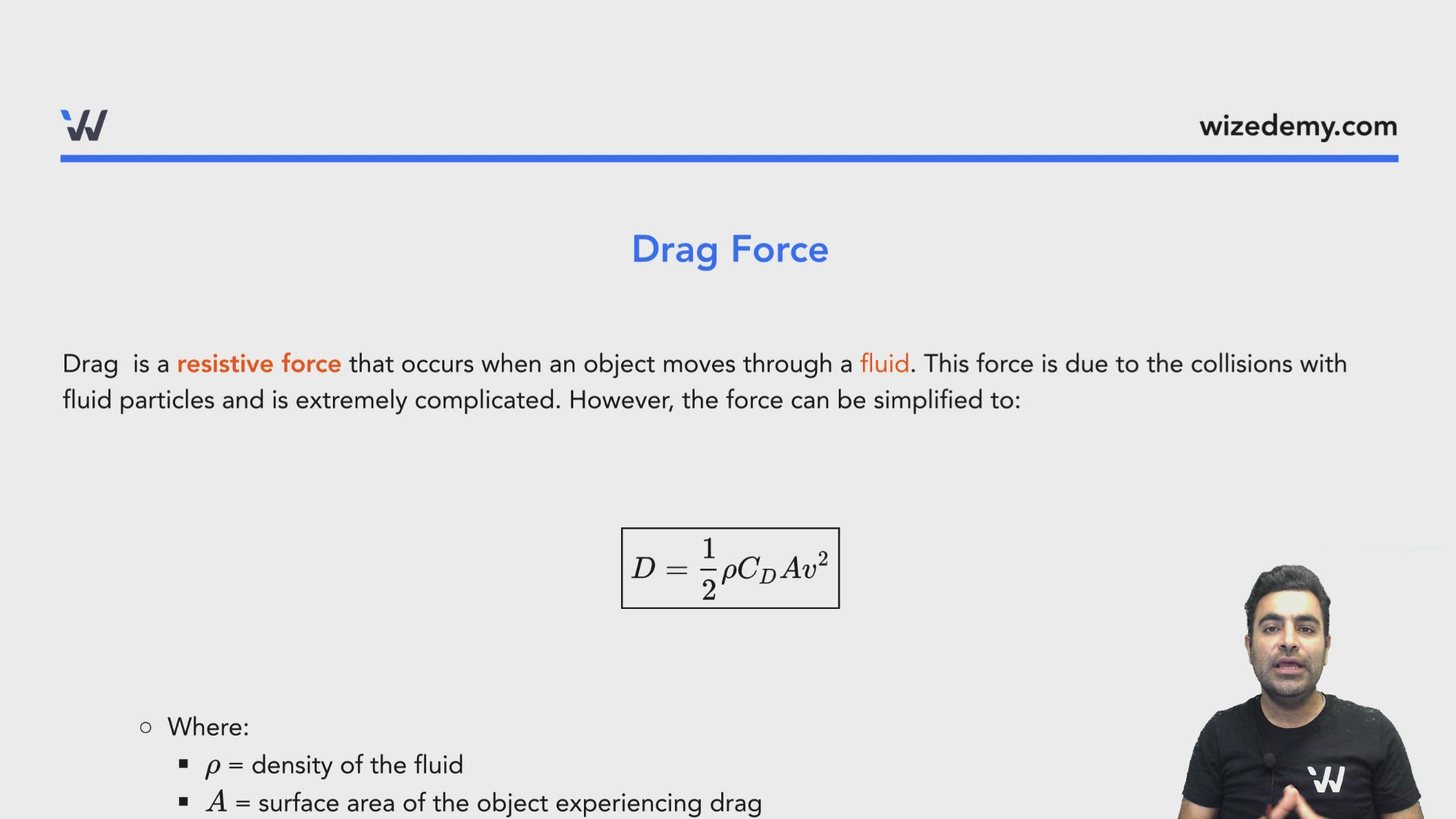
Drag is a resistive force that occurs when an object moves through a fluid. This force is due to the collisions with fluid particles and is extremely complicated. However, the force can be simplified to:
- Where:
- = density of the fluid
- = surface area of the object experiencing drag
- = speed of the object
- = drag coefficient
- = drag force (also shown by )
Terminal Velocity
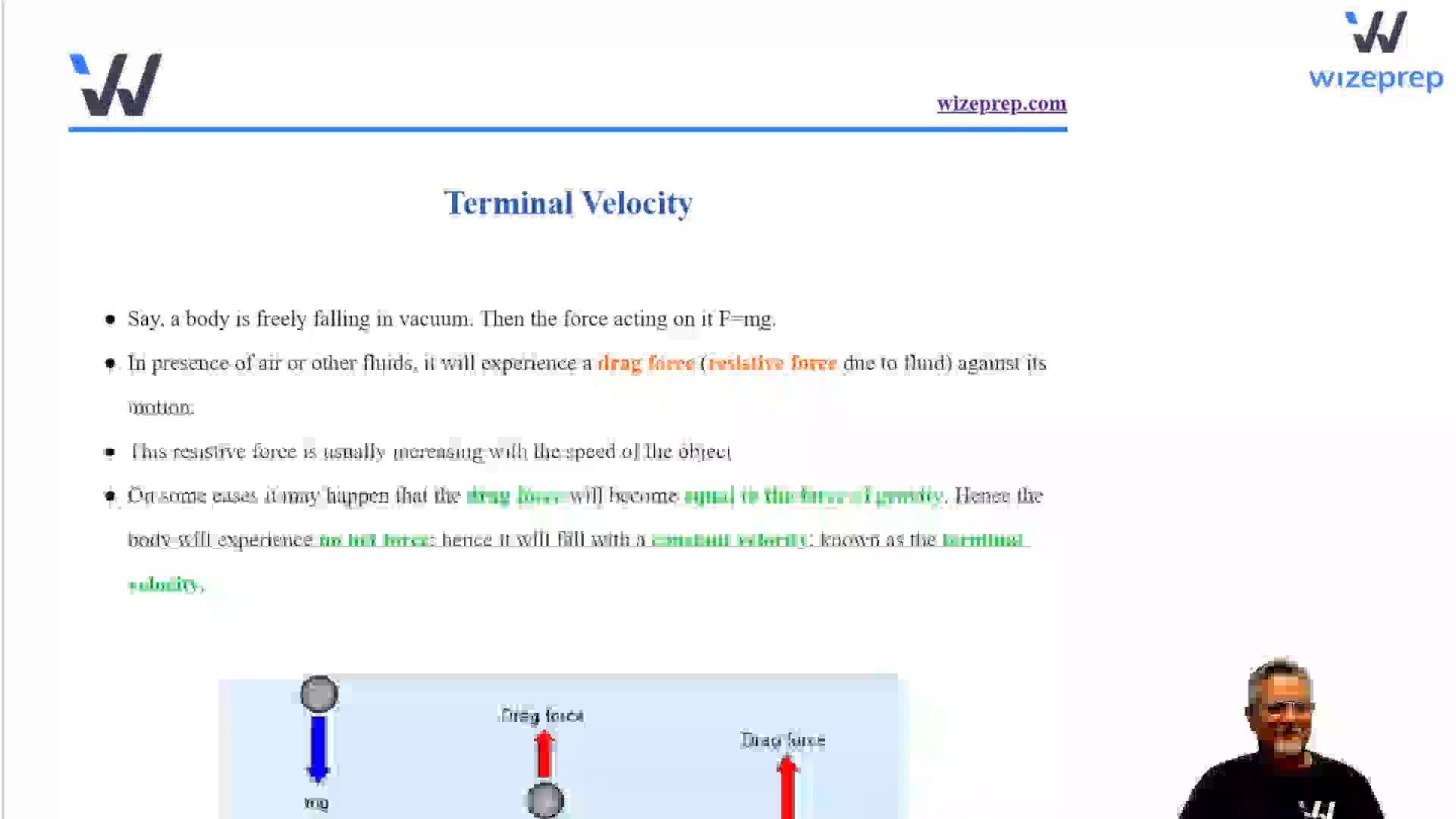
- Say, a body is freely falling in vacuum. Then the force acting on it F=mg.
- In presence of air or other fluids, it will experience a drag force (resistive force due to fluid) against its motion.
- This resistive force is usually increasing with the speed of the object
- On some cases it may happen that the drag force will become equal to the force of gravity. Hence the body will experience no net force; hence it will fall with a constant velocity, known as the terminal velocity.

Example: A Skydiver Terminal Velocity
A 60-kg skydiver jumps out of airplane. After a while, he reaches a final terminal velocity of 250 km/h. What is his effective cross section surface area of the airplane?
Solution:
When a falling object reaches terminal velocity, force of gravity is equal to drag force. Thus:
Effective cross section surface area is .