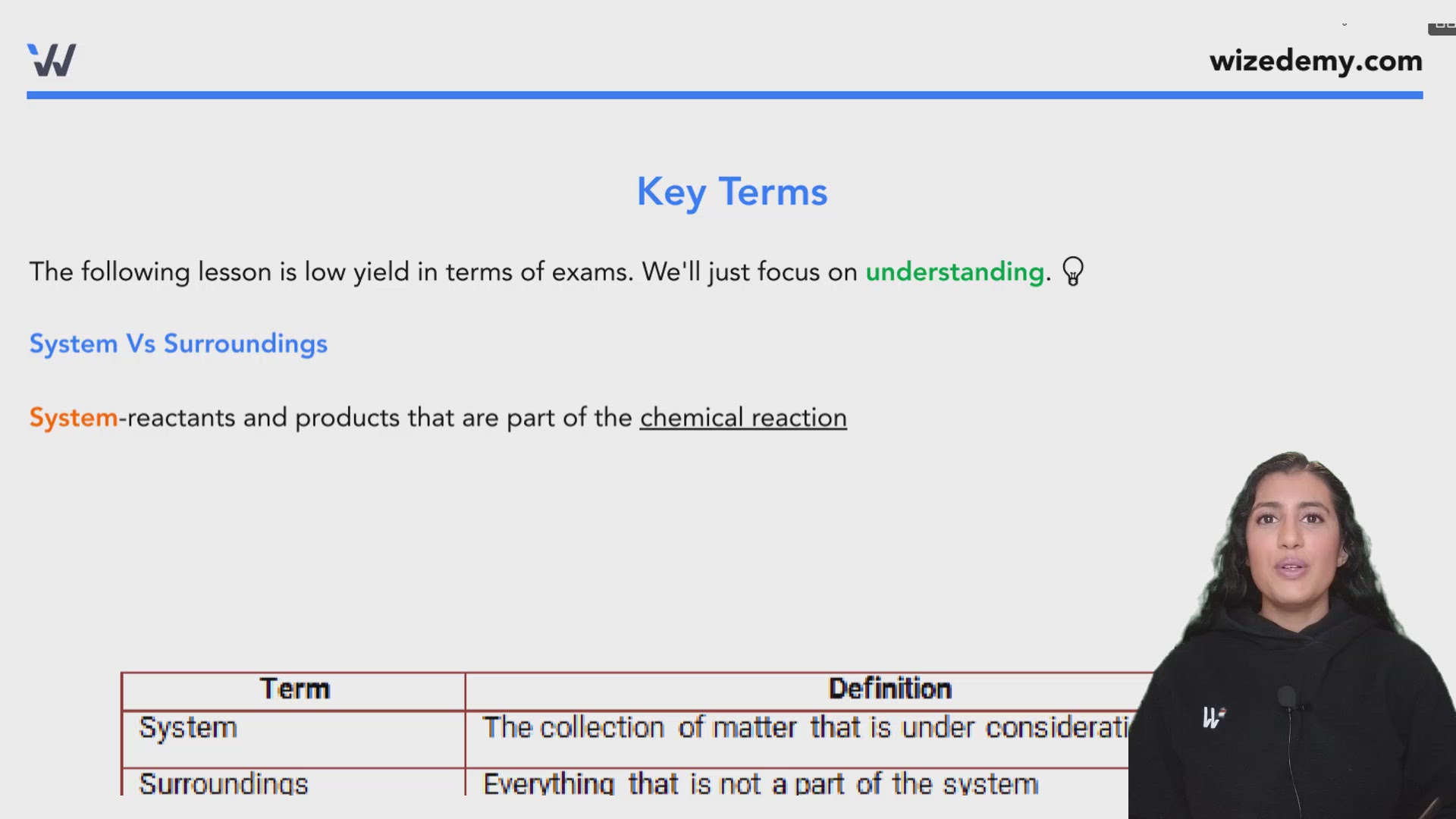
Key Terms
The following lesson is low yield in terms of exams. We'll just focus on understanding. 💡
System Vs Surroundings
System-reactants and products that are part of the chemical reaction

Open Vs Closed Vs Isolated Systems

Examples:
- open system → cup of coffee
- closed system → bottle of pop
- isolated system → perfect thermos
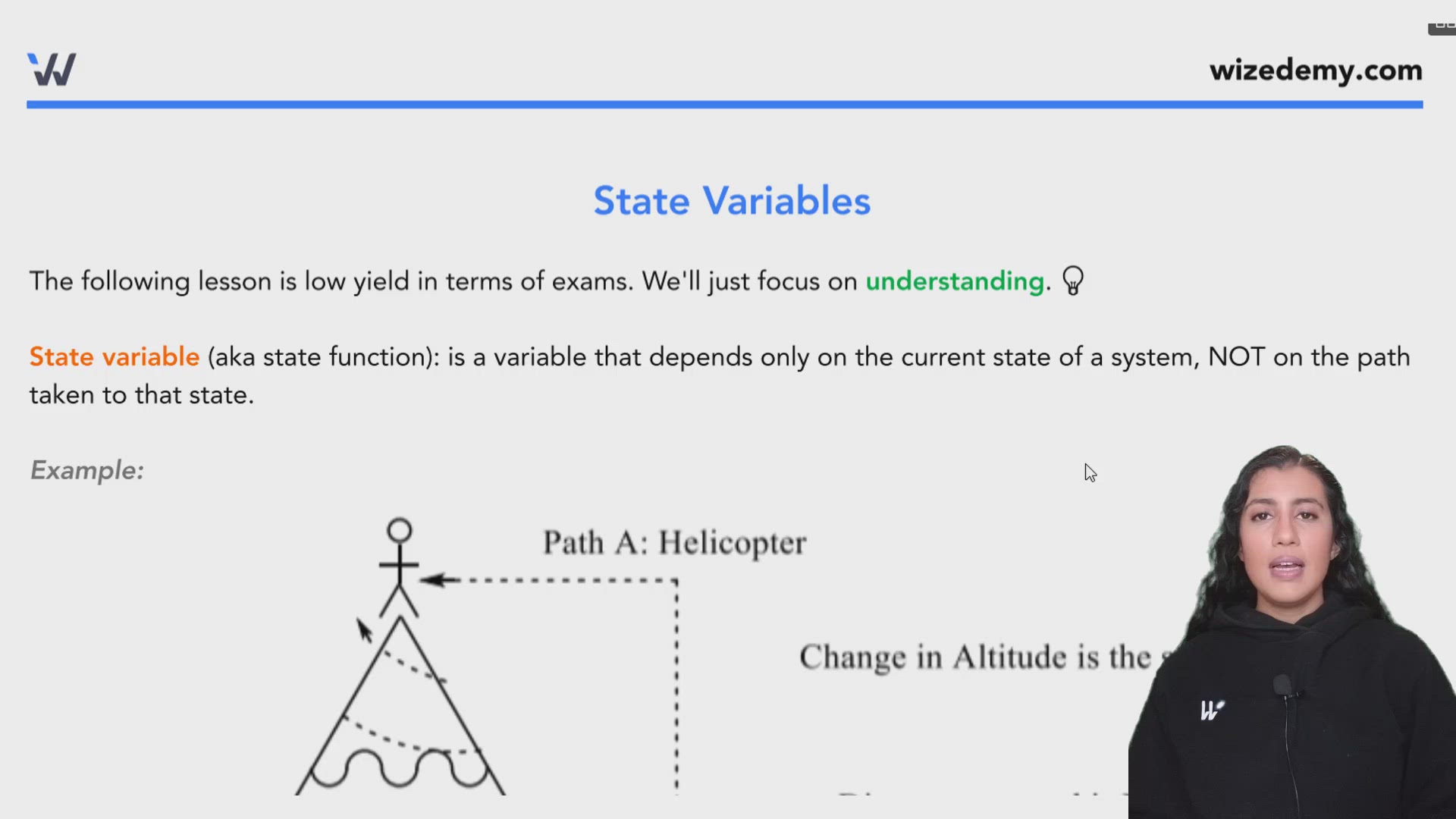
State Variables
The following lesson is low yield in terms of exams. We'll just focus on understanding. 💡
State variable (aka, state function): is a variable that depends only on the current state of a system, NOT on the path taken to that state.
Example:
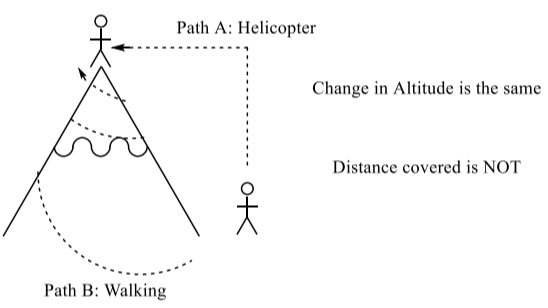
Is the distance travelled or change in altitude a state function?
The change in altitude is a state function because no matter which pathway was taken (walking or helicopter, the change in altitude was the same).
Distance is not a state function because when there was a different pathway taken, there was a different distance travelled!
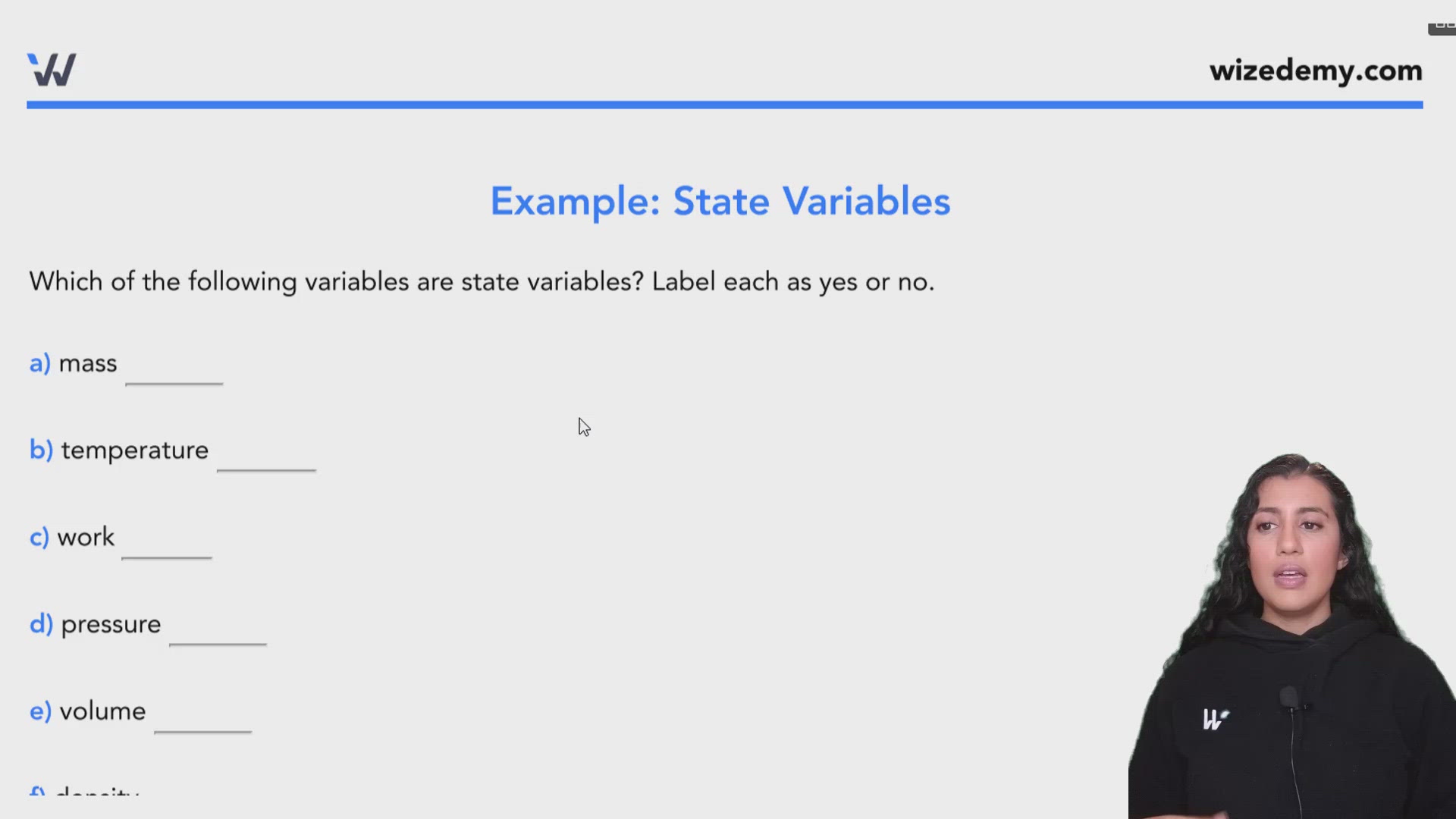
Example: State Variables
Which of the following variables are state variables? Label each as yes or no.
a) mass ________
b) temperature ________
c) work ________
d) pressure ________
e) volume ________
f) density ________
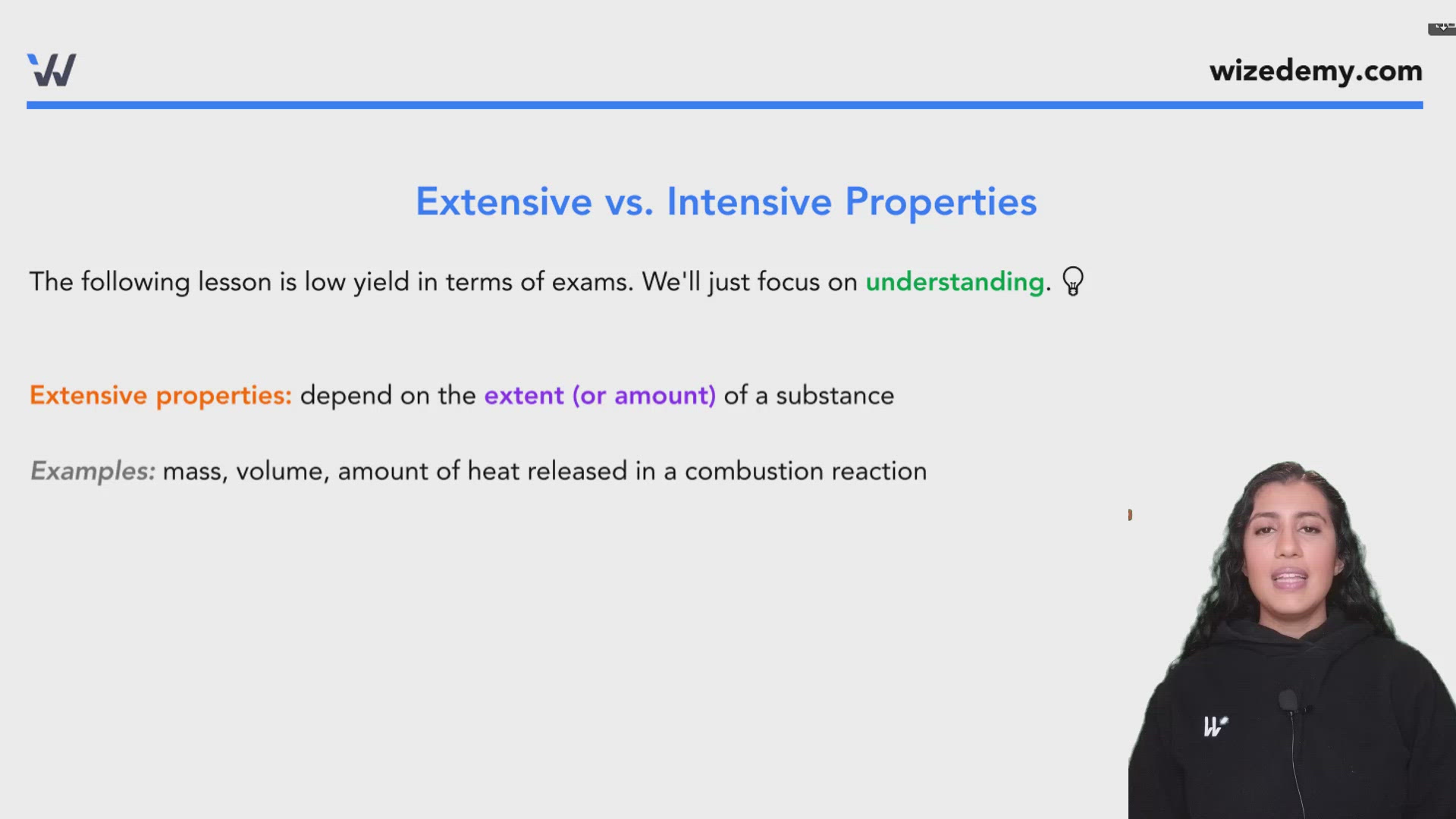
Extensive vs. Intensive Properties
The following lesson is low yield in terms of exams. We'll just focus on understanding. 💡
Extensive properties: depend on the extent (or amount) of a substance
Examples: mass, volume, amount of heat released in a combustion reaction
Intensive properties: does not depend on the amount of substance
Examples: melting point, boiling point, density
Think* no matter how much water you are boiling in a pot, water will always boil at 100oC and melt at 0oC!
When we take a ratio of 2 extensive properties what do we get?
________
Example: mass/volume=density
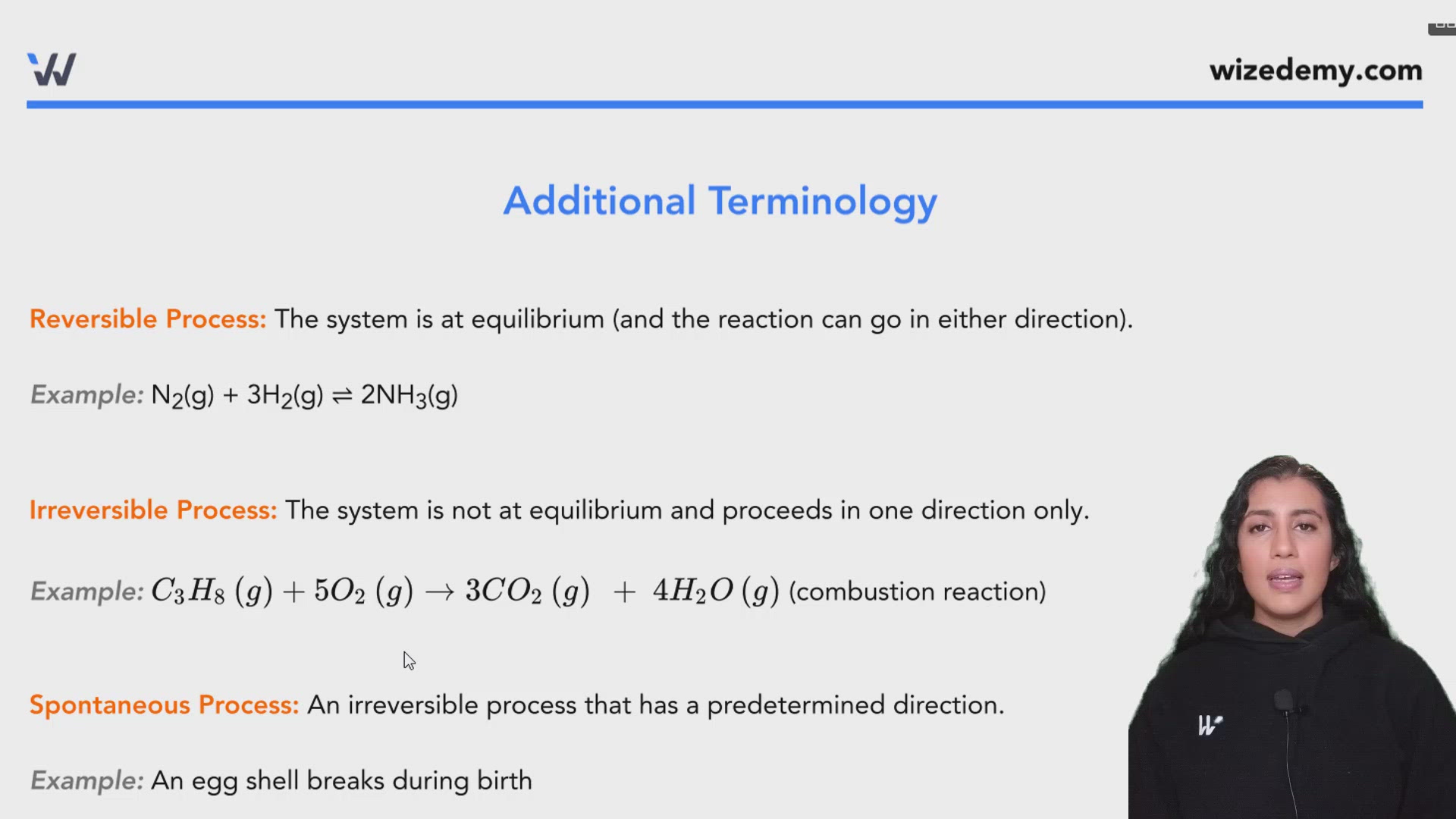
Additional Terminology
Reversible Process: The system is at equilibrium (and the reaction can go in either direction).
Example: N2(g) + 3H2(g) ⇌ 2NH3(g)
Irreversible Process: The system is not at equilibrium and proceeds in one direction only. This reaction is spontaneous in the forward direction.
Example: (combustion reaction)
Spontaneous Process: An irreversible process that has a predetermined direction.
Example: An egg shell breaks during birth
Isothermal: There is no change in temperature for the system
Isobaric: There is no change in pressure
Isochoric: There is no change in volume
Adiabatic: No heat exchange (no heat enters or leaves the system)
Exothermic: A Process in which heat is ________ (absorbed/released) to the ________ (system/surroundings)
Endothermic: A Process in which heat is ________ (absorbed/released) into the the ________ (system/surroundings)
Standard Conditions: Pressure of all gases is 1 atm, all solutions have 1M concentration, and temperature is 298K (25C). This is denoted as Ho So Go etc.