Popular Courses
MCAT
General Course
Grade 12 Chemistry
Ontario High School
Grade 12 Chemistry
Canada High School
CHEM 1302A/B
Western University
General Chemistry
University Study Guides
AP Chemistry Exam Prep Course
AP Exam Prep
CHEM 112
Queen's University
CHEM 203
University of Calgary
High School Chemistry
US High School
DAT
General Course
Chemistry
General Course
General Chemistry
University Study Guides
CHEM 1E03
McMaster University
CHM135H1
University of Toronto
CHEM 102
University of Alberta
CHEM 123
University of British Columbia
CHEM 120
McGill University
APSC 132
Queen's University
APSC 131
Queen's University
CHEM 102
University of Victoria
0:00 / 0:00
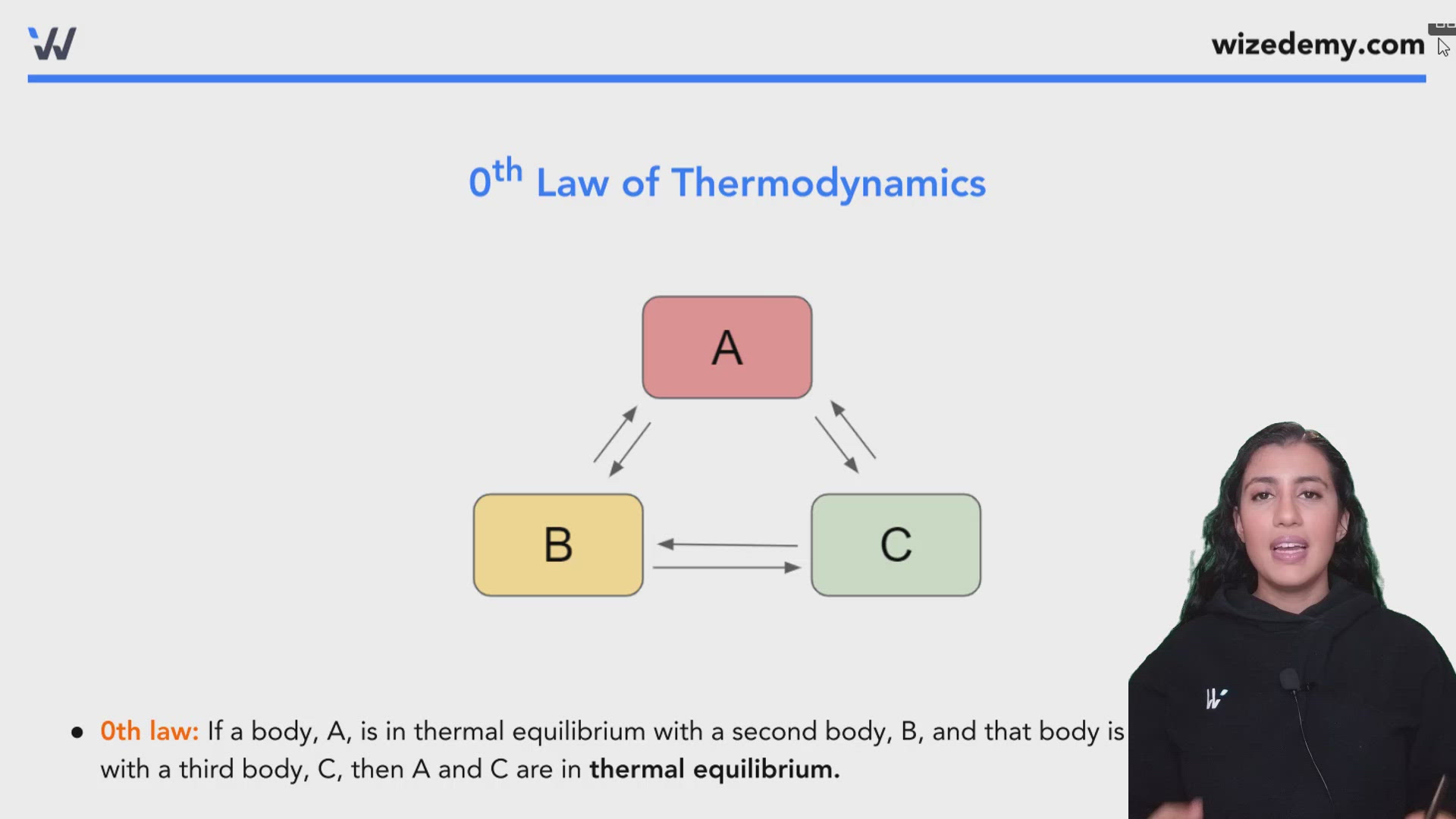
0th Law of Thermodynamics

- 0th law: If a body, A, is in thermal equilibrium with a second body, B, and that body is in thermal equilibrium with a third body, C, then A and C are in thermal equilibrium.
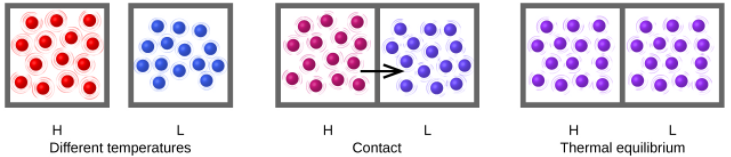
- If two bodies/systems are in thermal equilibrium with one another, it means they are at the same temperature!
What is the difference between thermal equilibrium and temperature?
Thermal equilibrium: When two substances are in physical contact and exchange no heat energy with one another.
Temperature: A measure of the average kinetic energy of the particles in a sample of matter
Increasing the temperature means that average kinetic energy of the particles will (increase/decrease)
increase
.