Fundamental Counting Principle
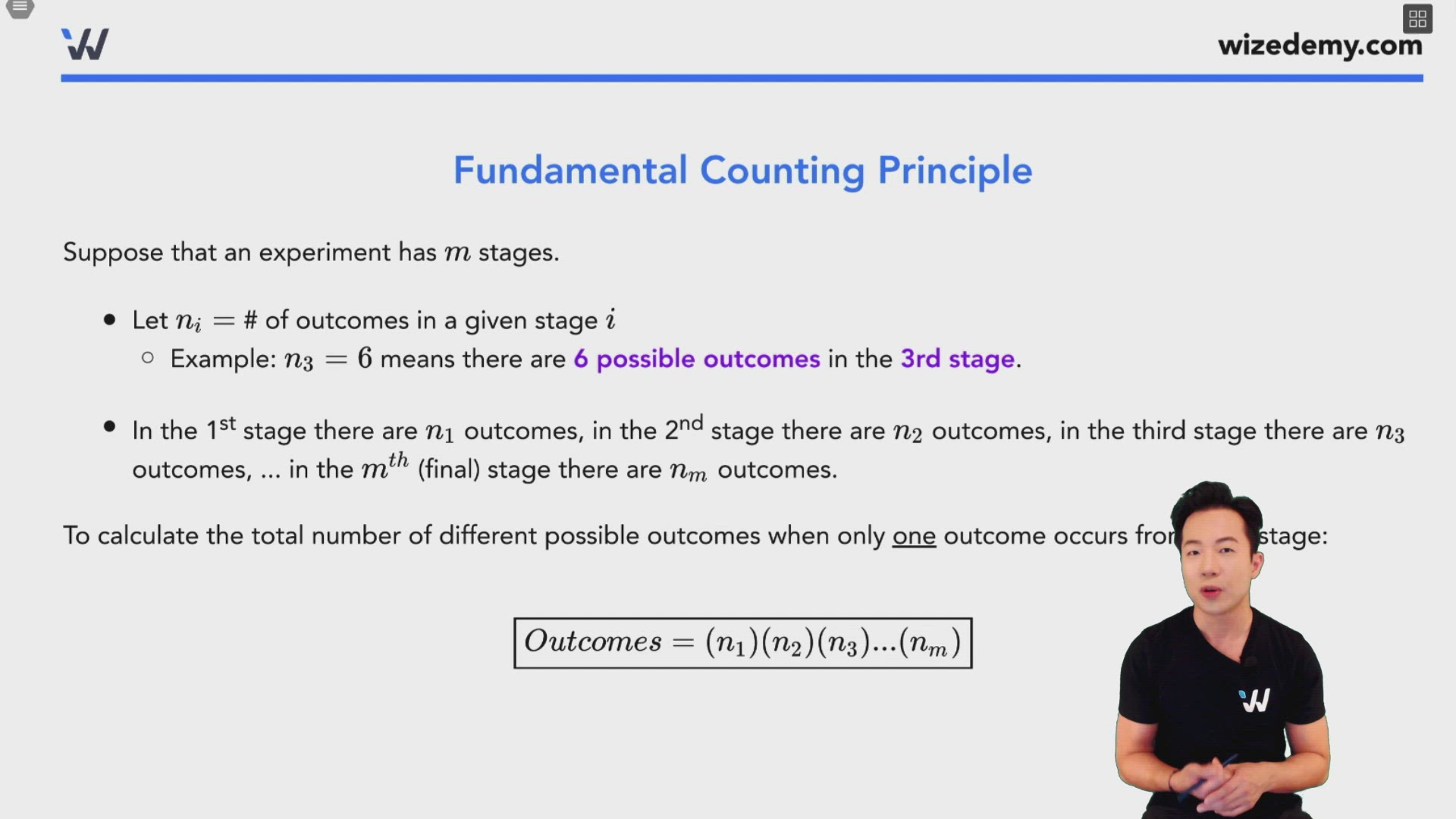
Suppose that an experiment has stages.
- Let # of outcomes in a given stage
- Example: means there are 6 possible outcomes in the 3rd stage.
- In the 1st stage there are outcomes, in the 2nd stage there are outcomes, in the third stage there are outcomes, ... in the (final) stage there are outcomes.
To calculate the total number of different possible outcomes when only one outcome occurs from each stage:
Example #1
Yyvonne is taking her dog to the dog spa. The spa package includes:
- Choose one of: (A) bubble bath or (B) pure rain experience; and
- Choose one of: (1) pawdicure, (2) massage, (3) Reiki
Determine how many possible treatment combos she can select from.
Example #2
For lunch, Jacob can pick:
- Pepsi, Coca-Cola, or Sprite as a drink;
- a chicken or beef burger;
- he has to have fries; and
- one of 4 possible desserts.
Determine how many possible meal combos he can select from.
It is simple to count when you only choose one item from each stage.
Permutations and Combinations
Permutations
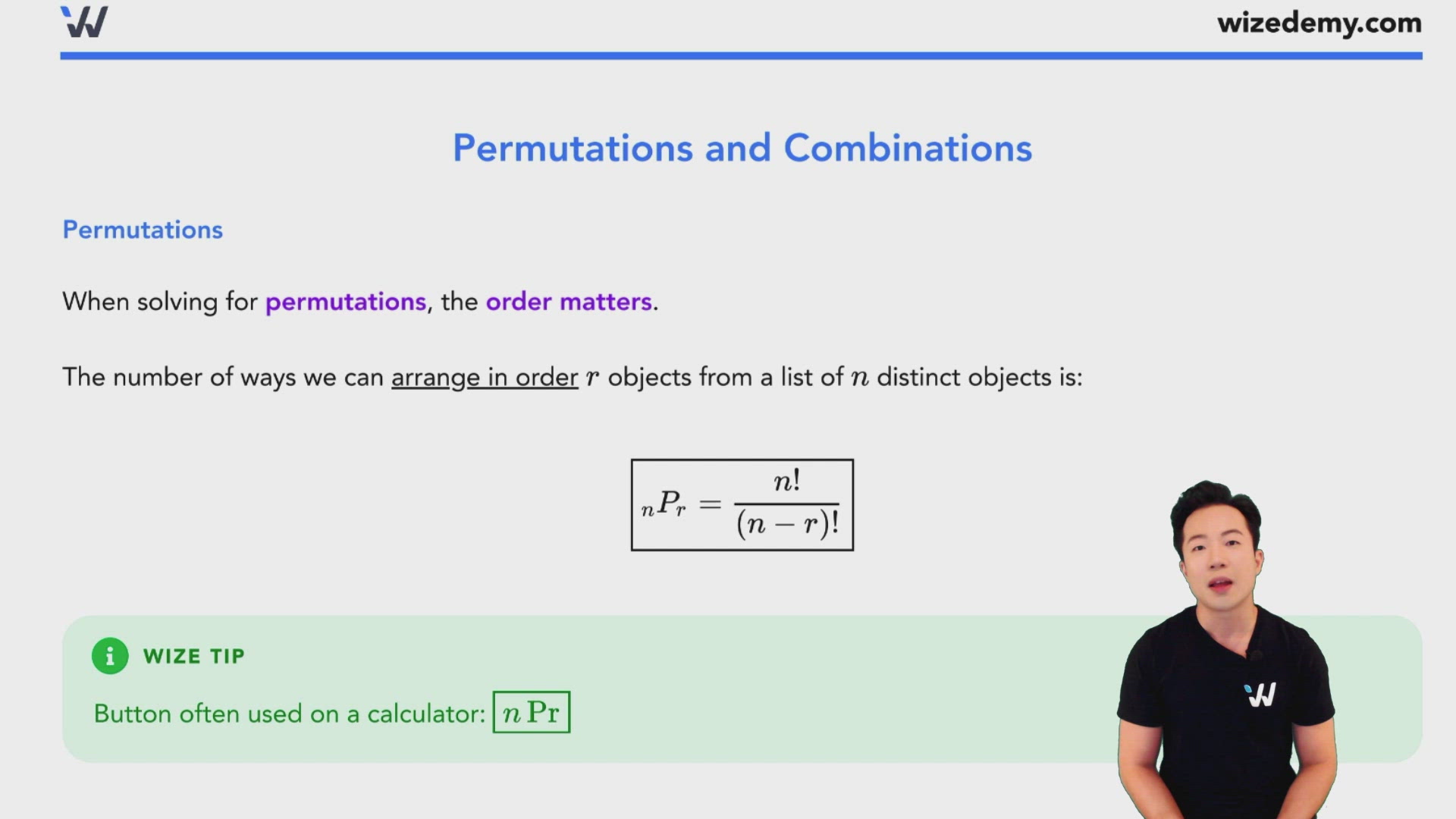
When solving for permutations, the order matters.
The number of ways we can arrange in order objects from a list of distinct objects is:
Example #1
In how many ways can 10 employees fill 3 different shifts (i.e. morning, afternoon, evening)?
Order matters (permutation)
employees
shifts (in a specific order)
Combinations
When solving for combinations, the order does not matter.
The total number of ways to choose objects from a set containing distinct objects is calculated using :
- Unlike permutations, combinations do not care about the order of the items.
- There are fewer combinations than permutations.
if
Example #1
From a group of 10 participants, how many ways can 3 people be selected to participate in a survey?
Order does not matter (combination)
participants to choose from
participants to be chosen
More Combination Rules
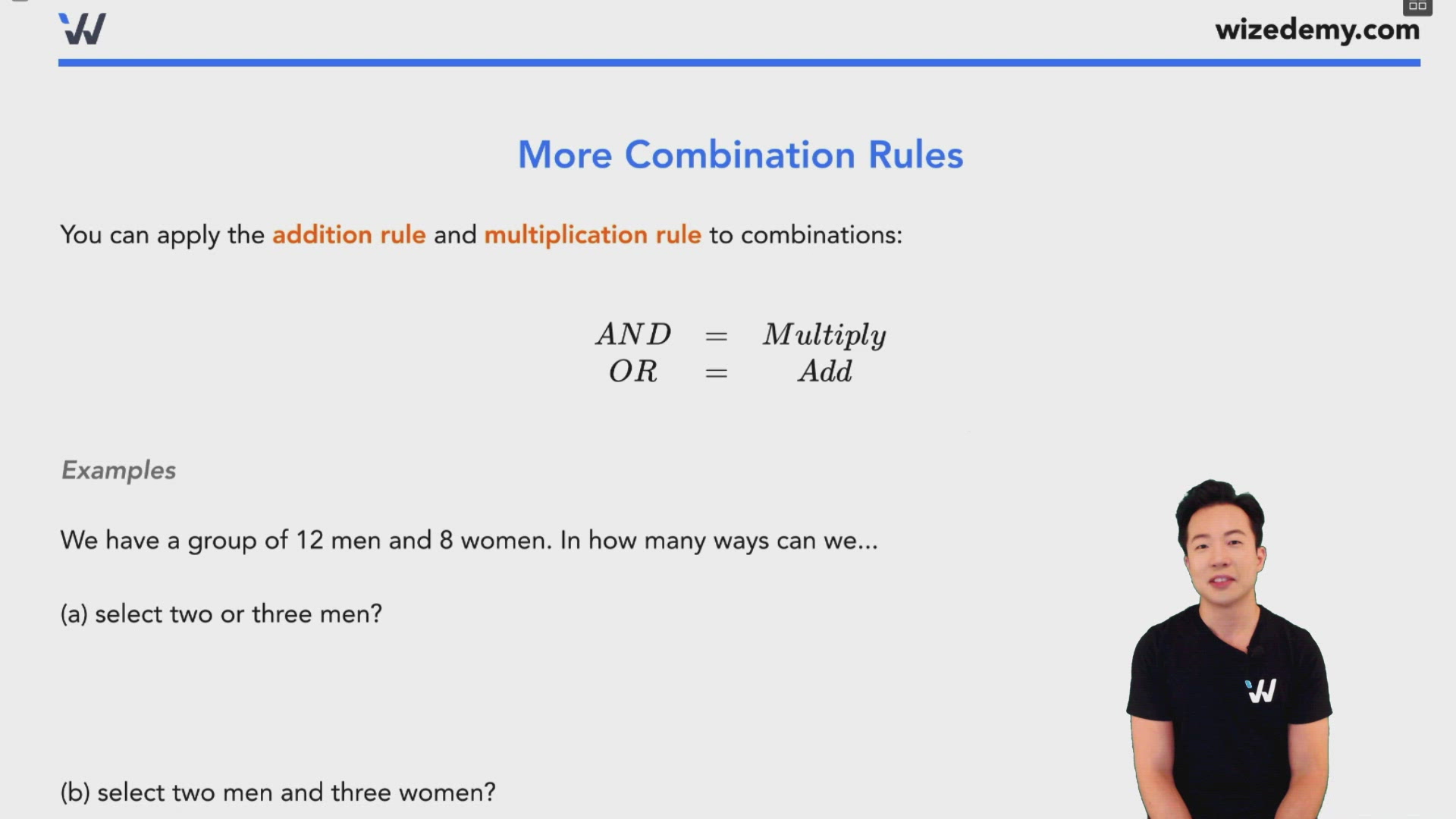
You can apply the addition rule and multiplication rule to combinations:
Examples
We have a group of 12 men and 8 women. In how many ways can we...
(a) select two or three men from a group of men?
(b) select two men from a group of men and three women from a group of women?
(c) select four men from a group of men or one woman from a group of women?
Example: More Combination Rules
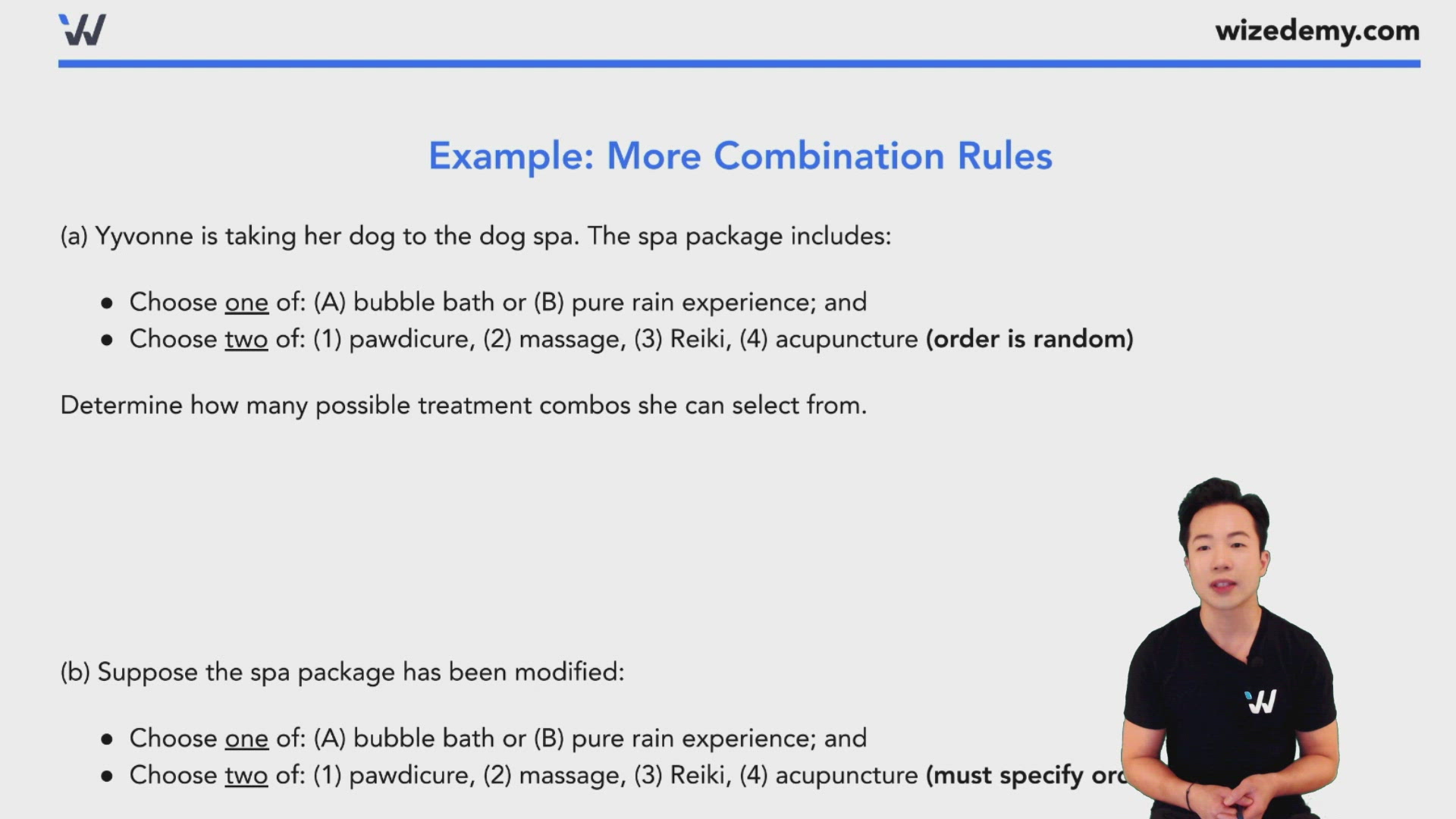
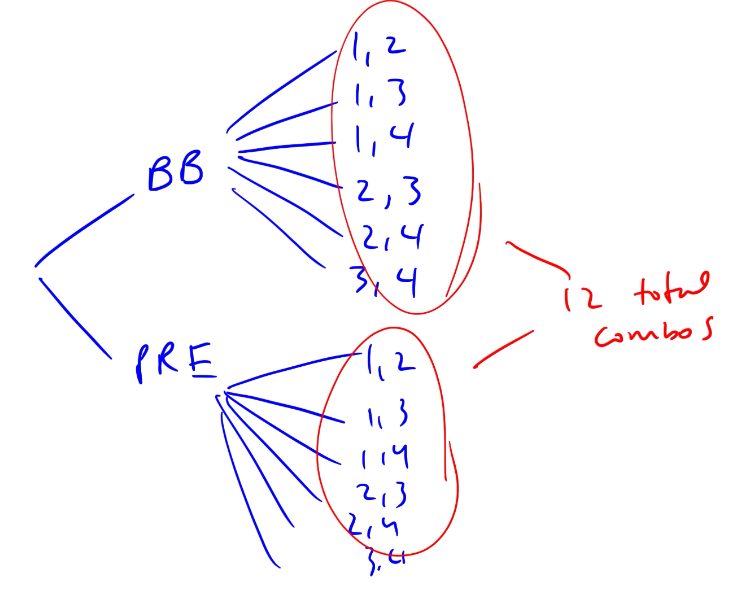
(a) Yyvonne is taking her dog to the dog spa. The spa package includes:
- Choose one of: (A) bubble bath or (B) pure rain experience; and
- Choose two of: (1) pawdicure, (2) massage, (3) Reiki, (4) acupuncture (order is random)
Determine how many possible treatment combos she can select from.
Using a tree diagram could help!
(b) Suppose the spa package has been modified:
- Choose one of: (A) bubble bath or (B) pure rain experience; and
- Choose two of: (1) pawdicure, (2) massage, (3) Reiki, (4) acupuncture (must specify order)
Determine how many possible treatment combos she can select from.