Wize AP Biology Textbook > Mendelian Genetics
Inheritance of X-Linked Traits
Popular Courses
Find My CourseInheritance of X-linked traits
X-linked traits are those that are present on the X chromosome.
X-Linked Recessive
X-linked recessive disorders are more common in males than females. Why?
- Males have only one X chromosome, so if the inherit a recessive trait on the X chromosome, it is impossible for them to also receive the dominant (normal) allele.
- For a female to be affected she would requirebothof her X chromosomes to carry the disease.
- One way to tell if a trait or disease is X-linked, you have a non-proportional number of females and males affected (i.e. way more males).
- Males will never be carriers because they have only one X chromosome so if they have the allele of interest (i.e. diseased), they will always express it. There is no normal allele to compensate.

- Females can be carriers, but are rarely affected.
- Only affected if they are unlucky enough to receive both recessive alleles, one from each parent.
- Or if they are carriers and their normal X chromosome is inactivated.
- Two non-affected parents can yield an affected male.
- Why? Non-affected father = normal X chromosome.
- Non-affected mother = 1 normal X chromosome, 1 diseased chromosome (carrier).
- Only boys can be affected because for girls to be affected the father must have had the disease.
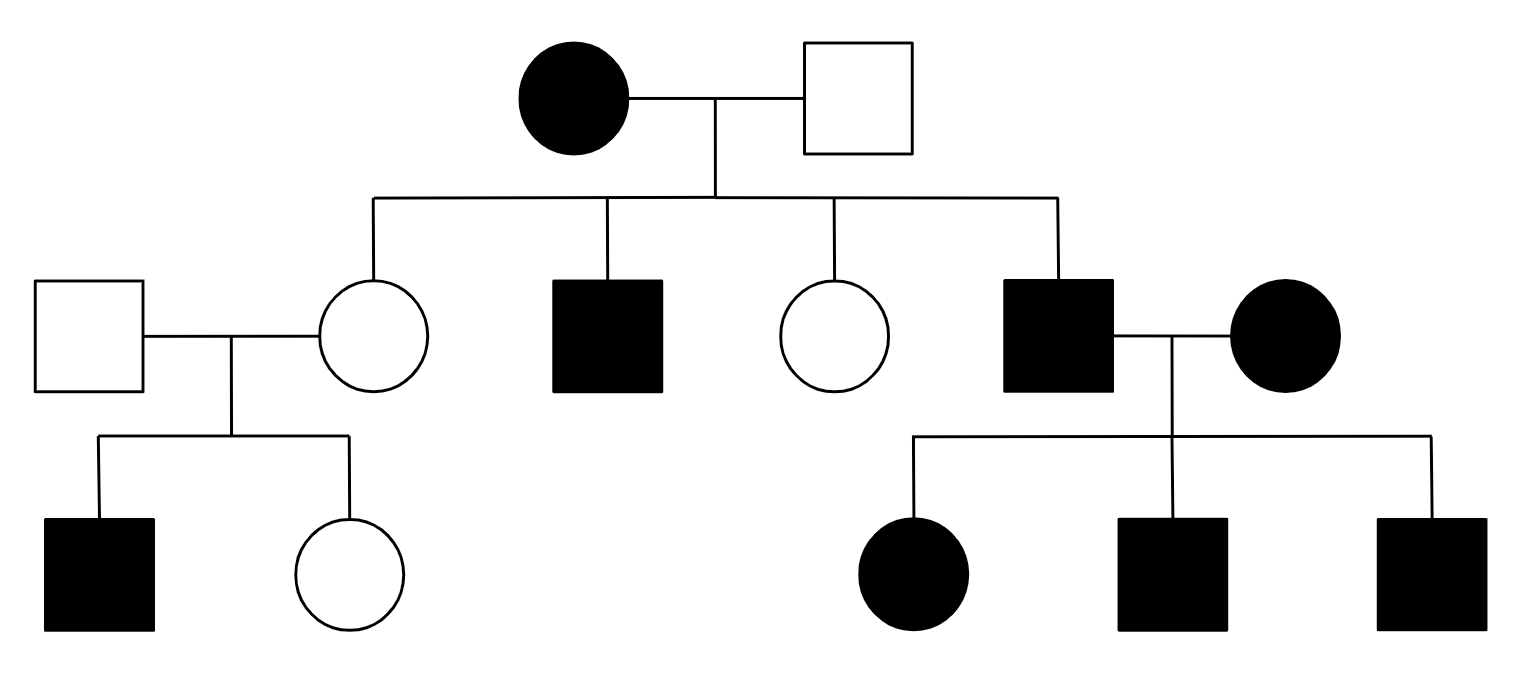
X-linked Dominant
- Highly prevalent in the family. The condition occurs twice as frequently in females as in males.
- No carriers.
- If father is affected, all daughters will have it, but never a son.
- An affected woman passes the condition to half her sons and half her daughters.
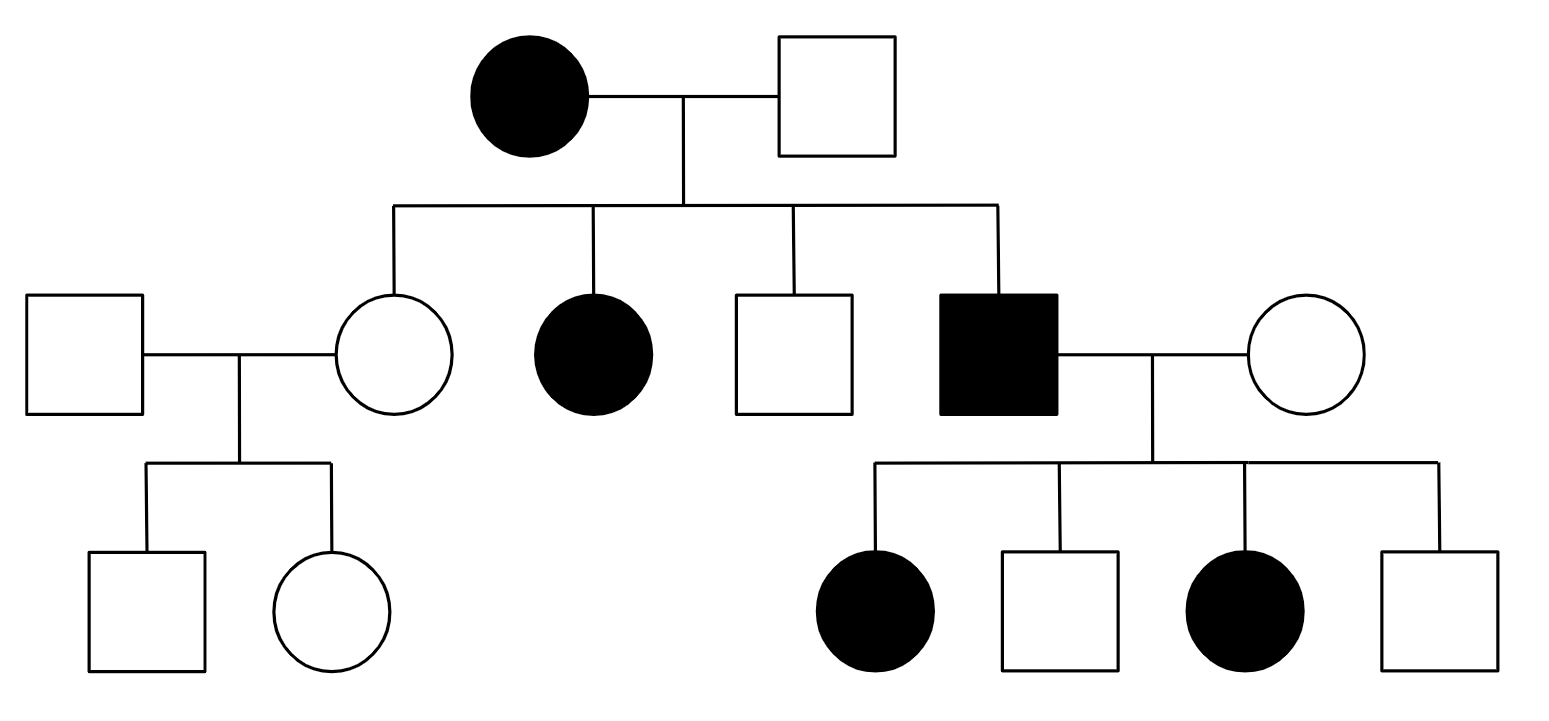
0:00 / 0:00
Example: X-Linked Recessive
Hemophilia, a blood clotting disorder, is a sex-linked gene where the disease phenotype is only in homozygotes. A normal man and a woman, who shows a normal phenotype but had a hemophiliac father, want to have children. Draw all the possible gametes from both the father and the mother, and determine the possible genotypes of their potential offspring.

If you were to draw the Punnet square: ¼ of offspring (or 25% chance) are hemophiliac
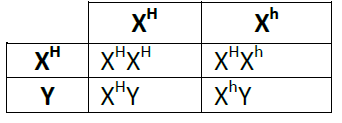
Example: X-Linked Recessive
A young man experiences severe intolerance to certain medications. His family pedigree with respect to this condition is shown below, with the red arrow indicating his position within the family. Assume that this condition demonstrates complete penetrance and is rare in the general population. This condition most likely exhibits which of the following inheritance patterns?
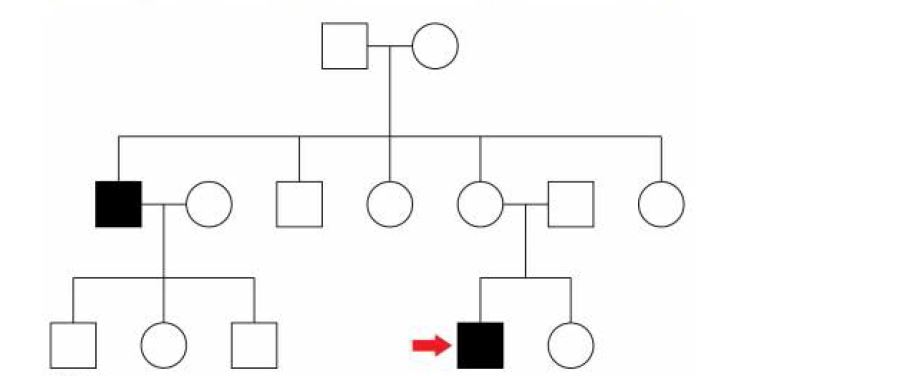
A) Autosomal Dominant Disease
B) Autosomal Recessive Disease
C) X-linked Dominant Disease
D) X-linked Recessive Disease
E) Mitochondrial disease
The pedigree shows that only males are affected by the drug intolerance. Specifically, male offspring of unaffected parents are affected. There is no evidence of male-to-male transmission. This pattern is most consistent with X-linked recessive inheritance from an asymptomatic carrier female in the first generation. In X-linked recessive inheritance:
1. Affected males will always produce unaffected sons and carrier daughters.
2. Carrier females have a 50% chance of producing an affected son or carrier daughter. Therefore, the answer is d.

X-linked Dominant.
Notice that males and females are affected equally.
Affected males always pass it on to their daughters.
Affected females can pass it on to both daughters and sons equally.