Wize AP Biology Textbook > Transcription and Translation
Translation into Proteins

0:00 / 0:00
Translation into Proteins
Recall that translation of mRNA into proteins is done by a cellular organelle called the ribosome.
- The ribosome is composed of a small subunit and a large subunit made from rRNA and proteins.
- The ribosome contains three sites:
- A (aminoacyl) site: the acceptor site for an aminoacyl-tRNA.
- P (peptidyl) site: the site where the peptide bond forms between the amino acid and the growing polypeptide chain.
- E (exit) site: the site where the tRNAs exit the ribosome.
- Translation occurs in three steps: (1) initiation, (2) elongation, and (3) termination.
Initiation
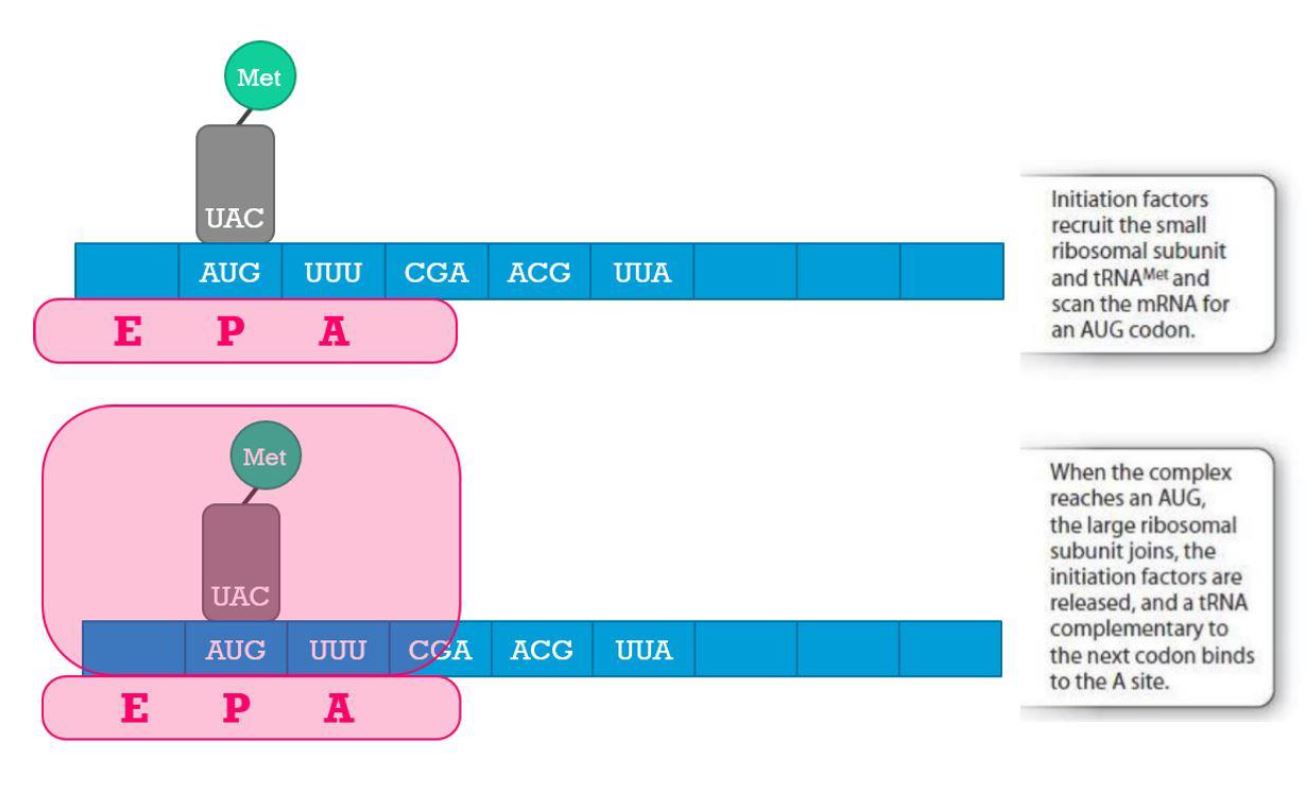
- When the mRNA enters the cytosol, the 5' end of the mRNA binds to the small subunit of the ribosome.
- A tRNA carrying the amino acid methionine arrives at the P site (peptidyl site) of the ribosome and binds to the start codon (AUG).
- Next, the large subunit binds and completes the initiation complex.
Elongation
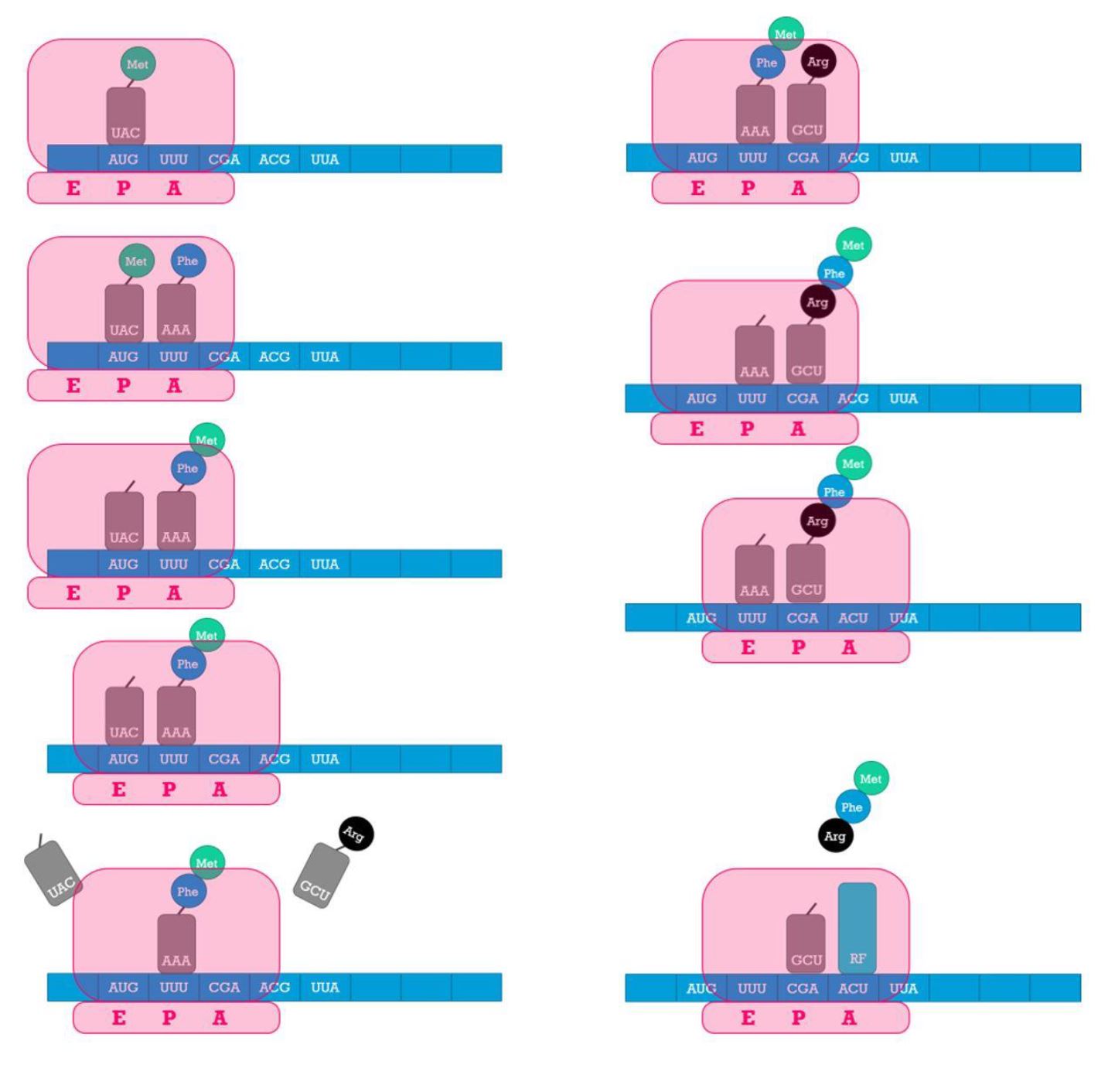
- A tRNA for the next codon attaches to the A site (aminoacyl site). The carboxyl end (C-terminus) of the methionine forms a peptide bond with the amine end (N-terminus) of the amino acid at the A site (catalyzed by peptidyl transferase).
- The ribosome shifts three nucleotides toward the 3' end of the mRNA in a step called translocation, shifting the tRNA that held the methionine to the E site (exit site), and the tRNA carrying the dipeptide moves from the A site to the P site.
- The A site is now available for another tRNA.
Termination
When a stop codon is reached, release factor proteins bind to the A site, releasing the polypeptide from the tRNA and ribosome.

0:00 / 0:00
Differences in Eukaryotic and Prokaryotic Translation
Differences
- Ribosomes
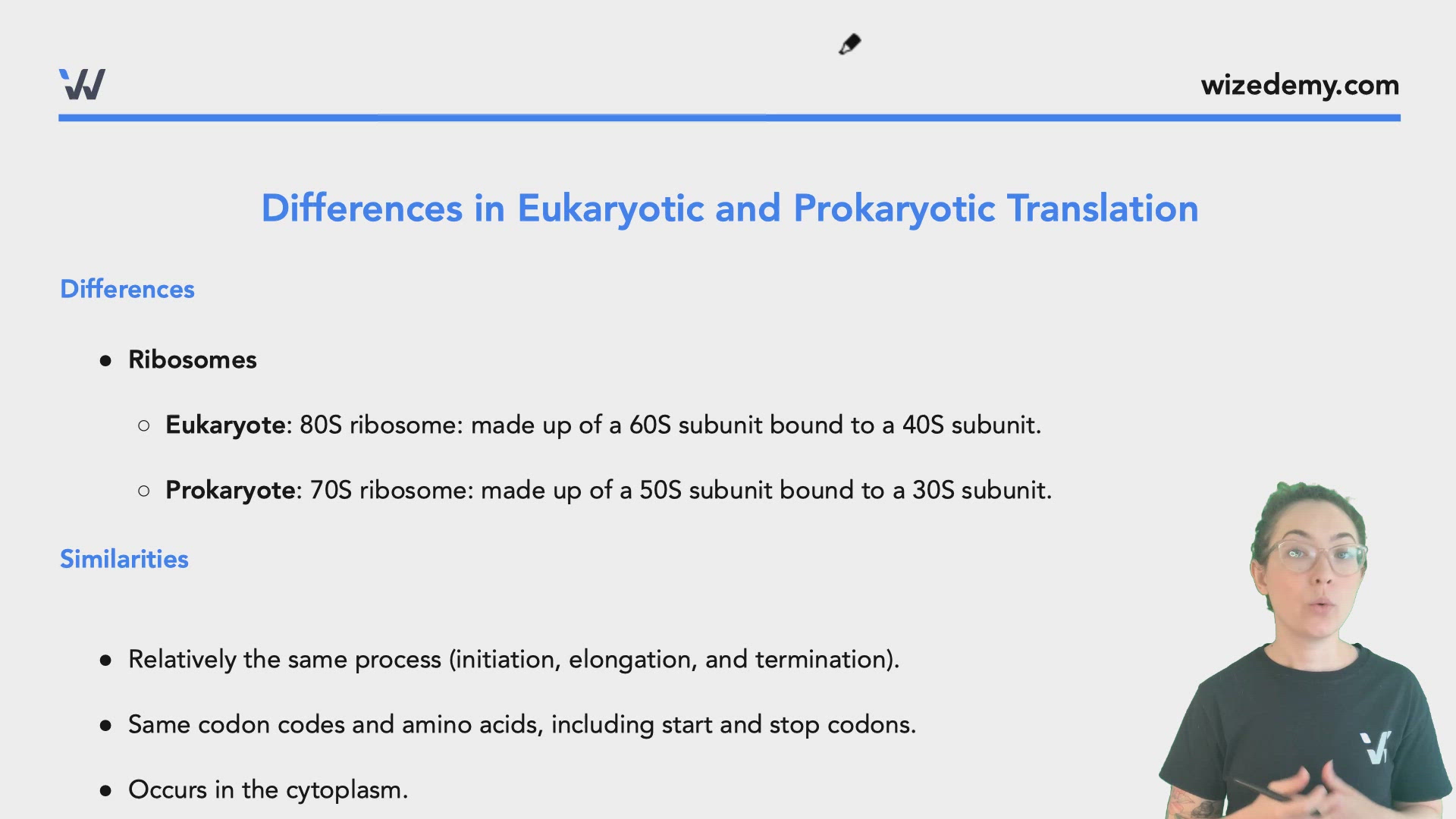
- Eukaryote: 80S ribosome: made up of a 60S subunit bound to a 40S subunit.
- Prokaryote: 70S ribosome: made up of a 50S subunit bound to a 30S subunit.
Similarities
- Relatively the same process (initiation, elongation, and termination).
- Same codon codes and amino acids, including start and stop codons.
- Occurs in the cytoplasm.
- Involves ribosomes, rRNA and tRNA.

0:00 / 0:00
Example: Translation and Reading Frame
Given the following sequence, translate the three possible reading frames assuming the first reading frame starts with the first A, the second reading frame starts with the first G and the third reading frame starts with the first U.
AGU UCC CGU AUC AAG GCC CGA

Reading frame 1 (starting with AGU): Ser-Ser-Arg-Ile-Lys-Ala-Arg
Reading frame 2 (starting with GUU): Val-Pro-Val-Ser-Arg-Pro
Reading frame 3: (starting with UUC): Phe-Pro-Tyr-Gln-Gly-Pro
Example: Transcription
The DNA strand of a hypothetical genome is shown below. Transcription begins at the Transcription Start Site (TSS) after the promoter and proceeds in the direction of the arrow. Transcription stops at the end of the Transcription Terminator.
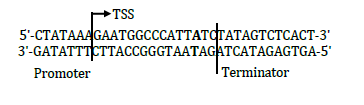
a) Which strand of DNA shown, the top or bottom, is the coding strand?
Top strand (coding = non-template). DNA is read 3’ to 5’ so the bottom is the template.
b) What is the sequence of the mRNA produced from this gene? Label the 5' and 3' ends.
5’ – GAAUGGCCCAUUAUCUAUAGUCUCACU – 3’
c) What is the sequence of the protein produced from the mRNA which is produced from this gene
Label the N and C terminals.
N – methionine-alanine-histidine-tyrosine-leucine– C
d) If a mutation is found where a G/C (top/bottom) base pair were added immediately after the T/A base
pair in bold, what would be the sequence of the mRNA? What would be the sequence of the protein?
5’ – GAAUGGCCCAUUAGUCUAUAGUCUCACU – 3’
N – methionine-alanine-histidine- C
Transcription vs Translation Chart

Summary of Prokaryotic and Eukaryotic Gene Expression
Where do proteins bind to nucleotide sequences?

Where do DNA/RNA sequences base pair to other DNA/RNA sequences?
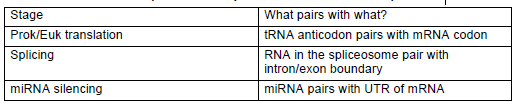
Comparing prokaryotic and eukaryotic gene expression
