Wize University Biology Textbook > Cell Structure
Connections between Cells and their Environment
Popular Courses
MCAT
General Course
AP Biology Exam Prep Course
AP Exam Prep
Biology
General Course
General Biology
University Study Guides
BIOL 107
University of Alberta
BIOL 102
Queen's University
Grade 12 Biology
Canada High School
DAT
General Course
High School Biology
US High School
General Biology
University Study Guides
BIOL 130
University of Waterloo
SC/BIOL 1000 3.00
York University
BIOL 200
University of British Columbia
BIO 1141
University of Ottawa
BLG 143
Toronto Metropolitan University
BIOL 112
McGill University
BIOL 186
University of Victoria
BIOL 1010
Dalhousie University
BIOL-1101
University of Windsor
BIO230H1
University of Toronto

0:00 / 0:00
The Extracellular Matrix
Animal cells synthesize an extracellular matrix (ECM) on the outside of the cell membrane. The ECM is composed of proteins and carbohydrates:
- The protein collagen forms long collagen fibers;
- These collagen fibers are modified with carbohydrates and interwoven with proteoglycan;
- Proteoglycan is a protein heavily modified with carbohydrates and form branched proteoglycan complexes.
- ECM components attach to membrane proteins called integrins and also connects to surrounding cells.
- The ECM provides strength and structure to tissues.

0:00 / 0:00
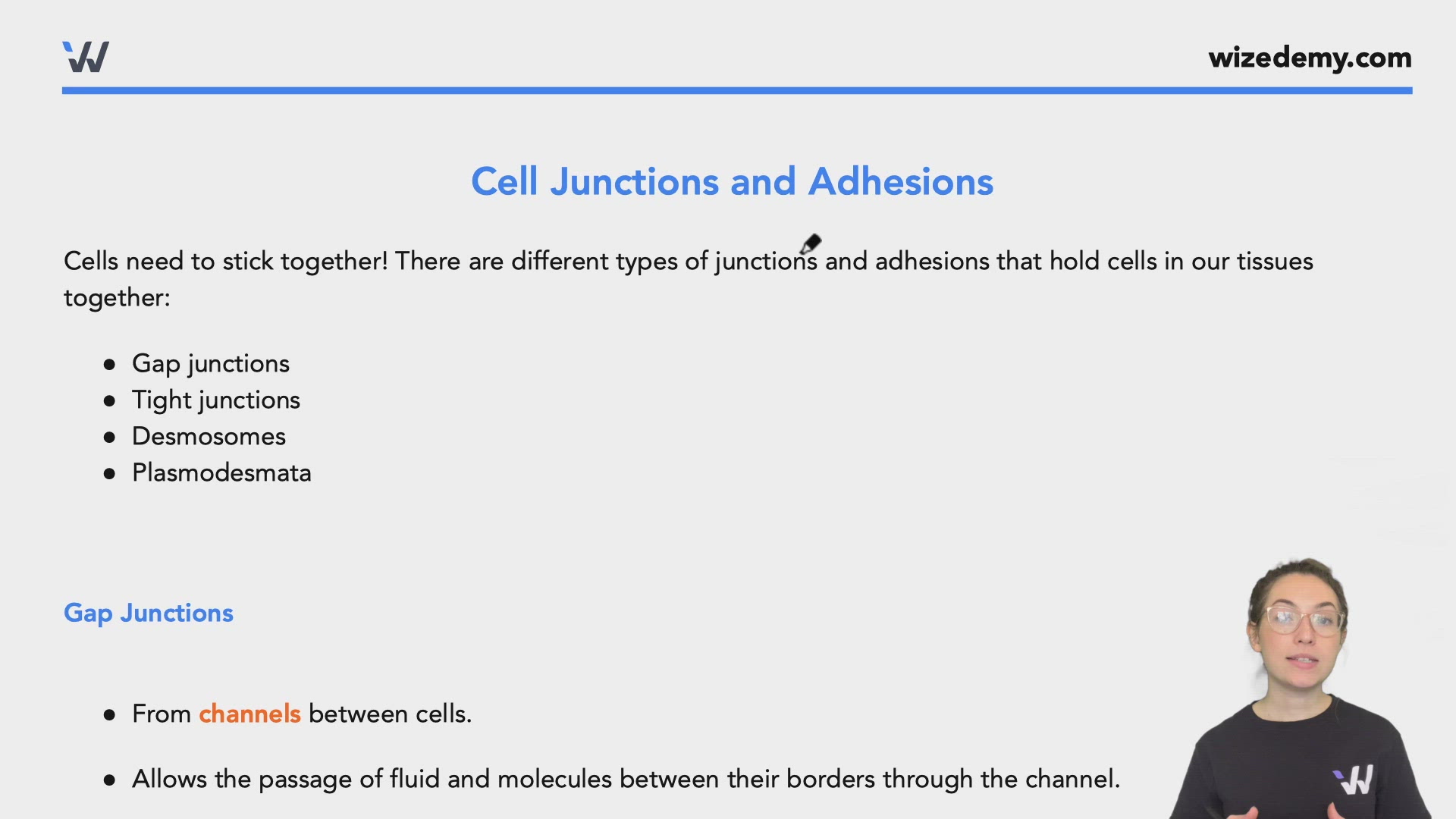
Cell Junctions and Adhesions
Cells need to stick together! There are different types of junctions and adhesions that hold cells in our tissues together:
- Gap junctions
- Tight junctions
- Desmosomes
- Plasmodesmata
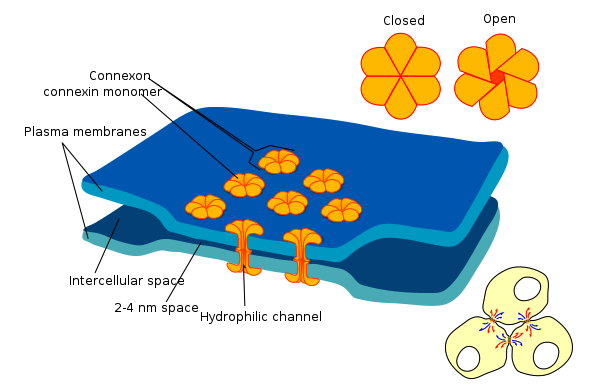
Gap Junctions
- From channels between cells.
- Allows the passage of fluid and molecules between their borders through the channel.
- The channels are called connexons and each one is composed of six connexin proteins.
Tight Junctions
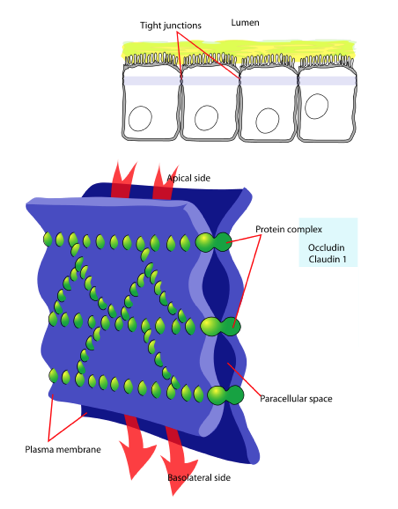
- Form a tight seal between cells, preventing the passage of fluids and molecules between their border.
- Cells are held together by tight junction proteins.
- Main proteins are claudins and occludins.
Desmosomes
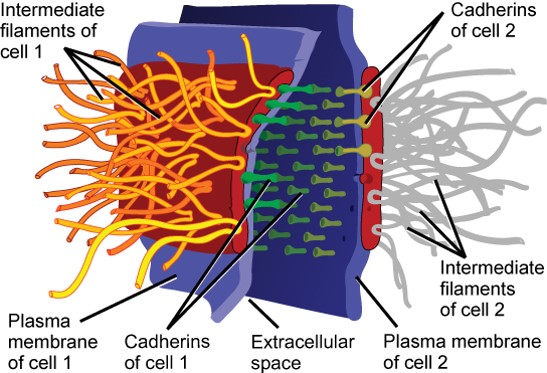
- Form links between cells (not water tight) and give strength to tissues.
- Cadherins are proteins located on the cell membrane.
- They connect with intermediate filaments on the inside of the cells and with other cadherins on the neighbor cell.
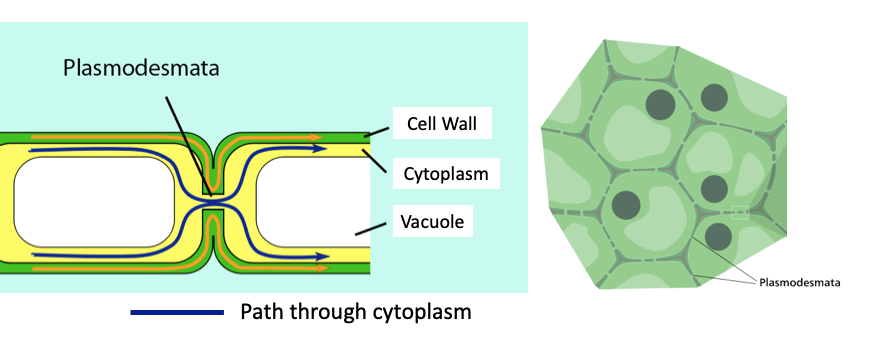
Plasmodesmata
- Neighboring plant cells are separated by two thick cell walls and the middle lamellae.
- Plasmodesma is a channel between the cell walls of two plant cells adjacent to each other.
- Allows for the sharing of cytoplasm between plant cells.
Practice: Extracellular Matrix
The extracellular matrix consists of all of the following EXCEPT...
Practice: Type of Cell Junction
Which of the types of cell junctions allow passage of cellular contents from one cell to another?
Practice: Gap Junctions
Where can you expect to find gap junctions and are ions permeable through them?