Wize University Biology Textbook > Cell Structure
Motor Proteins: Cilia and Flagella
Popular Courses
MCAT
General Course
AP Biology Exam Prep Course
AP Exam Prep
Biology
General Course
General Biology
University Study Guides
BIOL 107
University of Alberta
BIOL 102
Queen's University
DAT
General Course
Grade 12 Biology
Canada High School
High School Biology
US High School
BIOL*1090
University of Guelph
General Biology
University Study Guides
BIOL 130
University of Waterloo
SC/BIOL 1000 3.00
York University
BIO 1141
University of Ottawa
BLG 143
Toronto Metropolitan University
BIOL 112
McGill University
BIOL 186
University of Victoria
BIO230H1
University of Toronto
BIOL 1201
Western University
BISC 101
Simon Fraser University

0:00 / 0:00
Motor Proteins
Motor proteins are a class of proteins capable of moving along a surface. In the cell, motor proteins move along components of the cytoskeleton and transport cellular components throughout the cytoplasm. The energy for their movement comes from ATP. Examples:
- Kinesin: moves along microtubules in the (+) direction.
- Myosin: moves along actin filaments.
- Dynein: moves along microtubules in the (-) direction.
The Three Types of Movement
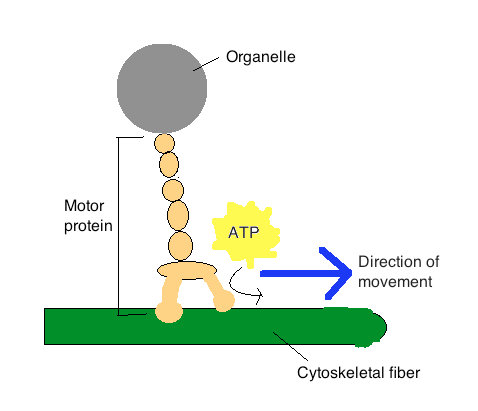
1. Motor proteins "walk" along the cytoskeleton transporting cargo
- Head proteins attach to the cytoskeleton;
- Tail proteins attach to the cargo;
- The head proteins alternate attaching and detaching from the cytoskeleton, taking "steps" forward every time they re-attach.
2. Motor proteins cause a filament to move
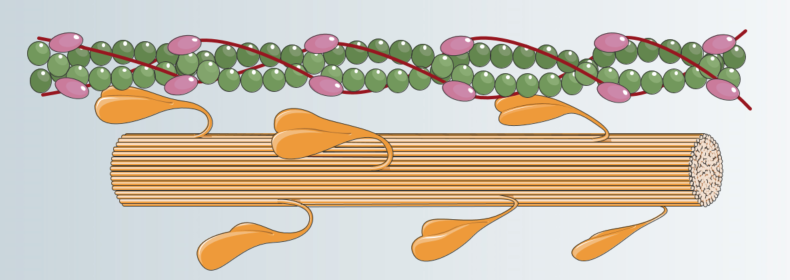
- Head proteins attach to a filament (e.g. actin filament);
- Tail proteins are anchored to a surface;
- As the head proteins carry out "walking motion", the tail remains anchored. The head proteins therefore push the filament along, causing it to move.
3. Motor proteins cause a "bend"
- Tails attached to one microtubule;
- Heads attached to another microtubule;
- The two microtubules are held together by a linking protein;
- As the heads carry out their "walking" motion, it causes a bend to form.
0:00 / 0:00
Cilia & Flagella
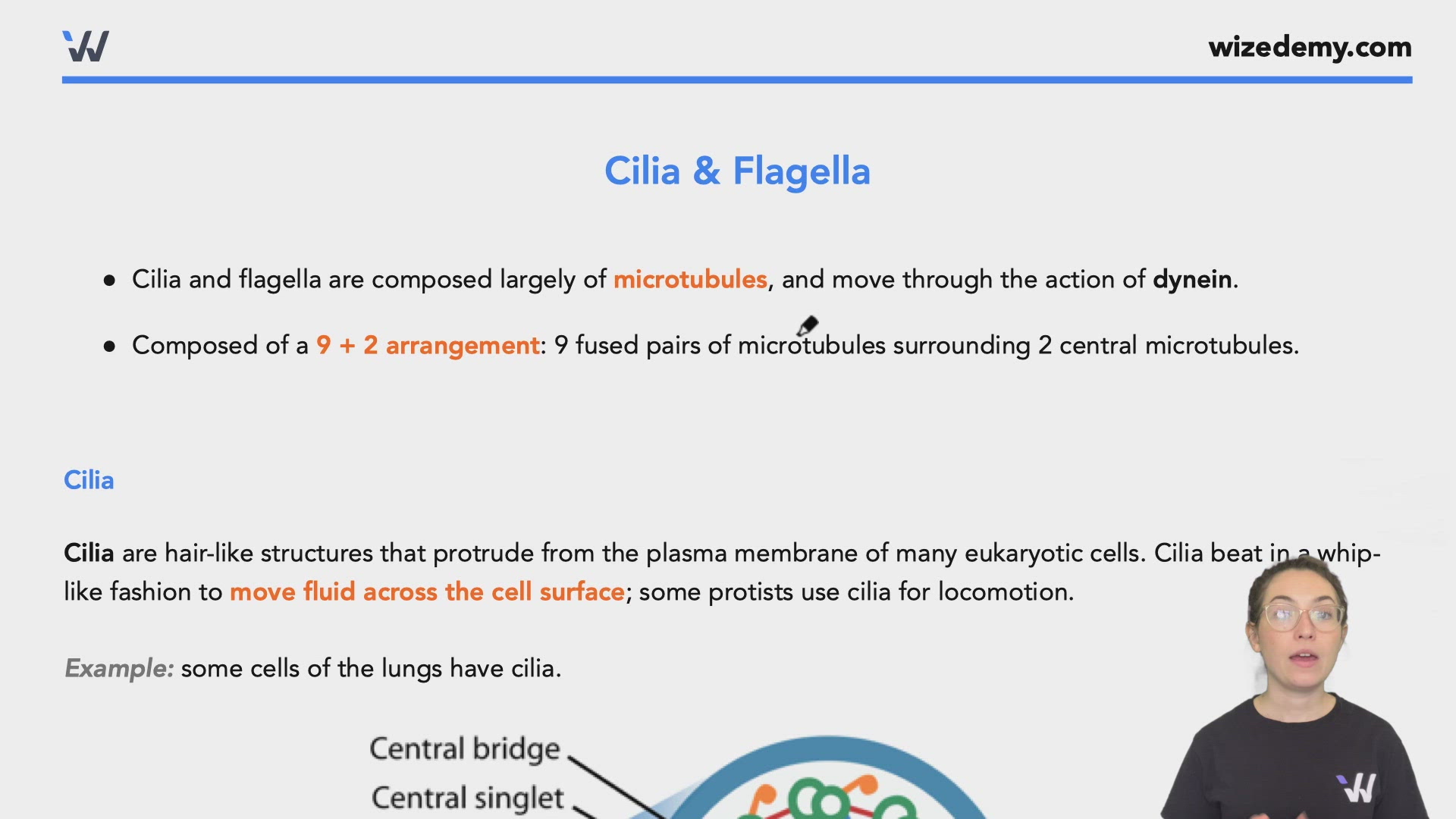
- Cilia and flagella are composed largely of microtubules, and move through the action of dynein.
- Composed of a 9 + 2 arrangement: 9 fused pairs of microtubules surrounding 2 central microtubules.
Cilia
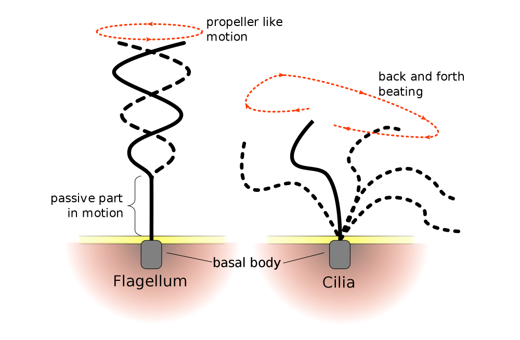
Cilia are hair-like structures that protrude from the plasma membrane of many eukaryotic cells. Cilia beat in a whip-like fashion to move fluid across the cell surface; some protists use cilia for locomotion.
Example: some cells of the lungs have cilia.

Flagella
Flagella are similar in structure to cilia, but longer; their main role is in locomotion.
Practice: Dyneins and Kinesins
Dyneins and kinesins are associated with which component of the cytoskeleton?
Practice: Cilia and Flagella
What type of proteins make up flagella and cilia?