Wize University Biology Textbook > The Plasma Membrane
Components and Structure
Popular Courses
MCAT
General Course
AP Biology Exam Prep Course
AP Exam Prep
Biology
General Course
General Biology
University Study Guides
BIOLOGY 1002B
Western University
BIOL 211
University of Calgary
BIOL 107
University of Alberta
BIOL 102
Queen's University
BIOL 112
University of British Columbia
Grade 12 Biology
Canada High School
DAT
General Course
High School Biology
US High School
BIOL*1090
University of Guelph
General Biology
University Study Guides
BIOL 130
University of Waterloo
SC/BIOL 1000 3.00
York University
BIOL 200
University of British Columbia
BIO 1141
University of Ottawa
BLG 143
Toronto Metropolitan University
BIOL 112
McGill University
0:00 / 0:00
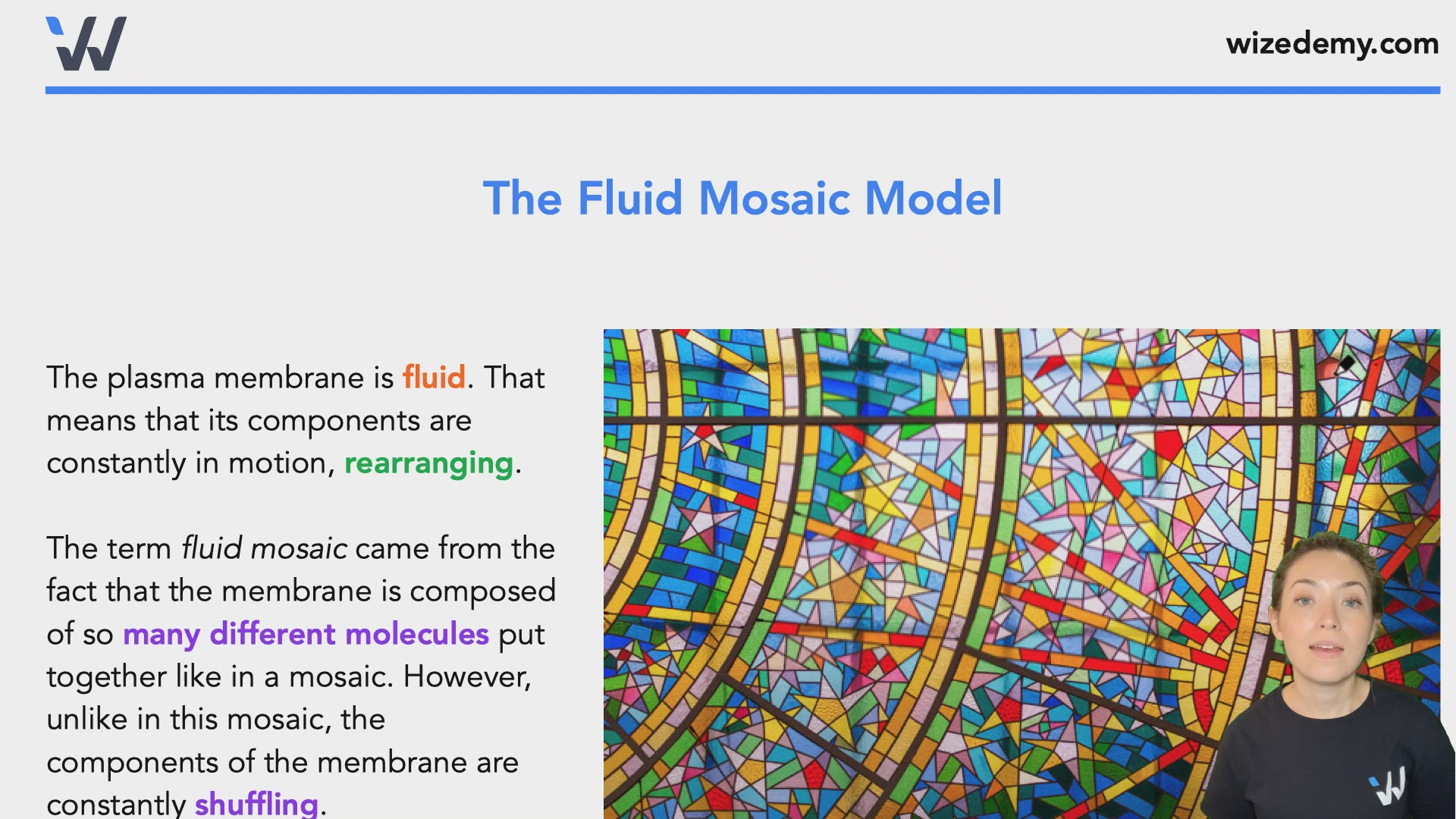
The Fluid Mosaic Model

The plasma membrane is fluid. That means that its components are constantly in motion, rearranging.
The term fluid mosaic came from the fact that the membrane is composed of so many different molecules put together like in a mosaic. However, unlike in this mosaic, the components of the membrane are constantly shuffling.
Components of the Cell Membrane
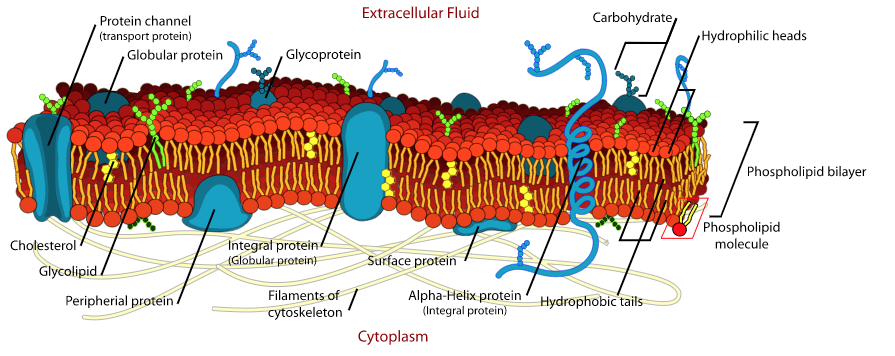
The cell membrane forms the barrier between the inside and outside of the cell. It is composed of a phospholipid bilayer and many other proteins, glycolipids and cholesterol.
- The phosphate head groups of the phospholipids are hydrophilic and face the aqueous environment inside and outside the cell.
- The lipid tails are hydrophobic and face one another, away from the aqueous environment.
- Cholesterol is another lipid found in cell membranes.
- Glycoproteins are proteins modified with carbohydrates (prefix "glyco-" refers to sugars). Sometimes, the carbohydrates are attached directly to the lipids: these are glycolipids.
- These carbohydrates are always facing the outside of the cell, forming the glycocalix.
Membrane Proteins
- Proteins can be part of the membrane itself (integral) or only be on the outer edges of the lipid bilayer (peripheral).
- Integral proteins go through the lipid bilayer (transmembrane portion is not charged);
- Peripheral proteins can be located on the cell interior or exterior by associating with integral proteins or phospholipids.
- These proteins have many important functions, which include:
- Catalyzing reactions (enzymes);
- Transporting molecules through the lipid bilayer;
- Receptors for signaling between internal and external environment;
- Anchor internal structures to the cell membrane;
- Attach adjacent cells to one another;
- Serve as a marker for cell identification.
0:00 / 0:00
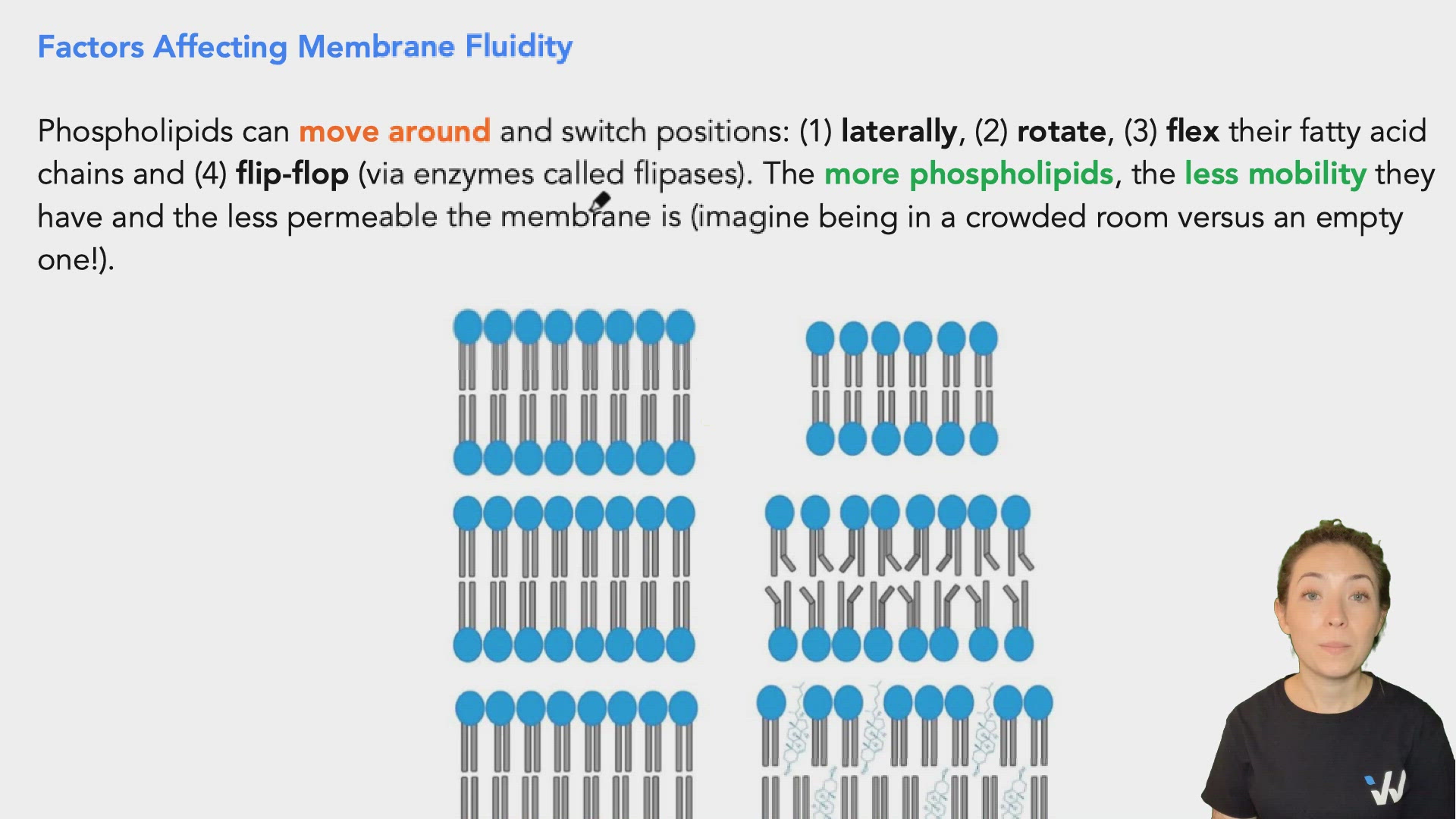
Factors Affecting Membrane Fluidity
Phospholipids can move around and switch positions: (1) laterally, (2) rotate, (3) flex their fatty acid chains and (4) flip-flop (via enzymes called flipases). The more phospholipids, the less mobility they have and the less permeable the membrane is (imagine being in a crowded room versus an empty one!).

Some of the factors affecting the degree of membrane fluidity are:
- Temperature: at higher temperatures, the membrane has more fluidity than at lower temperatures.
- Tail length: longer fatty acid tails allow for more intermolecular interactions between phospholipids, leading to less fluidity.
- Degree of unsaturation: Unsaturated fatty acids have one or more double bonds in the fatty acid tails. Double bonds lead to a "bend", pushing the adjacent phospholipids further apart. The increased spacing reduces the number of intermolecular interactions and increases fluidity.
- Cholesterol: the presence of cholesterol in the phospholipid bilayer affects fluidity depending on the temperature; it acts as a buffer:
- High temperature: cholesterol decreases fluidity.
- Low temperature: cholesterol increases fluidity.
Practice: Membrane Fluidity
Which of the following cell processes depend on the movement of membrane components and would probably not be possible if membranes were rigid, nonfluid structures?
Practice: Membrane Protein Functions
Cellular membrane proteins can:
A. Directly alter gene expression
B. Serve as transporters
C. Signal the cell regarding activity in the extracellular environment
D. Perform translation of mRNA into protein
Practice: Cholesterol
Cholesterol: