Popular Courses
MCAT
General Course
AP Biology Exam Prep Course
AP Exam Prep
Biology
General Course
General Biology
University Study Guides
BIOLOGY 1002B
Western University
BIOL 211
University of Calgary
BIOL 102
Queen's University
BIOL 112
University of British Columbia
Grade 12 Biology
Canada High School
High School Biology
US High School
DAT
General Course
BIOL 200
McGill University
General Biology
University Study Guides
BIOL 130
University of Waterloo
SC/BIOL 1000 3.00
York University
BIO 1141
University of Ottawa
BLG 143
Toronto Metropolitan University
BIOL 112
McGill University
BIOL 186
University of Victoria
BIOL-1101
University of Windsor
0:00 / 0:00
Enzymes
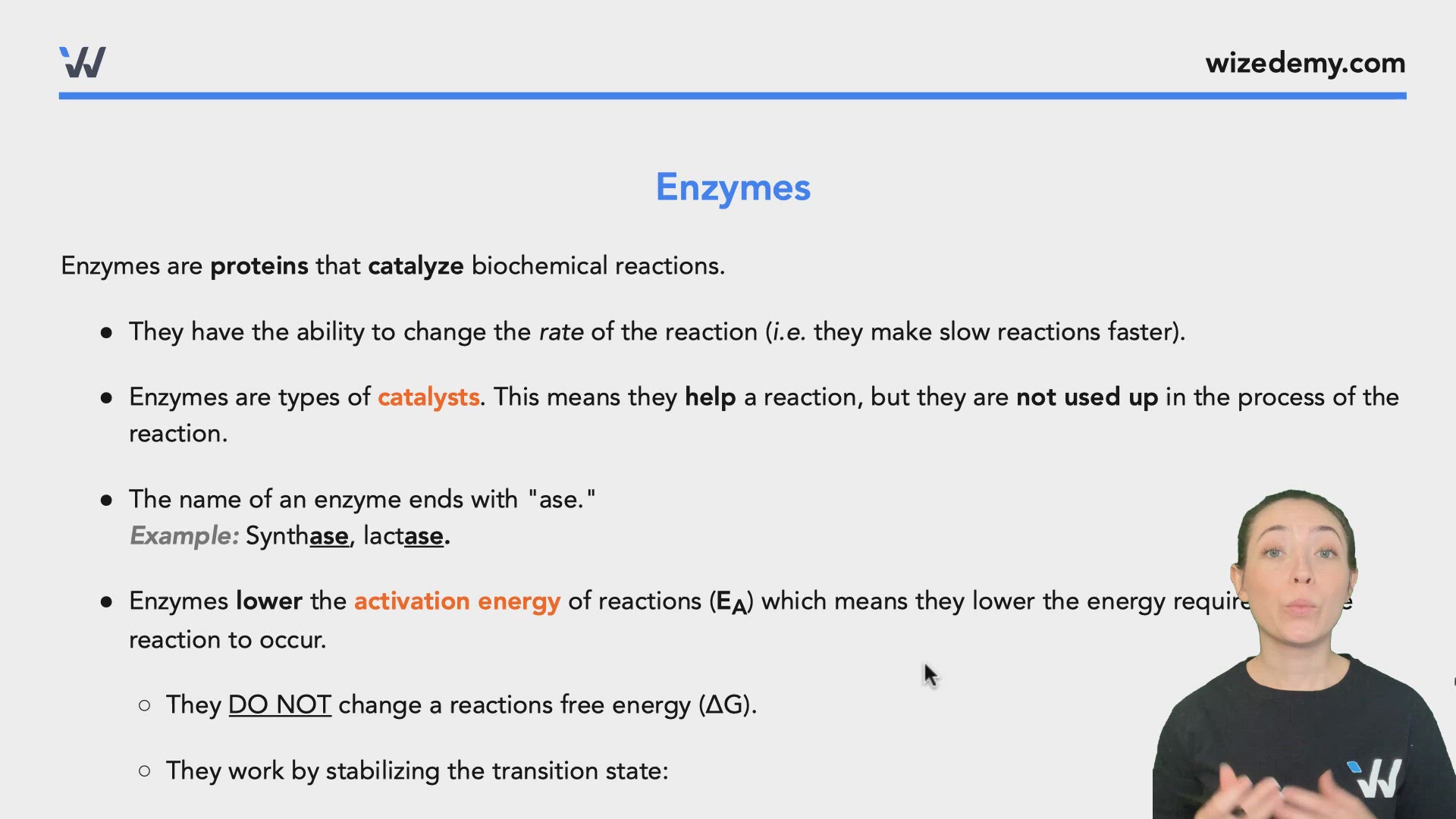
Enzymes are proteins that catalyze biochemical reactions.
- They have the ability to change the rate of the reaction (i.e. they make slow reactions faster).
- Enzymes are types of catalysts. This means they help a reaction, but they are not used up in the process of the reaction.
- The name of an enzyme ends with "ase." Example: Synthase, lactase.
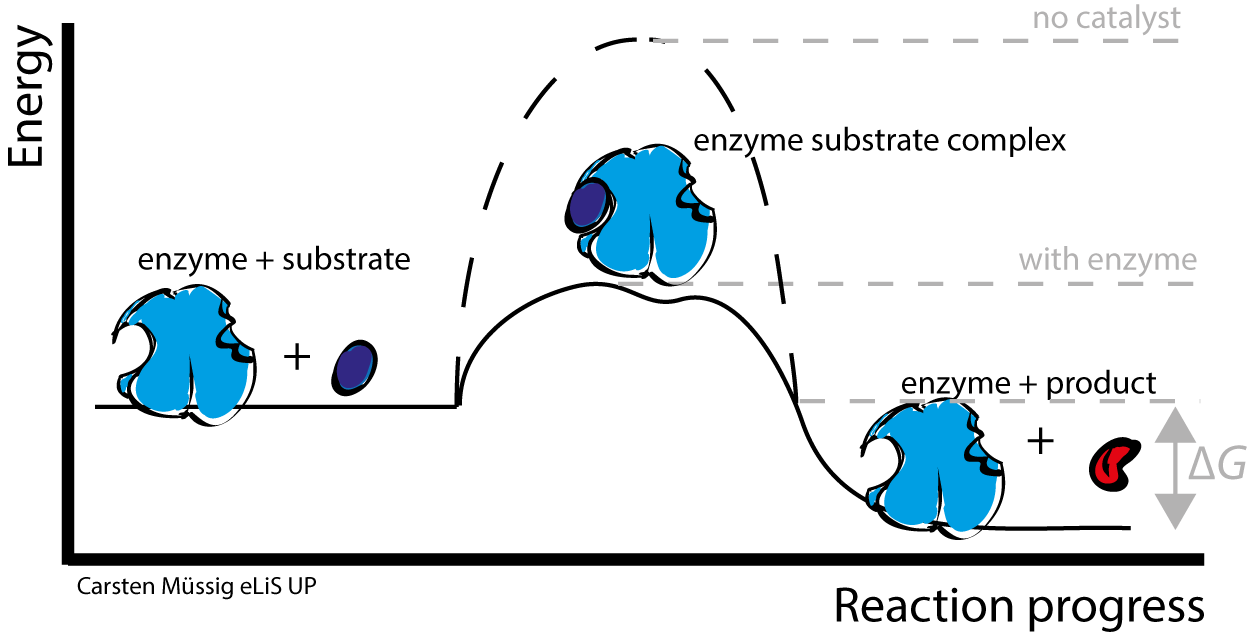
- Enzymes lower the activation energy of reactions (EA) which means they lower the energy required for the reaction to occur.
- They DO NOT change a reactions free energy (ΔG).
- They work by stabilizing the transition state:
(transition state)
Enzymes Specificity
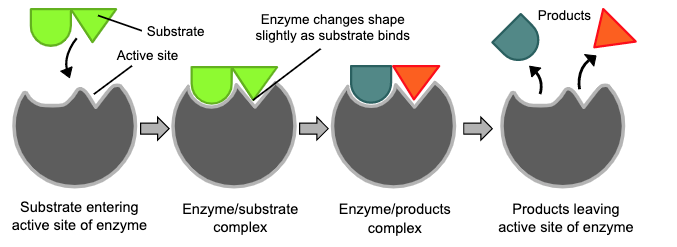
Enzymes are specific to one (or a few) substrates, and have an active site that binds to its particular substrate.
- Induced fit – active site changes upon substrate binding for better fit/catalysis.
- The active site holds the molecules in a position that promotes a reaction to occur.
0:00 / 0:00
Enzyme Activity
Enzyme Activity And Its Effect On the Rate of a Reaction
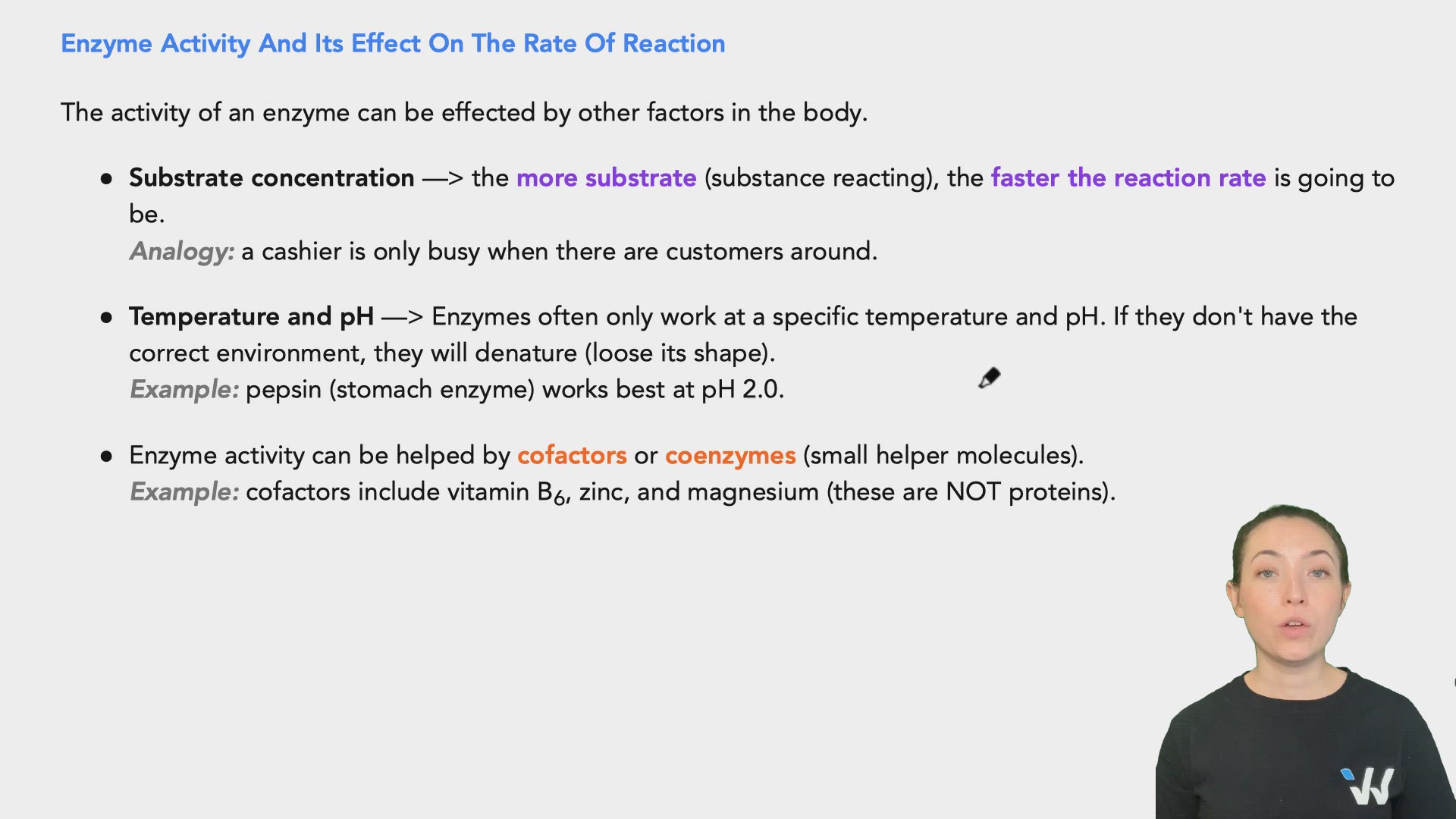
The activity of an enzyme can be affected by other factors in the body.
- Substrate concentration ––> the more substrate (substance reacting), the faster the reaction rate is going to be. Analogy: a cashier is only busy when there are customers around.
- Temperature and pH ––> Enzymes often only work at a specific temperature and pH. If they don't have the correct environment, they will denature (loose its shape). Example: pepsin (stomach enzyme) works best at pH 2.0.
- Enzyme activity can be helped by cofactors or coenzymes (small helper molecules). Example: cofactors include vitamin B6, zinc, and magnesium (these are NOT proteins).
0:00 / 0:00
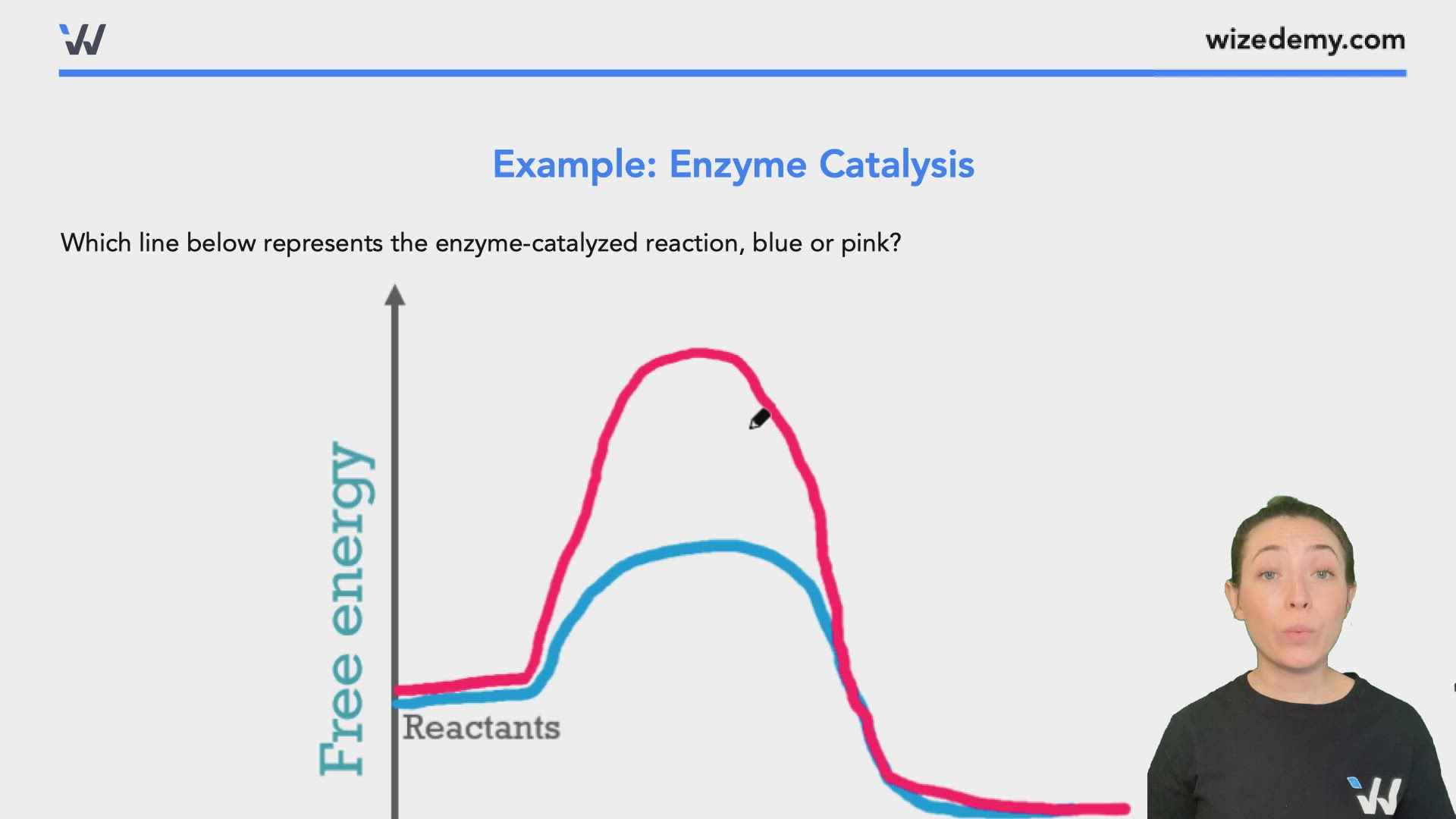
Example: Enzyme Catalysis
Which line below represents the enzyme-catalyzed reaction, blue or pink?
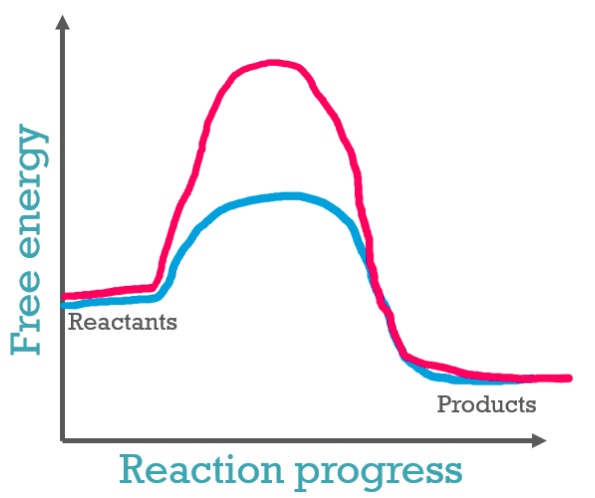
The blue line shows an enzyme catalyzed reaction. The activation energy has been lowered.
Practice: Enzymes and Delta G
Enzymes lower the overall delta G of a reaction, true or false?