Popular Courses
ECON 201
Concordia University
ECONOMIC 1021A/B
Western University
Microeconomics
University Study Guides
ECON 201
University of Calgary
ECON 101
University of British Columbia
ECON 1B03
McMaster University
ECON*1050
University of Guelph
ECON 101
University of Alberta
Microeconomics
General Course
ECO101H1
University of Toronto
Microeconomics
University Study Guides
ECON 208
McGill University
ECON 101
University of Waterloo
ECN 104
Toronto Metropolitan University
ECON 110A
Queen's University
ECO 1104
University of Ottawa
EC120
Wilfrid Laurier University
AP/ECON 1000 3.00
York University
ECON 103
University of Victoria
ECON 1101
Dalhousie University
0:00 / 0:00
Tax

A per unit tax is a fixed amount of tax paid by either buyer or seller on every good that is sold.
Exam Tip
Typical questions ask you to determine the new equilibrium after tax is introduced. Do not simply add the tax amount to the original equilibrium price to get the new equilibrium price!
Steps when Tax is Paid by Seller
- Every point on supply curve shifts up (left) by the amount of the tax
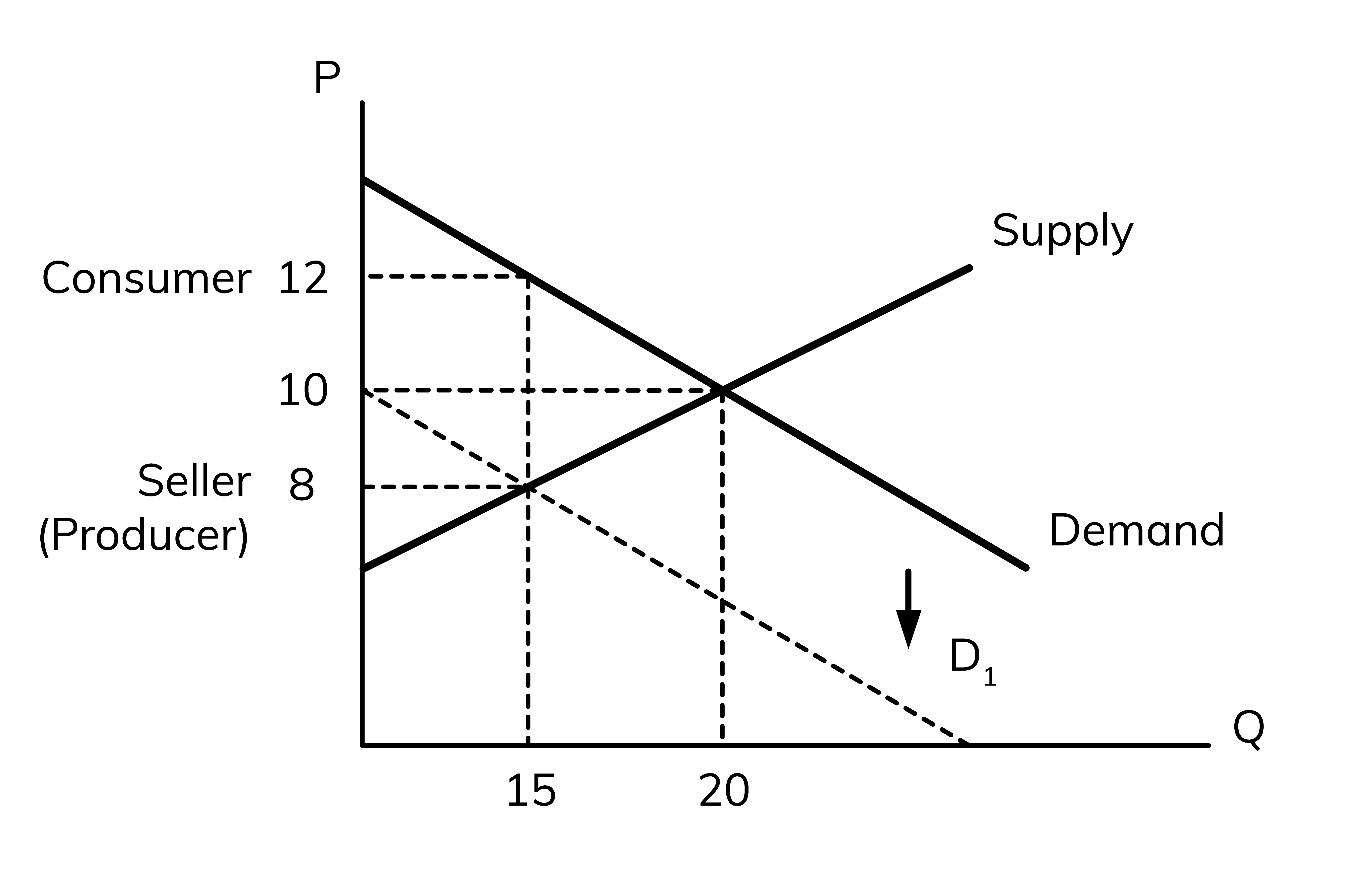
- The new equilibrium price is the amount paid by consumers. In the diagram below, this price is$12
- The new equilibrium quantity with the tax is15units
- Plug the new quantity in to the original supply curve to get the price the producers receive. In the diagram below this would be$8
- The amount of the tax is the difference between the consumer price and producer price at the new equilibrium quantity. In the diagram below this would be12 - 8 = $4

Steps when Tax is Paid by Consumers
- Every point on demand curve shifts down (left) by the amount of the tax
- The new equilibrium price is the amount received by sellers (producers). In the diagram below the price received by producers is$8
- The new equilibrium quantity with the tax is15units
- Plug the new quantity in to the original demand curve to get the price the consumers pay. In the diagram below this would be$12
- The amount of the tax is the difference between the consumer price and producer price at the new equilibrium quantity. In the diagram below this would be12 - 8 = $4
Exam Tip
When showing the effect of a tax, you can shift down the demand curve or shift up the supply by the amount of the tax. In theory, you will get the same answers for the new price and quantity. But just to be safe, shift the curve that the question asks you to shift. If the question does not mention it, most professors expect you to shift the supply.
Practice: Tax
If the government decides to levy (place) a $3 per unit tax on consumers of a good, it would have the same effect as: