Wize University Microeconomics Textbook > Oligopoly
Prisoner's Dilemma
Popular Courses
ECON 201
Concordia University
ECONOMIC 1021A/B
Western University
Microeconomics
University Study Guides
ECON 201
University of Calgary
ECON 1B03
McMaster University
ECON*1050
University of Guelph
ECON 101
University of Alberta
Microeconomics
General Course
ECO101H1
University of Toronto
Microeconomics
University Study Guides
ECON 208
McGill University
ECON 101
University of Waterloo
ECN 104
Toronto Metropolitan University
ECON 110A
Queen's University
ECO 1104
University of Ottawa
EC120
Wilfrid Laurier University
AP/ECON 1000 3.00
York University
ECON 1101
Dalhousie University
ECON 111
Queen's University
ECON 103
Simon Fraser University
0:00 / 0:00
Prisoner's Dilemma:
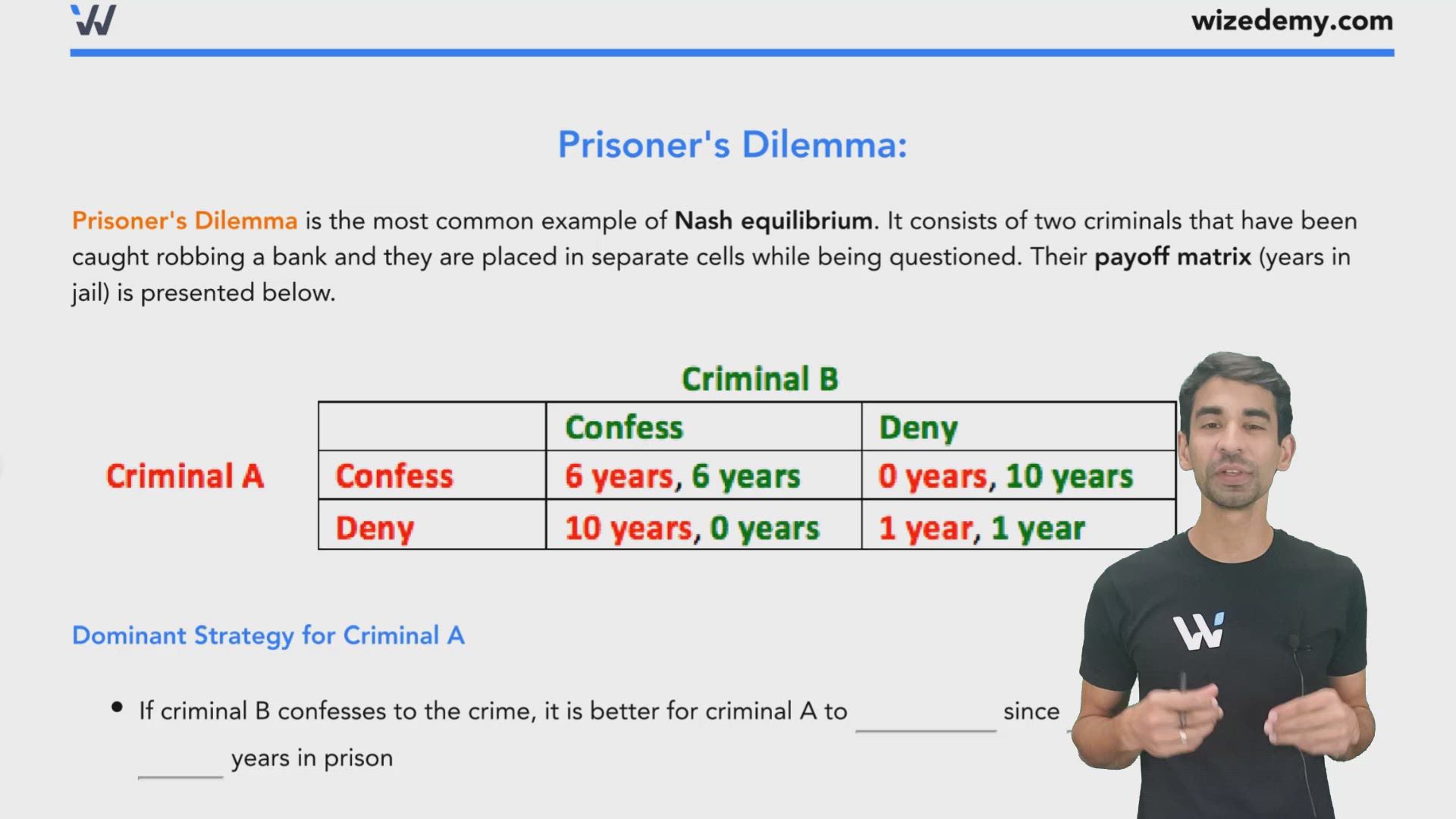
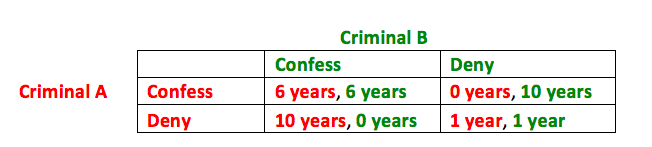
Prisoner's Dilemma is the most common example of Nash equilibrium. It consists of two criminals that have been caught robbing a bank and they are placed in separate cells while being questioned. Their payoff matrix (years in jail) is presented below.
Dominant Strategy for Criminal A
- If criminal B confesses to the crime, it is better for criminal A toconfesssince6years is better than10years in prison
- If criminal B denies the crime, it is better for criminal A toconfesssince0years is better than1year in prison
- Therefore criminal A's dominant strategy is toconfess
Dominant Strategy for Criminal B
- If criminal A confesses to the crime, it is better for criminal B toconfesssince6years is better than10years in prison
- If criminal A denies the crime, it is better for criminal B toconfesssince0years is better than1year in prison
- Therefore criminal B's dominant strategy is toconfess
Nash Equilibrium
- The Nash equilibrium is when both criminalsconfessbecause neither player has an incentive tocheat,
- If we are in the top left box and criminal A cheats, he will end up doing10years in jail instead of6years in jail.
- If we are in the top left box and criminal B cheats, he will end up doing10years in jail instead of6years in jail.
Mutually Beneficial Outcome
- If they were able to collude both criminals woulddenythe crime and each of them would do1year in jail
- However, this outcome is not sustainable because each criminal has an incentive tocheat,
- If we are in the bottom right box and criminal A cheats, he would do0years in jail instead of1year.
- If criminal B cheats. he would do0years in jail instead of1year.
0:00 / 0:00
Example: Nash Equilibrium with Common Resources
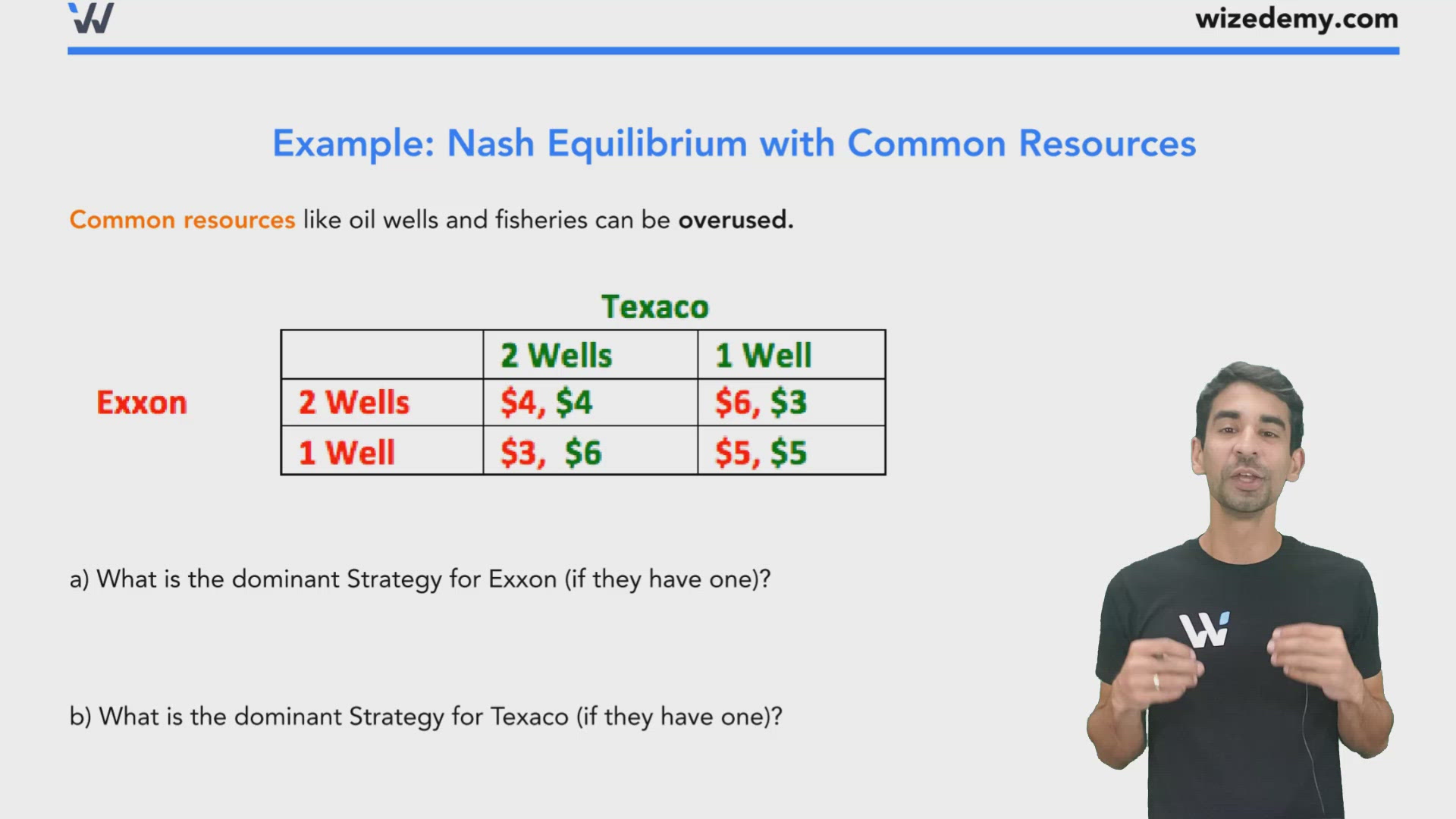
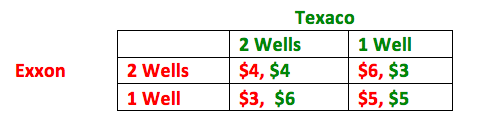
Common resources like oil wells and fisheries can be overused.
a) What is the dominant Strategy for Exxon (if they have one)?
a) Dominant Strategy for Exxon: Drill 2 wells
b) What is the dominant Strategy for Texaco (if they have one)?
b) Dominant Strategy for Texaco: Drill 2 wells
c) What is the Nash equilibrium?
c) Nash Equilibrium: (2 wells, 2 wells)
d) Is there a mutually beneficial outcome compared to the Nash equilibrium?
d) Mutually Beneficial Outcome: (1 well, 1 well)