Wize University Microeconomics Textbook > Labor Market
Demand and Supply of Labor
Popular Courses
ECONOMIC 1021A/B
Western University
Microeconomics
University Study Guides
ECON 201
University of Calgary
ECON*1050
University of Guelph
ECON 101
University of Alberta
Microeconomics
General Course
Microeconomics
University Study Guides
ECO 1104
University of Ottawa
EC120
Wilfrid Laurier University
AP/ECON 1000 3.00
York University
ECON 1101
Dalhousie University
ECON 111
Queen's University
ECON 103
Simon Fraser University
ECON-1100
University of Windsor
MET EC 101
Boston University
ECON-B 251
Indiana University - Bloomington
ECN 101
Toronto Metropolitan University
EC 201
Michigan State University
ECON 102
University of Illinois at Urbana - Champaign
ECON 1010
University of Manitoba

0:00 / 0:00
Demand and Supply of Labor
In this section we see the difference between supply and demand for labor and what factors cause each line to shift.
Demand for Labor
The demand for labor is downward sloping because as more workers are hired the Value of Marginal Product (Marginal Revenue Product) falls, so firms are willing to pay a lower wage for each additional worker.

- In the diagram above, if the wage is $50, the firm will demand a quantity of20units of labor.
- On the left of 20 the VMP (MRP) ishigherthan the wage so the firm will demandmorelabor.
- On the right 20 the VMP (MRP) islessthan the wage so the firm will demandlesslabor.
Shifts in Demand
- Output price - higher prices of the product will cause VMP(MRP) toincreaseand shift the labor demandright
- Technological change - improvements in technology will shift the demandleft or right
- Supply of other factors - if the supply of another factor (like paper used to make books) decreases then the marginal product of labor willdecreaseand labor demand will shiftleft
Supply of Labor
The supply is upward sloping because as the wage rises, the opportunity cost of leisure gets
higher
so workers will work more
hours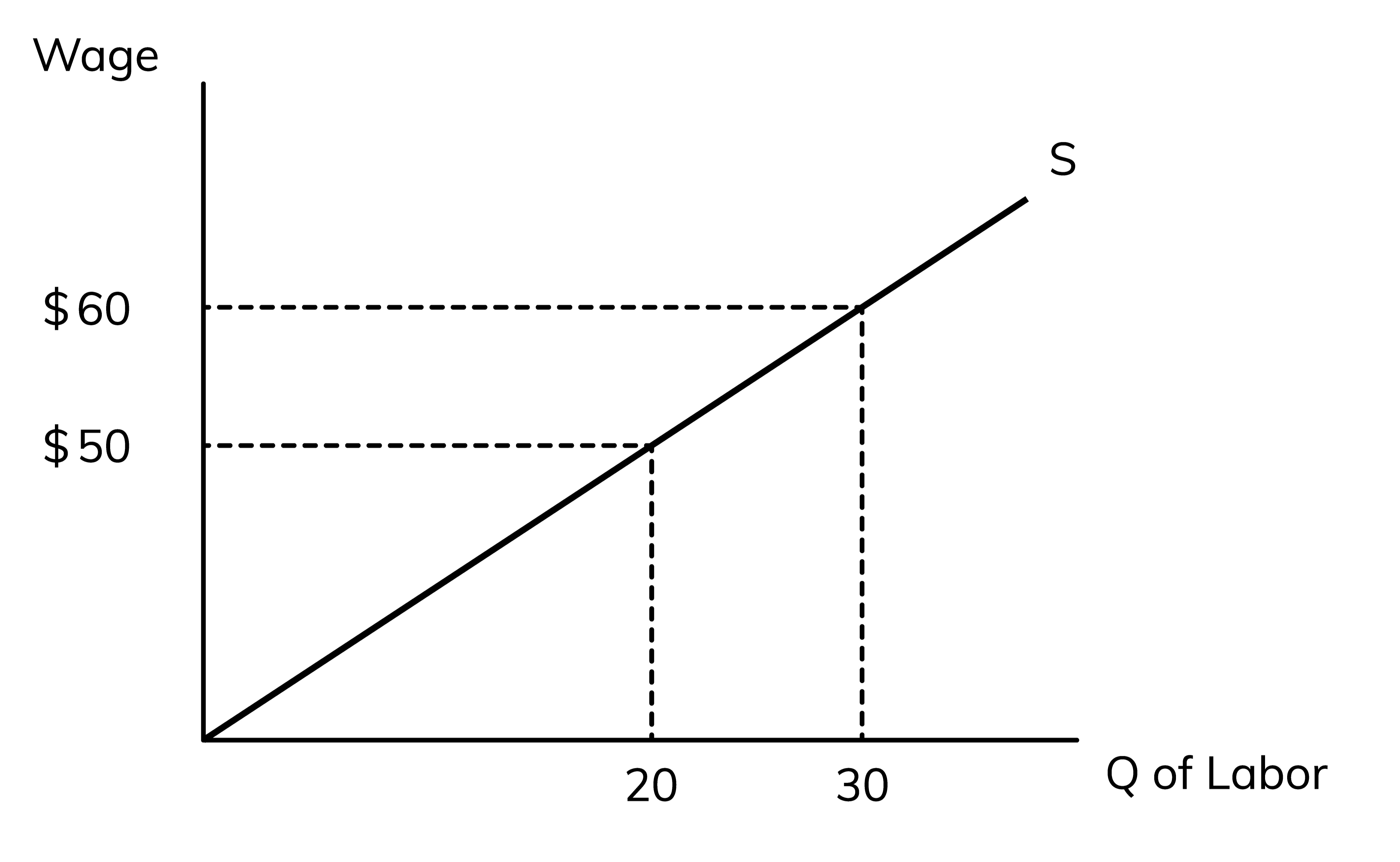
Shifts in Supply
- Changes in Tastes - this could include things like if more women join the labor force it would cause supply of labor to shiftright
- Changes in Alternative Jobs - if other companies pay less, the supply of workers in this company will shiftright
- Immigration - if there is more immigration, supply of workers would shiftright

In the diagram above, if supply of labor shifts right, the equilibrium wage will
decrease
and employment will increase
.
0:00 / 0:00
Example: Demand and Supply of Labor
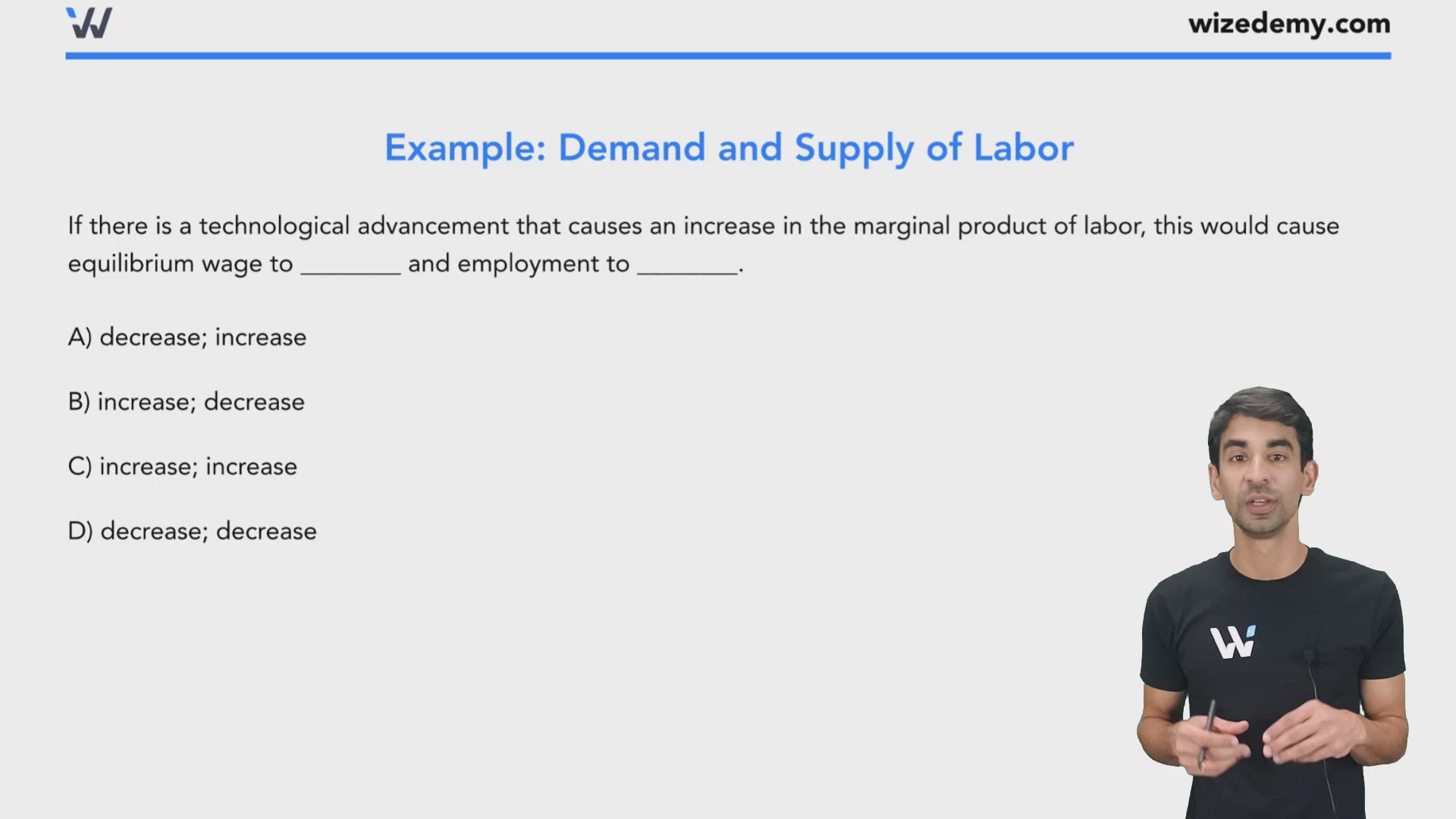
If there is a technological advancement that causes an increase in the marginal product of labor, this would cause equilibrium wage to ________ and employment to ________.
A) decrease; increase
B) increase; decrease
C) increase; increase
D) decrease; decrease
C
If workers become more productive due to faster machines, their marginal product and marginal revenue product (VMP) increase causing the demand for those workers to also increase. The causes equilibrium wages and employment to increase.
Practice: Demand and Supply of Labor
When companies are competitive and trying to maximize their profit, the demand curve for labor is determined by