Popular Courses
ECON 203
Concordia University
ECON 203
Concordia University
Macroeconomics
University Study Guides
AP Macroeconomics Exam Prep Course
AP Exam Prep
ECONOMIC 1022A/B
Western University
Macroeconomics
General Course
ECON 102
University of British Columbia
ECON*1100
University of Guelph
Macroeconomics
University Study Guides
ECON 203
University of Calgary
ECON 102
University of Alberta
ECO102H1
University of Toronto
ECO 1102
University of Ottawa
ECON 209
McGill University
ECON 1BB3
McMaster University
COMM 171
Queen's University
ECON 112
Queen's University
AP/ECON 1010 3.00
York University
ECON 295
McGill University
ECON 110
Queen's University
0:00 / 0:00
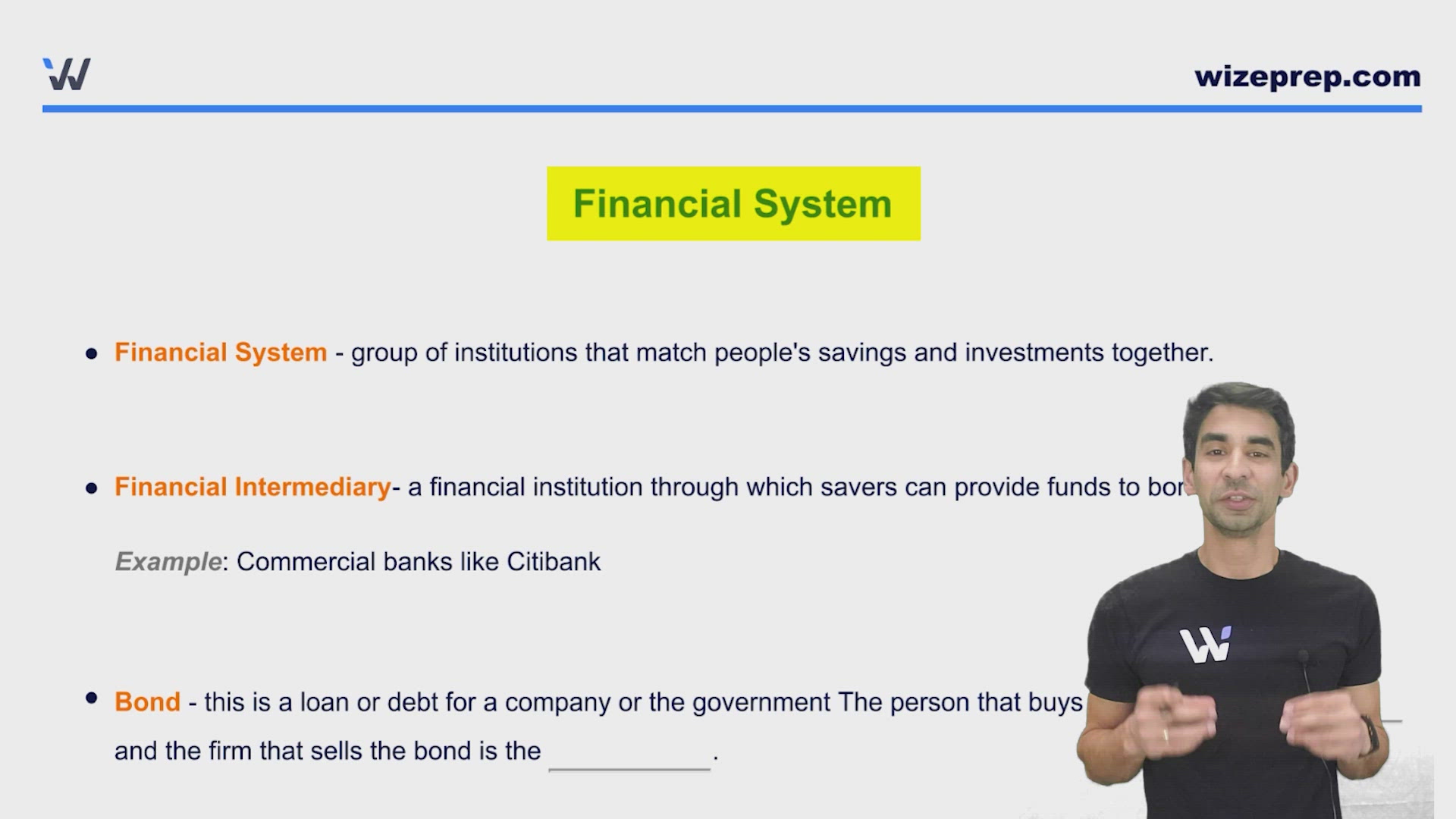
Financial System
- Financial System - group of institutions that match people's savings and investments together.
- Financial Intermediary- a financial institution through which savers can provide funds to borrowers. Example: Commercial banks like Citibank
- Bond - this is a loan or debt for a company or the government The person that buys the bond is thelenderand the firm that sells the bond is theborrower. Example: If you buy $1000 bond from Apple Inc. that means you are lending Apple $1000 and they will pay you coupons (which are like interest payments).
- Example: If you have bought a bond that will pay you $1050 next year and the current market interest rate is 7%, then the present value (price) of this bond today is1050/1.07^1 = $981.31
- If the interest rate increases, the price of the bonddecreases.
- Stocks - represent equity, shares or ownership in a company. Example: If you buy $1000 of stocks in Apple Inc that means you are buying equity or ownership in the company. Stocks are generallymorerisky compared to bonds.
- Mutual Fund - an institution that sells shares to the public and uses the money to buy a portfolio of stocks and bonds
0:00 / 0:00
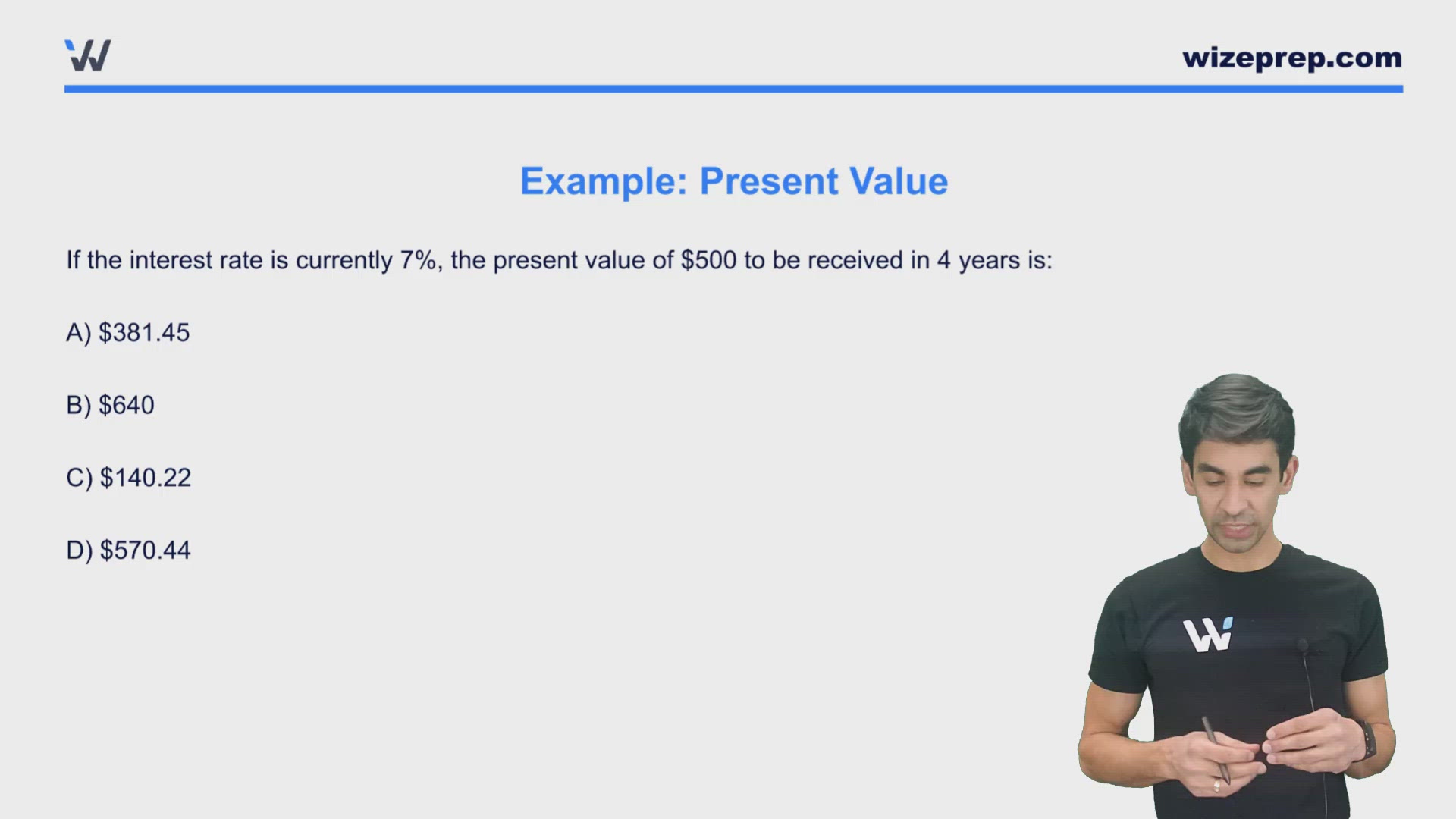
Example: Present Value
If the interest rate is currently 7%, the present value of $500 to be received in 4 years is:
A) $381.45
B) $640
C) $140.22
D) $570.44
A.
Practice: Bonds
In general, if interest rates rise, this will be: