Wize University Macroeconomics Textbook > Monetary Policy
Money Supply and Demand
Popular Courses
ECON 203
Concordia University
ECON 203
Concordia University
Macroeconomics
University Study Guides
AP Macroeconomics Exam Prep Course
AP Exam Prep
ECONOMIC 1022A/B
Western University
Macroeconomics
General Course
ECON 102
University of British Columbia
ECON*1100
University of Guelph
Macroeconomics
University Study Guides
ECON 203
University of Calgary
ECON 102
University of Alberta
ECO102H1
University of Toronto
ECO 1102
University of Ottawa
ECON 209
McGill University
ECON 1BB3
McMaster University
COMM 171
Queen's University
ECON 112
Queen's University
AP/ECON 1010 3.00
York University
ECON 295
McGill University
ECON 110
Queen's University
0:00 / 0:00
Money Supply and Demand
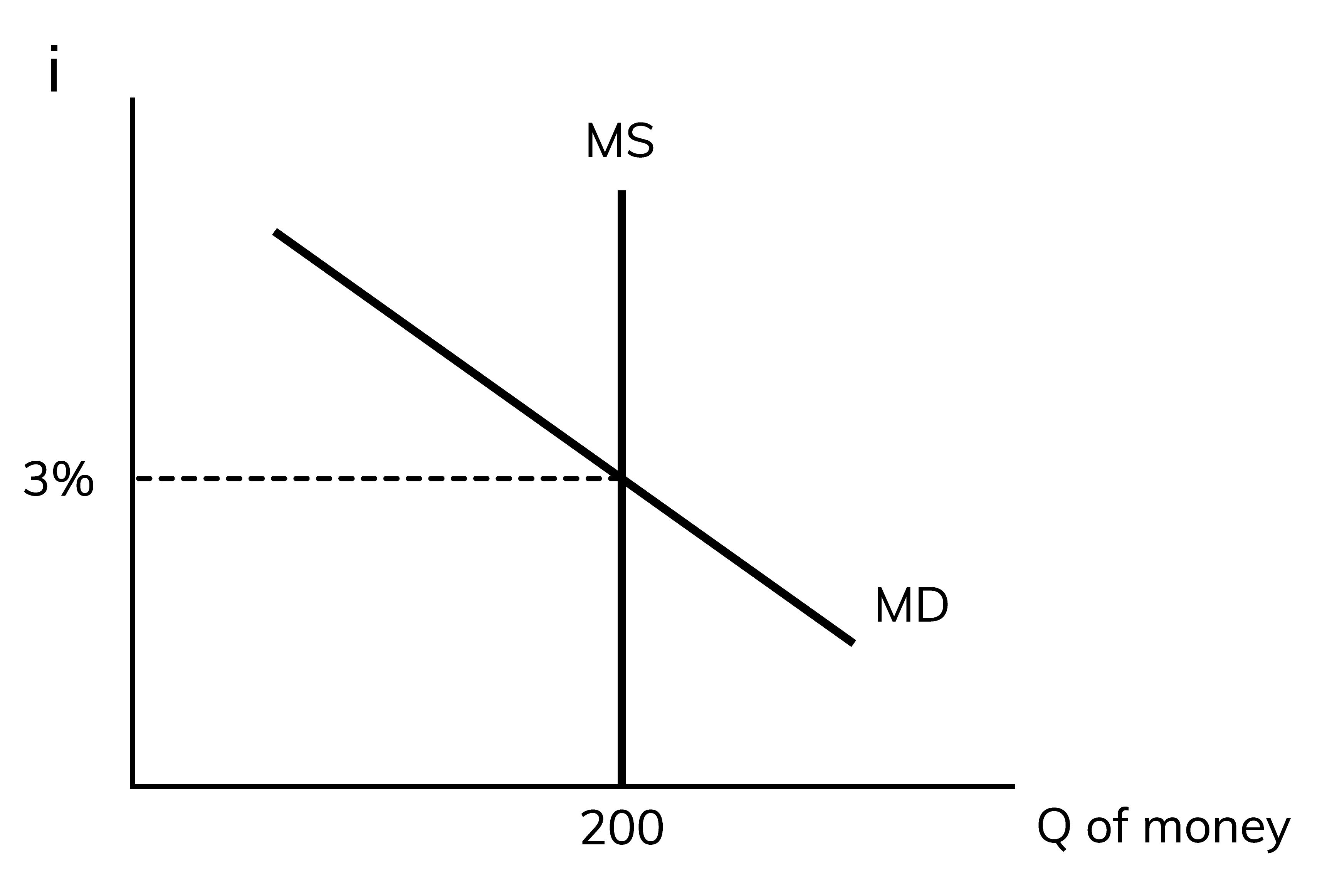
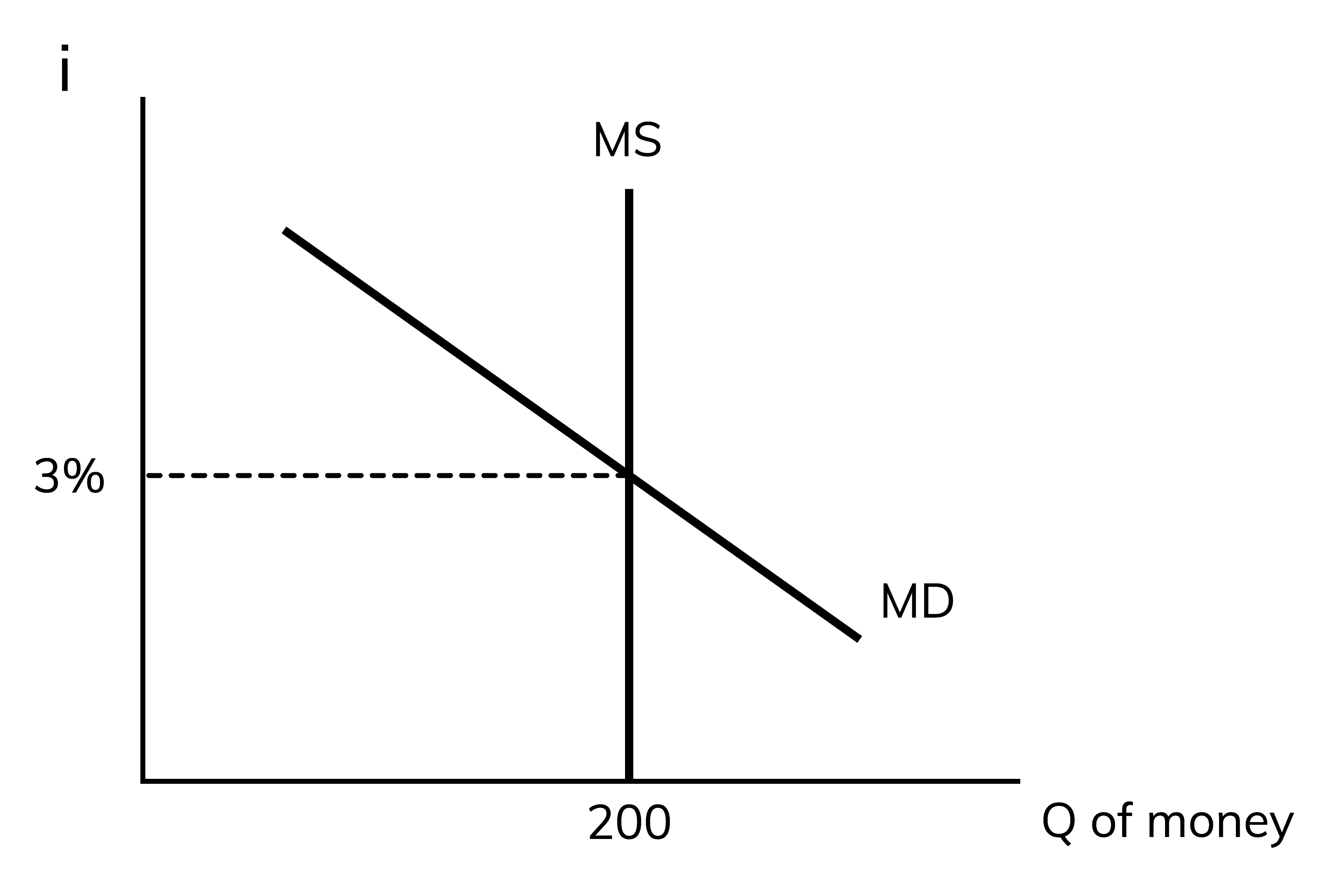
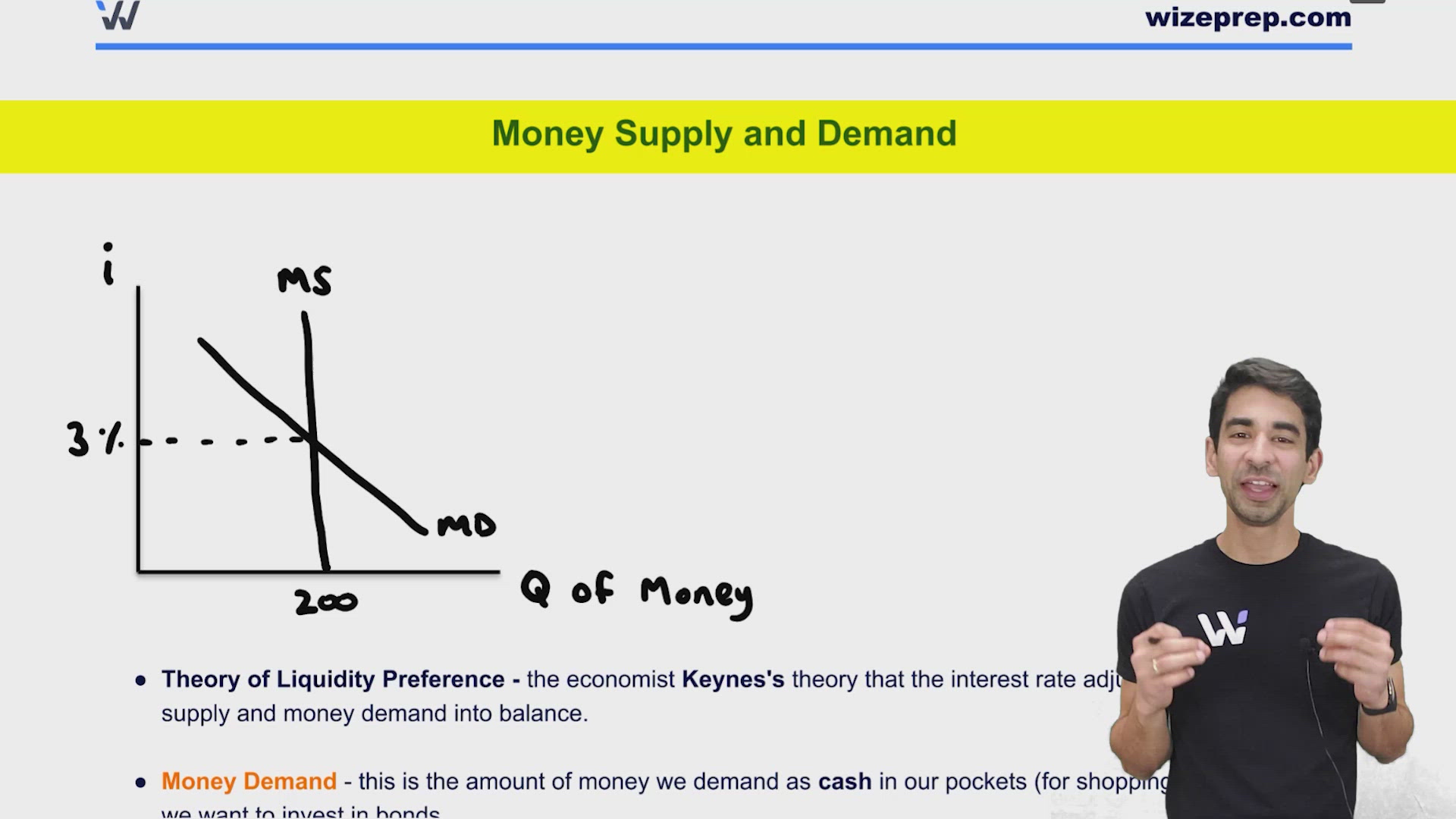
- Theory of Liquidity Preference - the economist Keynes's theory that the interest rate adjusts to bring money supply and money demand into balance.
- Money Demand - this is the amount of money we demand as cash in our pockets (for shopping) but not money we want to invest in bonds,
- If the interest rate is above equilibrium there is an excesssupplyof money and this will cause interest rates tofall
- If the interest rate is below equilibrium there is an excessdemandfor money and this will cause interest rates torise
Motives for Holding Money
- Transactions Motive - holding money for day-to-day transactions like grocery shopping. It is due to the difference in timing between receiving and making money payments.
- Precautionary Motive - holding money for emergencies like emergency taxi to the hospital. It is due to the uncertainty of when money payments will need to be made.
- Asset/Speculative Motive - holding money to reduce the risk of your portfolio or to take advantage and buy stocks/bonds when their prices drop.
Shifts in Money Demand
1. Price Level - If price level increases the money demand will shift
right
because people will need more cash for shopping.
2. Income (output/GDP) - If the income increases the money demand will shift
right
because people will do more shopping and there are more transactions when output increases.