Wize University Macroeconomics Textbook > Monetary Policy
Monetary Injection in Closed and Open Economy
Popular Courses
ECON 203
Concordia University
ECON 203
Concordia University
Macroeconomics
University Study Guides
AP Macroeconomics Exam Prep Course
AP Exam Prep
ECONOMIC 1022A/B
Western University
Macroeconomics
General Course
ECON 102
University of British Columbia
ECON*1100
University of Guelph
Macroeconomics
University Study Guides
ECON 203
University of Calgary
ECON 102
University of Alberta
ECO102H1
University of Toronto
ECO 1102
University of Ottawa
ECON 209
McGill University
ECON 1BB3
McMaster University
COMM 171
Queen's University
ECON 112
Queen's University
AP/ECON 1010 3.00
York University
ECON 295
McGill University
ECON 110
Queen's University
0:00 / 0:00
Monetary Injection and AD
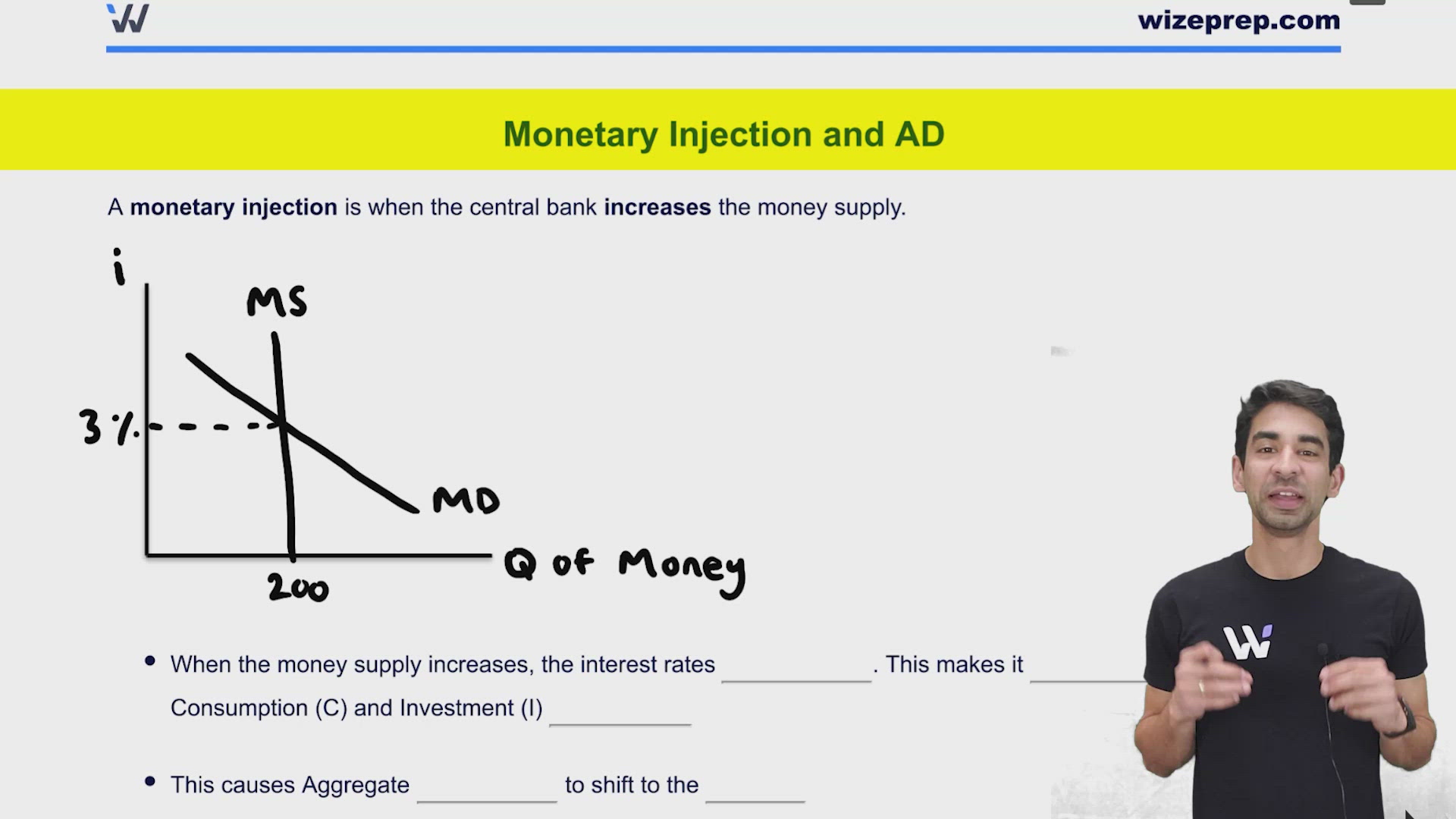
A monetary injection is when the central bank increases the money supply.
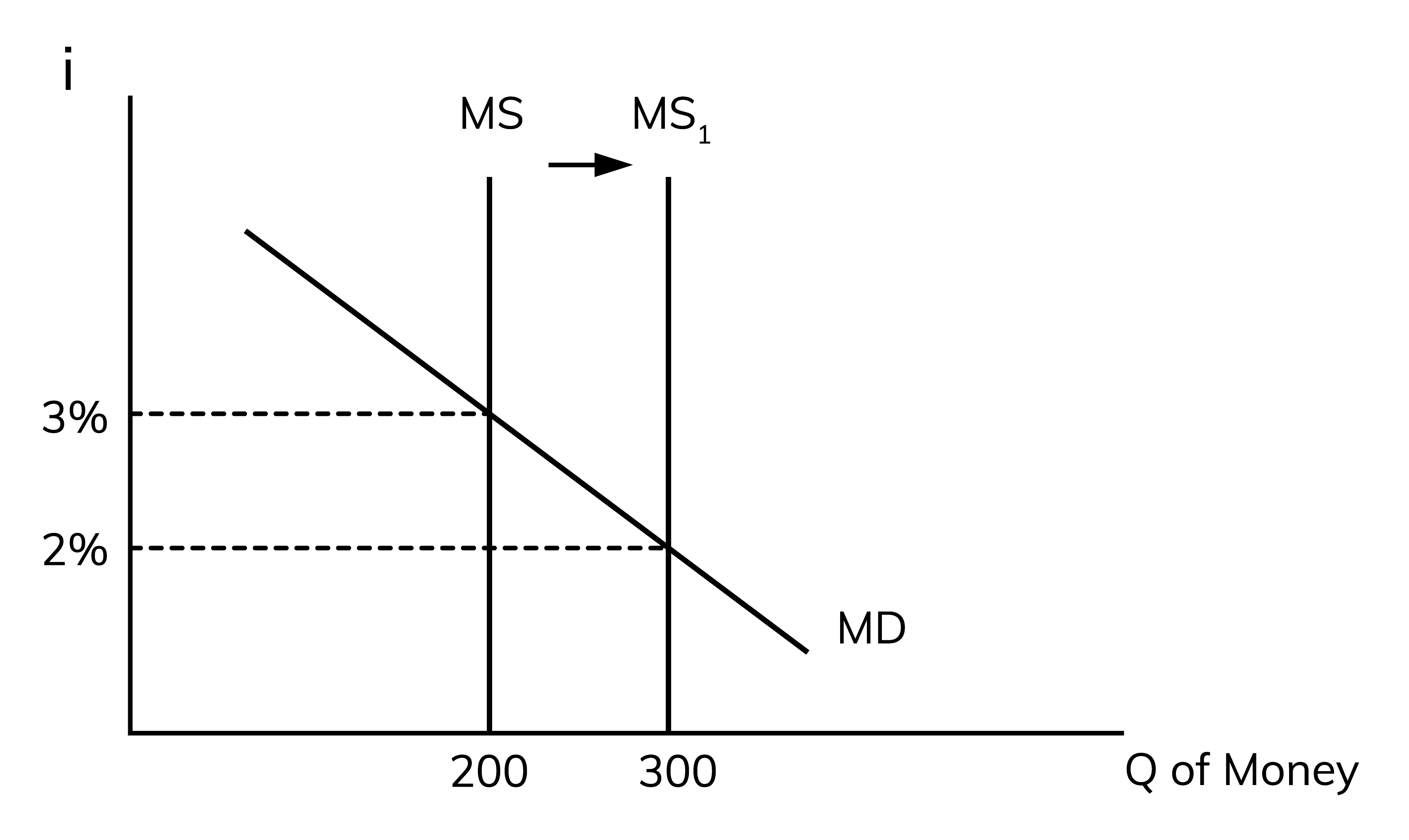
- When the money supply increases, the interest ratesdecrease. This makes itcheaperto take loans so Consumption (C) and Investment (I)increase
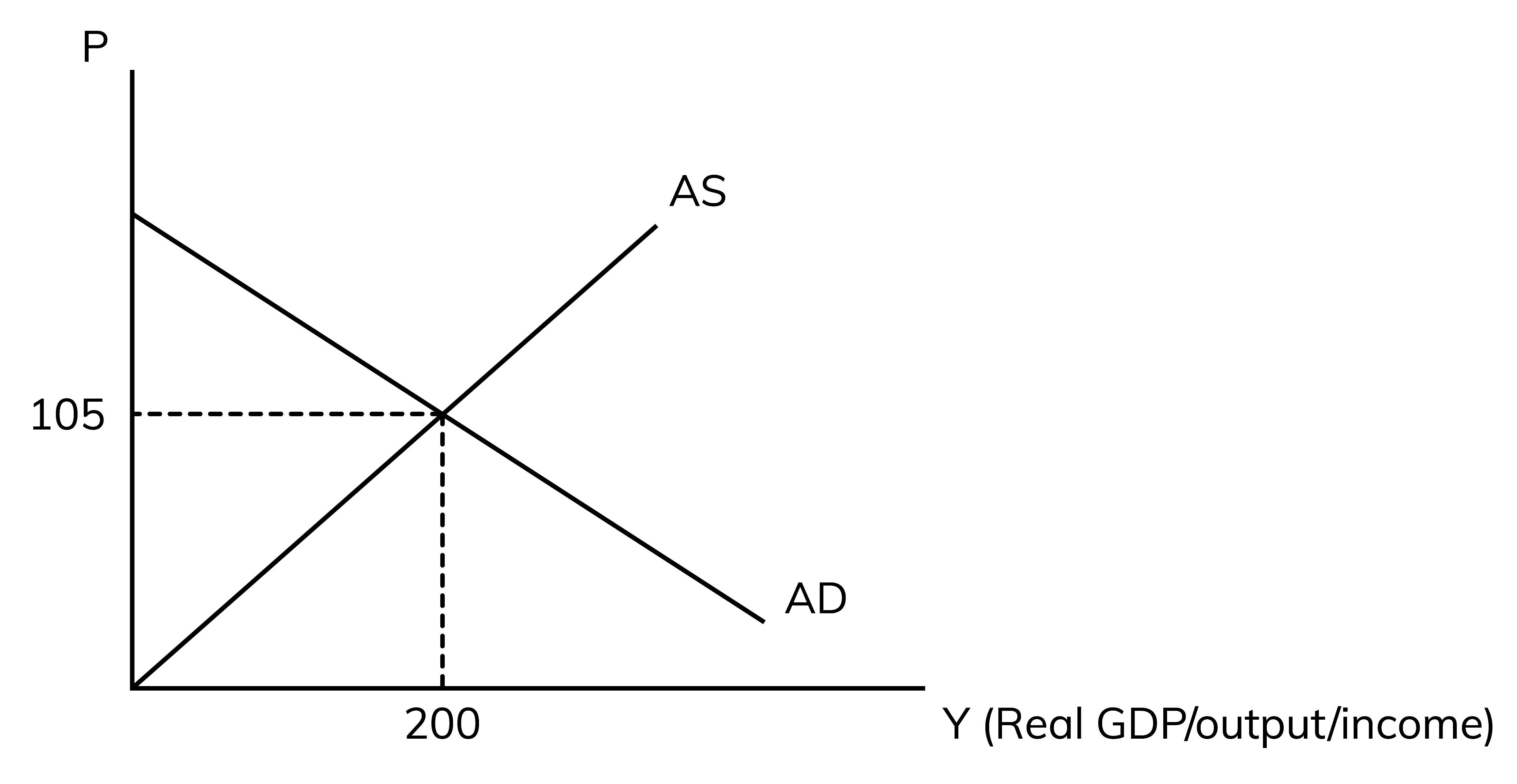
- This causes AggregateDemandto shift to theright
Net Exports
- In a small open economy with a flexible exchange rate, a monetary injection by the central bank that lowers interest rates will make domestic assets (like bonds)lessattractive. This causes the dollar todepreciateunder a flexible exchange rate.
- This causes net exports torise
- A monetary injection in an open economy shifts the aggregate demand curvemoreto the right than it does in a closed economy.
- A fixed exchange rate is when the central bank does not allow the exchange rate to change between two countries.
- If the central bank tries monetary injection (higher money supply and lower interest rates) with a fixed exchange rate, when the domestic interest rate falls below the world interest rate, everyone would try to buymoreforeign assets (bonds).
- To do this they would have to exchange their dollars to foreign currency at the central bank which would cause the money supply todecreaseback to the original level
- For this reason, monetary injection and monetary policy are effective withflexibleexchange rates, but notfixedexchange rates.
0:00 / 0:00
Monetary Injection with a Flexible/Fixed Exchange Rate
Flexible Exchange Rate
