Wize University Microeconomics Textbook > Gains from Trade
Gains from Trade
Popular Courses
ECON 201
Concordia University
Microeconomics
University Study Guides
ECON 201
University of Calgary
ECON 101
University of British Columbia
ECON 1B03
McMaster University
Macroeconomics
University Study Guides
ECON*1050
University of Guelph
ECON 101
University of Alberta
Microeconomics
General Course
ECO101H1
University of Toronto
Microeconomics
University Study Guides
ECON 208
McGill University
ECONOMIC 1022A/B
Western University
Macroeconomics
General Course
ECON 101
University of Waterloo
ECON*1100
University of Guelph
Macroeconomics
University Study Guides
ECON 110A
Queen's University
ECON 203
University of Calgary
ECO 1104
University of Ottawa

0:00 / 0:00
Gains From Trade
We know that countries benefit from trade, but how much they gain depends on the terms of trade.
CANADA MEXICO
SHOES 40,000 90,000
BOOKS 4,000 6,000
- The opportunity cost of making 1 book for Canada is10shoes
- The opportunity cost of making 1 book for Mexico is15shoes
- Canada has a comparative advantage inBooksand Mexico has a comparative advantage inShoes
Each book will trade between:
- Lower limit:10shoes
- Upper Limit:15shoes
Example: Before the trade Canada was consuming 2,950 books and 10,500 shoes, while Mexico was consuming 800 books and 78,000 shoes. Suppose each country specializes and they trade 1000 Books for 11000 Shoes - this is called the terms of trade. What would be Canada's consumption of shoes and books after the trade?

Step 1. Ask yourself, what product will they spend all their time making (according to comparative advantage)?
4000 Books
Step 2. How much will they give up with the trade?
1000 Books
Step 3. What are they left with?
3000 Books
Step 4. What do they get in return?
11000 Shoes
Step 5. What is their post-trade (after trade) consumption?
Final answer: 3000 Books and 11000 Shoes
What is Canada's gain from the trade?
Take the difference between the post-trade consumption that we just solved for and the pre-trade (before trade) consumption that was given in the question:
11,000 shoes - 10,500 shoes = 500 shoes gained.
3000 books - 2950 books = 50 books gained.
Final answer: Canada gains 500 shoes and 50 books from the trade.
0:00 / 0:00
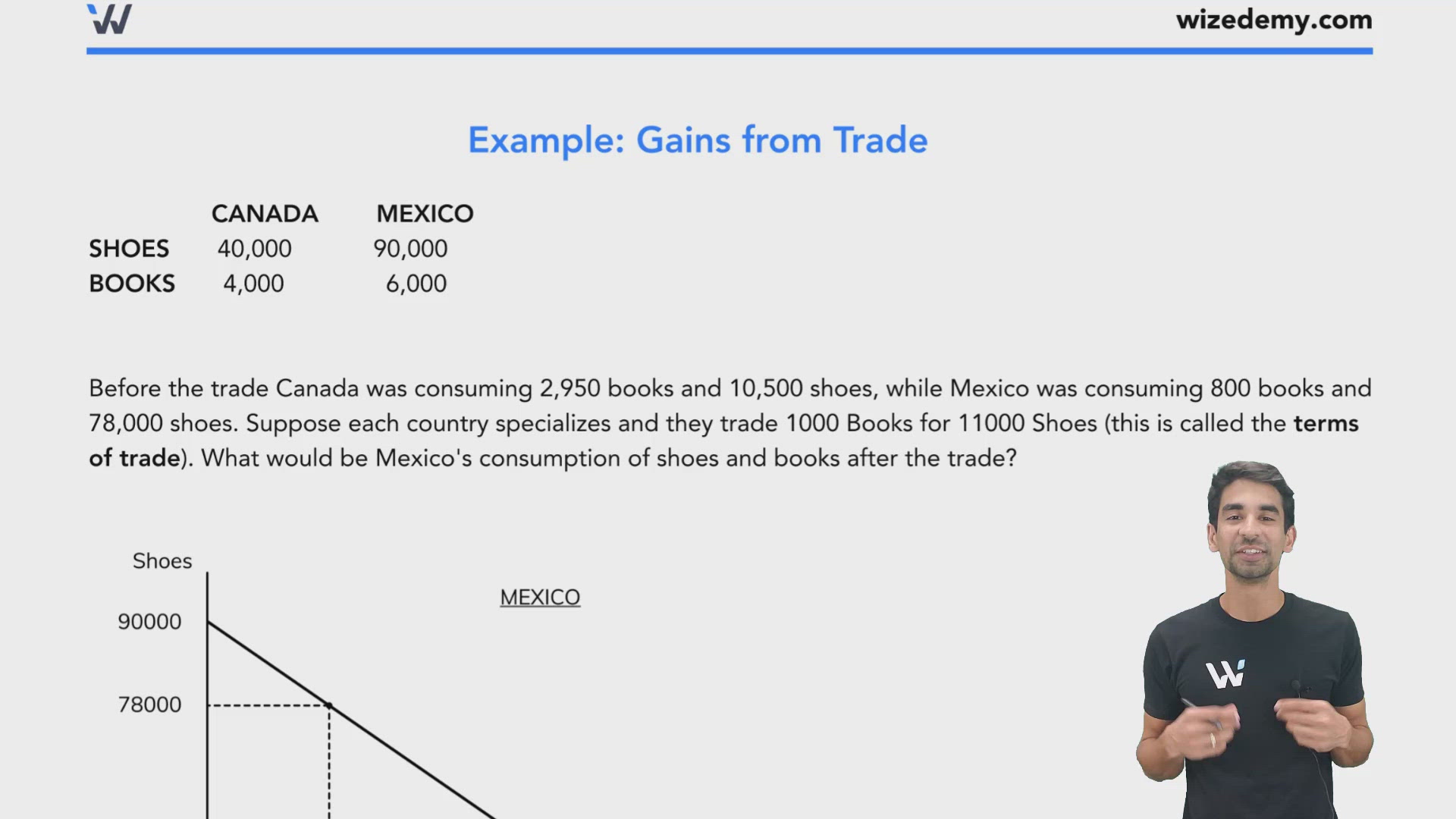
Example: Gains from Trade
CANADA MEXICO
SHOES 40,000 90,000
BOOKS 4,000 6,000
Before the trade Canada was consuming 2,950 books and 10,500 shoes, while Mexico was consuming 800 books and 78,000 shoes. Suppose each country specializes and they trade 1000 Books for 11000 Shoes (this is called the terms of trade). What would be Mexico's consumption of shoes and books after the trade?

Step 1. Ask yourself, what product will they spend all their time making (according to comparative advantage)?
90,000 shoes
Step 2. How much will they give up with the trade?
11,000 shoes
Step 3. What are they left with?
79,000 shoes
Step 4. What do they get in return?
1000 books
Step 5. What is their post-trade (after trade) consumption?
Final answer: 79,000 shoes and 1000 books
What is Mexico's gain from the trade?
Take the difference between the post-trade consumption that we just solved for and the pre-trade (before trade) consumption that was given in the question:
79,000 shoes - 78,000 shoes = 1,000 shoes gained.
1000 books - 800 books = 200 books gained.
Final answer: Mexico gains 1,000 shoes and 200 books from the trade.
0:00 / 0:00
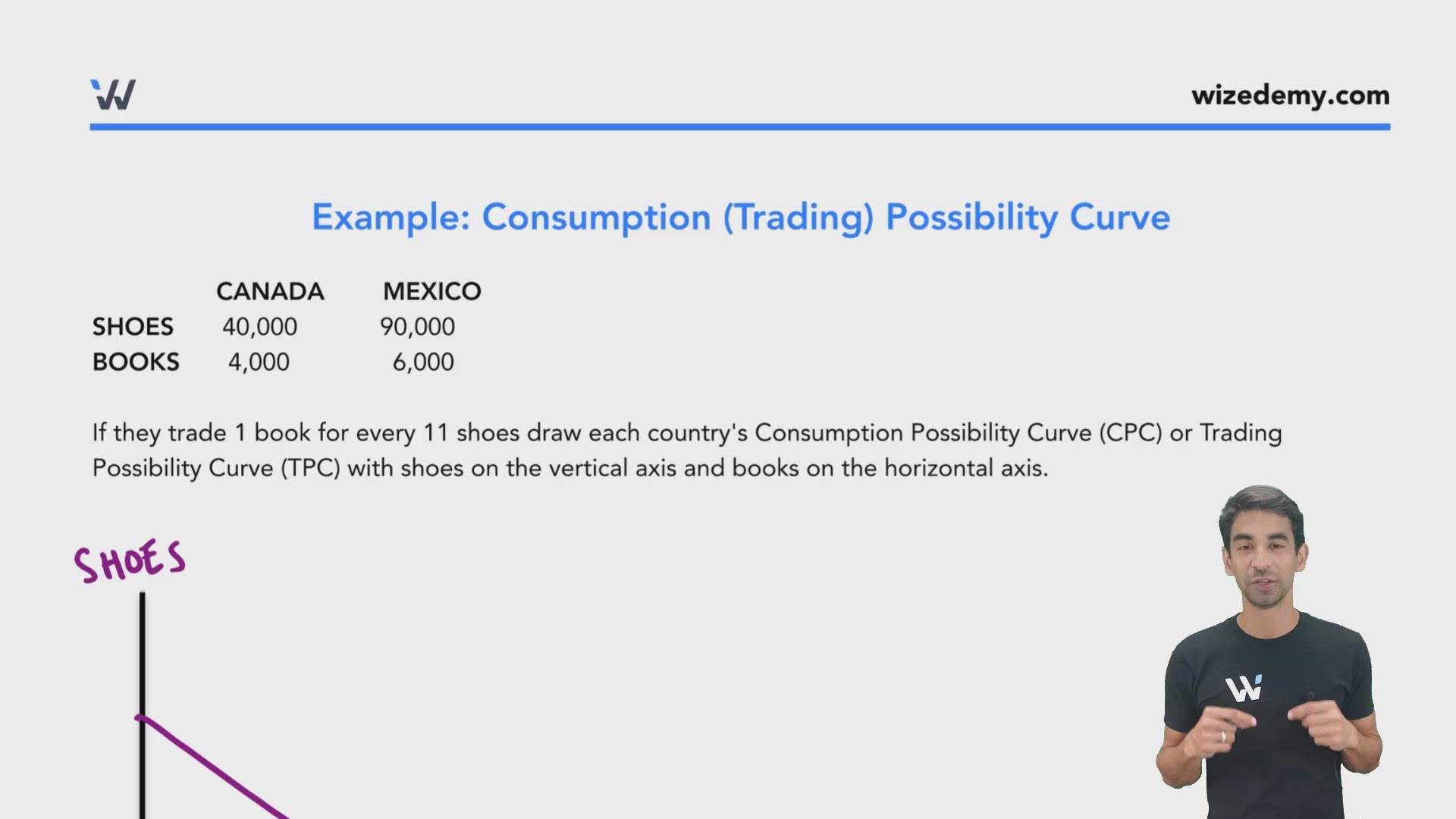
Example: Consumption (Trading) Possibility Curve
CANADA MEXICO
SHOES 40,000 90,000
BOOKS 4,000 6,000
If they trade 1 book for every 11 shoes draw each country's Consumption Possibility Curve (CPC) or Trading Possibility Curve (TPC) with shoes on the vertical axis and books on the horizontal axis.

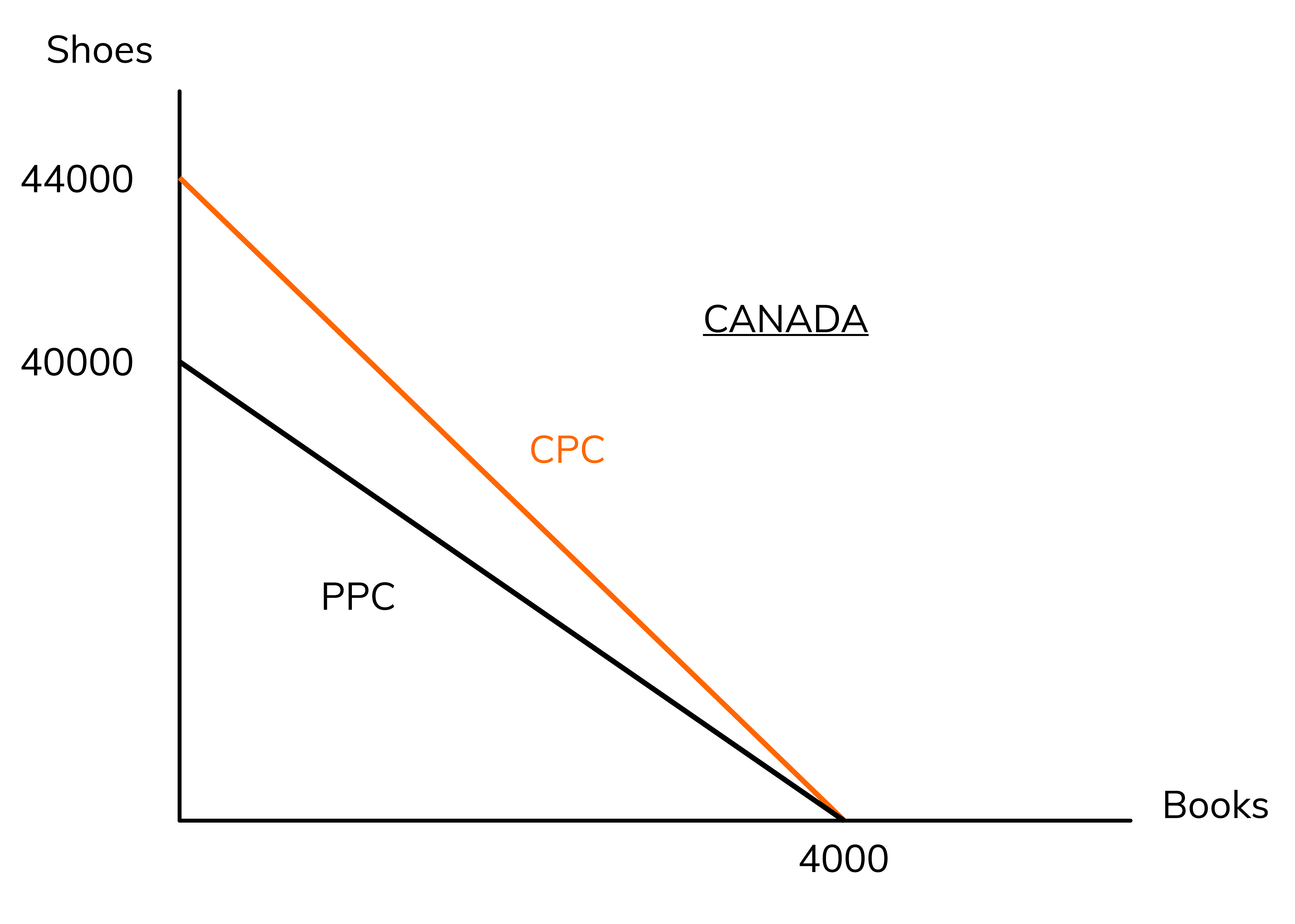
Canada has a comparative advantage in books so they will spend all their time making books.
The maximum books they can make is 4000. If they give up all these 4000 books to Mexico in reurn they will get 4000 * 11 = 44000 shoes.
These are the intercepts for Canada's CPC
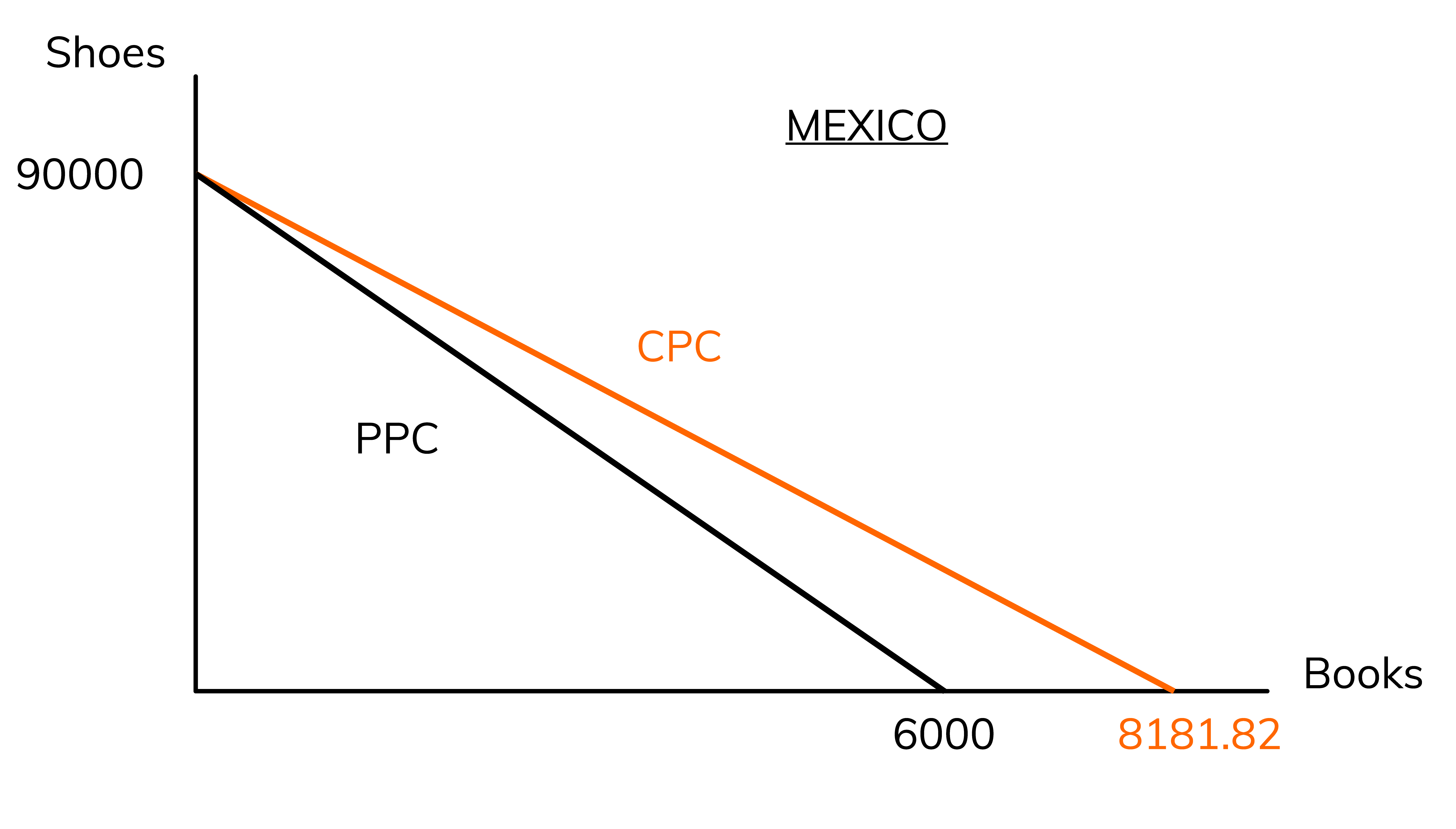
Mexico has a comparative advantage in shoes so they will spend all their time making shoes.
The maximum shoes they can make is 90000. If they give up all these 90000 shoes to Canada in return they will get 90000/11 = 8181.82 books.
These are the intercepts for Mexico's CPC
Practice: Gains from Trade
In England producing an engine takes 5,000 hours of labor and producing a shoe takes 2 hours of labor. In Holland producing an engine takes 20,000 hours of labor and producing a shoe takes 4 hours of labor. What will these countries trade?