Wize University Calculus 1 Textbook > Derivatives
The Limit Definition of a Derivative
Popular Courses
CALCULUS 1000A/B
Western University
Calculus 1
University Study Guides
AP Calculus (AB) Exam Prep Course
AP Exam Prep
MATH 209
Concordia University
MATH 100A
University of British Columbia
MATH 100C
University of British Columbia
MATH 249
University of Calgary
MATH 265
University of Calgary
Calculus 1
General Course
MATH 275
University of Calgary
MATH 140
McGill University
MATH 121
Queen's University
MAT135H1
University of Toronto
MATH*1080
University of Guelph
MATH 134
University of Alberta
Calculus 1
University Study Guides
MAT 1320
University of Ottawa
MATH 100
University of Alberta
MATH 100B
University of British Columbia
MATH 203
Concordia University
0:00 / 0:00
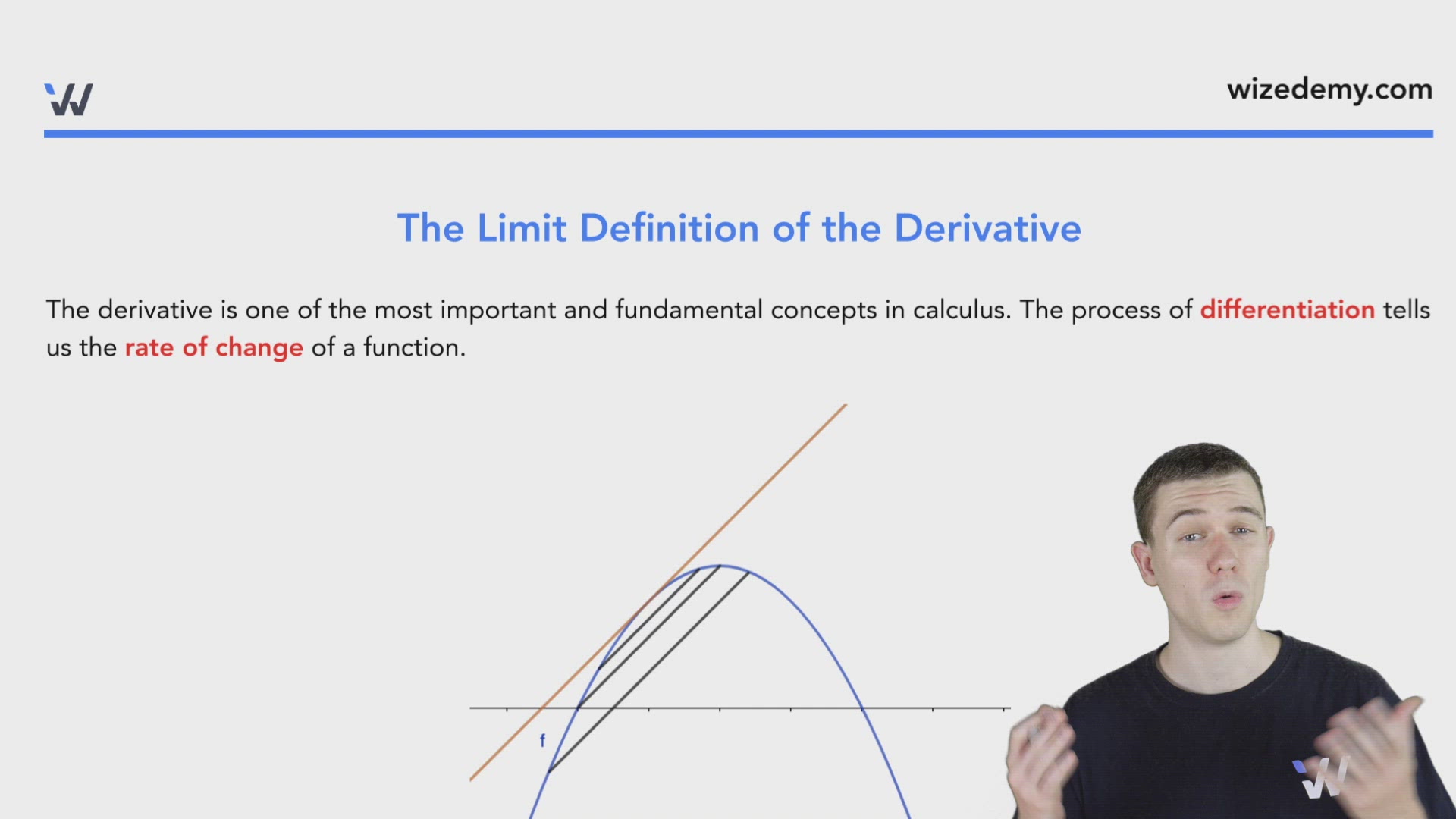
The Limit Definition of the Derivative
The derivative is one of the most important and fundamental concepts in calculus. The process of differentiation tells us the rate of change of a function.
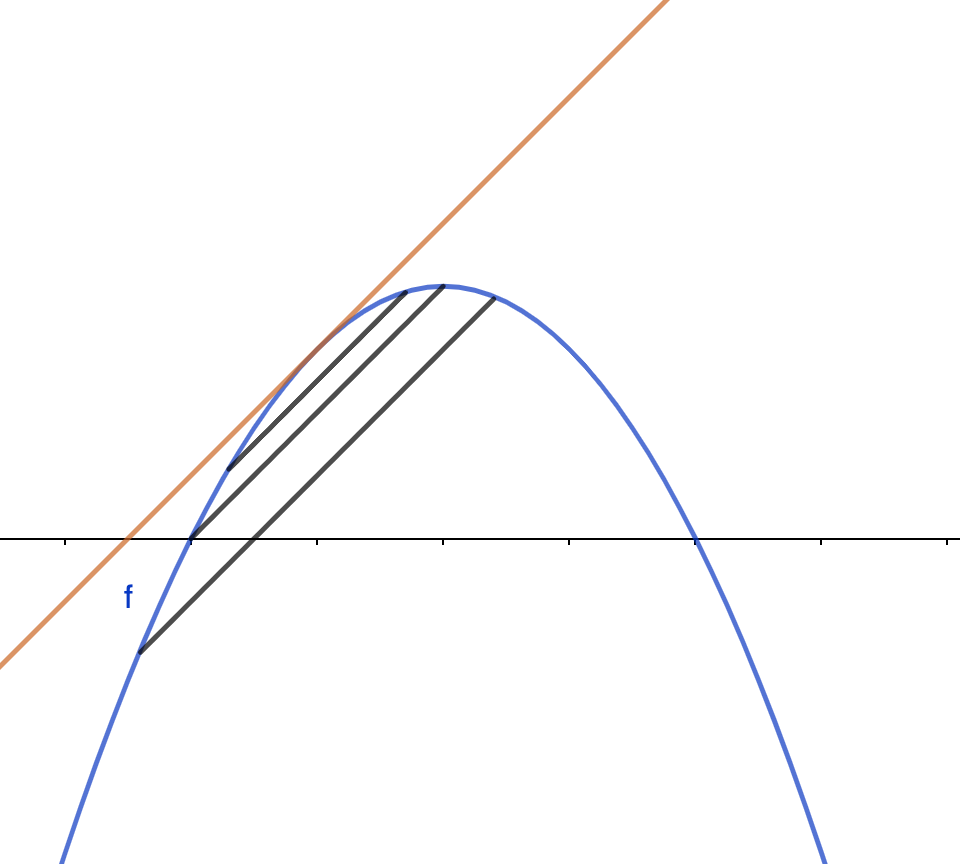
The Derivative (At a Point)
The derivative of a function at a point denoted , is
When this limit exists, we say that the function is differentiable at
Note: The derivative is also denoted
0:00 / 0:00
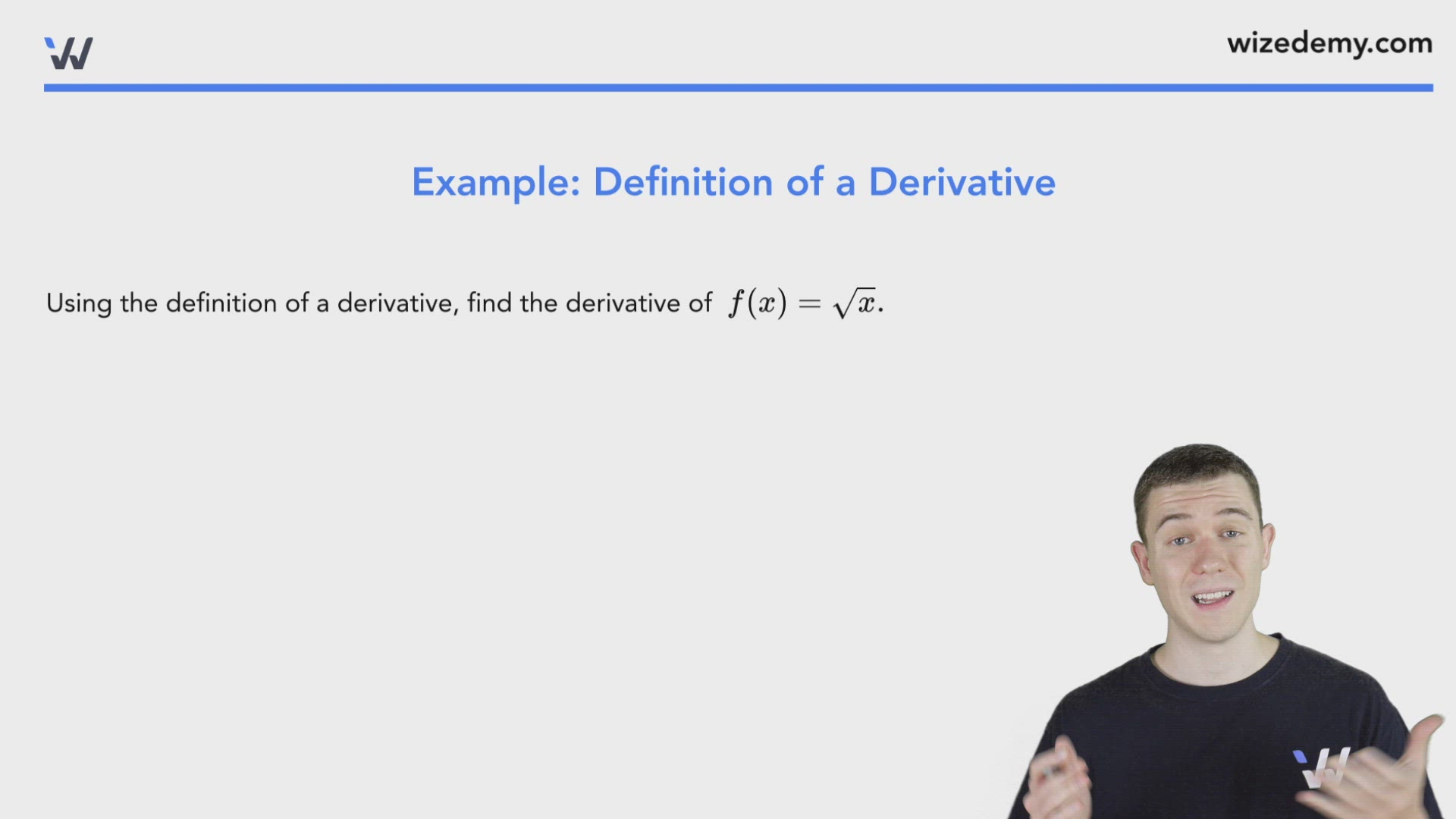
Example: Definition of a Derivative
Using the definition of a derivative, find the derivative of
Using the definition of the derivative, find the derivative of
When is Function Not Differentiable?
Here are the 4 cases where a function is not differentiable (i.e. the limit does not exist)
- If a function is discontinuous at a point, then it is not differentiable at that point:
- Jump discontinuity: the function is not differentiable at the jump

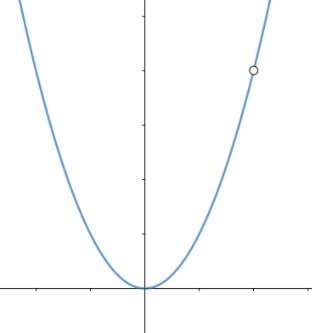
- Hole (removable discontinuity): the function is not differentiable at the hole
- Vertical asymptote: the function is not differentiable at the x value where the vertical asymptote is

- A function is not differentiable at a corner or cusp: For example, the function is not differentiable at

- A function is not differentiable where there is a vertical tangent line: For example, the function or is not differentiable at

- A function is not differentiable if it oscillates back and forth as it approaches a certain point: For example, the function is not differentiable at because the value oscillates back and forth between 1 and -1.
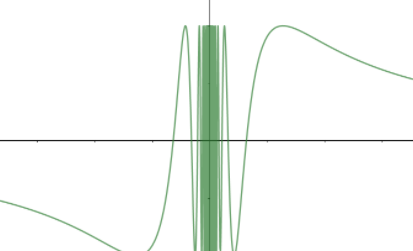
Checking Differentiability at a Point
A common differentiability question you might see on the exam is that they'll give you a piecewise function and ask if the function is differentiable at the connection point . For this function to be differentiable, we need to check that . However, this can be very time-consuming and hard to do. Instead, we can usually check the two following things:
- Check that . Most of the time you can just check if (this is a commonly used trick that only works MOST of the time)
- Check that . We can use differentiation rules to find and instead of having to evaluate a difficult limit. (See the next few sections to learn about these differentiation rules)