Popular Courses
Grade 12 Advanced Functions
Ontario High School
CALCULUS 1000A/B
Western University
Calculus 1
University Study Guides
Grade 12 Pre-Calculus/Functions
Canada High School
AP Calculus (AB) Exam Prep Course
AP Exam Prep
Math 30-1
Alberta High School
Pre-Calculus 12
British Columbia High School
MATH 249
University of Calgary
MATH 265
University of Calgary
Calculus 1
General Course
MATH 275
University of Calgary
MATH 140
McGill University
MAT135H1
University of Toronto
MATH*1080
University of Guelph
MATH 134
University of Alberta
MATH 154
University of Alberta
Calculus 1
University Study Guides
MAT 1320
University of Ottawa
MATH 100
University of Alberta
MATH 203
Concordia University
0:00 / 0:00
Domain
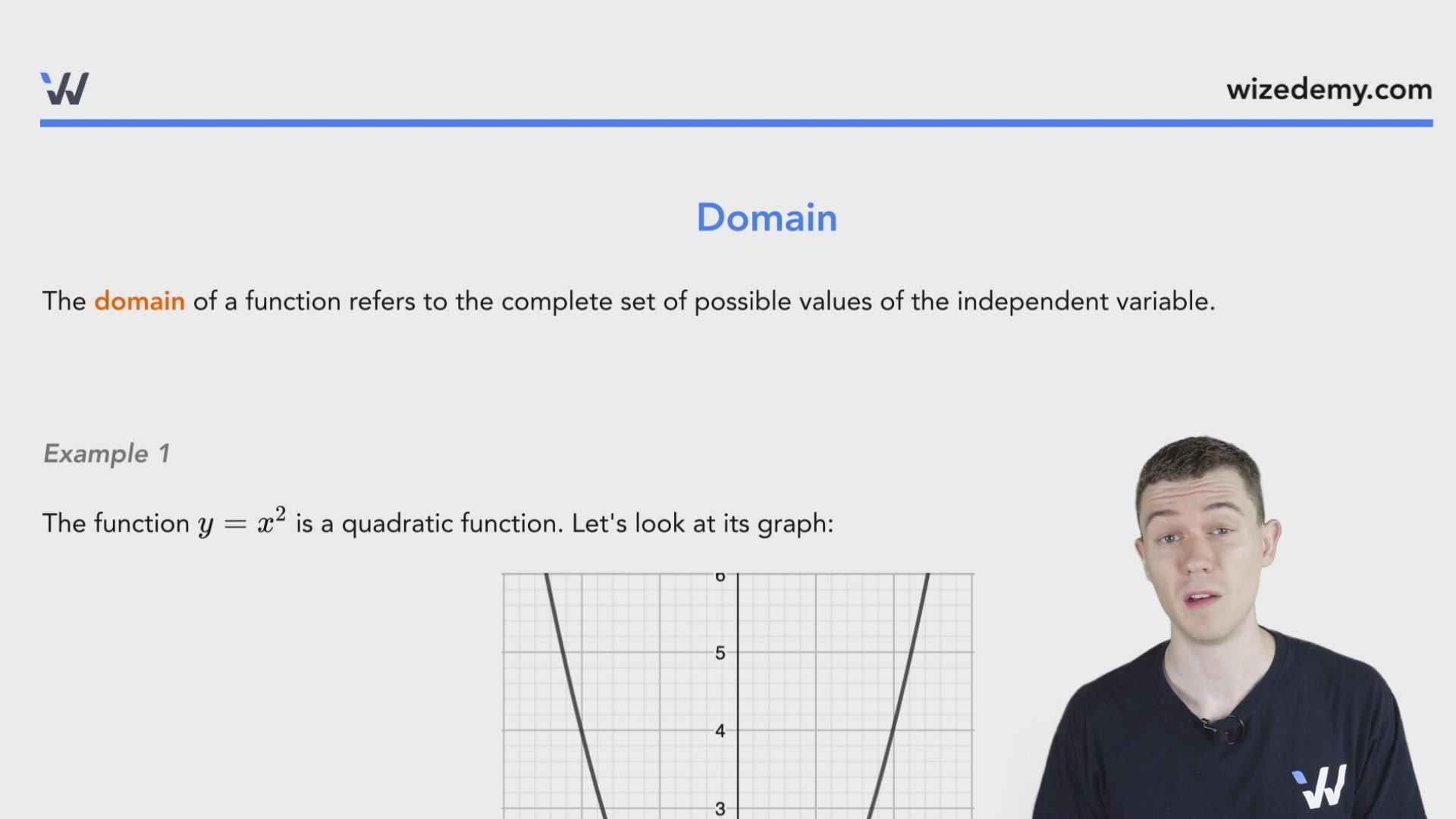
The domain of a function refers to the complete set of possible values of the independent variable. (i.e.: the domain is the set of all possible x-values which will make my function "work" and will out-put real y-values).
Example 1
The function is a quadratic function. Let's look at its graph:

Considering all the possible values of 'x' that allow us to get a real number in return, we are allowed to take any real number 'x'.
Therefore, the domain of is all real numbers.
- Interval Notation:
- Set Notation:
Example 2
Consider the graph of the function below:
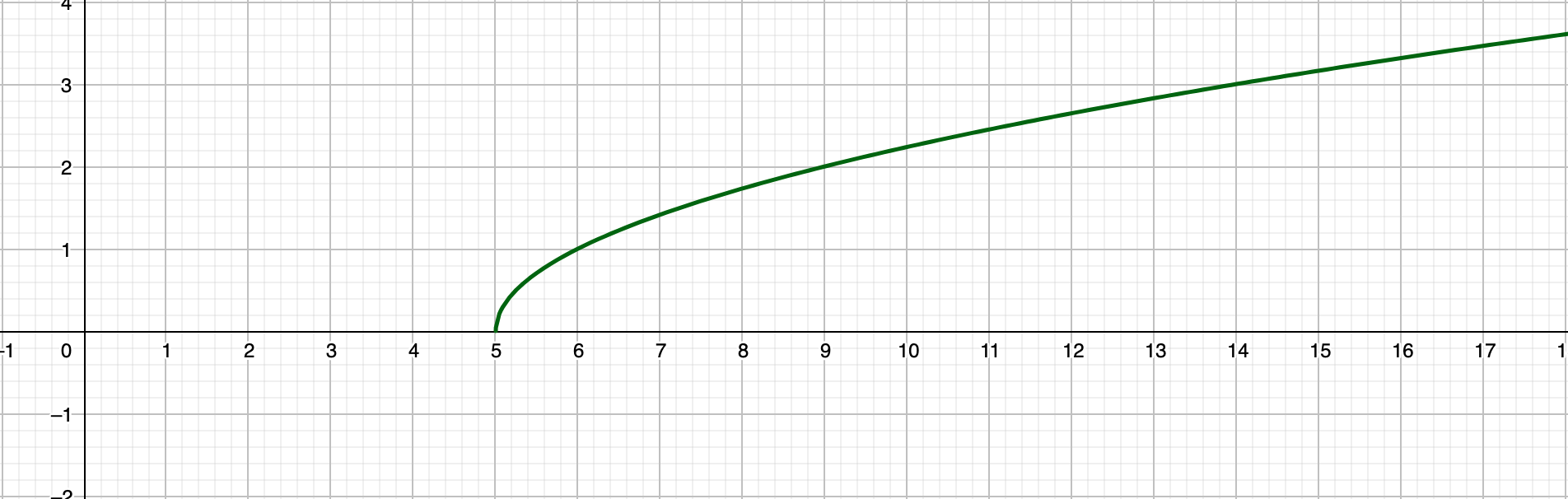
Considering all the possible values of 'x' that allow us to get a real number in return, we are allowed to take any values of 'x' that are equal to or greater than 5.
Therefore, the domain of the function is
- Interval Notation:
- Set Notation:
0:00 / 0:00
Range
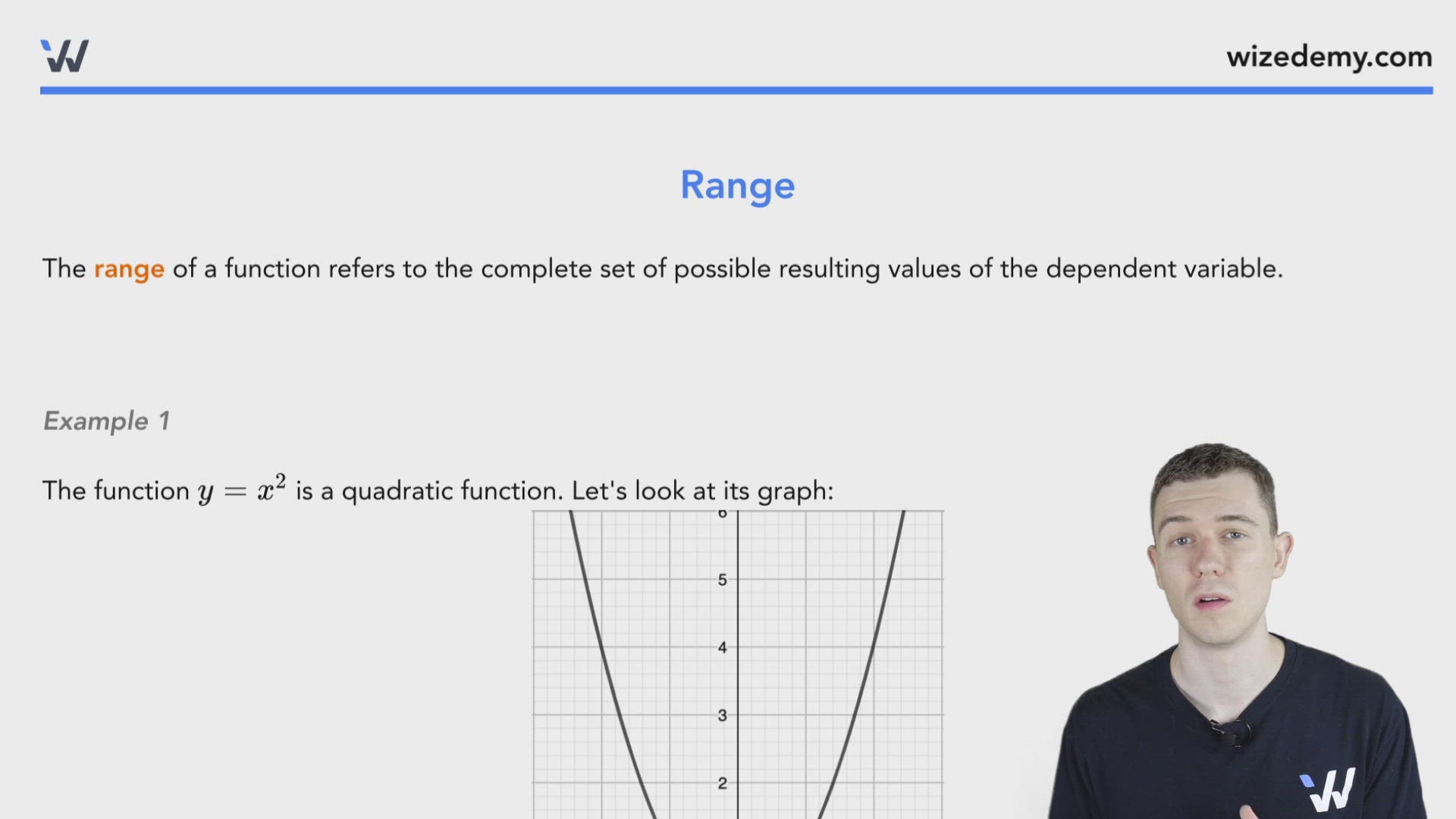
The range of a function refers to the complete set of possible resulting values of the dependent variable. (i.e.: the range is the resulting y-values we get after substituting all possible x values into our function).
Example 1
The function is a quadratic function. Let's look at its graph:

If we consider the possible return values for some input value, 'x', then we can see that 'y' is greater than or equal to 0.
Therefore, the range is
- Interval Notation:
- Set Notation:
Example 2
Consider the graph of the function below:
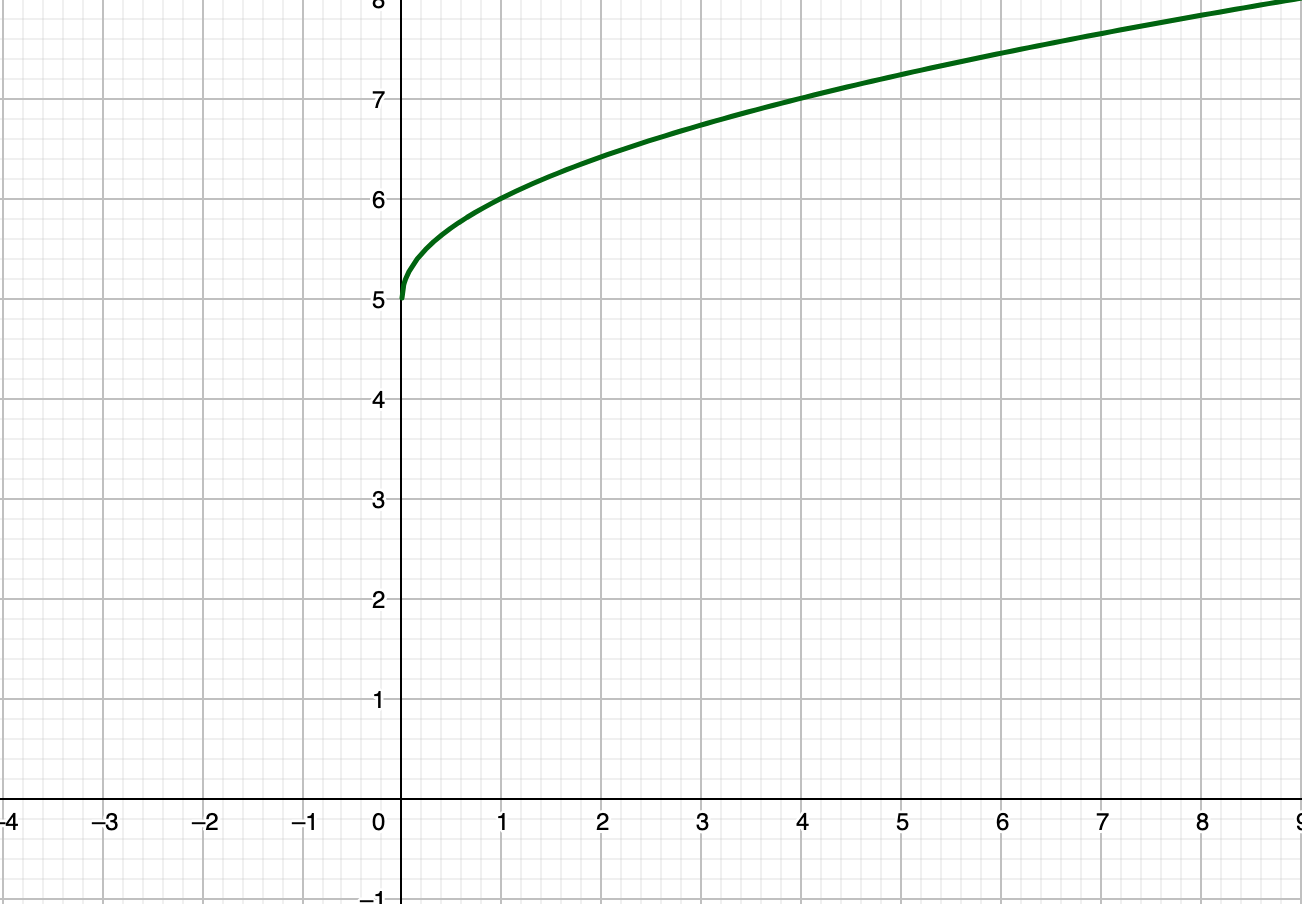
If we consider the possible return values for some input value, 'x', then we can see that 'y' is greater than or equal to 5.
Therefore, the range is
- Interval Notation:
- Set Notation:
0:00 / 0:00
Example: Domain & Range
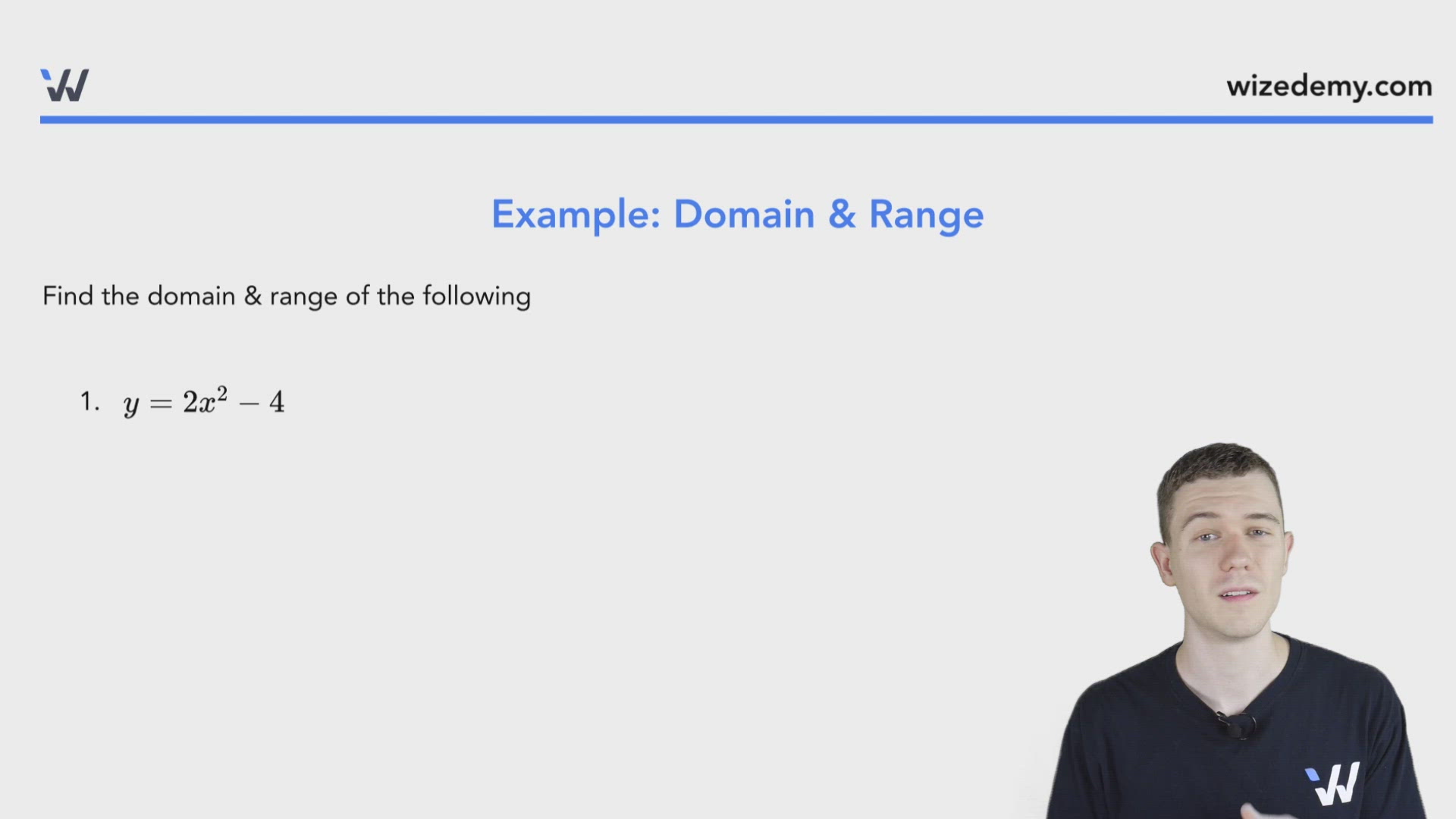
Find the domain & range of the following
1. Sketch the function:
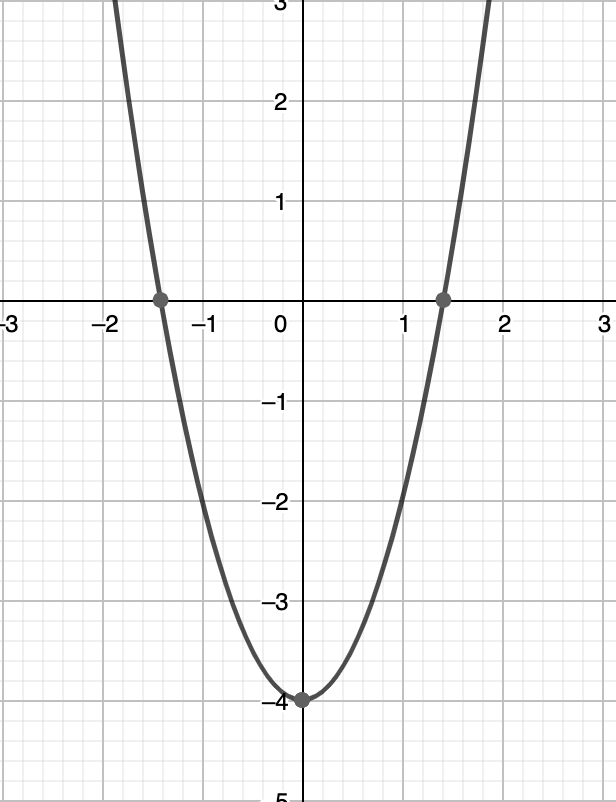
2. Identify any maximums or minimums that could restrict the input and output values
3. Express the domain & range in interval & set notation
1. Sketch the function:
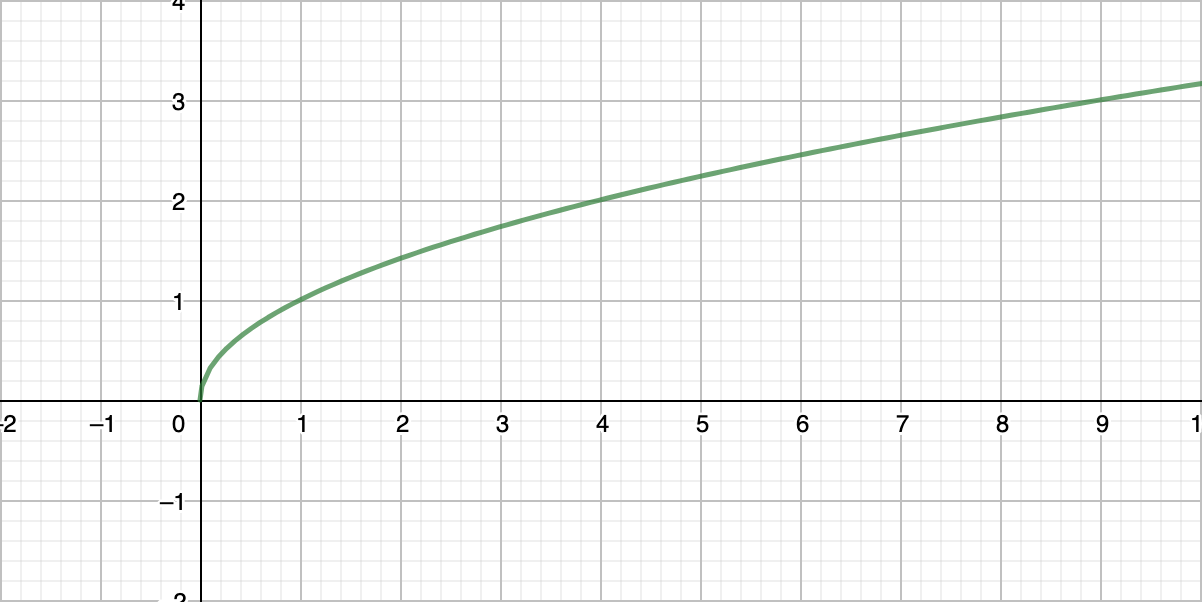
2. Identify any maximums or minimums that could restrict the input & output values
3. Express the domain & range in interval & set notation
Find the range of .
Match the first two functions with their domain, and the second two function with their range.