Wize University Physics Textbook (Master) > Work and Energy
Mechanical Work (Calculus-Based / Using Integrals)
Popular Courses
Intro to Physics
University Study Guides
PHYSICS 1D03
McMaster University
AP Physics C: Mechanics Exam Prep Course
AP Exam Prep
Physics
General Course
PHYS 115
Queen's University
PCS 211
Toronto Metropolitan University
Intro to Physics
University Study Guides
PHYS*1300
University of Guelph
PHY 1321
University of Ottawa
PHYS 131
McGill University
PHYS 111
University of Waterloo
PCS 120
Toronto Metropolitan University
PHYS 110
University of Victoria
LE/PHYS 1800 3.00
York University
PHYS-1400
University of Windsor
PHY131H1
University of Toronto
PHY 1331
University of Ottawa
PHYS 142
McGill University
PHYS 117
University of British Columbia
PHYC 1190
Dalhousie University
0:00 / 0:00
Mechanical Work
Mechanical work is defined as the dot product of displacement vector and force vector. For a constant force applied over the object in distance, the work done by the force is:
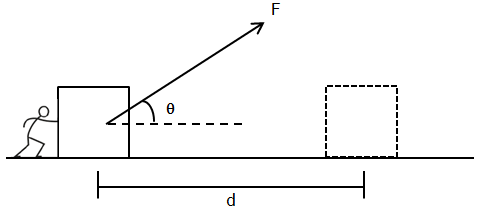
where is the angle between force direction and direction of motion of the object.
For a varying force, work is defined as:
Wize Tip
If the curve of force as a function of x is given for a force along the motion, the area under the curve is the work done by the force.
The SI unit of work is the Joule.
Mechanical Work Sign
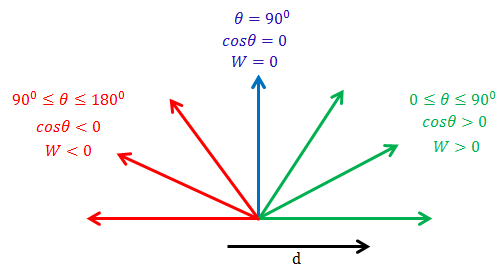
Work is a scalar quantity and can be either positive, negative or zero:
- If the applied force F (and the displacement d are in the same direction, work done is positive – e.g: pushing block forward
- If F and d are in opposite directions (cos 180° = −1), work done is negative – e.g. applying brakes in a moving car
- Work is zero if either
- displacement is zero, so the work done is zero – e.g. pushing against a wall OR
- θ = 90°, so cos θ = 0 (force is perpendicular to displacement) – e.g. you are carrying a box and moving horizontally (no work done against the force of gravity)
Three cases:
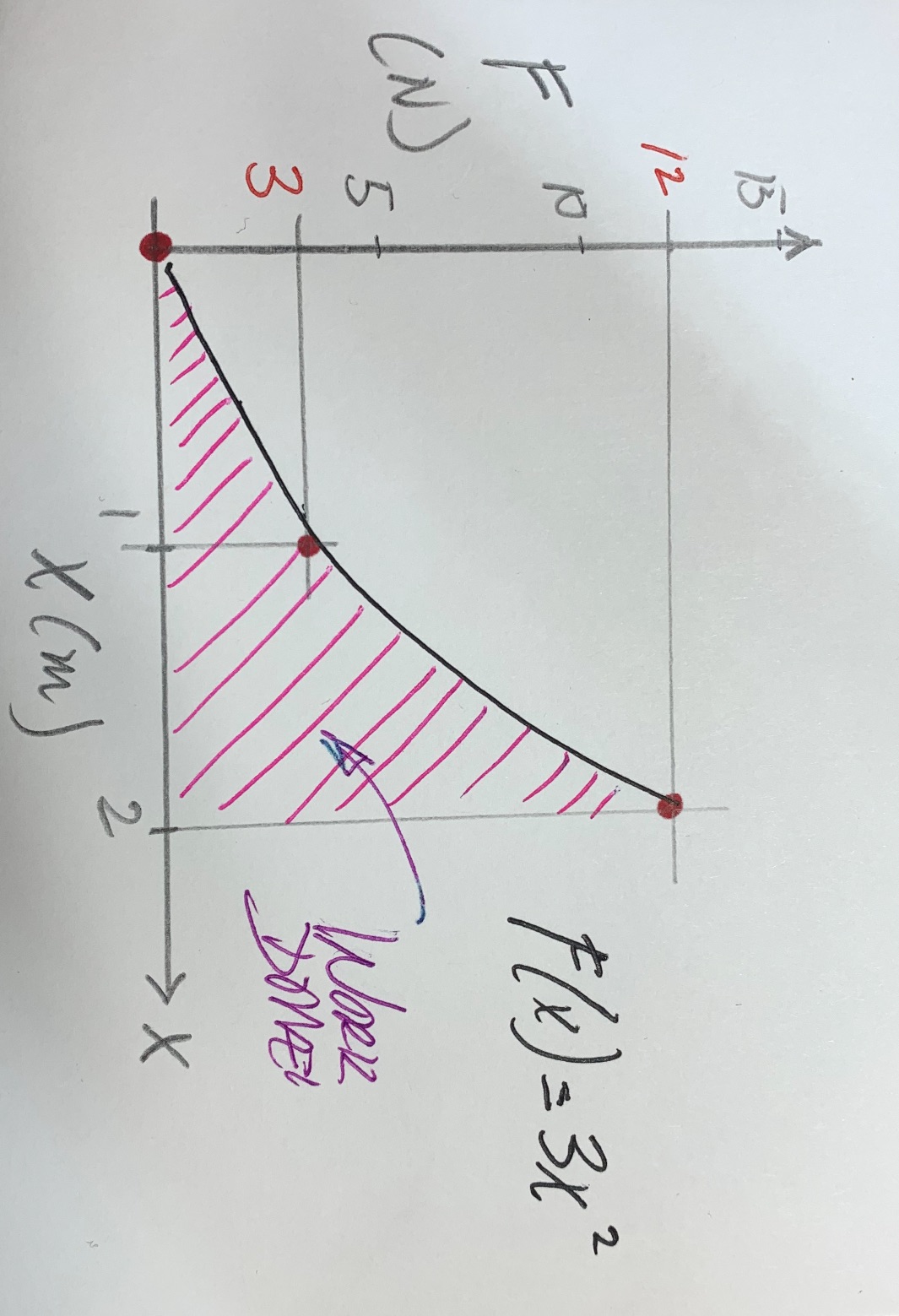
Determine the work done by the variable force F(x) = 3x2 from x=0 to 2m.
W = ∫ dW = ∫ F dx = ∫ 3x2dx = x3 (evaluate from 0 to 2) = 8 - 0 = 8 Nm
Plotting the function from 0 to 2m, the Work Done is the area under the curve.
An object moving along x-axis is acted upon by a variable force . How much work does the force do on the object as the object moves from x=0 to x=16 m?
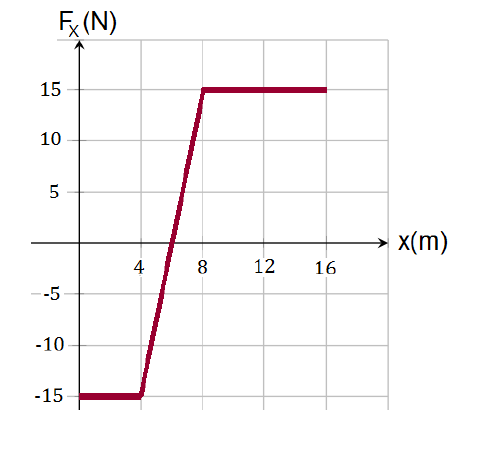
Solution: