Wize High School Grade 11 Biology Textbook > Selection & Evolution
History of the Theory of Evolution
0:00 / 0:00
Charles Darwin
Views Before Darwin
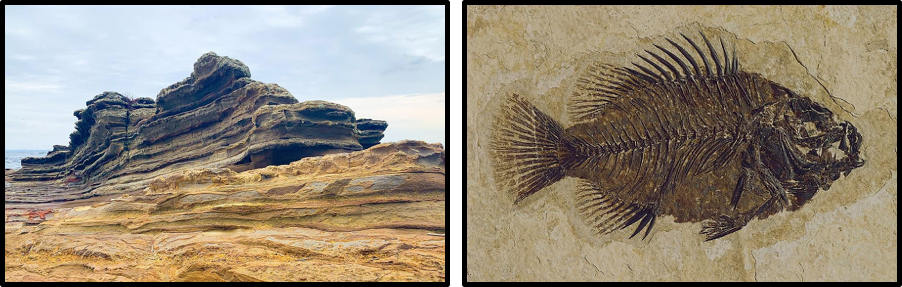
- Geoerges Cuvier: French scientist that studied fossils
- Fossils in strata
- Strata: Specific layers of rock that can be used to infer age of the layer (and the fossils within each stratum)
- Extinction must occur frequently through catastrophic events
- These events lead to fossils in the different strata
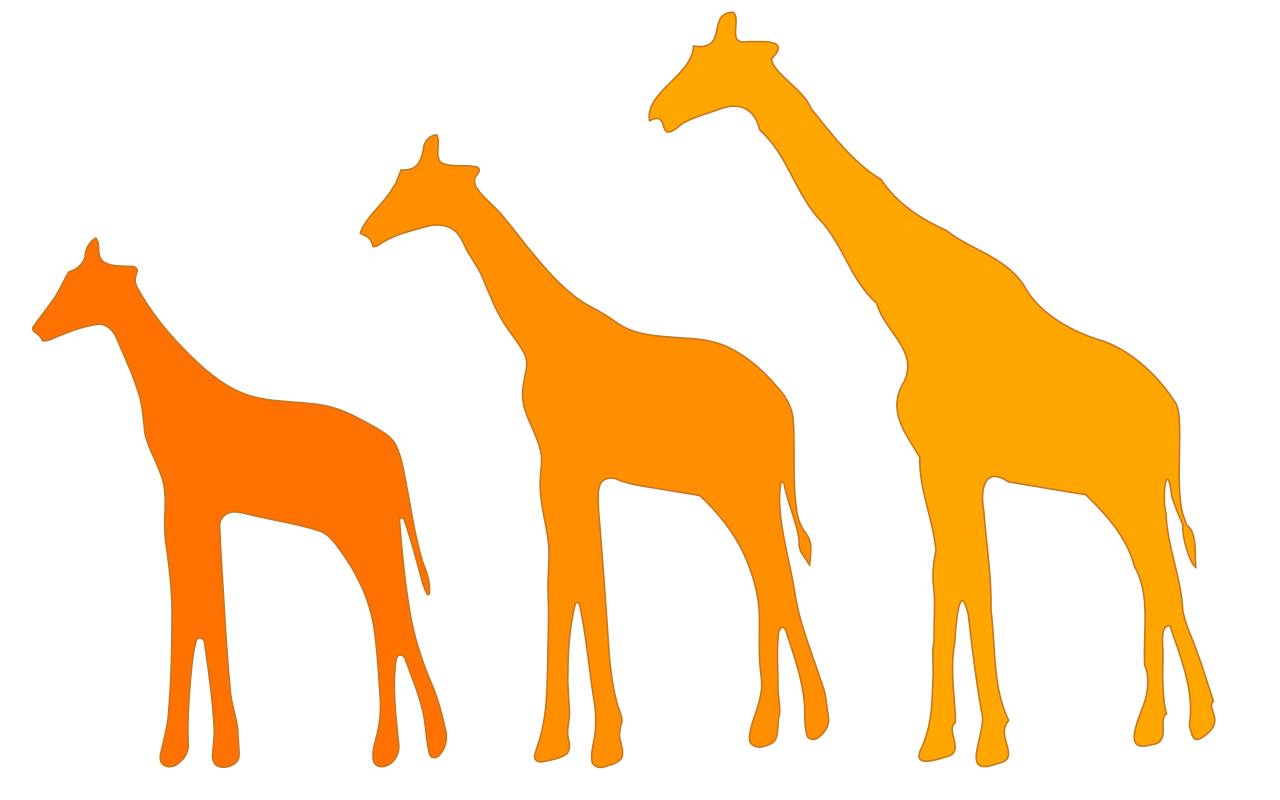
- Lamarck: French biologist that recognized species DO change over time
- Known for incorrect mechanism of evolution
- Believed species changed over evolutionary time scales by passing down acquired characteristics Example: Each generation giraffes would stretch their necks to reach high branches, and then they would pass these longer necks down to their offspring
- This is logically flawed!
Charles Darwin
- Wrote Origin of Species
- Unity: Many species resemble each other - based on all life descending from a common ancestor
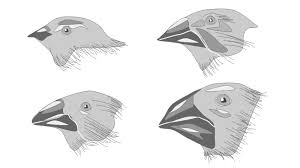
- Diversity: Species in different environments acquired diverse modification (adaptations) Example: Finches on different islands are different, but all are similar and appear to be related
- Variation on a central theme (modification on the design of a common ancestor)
Natural Selection
- Organisms produce many more offspring than the number that survive
- However, populations are stable (don't increase or decrease)
- Resources are limited
- Therefore, organisms must compete to survive
- Variation exists among individuals
- Some of the variation is heritable
- Heritable: A trait that can be passed down to offspring
- Some variations will produce superior competitors
- Individuals with these advantages will be more likely to survive
- Therefore, there will be more individuals with these advantageous traits in the next generation
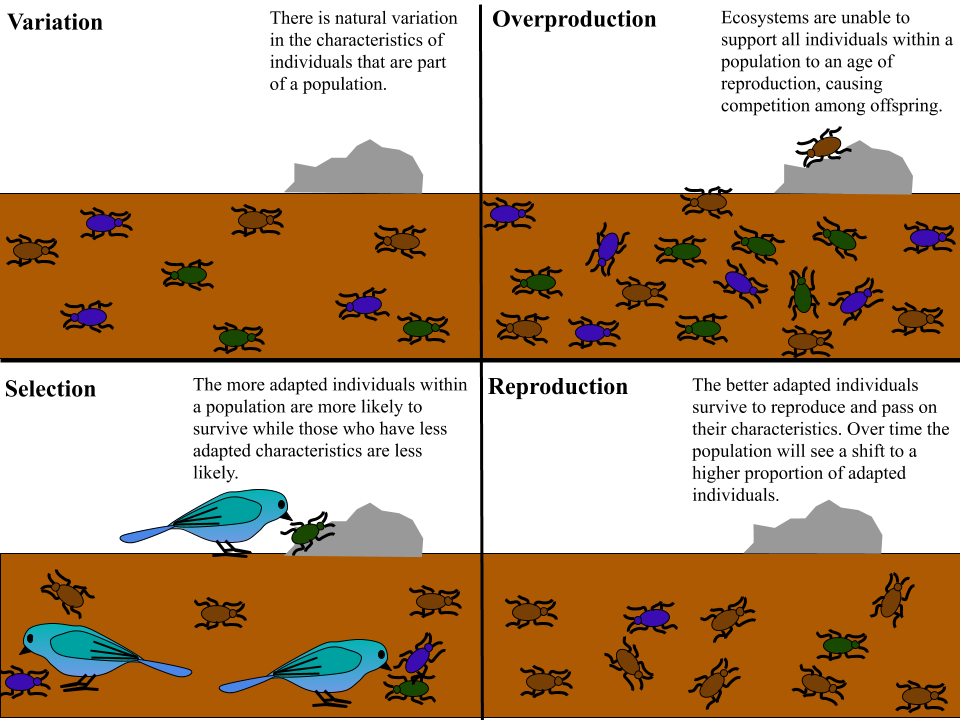
- Together these form the mechanism of evolution: Descent with Modification
- Species adapt to the environment over generations
- Natural selection must act on existing variation
- There has to be some trait present in the population for natural selection to act on
Wize Concept
It's important to note that an individual cannot evolve.
Evolution occurs over many generations as individuals with beneficial traits have more children that survive who also have these beneficial traits.
When you repeat that process over thousands of year, you eventually see the species change.
0:00 / 0:00
Other Players in Developing Evolutionary Theory
Although Charles Darwin is the poster-person for evolution, there have been many scientists before and after Darwin who have contributed to the theory.
Before Darwin
Georges Louis Leclerc, Comte de Buffon
- A French naturalist in the 1700's
- Was the first to propose that both the Earth and all life has a history that cannot be explained by Christianity
- Proposed that life could be created spontaneously in an early Earth and that all life must have come from a single common ancestor
Charles Lyell
- An English geologist in the 1800's
- Proposed "the present is the key to the past"
- Proposed that the forces changing the Earth's surface occurring today have always occurred at the same rate, so the formation of the Earth's crust has occurred through countless small changes over vast amounts of time
Thomas Malthus
- An English economist in the late 1700's to early 1800's
- Proposed that human population growth will always outpace food supply and that without strict population control in the fight for resources humans will be subject to famine, disease and war where some individuals will live and many others will die
- Darwin read his work after returning to England from the Beagle expedition
- Helped Darwin formulate his ideas around natural selection
With Darwin
Alfred Wallace
- An English biologist in the 1800's - a contemporary of Darwin
- Independently came up with the theory of natural selection when observing organisms in Asia
- Sent is theory to Darwin in 1858 - 1 year before On the Origin of Species was publish in 1859
After Darwin
Stephen Jay Gould & Niles Eldridge
- Evolutionary biologists in the late 1900's
- Proposed the concept of punctuated equilibrium in 1972
- Proposed that species generally stay the same for millions of years until a single rapid burst of changes causes the emergence of a new species
- Proposed that these rapid changes would only occur on the edges of species ranges where small subsets of the population could become isolated
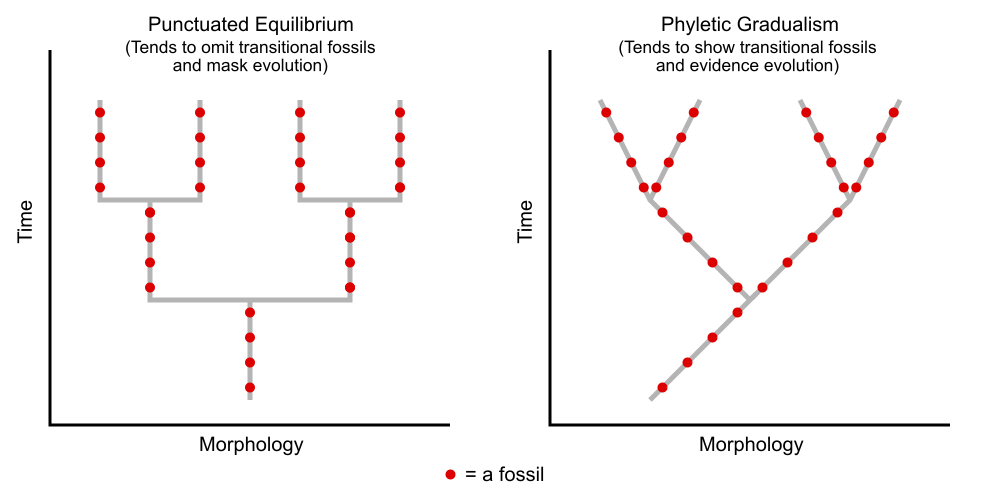
(CC BY-SA 4.0)
Karl Popper
- Philosopher in the 1900's
- Came up with the idea that scientific theories must be falsifiable
- Falsifiable statements can be tested with observation
- Example: there are no elephants in North America
0:00 / 0:00
Modern Theory of Evolution
The modern theory of evolution is derived from the evolutionary theory of natural selection proposed by Charles Darwin, however incorporates other bio-geological theories and facets of our current understanding of genetics.
Modern Darwinism
- Evolution happens as a result of changes in allele frequencies in a population over time
- Evolution is gradual
- Speciation happens as a result of evolutionary processes
- All life is related through common ancestry = descent with modification
- Most but NOT all evolution is the result of natural selection
- Other factors affecting evolution:
- Random mutations
- Genetic Drift = changes in allele frequencies in a small population due to random chance
- Gene flow = migration, transfer of alleles from one population to another
- Evolution occurs to populations NOT individuals
0:00 / 0:00
Example: Facets of Modern Evolution
List the facets of Modern Evolutionary Theory:
- Evolution occurs to populations, not individuals
- Evolution is gradual
- Evolution is the accumulation of changes in allele frequencies in a population over time
- Evolution is the result of descent with modification - all life on Earth is related through common ancestry
- Speciation, one species becoming another, is the result of these changes in allele frequency over time
- Most evolution, but NOT all evolution occurs by natural selection
Practice: Scientist
Which scientist studied fossils and concluded that mass extinctions were common throughout history.
Practice: Darwin
Which of the following did Charles Darwin not believe in:
Practice: Natural Selection
What inference did Darwin draw from the observation that organisms produce more offspring than the environment can support?