0:00 / 0:00
Light & The Electromagnetic Spectrum
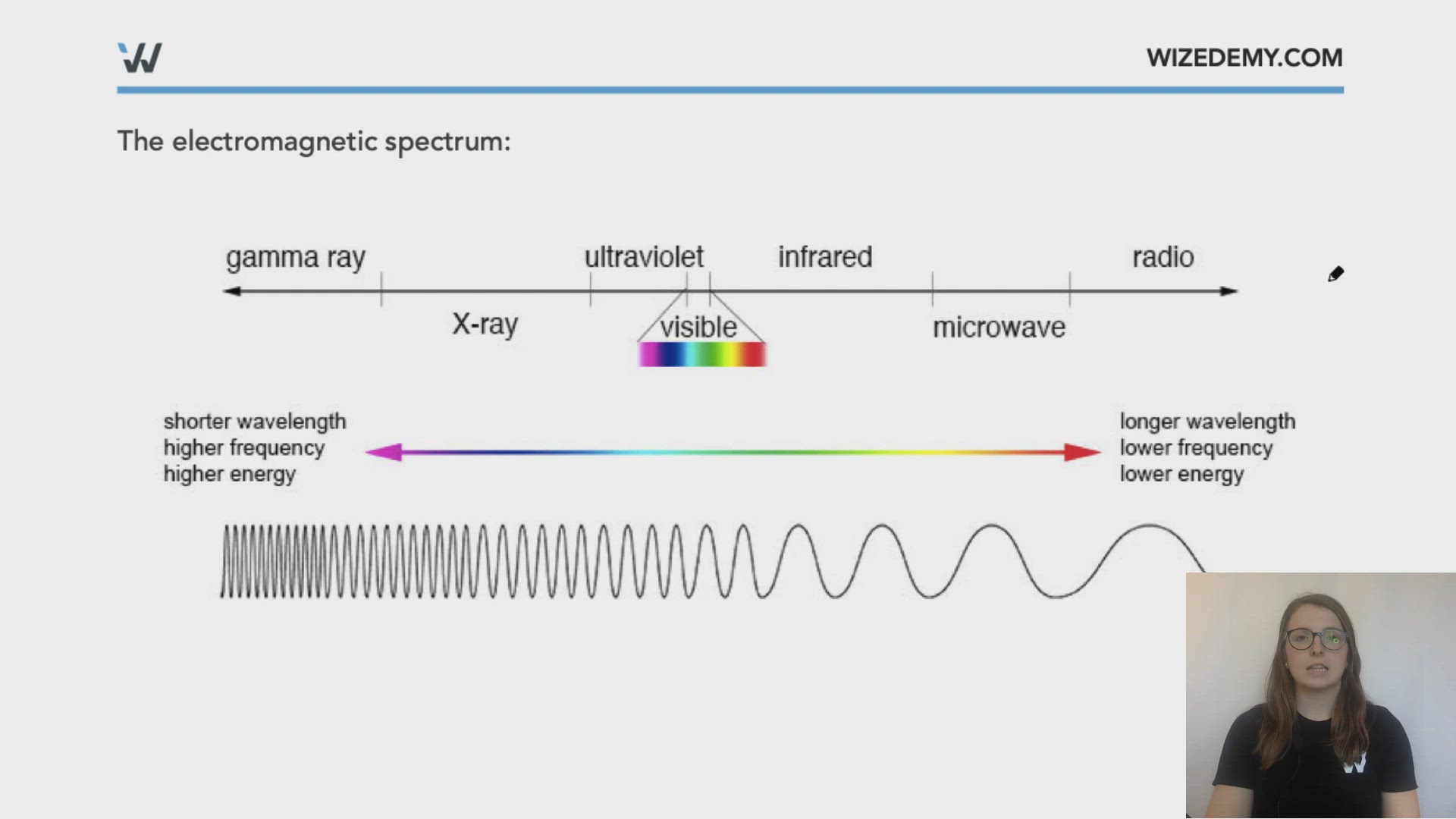
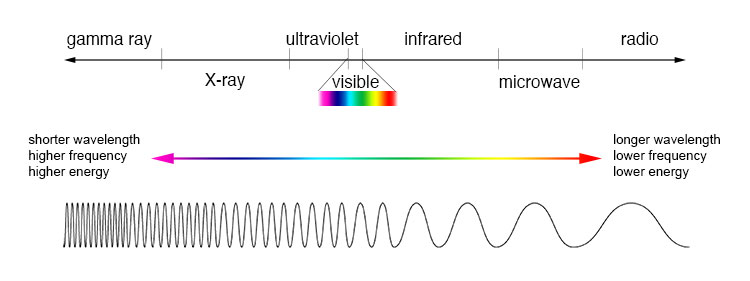
The electromagnetic spectrum:
0:00 / 0:00
Light Absorption by Chlorophyll
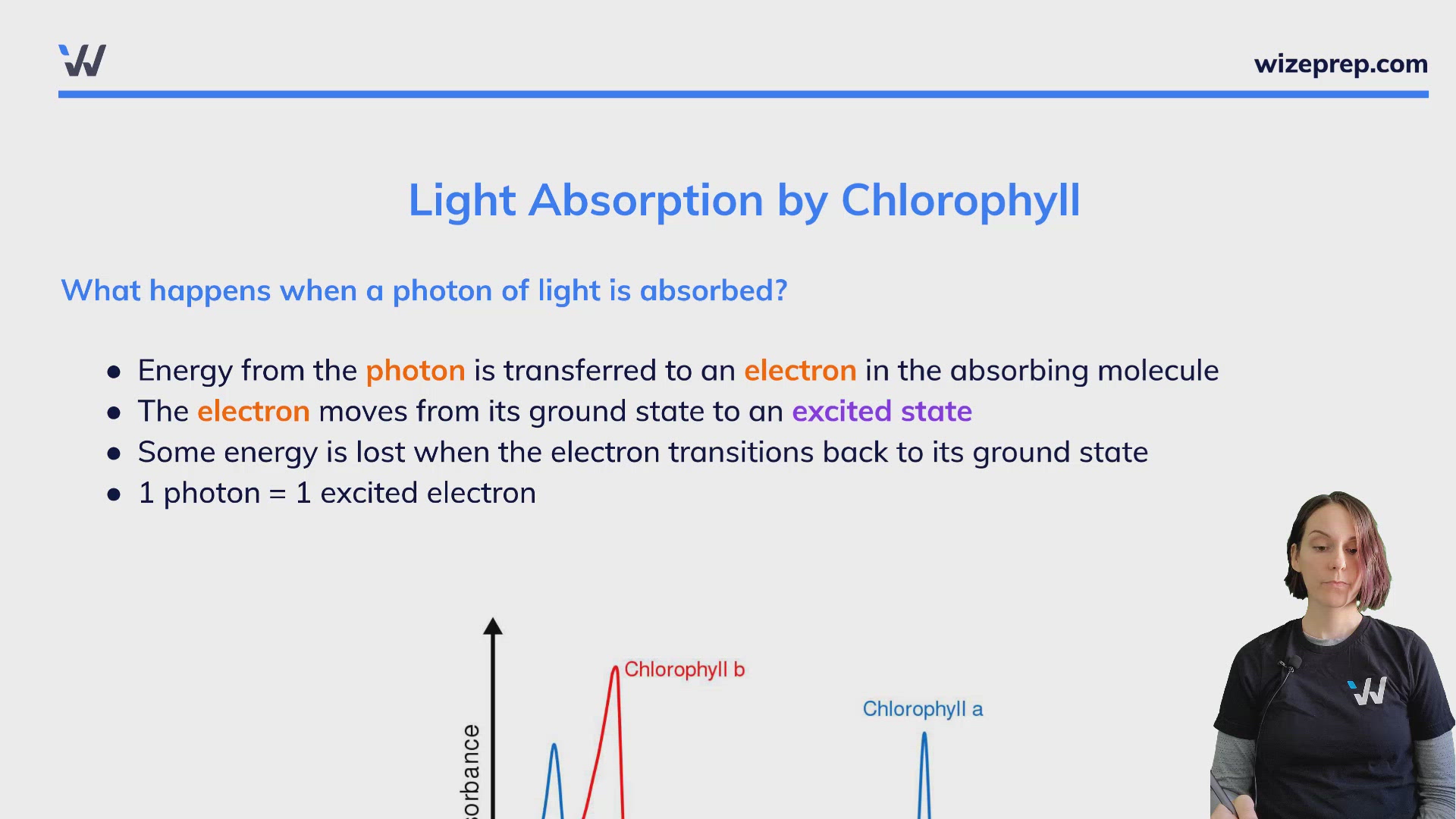
What happens when a photon of light is absorbed?
- Energy from the photon is transferred to an electron in the absorbing molecule
- The electron moves from its ground state to an excited state
- Some energy is lost when the electron transitions back to its ground state
- 1 photon = 1 excited electron

0:00 / 0:00
Plant Structures for Light-Dependent Reactions
The main organelle responsible for the light-dependent reactions of photosynthesis is the chloroplast. It harvests energy light to produce sugar. Chloroplasts are separated into three compartments by three membranes:
- Outer Chloroplast Membrane – Highly permeable.
- Intermembrane Space – Space found between the inner and outer membranes.
- Inner Chloroplast Membrane – Highly impermeable except where specific transporters are present. Impermeable to ATP and NADPH.
- Stroma – The aqueous fluid within the inner chloroplast membrane; analogous to the matrix of mitochondria. Site of sugar production.
- Thylakoid Membrane – Highly folded membrane which forms a set of flattened, disc-like sacs (thylakoids) which are arranged in stacks (grana). Contains chlorophyll, site of electron transport chain, and ATP synthase.
- Thylakoid Space – Internal compartment of thylakoid.

Chlorophyll
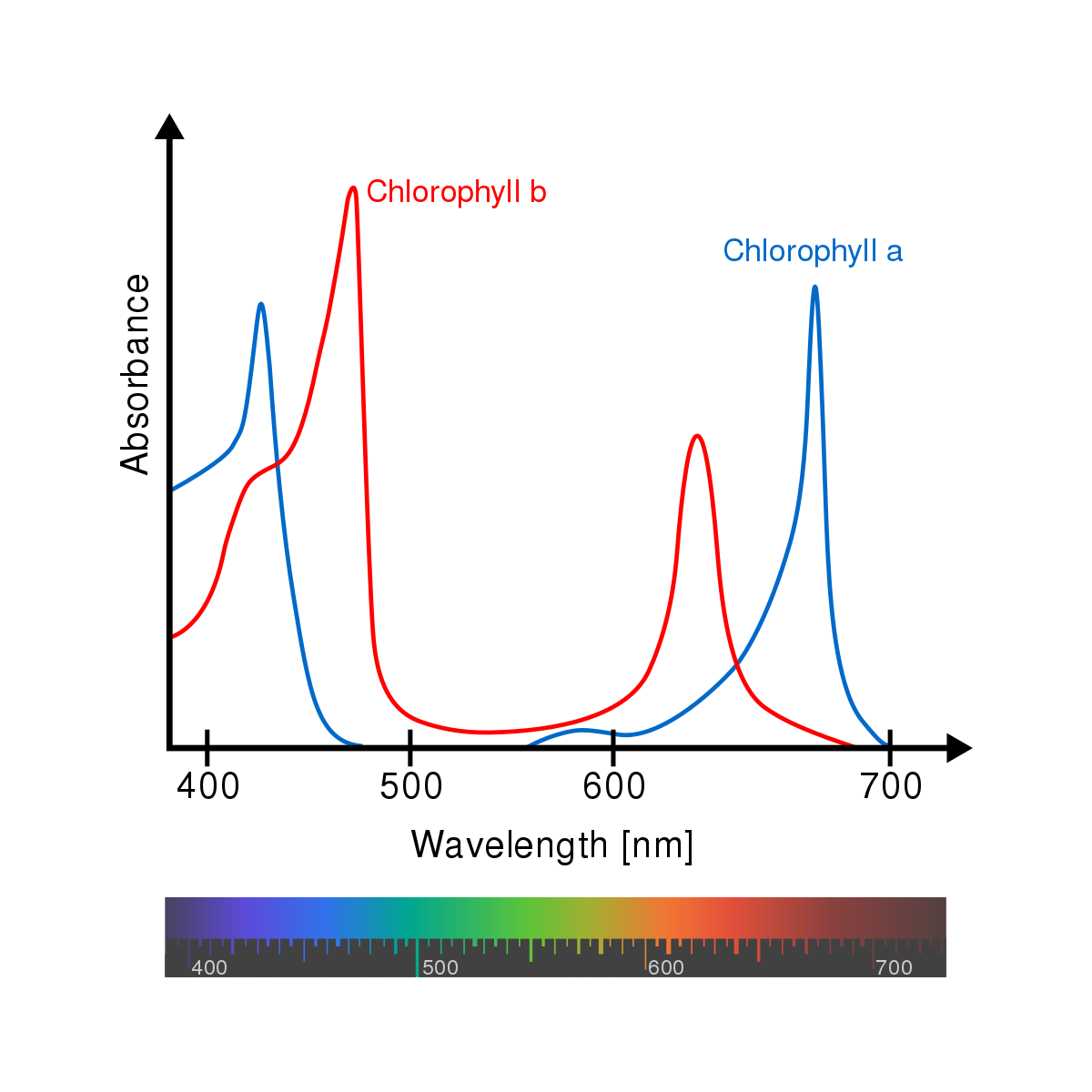
- Chlorophyll – Light-capturing pigments found in chloroplast, are responsible for the first step in photosynthesis.
- When pigment absorbs light an electron jumps to a higher energy level; as it returns to its ground state, the released energy is transferred to the neighboring chlorophyll molecule.
- Pigments are organized into antennae complexes that associate with the two photosystems of photosynthesis.

0:00 / 0:00
Photosynthesis Overview
Photosynthesis is a series of light-driven reactions which converts atmospheric CO2 to organic molecules and O2.

Stage I: Light Reactions
- The overall goal of the light reactions is to convert light energy into chemical energy in the form of ATP and NADPH.
- Using light energy harnessed by pigments (such as chlorophyll), electrons are excited and passed along the electron transport chain (ETC) to set up an electrochemical proton gradient which is used to drive ATP synthesis.
- The final electron acceptor is NADP+ which becomes NADPH.
Photosystems
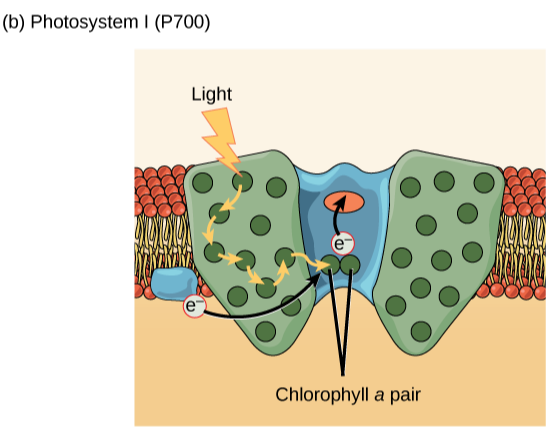
- Pigments are organized in photosystems.
- A photosystem has two parts: the light harvesting (antenna) complex + the reaction center.
- They both:
- Absorb light energy;
- Pass it from pigment to pigment in the light harvesting complex;
- Energy ends up exciting chlorophyll a in the reaction center;
- Chlorophyll a gives off an electron to an electron acceptor.
- In photosystem II:
- Chlorophyll a regains electrons it lost by splitting water (releases O2).
- The excited electron is passed down members of the electron transport chain (ETC).
- Its energy is used to drive protons (H+) into the lumen.
- The electron ends up in chlorophyll a of photosystem I.

- In photosystem I:
- Absorbs light energy, gives off an electron and passes it to an enzyme which uses the electrons to reduce NADP+ to NADPH.
- The electrons donated by the reaction center are replaced by photosystem II.
- Proton gradient is used to generate ATP by ATP Synthase.
Stage II: Dark Reactions (Calvin Cycle)
- Happens in the stroma.
- ATP and NADPH that result from Stage I are used for carbon fixation (production of organic molecules from CO2).
- Rubisco is the main enzyme responsible for combining CO2 with an organic molecule.
- Glyceraldehyde-3-phosphate (G3P) is made. G3P is used to produce other sugars such as glucose.

0:00 / 0:00
Example: Why Plants Need Light
Explain why plants need light in terms of the Calvin cycle and photosynthesis?
- Light drives photosynthesis to generate ATP
- Light also drives photosynthesis to NADPH
- is required for fixation
- allow the plant to generate glucose
Practice: Carbon Fixation
Where does CO2 fixation occur?
Practice: Rate of Photosynthesis
How can you monitor the rate of photosynthesis:
Practice: Source of Oxygen
Oxygen released during photosynthesis is a by-product of what?
Practice: Overall Photosynthesis Reaction
Given the following overall photosynthesis reaction, fill in the missing components (left to right):
6 H2O + ______ --> ________ + 6 O2