Wize High School Grade 11 Biology Textbook > Cell Biology
Environmental Effects on Cells
0:00 / 0:00
Cells & the Environment
Single celled organisms like archaea and bacteria, and the cells of multicellular eukaryotic organisms, interact with their surrounding environments. In the case of prokaryotes, this is the fluid or surface they reside in/on. In the case of multicellular organisms, this is the extracellular environment - the space or fluid that surrounds the cell.
Whether cells exist in isolation or as part of an organism, they need to be able to sense changes in their environments and respond accordingly.
How do cells interact with their environment?
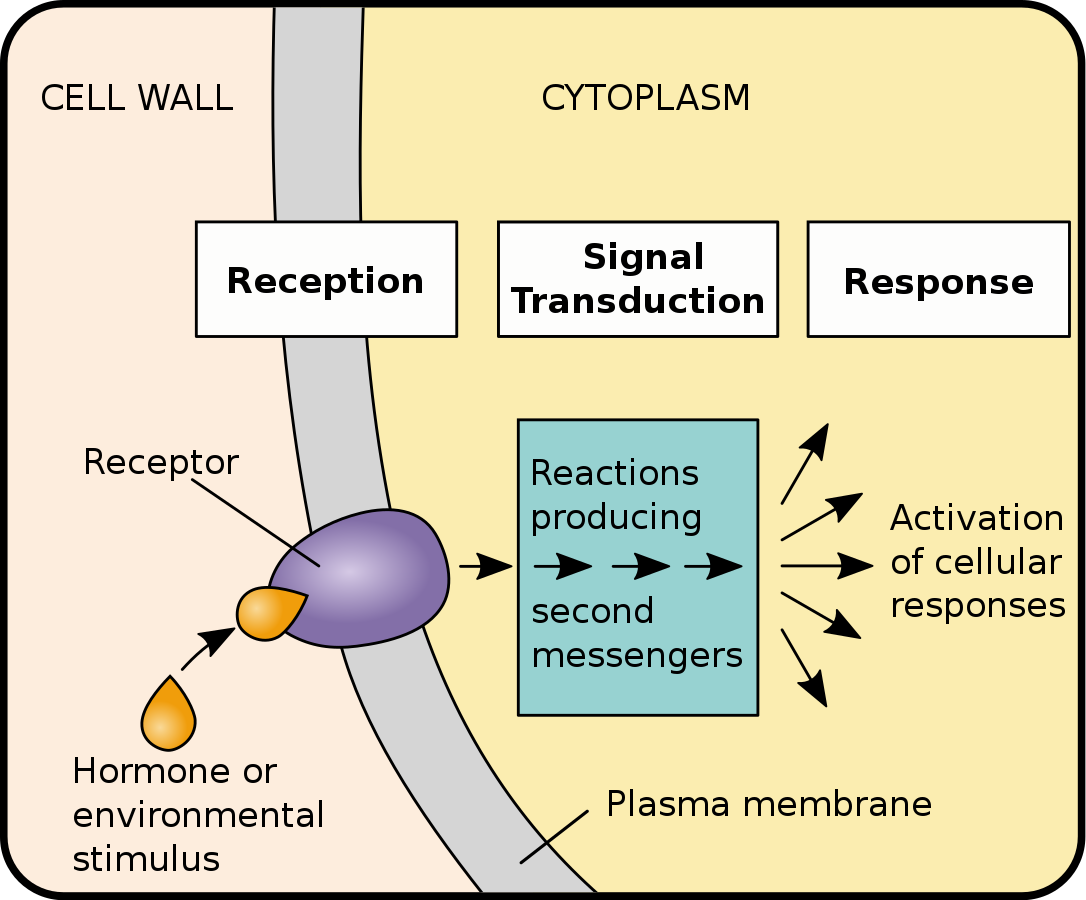
- Cells usually sense their environment using membrane proteins
- An extracellular signal, like a hormone flowing through the bloodstream, or a nutrient in a pond where a bacterium is living, binds to an extracellular protein, called a receptor
- The binding of these molecules to the receptor leads to a signal that is initiated on the other side of the membrane, inside the cell
- This signal leads to the cell's response
- The response depends on the signal that was received. In the case of the hormone, a cell might start to grow and divide. In the case of the bacterium, the cell might start to gear up its metabolism to consume the nutrient.
0:00 / 0:00
Effects of Lead on Nerve Cells
Environmental chemicals and contaminants can affect the function of cells in our bodies. For example, the heavy metals lead and mercury are known to affect the function of nerve cells.
Lead & Nerve Cells
Lead looks a lot like calcium, which is essential for proper nerve cell and brain function.
In order for nerve cells to send signals to each other, large amounts of calcium ions cross into the cell. This leads to the release of chemicals, called neurotransmitters, which pass the nerve signal onto the next nerve cell.
Because lead looks a lot like calcium, it's able to alter the signals sent between neurons.
0:00 / 0:00
Effects of Sun Rays on Cells
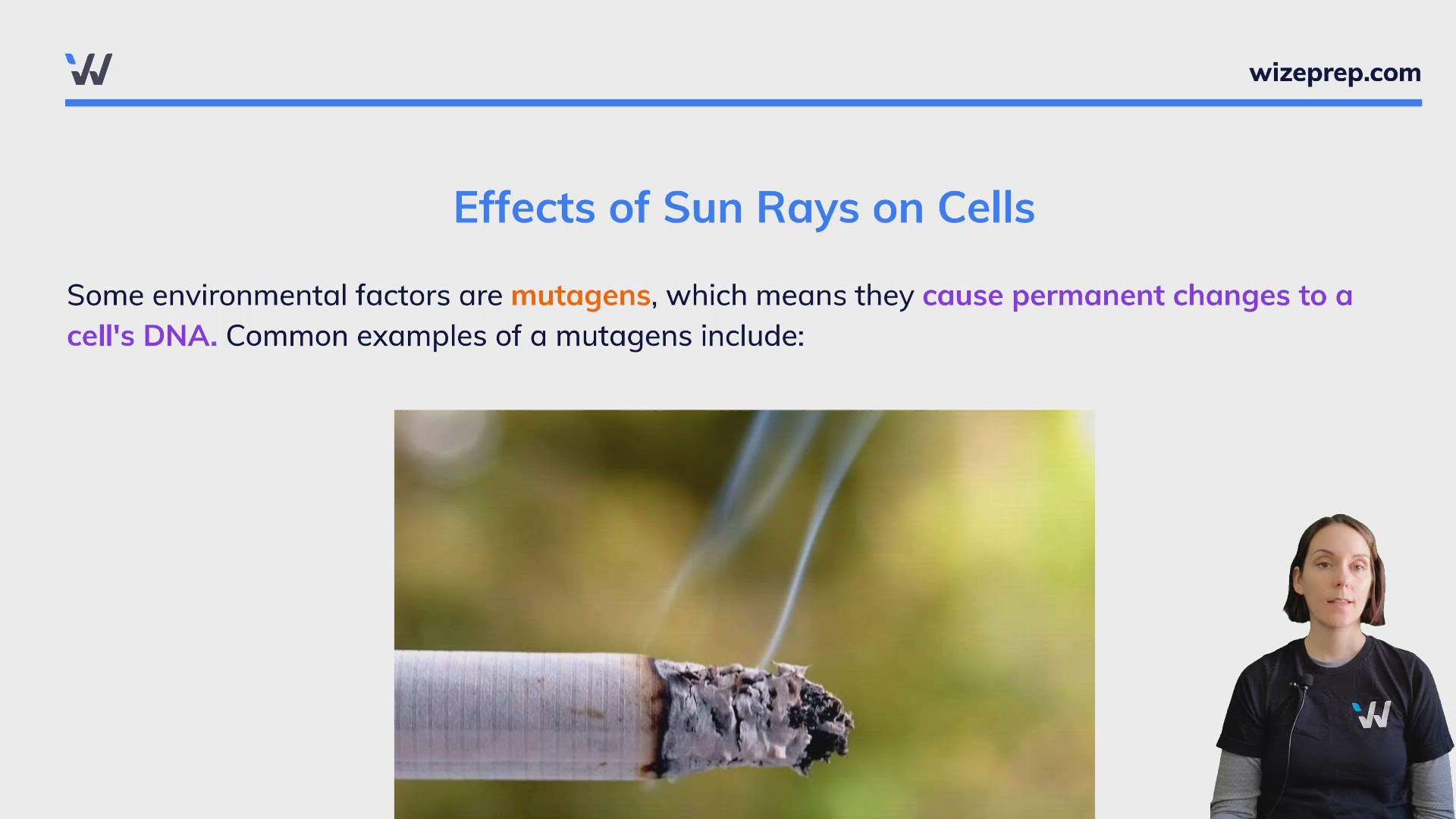
Some environmental factors are mutagens, which means they cause permanent changes to a cell's DNA. Common examples of a mutagens include:

- Cigarette smoke
- Pollution
- Radiation
- Sunlight
UV Radiation
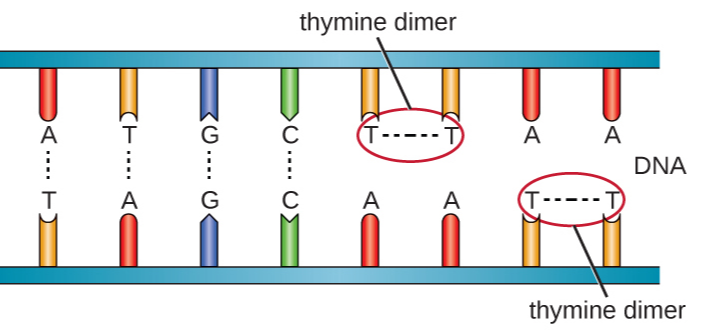
Ultraviolet (UV) radiation comes from the sun. When UV radiation reaches your skin cells, it causes changes in the bonds within the DNA structure. Specifically, it leads to the formation of thymine dimers. These mutations can ultimately lead to skin cancer.
0:00 / 0:00
How Does Botox Affect Nerve Cells?
Botox is a deadly toxin, called botulinim toxin, that is produced by the bacterium Clostridium botulinum. When ingested, the toxin leads to paralysis and death. Botulinum toxin is the mostly poisonous substance known.
Yet people inject the toxin into their faces to reduce the look of wrinkles! How does the toxin affect cells, and how can it be used cosmetically and medically?
Botulinim toxin prevents the release of neurotransmitters. This prevents nerve cells from sending signals to one another and leads to paralysis.
Botulinum toxin is marketed under the name Botox, which can be used in cosmetics or as a medical treatment.
Injection of botulinum toxin into the muscles under facial wrinkles causes relaxation of those muscles, resulting in the smoothing of the overlying skin. Botox can also be used to treat pain and migraine by preventing transmission of pain signals.
Practice
Because prokaryotic cells are free-living, single celled organisms, they need to quickly adapt to changes in their extracellular environments. Eukaryotic cells reside in a stable environment as part of a multicellular organism, so they do not need to respond to environmental changes.
Practice
Which of the following might impact the behaviour of a cell?
Practice
Which of the following proteins do you expect to be involved in sensing environmental changes?