0:00 / 0:00
The Laws of Thermodynamics
The First Law of Thermodynamics
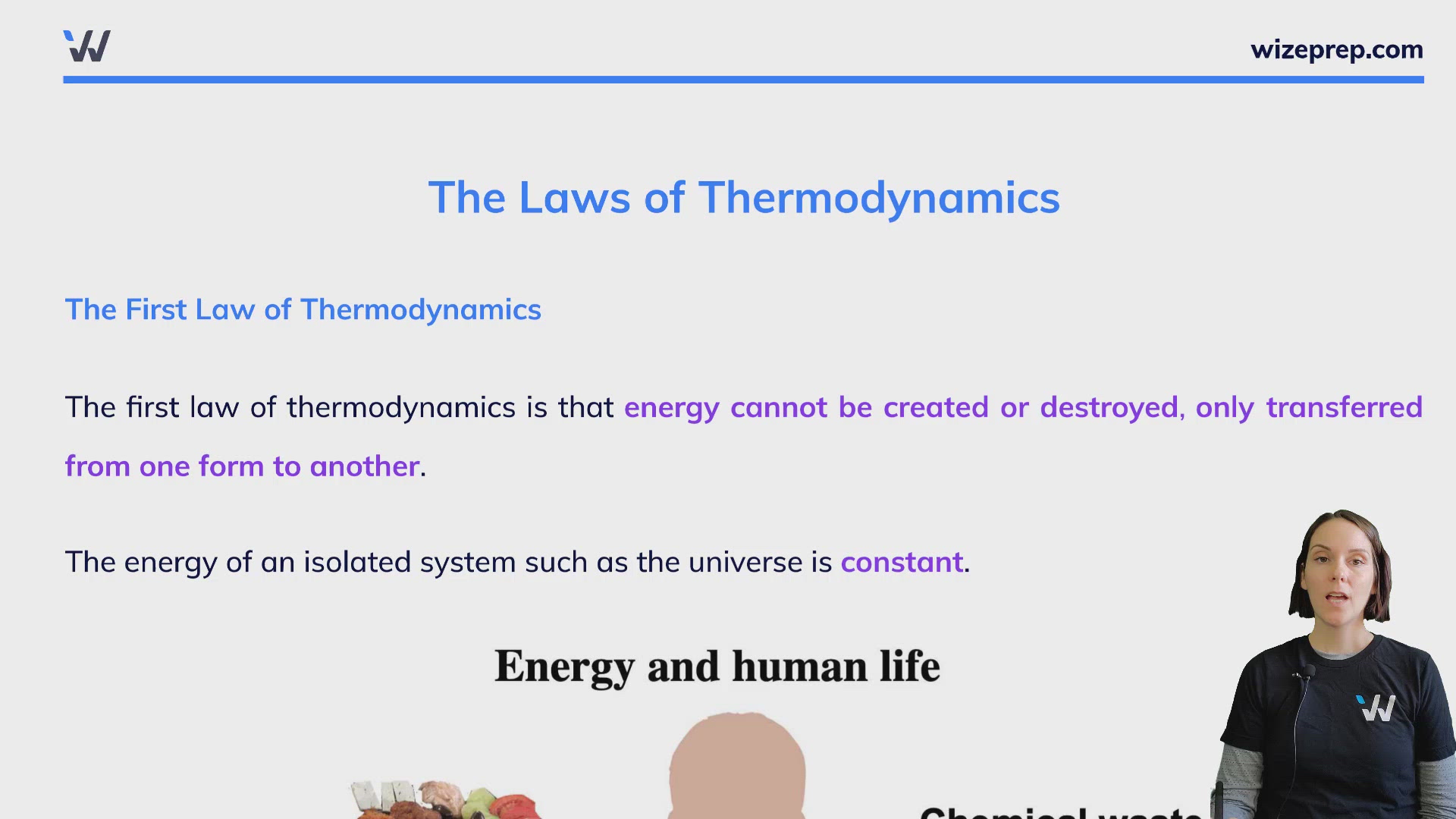
The first law of thermodynamics is that energy cannot be created or destroyed, only transferred from one form to another.
The energy of an isolated system such as the universe is constant.

The Second Law of Thermodynamics
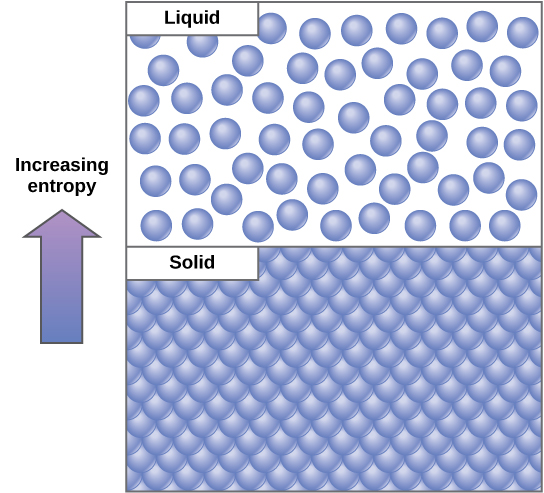
The second law states that a system naturally moves toward more disorder. That is, its entropy always increases.
- This can also be related to the first law by thinking of the energy transfer. Every transfer of energy from one form to the other increases the universe's entropy.
- If a system is naturally moving toward more disorder, then it will take work to keep or create order. Example: Once you clean your bedroom, it doesn't take long to make a mess again. In order to keep it clean and in order, we need to do work.
0:00 / 0:00
Example: Life Requires Energy Input
Why does life require energy input?
- Entropy (randomness) is always increasing
- Life needs to have order
- Energy is needed to maintain ordered structures
0:00 / 0:00
Enzymes
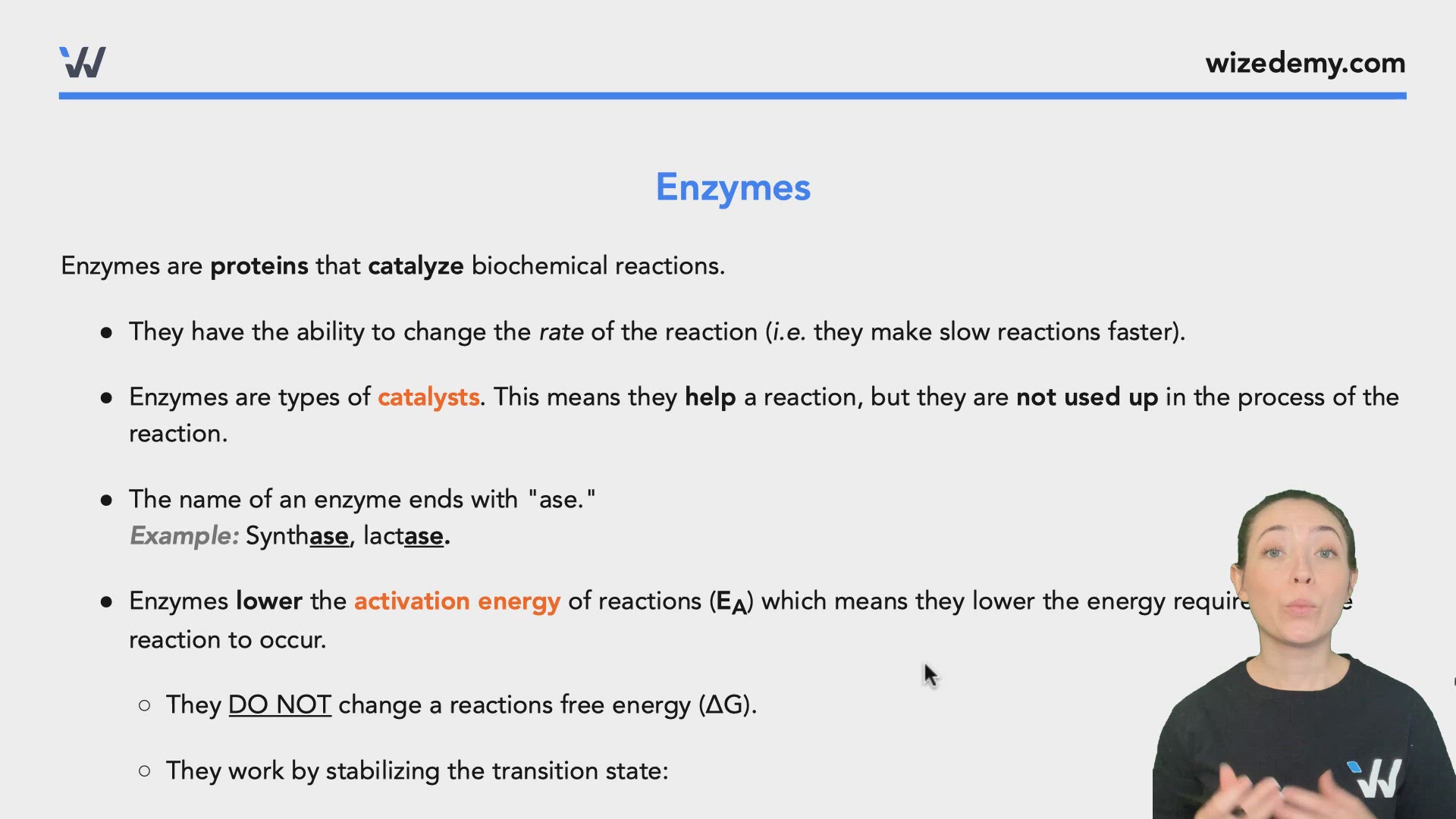
Enzymes are proteins that catalyze biochemical reactions.
- They have the ability to change the rate of the reaction (i.e. they make slow reactions faster).
- Enzymes are types of catalysts. This means they help a reaction, but they are not used up in the process of the reaction.
- The name of an enzyme ends with "ase." Example: Synthase, lactase.
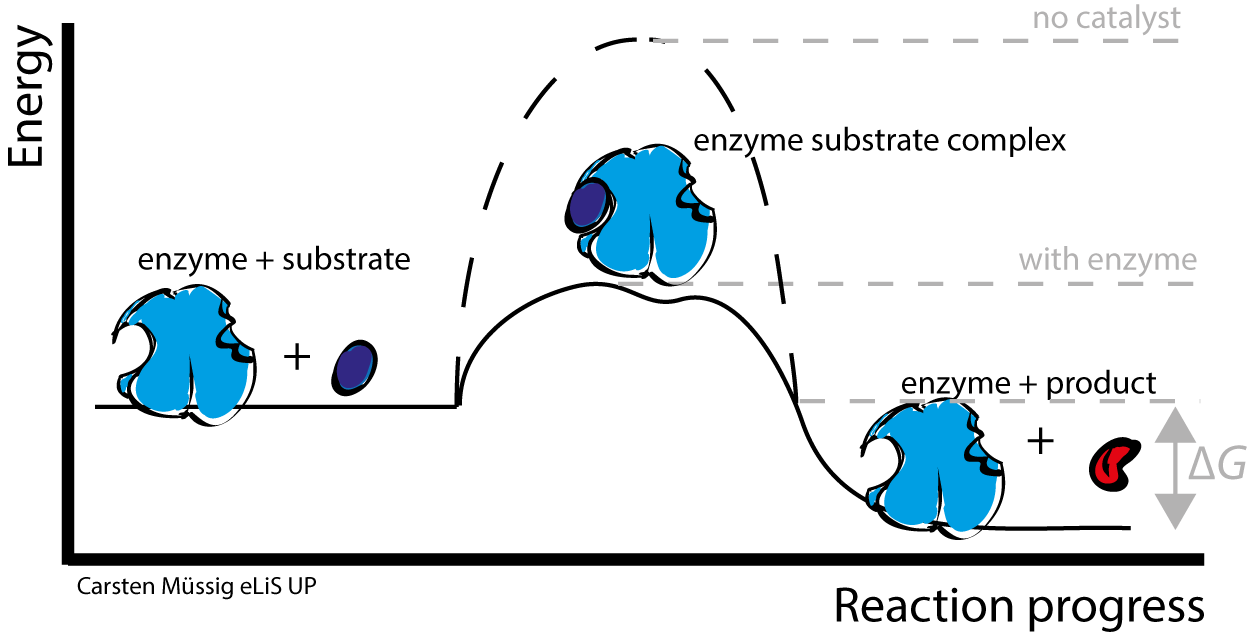
- Enzymes lower the activation energy of reactions (EA) which means they lower the energy required for the reaction to occur.
- They DO NOT change a reactions free energy (ΔG).
- They work by stabilizing the transition state:
(transition state)
Enzymes Specificity
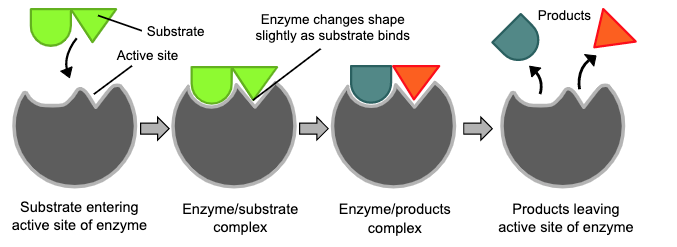
Enzymes are specific to one (or a few) substrates, and have an active site that binds to its particular substrate.
- Induced fit – active site changes upon substrate binding for better fit/catalysis.
- The active site holds the molecules in a position that promotes a reaction to occur.
0:00 / 0:00
Enzyme Activity
Enzyme Activity And Its Effect On the Rate of a Reaction
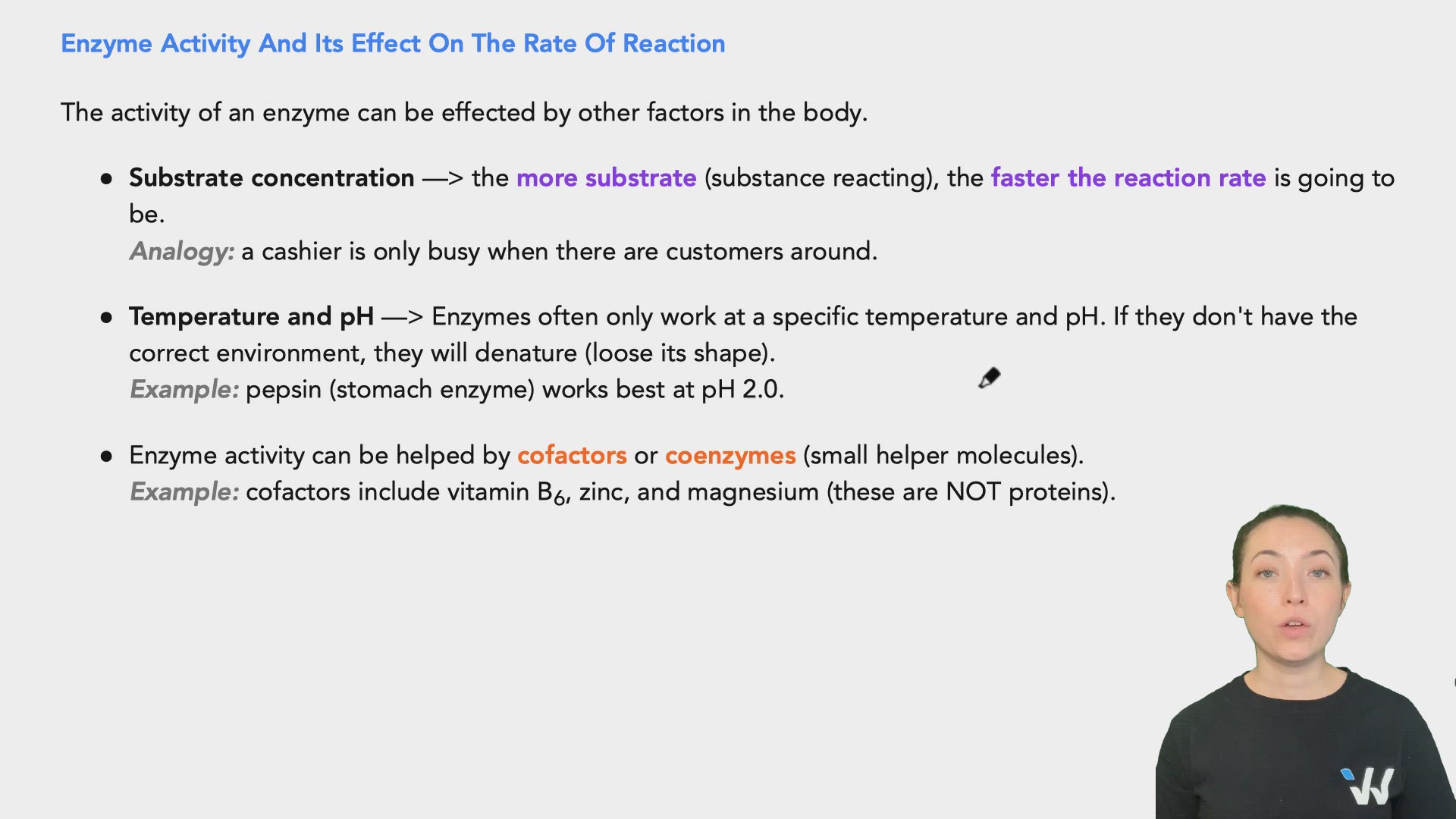
The activity of an enzyme can be affected by other factors in the body.
- Substrate concentration ––> the more substrate (substance reacting), the faster the reaction rate is going to be. Analogy: a cashier is only busy when there are customers around.
- Temperature and pH ––> Enzymes often only work at a specific temperature and pH. If they don't have the correct environment, they will denature (loose its shape). Example: pepsin (stomach enzyme) works best at pH 2.0.
- Enzyme activity can be helped by cofactors or coenzymes (small helper molecules). Example: cofactors include vitamin B6, zinc, and magnesium (these are NOT proteins).
0:00 / 0:00
Example: Enzymes are Required for Life
Why do biological systems need enzymes if the reactions are already spontaneous?
- is not the same a rxn kinetics!
- Enzymes the rate of spontaneous rxns, just because a reaction is spontaneous does NOT mean it happens quickly
- Biological systems are limited by temperature!
0:00 / 0:00
Example: Enzyme Catalysis
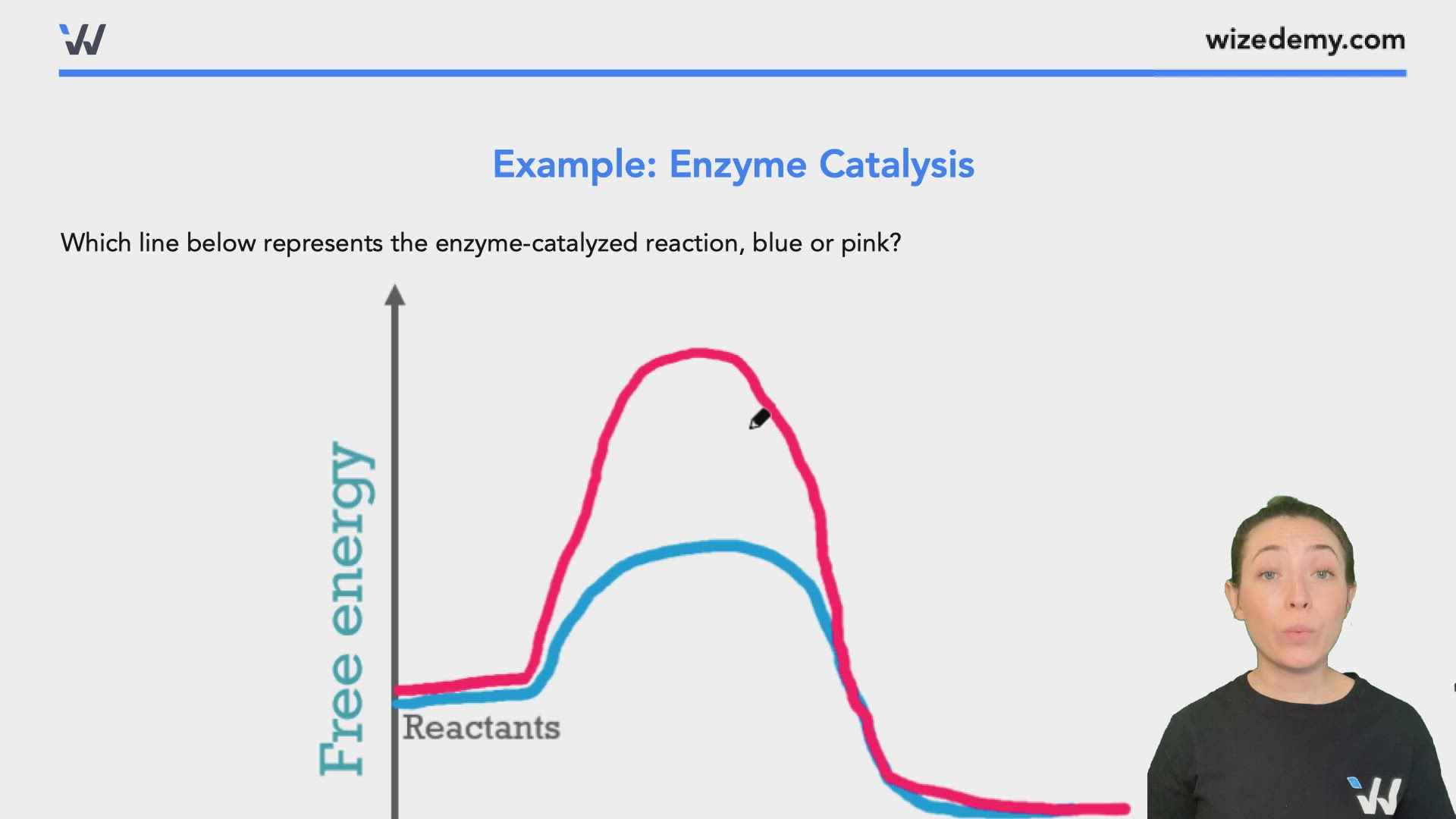
Which line below represents the enzyme-catalyzed reaction, blue or pink?
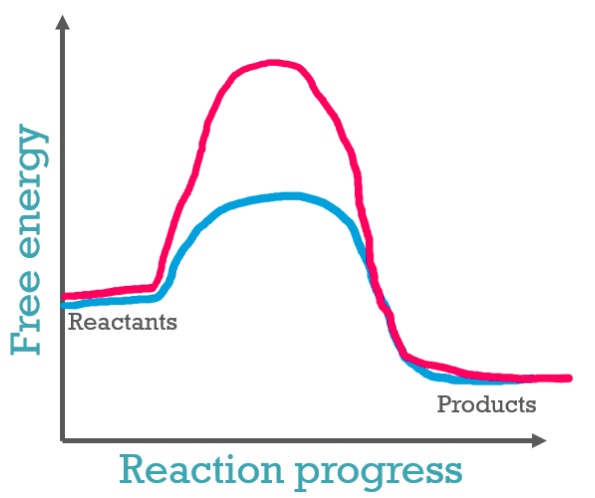
The blue line shows an enzyme catalyzed reaction. The activation energy has been lowered.
0:00 / 0:00



Mark Yourself Question
- Grab a piece of paper and try this problem yourself.
- When you're done, check the "I have answered this question" box below.
- View the solution and report whether you got it right or wrong.
Practice: Reactions
Draw a graph that correctly represents the reaction progress of a spontaneous reaction. Must include the following labels: Energy, Reaction Progress, Reactants, Products, Activation Energy and indicate on the graph whether there is a net release or consumption of energy.
Practice: ATP
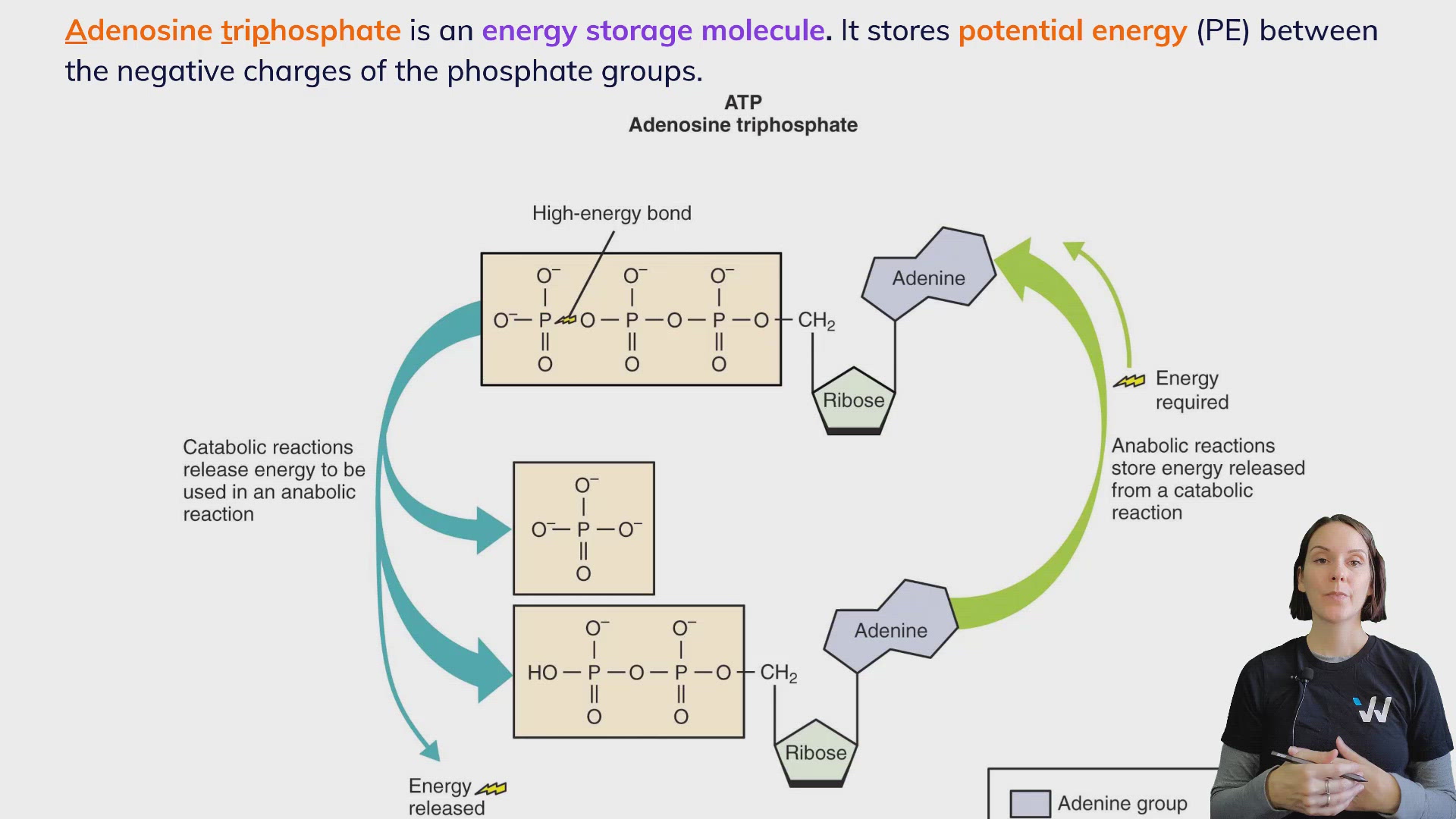
Which of the following are TRUE regarding the energy molecule ATP?
Practice: Reaction Progress
Which letter represents the energy of activation of the reaction in the absence of enzyme?
