Wize High School Grade 11 Biology Textbook > Biochemistry of Metabolism
Cellular Respiration
Overview of Cellular Respiration
Example: Eukaryotic vs. Prokaryotic Respiration
Glycolysis
Pyruvate Processing
Practice: Product of Glycolysis
Fermentation
Example: Fermentation
The Citric Acid Cycle/Krebs Cycle
Electron Transport Chain Overview
Practice: Processes in the Cytosol
Practice: Location of Krebs Cycle
Practice: Locations in Mitochondria
Practice: Permeability to H+
Popular Courses
Find My Course

0:00 / 0:00
Overview of Cellular Respiration
Cellular respiration is a set of catabolic reactions that allows organisms to convert biochemical energy from nutrients into ATP. Aerobic (meaning, in the presence of oxygen) cellular respiration can be broken down into 4 stages:
- Glycolysis
- Pyruvate processing / oxidation
- Citric acid cycle / Kreb’s cycle / tricarboxylic acid (TCA) cycle
- Electron transport chain (ETC) and ATP synthesis

Molecules that can store energy
- ATP - energy carried via a phosphate group
- NADH or NADPH - energy carried via electrons and hydrogen
- FADH2 - energy carried via electrons and hydrogen
There are two types of cellular respiration: aerobic respiration (requires oxygen; redox reaction) and anaerobic respiration (does not require oxygen).

0:00 / 0:00
Example: Eukaryotic vs. Prokaryotic Respiration
Why do eukaryotes continue cellular respiration past glycolysis?
Solution:
Glycolysis produces only 2 ATP
Where OXPhoS produces 38 ATP
0:00 / 0:00
Glycolysis
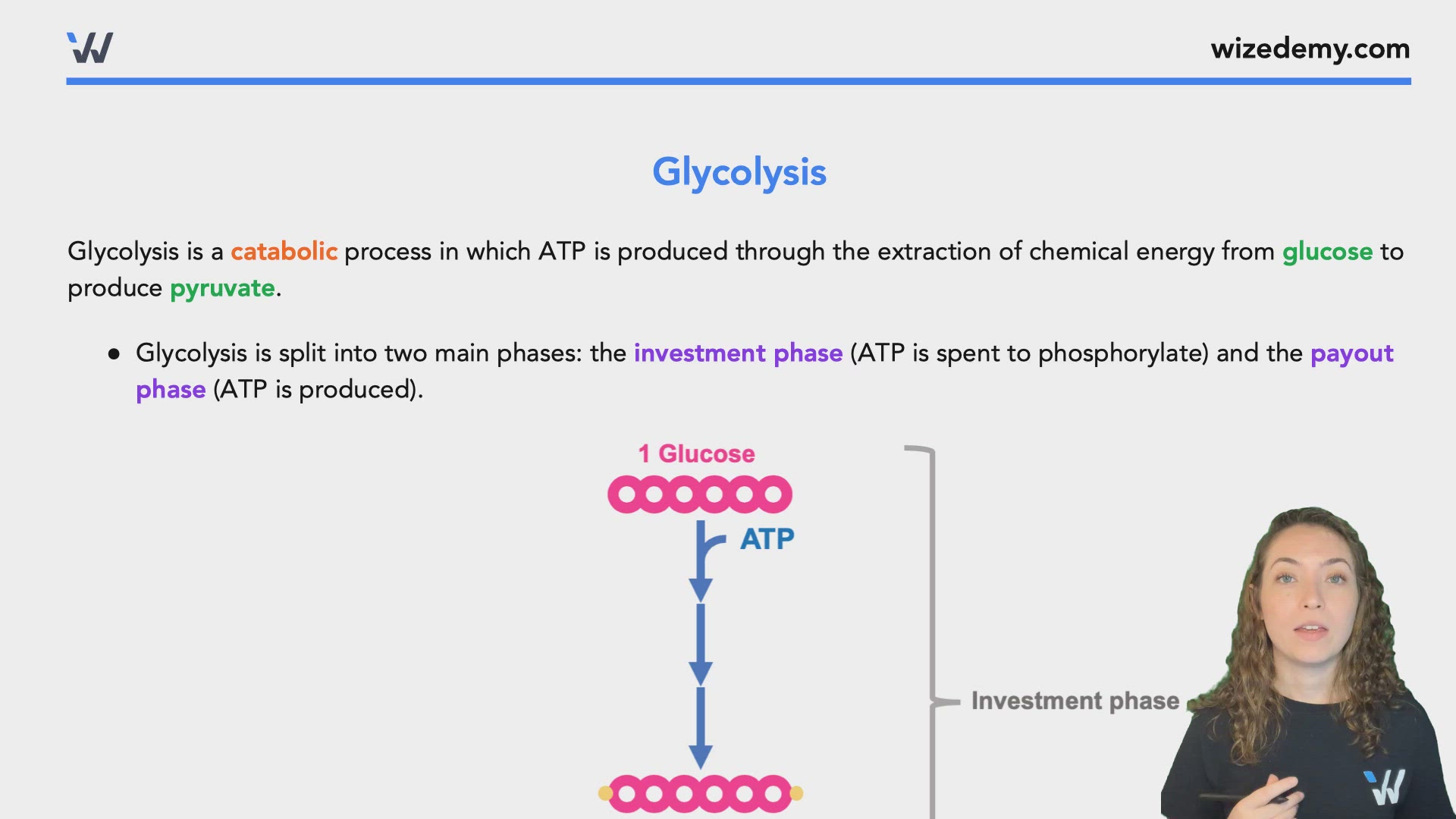
Glycolysis is a catabolic process in which ATP is produced through the extraction of chemical energy from glucose to produce pyruvate.
- Glycolysis is split into two main phases: the investment phase (ATP is spent to phosphorylate) and the payout phase (ATP is produced).

Glycolysis Products
At the end of glycolysis, the energy from glucose has been stored in:
- 2 pyruvate
- 2 ATP
- 2 NADH
Pyruvate produced by glycolysis has 2 possible fates cellular respiration if oxygen is present, or fermentation if it is not.
0:00 / 0:00
Pyruvate Processing
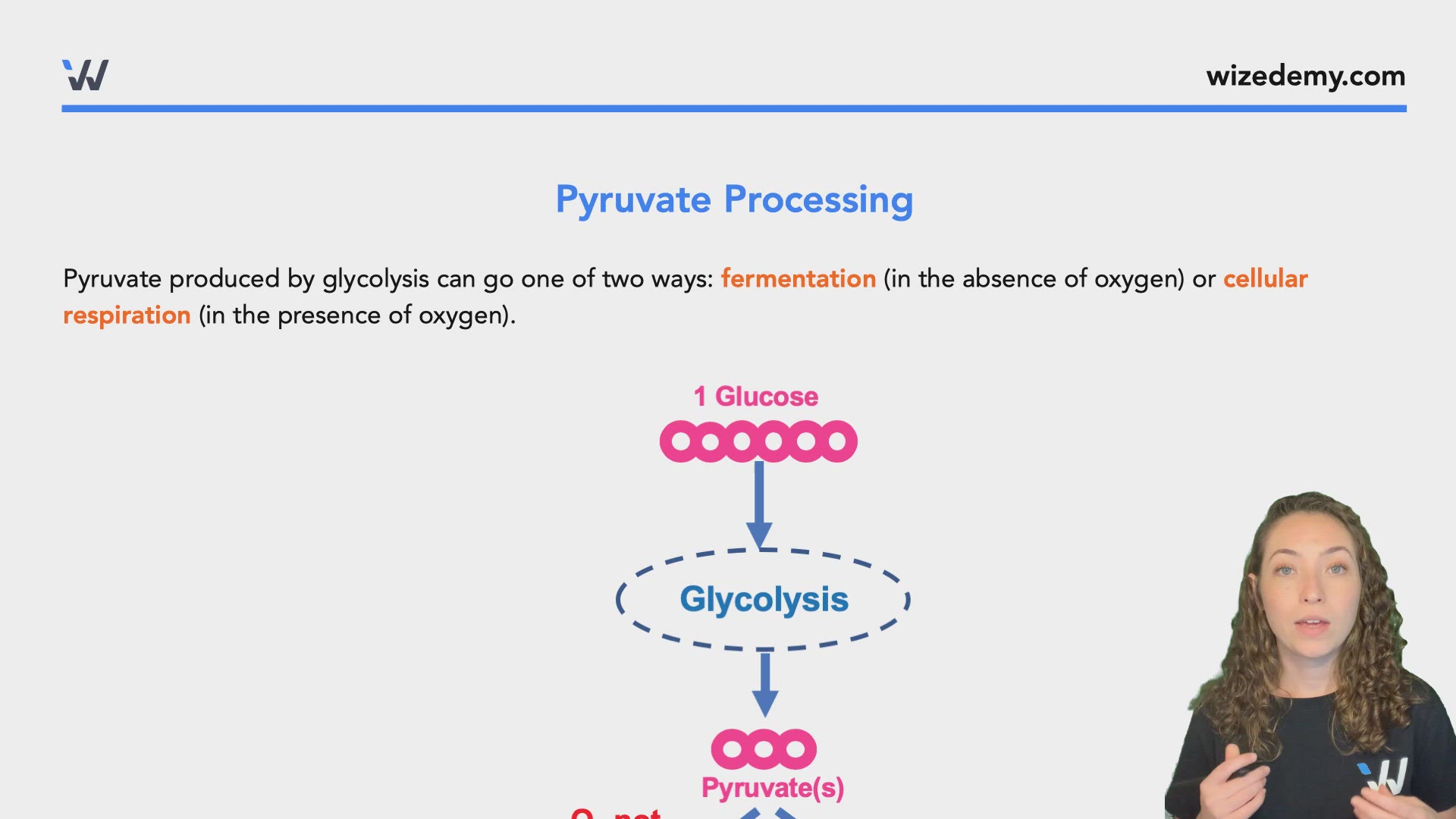
Pyruvate produced by glycolysis can go one of two ways: fermentation (in the absence of oxygen) or cellular respiration (in the presence of oxygen).

Pyruvate Processing or Oxidation
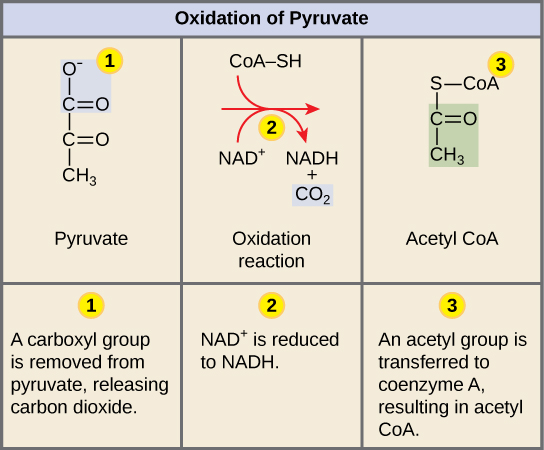
In eukaryotes, cellular respiration occurs in the mitochondrial matrix. Pyruvate is transported into the mitochondrial matrix and is converted to acetyl-CoA. In prokaryotes, it remains in cytosol.
- Pyruvate is converted to acetyl-CoA by pyruvate dehydrogenase.
- The reaction produces 1 NADH and therefore 2 NADH per molecule of glucose.
Balance after Glycolysis + Pyruvate Processing
After glycolysis and pyruvate processing, acetyl-CoA produced is ready to enter the Citric Acid or Krebs cycle (stage 3).

Practice: Product of Glycolysis
What is the carbohydrate product of glycolysis in the cytosol?

0:00 / 0:00
Fermentation
Fermentation occurs when oxygen is not present.
- Ethanol fermentation is used by anaerobic prokaryotes and yeast. NADH is oxidized back to NAD+ so that it can be recycled in another round of glycolysis. The NAD+ is needed to keep glycolysis running. The product is ethanol.
- Lactic acid fermentation is used by humans and other mammals. NADH is oxidized back to NAD+ just like in alcohol fermentation. The product is lactic acid. Compared to oxidative phosphorylation, it is inefficient. Example: You might have experienced exercise fatigue. This is thought to be due partly to the production of lactic acid in the muscle. It occurs when the muscle needs more oxygen to keep functioning than is available at the moment, so it starts producing lactic acid as a way to get energy from glycolysis.

0:00 / 0:00
Example: Fermentation
What is the importance of generating ethanol or lactate in anaerobic glycolysis?
Solution:
Both ethanol & lactate production regenerates which is required for
glycolysis
- Need glycolysis to stay alive!
0:00 / 0:00
The Citric Acid Cycle
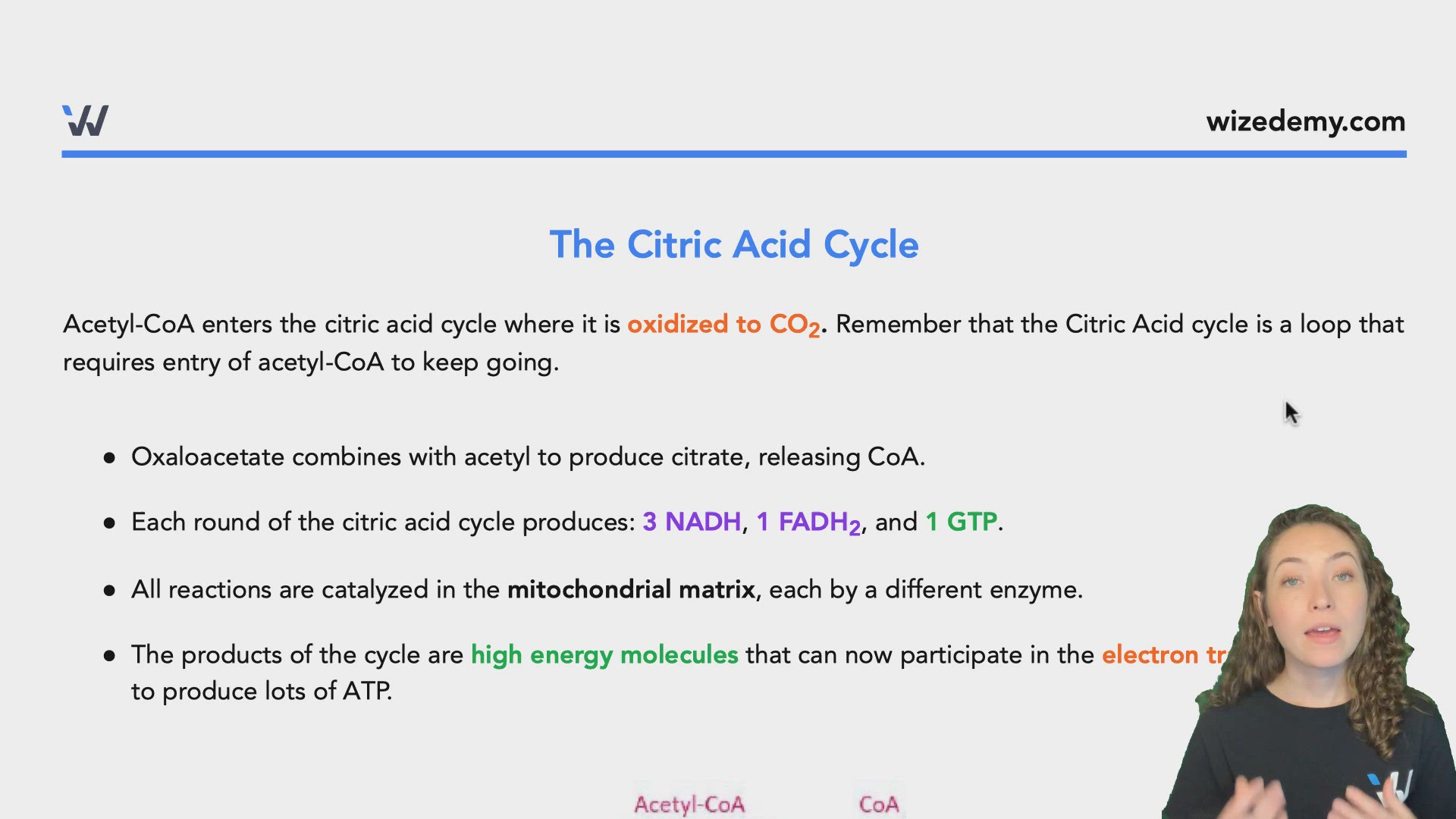
Acetyl-CoA enters the citric acid cycle where it is oxidized to CO2. Remember that the Citric Acid cycle is a loop that requires entry of acetyl-CoA to keep going.
- Oxaloacetate combines with acetyl to produce citrate, releasing CoA.
- Each round of the citric acid cycle produces: 3 NADH, 1 FADH2, and 1 GTP.
- All reactions are catalyzed in the mitochondrial matrix, each by a different enzyme.
- The products of the cycle are high energy molecules that can now participate in the electron transport chain to produce lots of ATP.

Balance After Glycolysis + Pyruvate Processing + Citric Acid Cycle
- Glycolysis: 2 pyruvate, 2 ATP, 2 NADH
- Pyruvate processing: 2 acetyl-CoA, 2 NADH
- Citric acid cycle: 6 NADH, 2 FADH2, 2 GTP
NET REACTION: 4 ATP, 10 NADH, 2 FADH2

0:00 / 0:00
Electron Transport Chain Overview
Occurs at the inner mitochondrial membrane and uses electron donor molecules NADH and FADH2 produced from glycolysis and the citric acid cycle. Steps involved:
- Electrons from NADH and FADH2 are used by membrane proteins to pump hydrogen ions across the membrane.
- This creates a hydrogen ion gradient on the outside of the membrane (between the outer and inner membrane of the mitochondria).
- The H+ gradient (potential energy) is used by ATP synthase to make ATP.
- The movement of hydrogen ions down their gradient is called chemiosmosis.
What happens to the extra electrons at the end of ETC?
- They are accepted by oxygen molecules.
- This generates water upon electron accepting.

Products of ETC
- Uses all the NADH and FADH2 from the rest of cellular respiration and produces ATP from them.
- Net ATP production (entire process from glucose to O2) = 30 - 32 ATP.
- Lack of O2 causes a build up of electrons. This happens because there is nothing available to accept the electrons, so they just end up sitting and waiting.
- Poisons (such as cyanide) dissipate H+ ions and block ATP synthesis. If this happens, the body will be starved of energy. The process is fatal within minutes.
Which of the following processes occurs in the cytosol of eukrayotes?
Where does the Krebs Cycle occur?
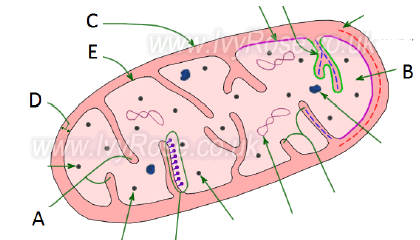
Letter A is pointing to the location of:
You are testing a drug that causes the inner mitochondrial membrane to become permeable to H+. How would this drug affect mitochondrial ATP output?