0:00 / 0:00
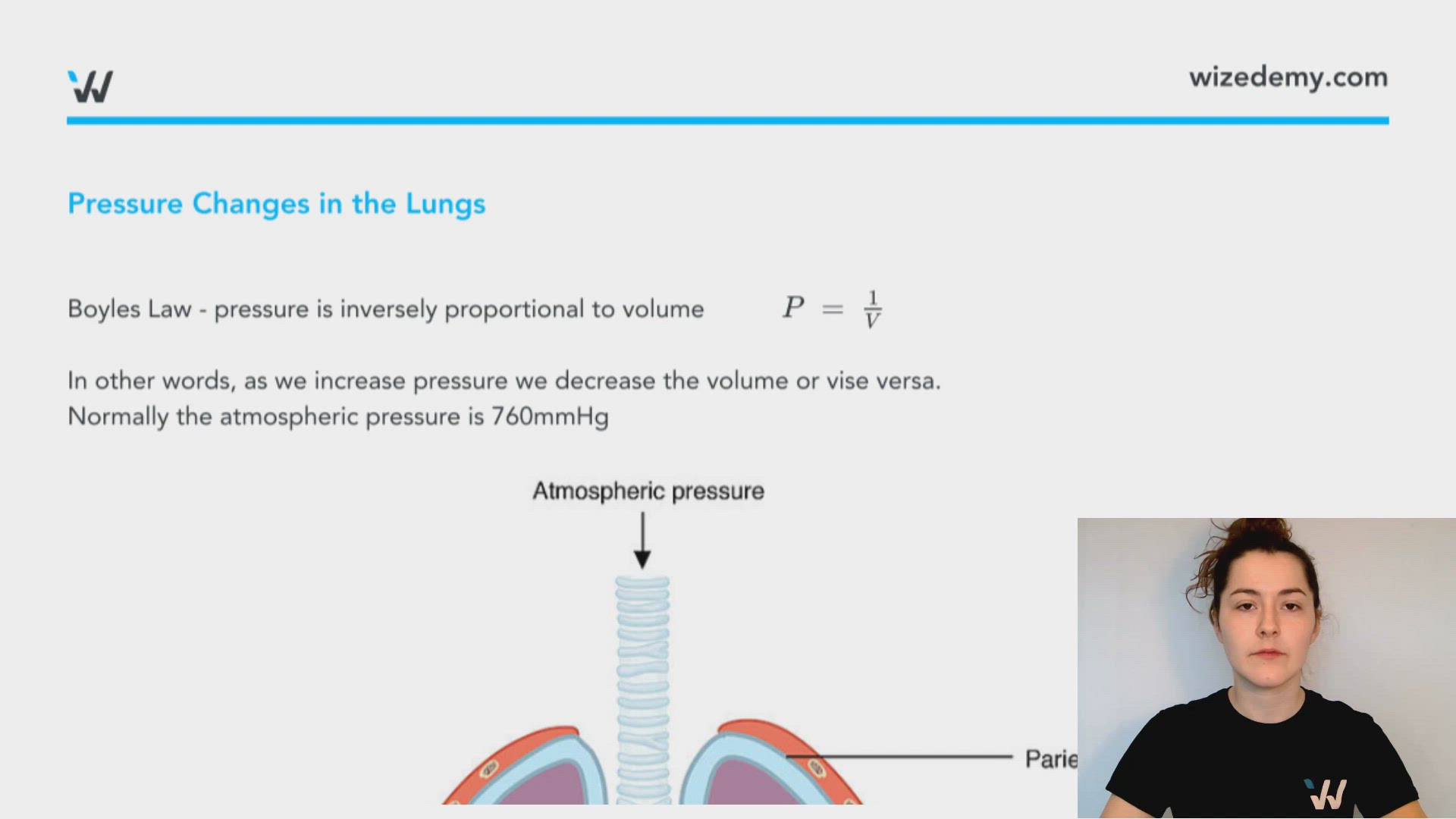
Pressure Changes in the Lungs
Boyles Law - pressure is inversely proportional to volume
In other words, as we increase pressure we decrease the volume or vise versa.
Normally the atmospheric pressure is 760mmHg
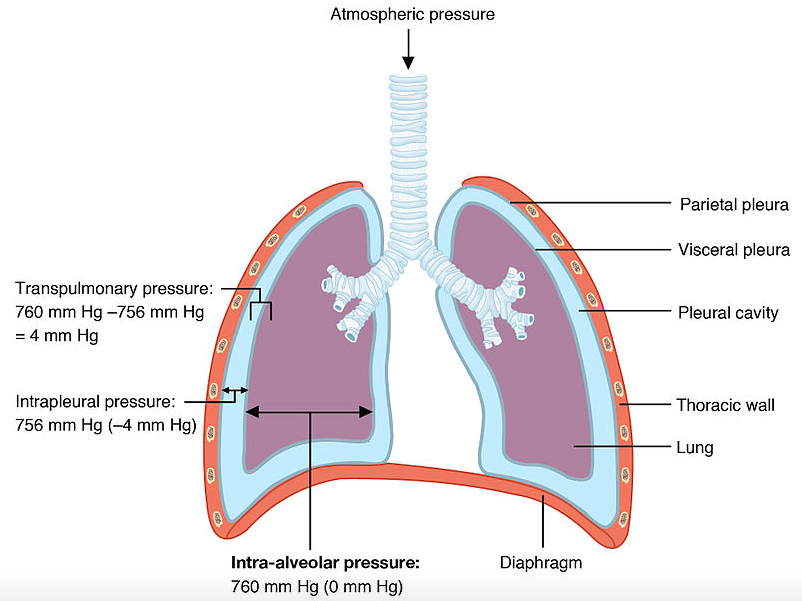
Breathing In
- Get air in by increasing volume of the lungs (therefore decreasing pressure)
- normally inside the lungs we have the same pressure as the atmosphere. As we use our muscles to expand the thoracic cavity, the lungs increase in volume and decrease in pressure. Air flows into the lungs from outside.
Breathing Out
- relaxation of the diaphragm helps initiate exhalation
- pressure in the lungs increases as volume decreases from diaphragm relaxation --> gas naturally moves out from high pressure to lower pressure.
Intrapleural Pressure
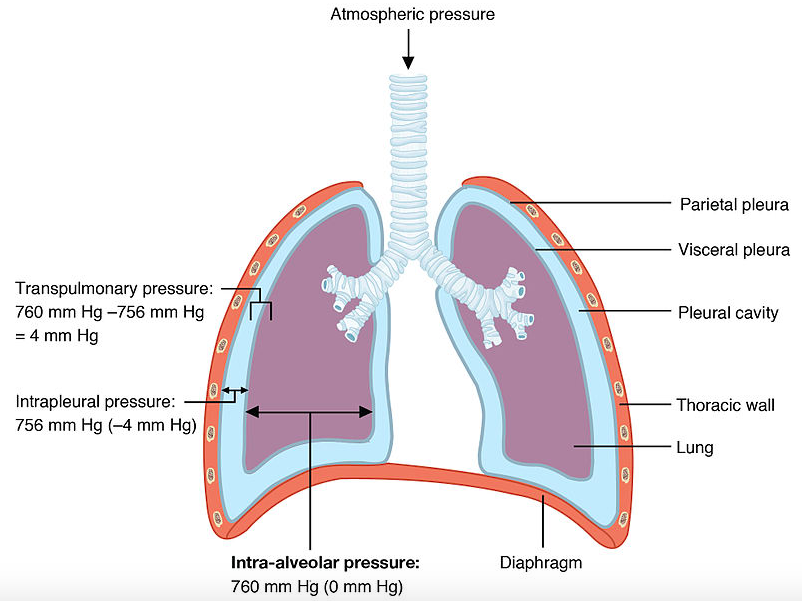
Transpulmonary pressure = A pressure difference between the lung and the pleural cavity that prevents the lungs from collapsing
- intrapulmonary pressure must be higher than intrapleural pressure to prevent collapsing
- If lung pressure is 760mmHg and pleural pressure is 757mmHg, we can calculate the pressure difference between them (the transpulmonary pressure)
- Transpulmonary pressure (TPP) = about +3mmHg
- When the pressures are the same, the lung will collapse
- If the pleural pressure was greater than the intrapulmonary pressure, the lung would collapse.
0:00 / 0:00
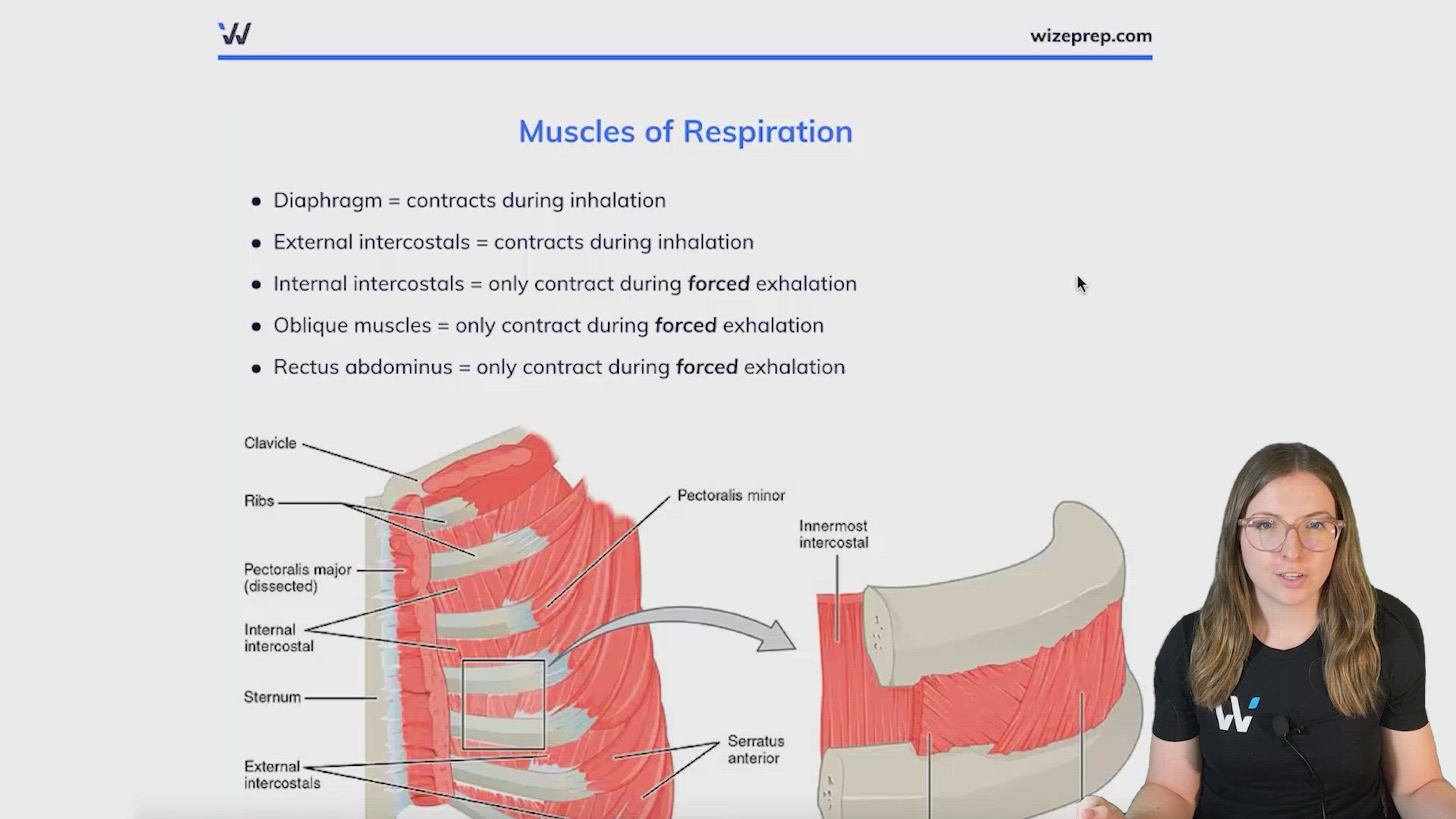
Muscles of Respiration
- Diaphragm = contracts during inhalation
- External intercostals = contracts during inhalation
- Internal intercostals = only contract during forced exhalation
- Oblique muscles = only contract during forced exhalation
- Rectus abdominus = only contract during forced exhalation

Intercostals (CC BY 4.0)
0:00 / 0:00
Measuring Respiration
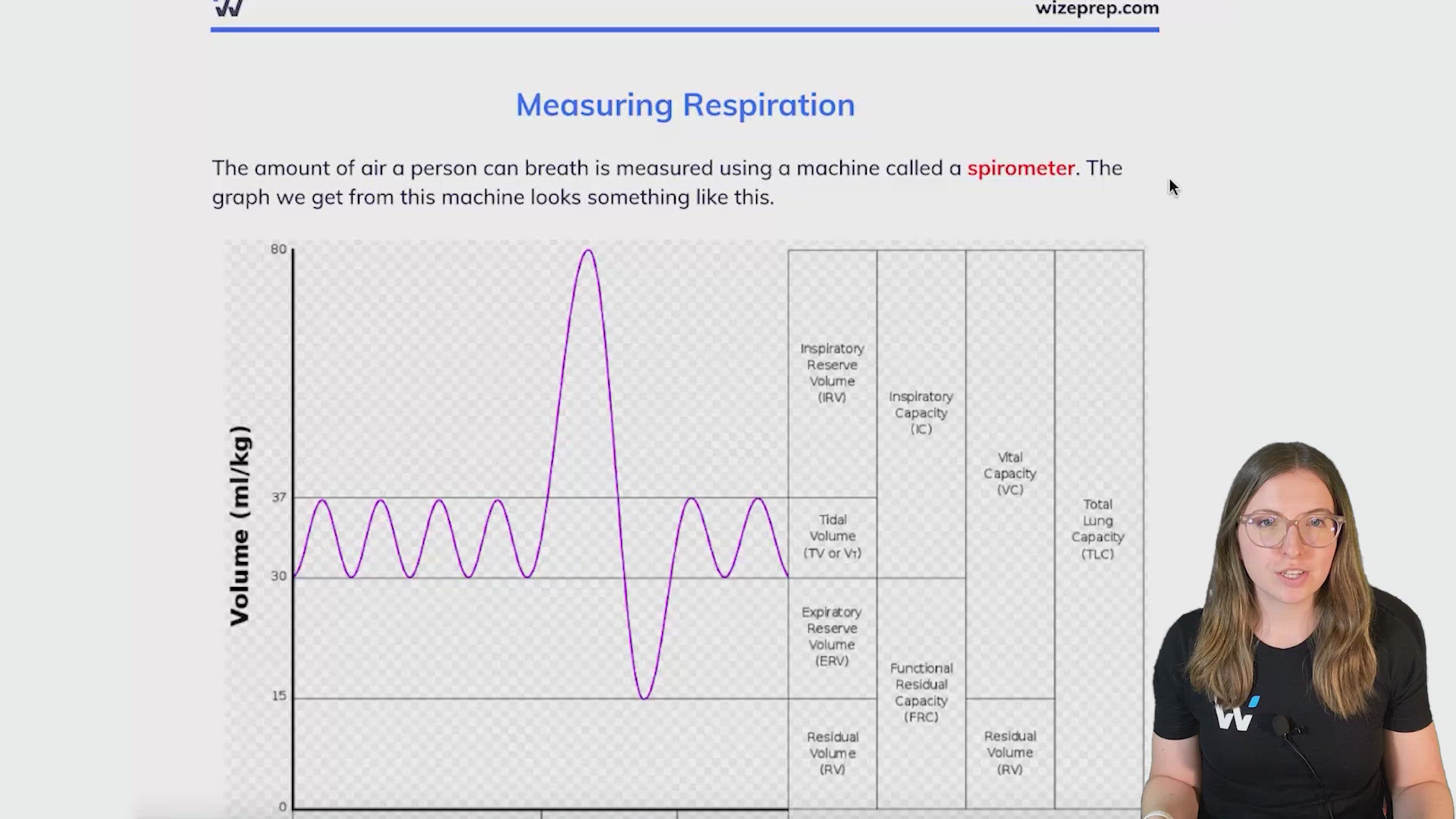
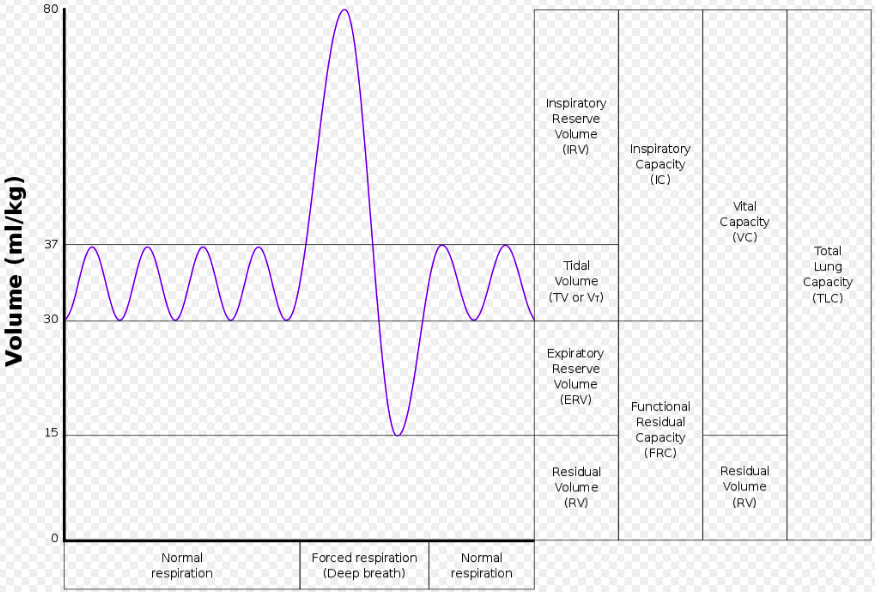
The amount of air a person can breath is measured using a machine called a spirometer. The graph we get from this machine looks something like this.
Important Terms
- Tidal Volumethe volume of a normal breath (around 500mL)
- Inspiratory Reserve Volumehow much more you can breathe in after the normal tidal volume
- Expiratory Reserve Volumehow much more you can breath out after the normal tidal volume
- Residual volumethe volume of air that is always left in the lungs
- Total Lung Capacitythe whole shebang - includes all of vital capacity and residual volume
- Vital Capacityvolume of air from max inspiration to max expiration
- Forced Vital Capacityhow much air you can get out in 1 second. This must be equal to or more than what you can take in in 1 second
Lung obstructions can alter the values of ones normal respiration volumes
0:00 / 0:00
Example: Diaphragm & Pressure
Using words and diagrams, describe how the diaphragm alters pressure in the lungs to control inspiration and expiration.
Inspiration = the diaphragm lowers (contracts), increasing the volume of the lungs, increased volume causes the air pressure in the lungs to be lower than the pressure outside of the body, this causes air to flow into the lungs (from high to low)
Expiration = the diaphragm relaxes, decreasing the volume of the lungs, decreased volume causes air pressure in the lungs to be higher than the pressure outside of the body, this causes air to flow out of the lungs (from high to low)
0:00 / 0:00
Example: Lung Capacity
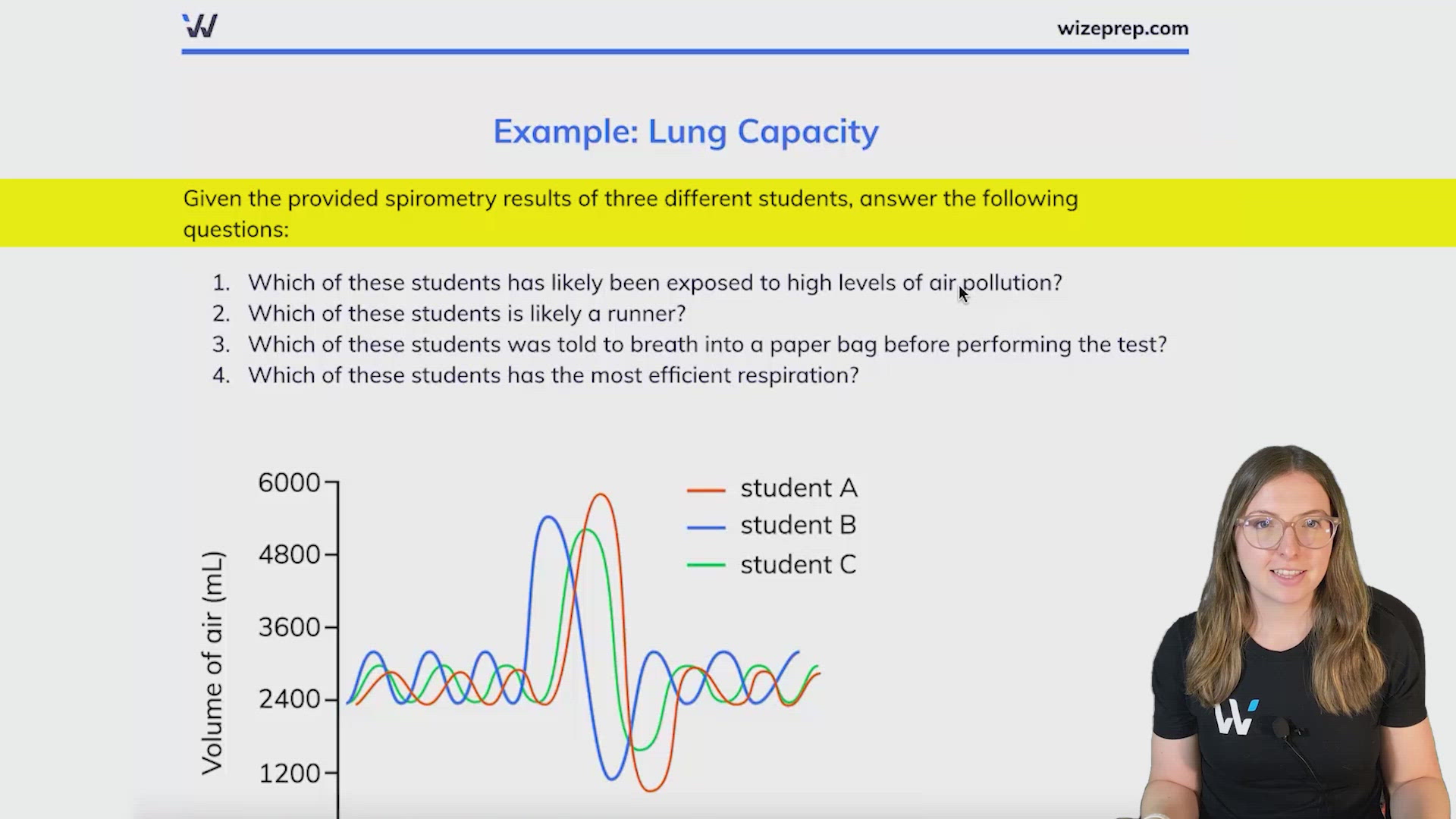
Given the provided spirometry results of three different students, answer the following questions:
- Which of these students has likely been exposed to high levels of air pollution?
- Which of these students is likely a runner?
- Which of these students was told to breath into a paper bag before performing the test?
- Which of these students has the most efficient respiration?
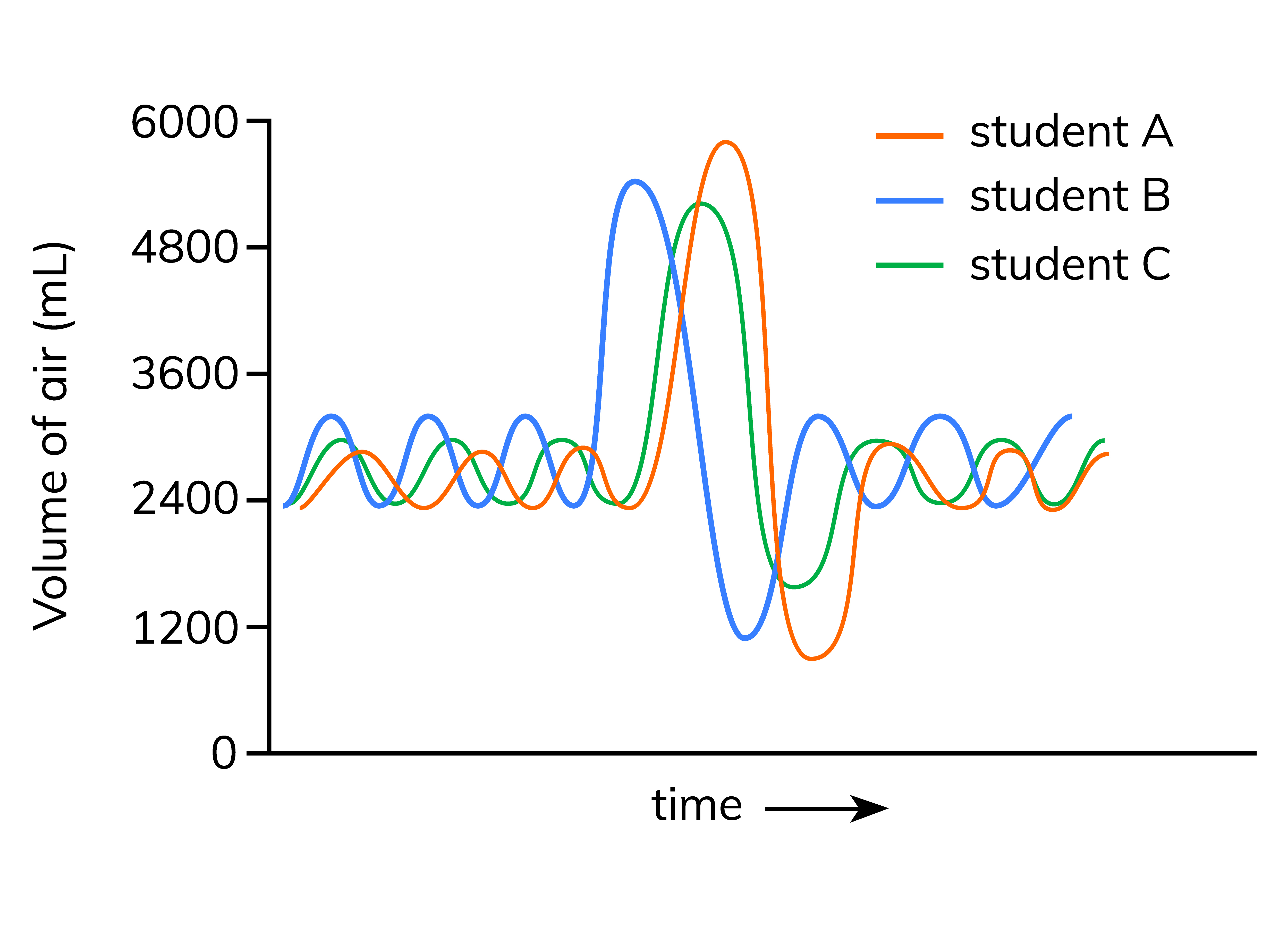
Answers:
1 - person C. Being exposed to high amounts of air pollution can damage the lungs, making them weaker, so the amount of volume that the lungs can inhale and exhale is low.
2 - person A. Being a distance runner increases your lungs strength, so their ability to take in and expel larger volumes of air. It also increases the efficiency of your muscles and circulatory system, so respiration rate is slower.
3 - person B. Breathing into a paper bag (rebreathing) increases in the amount of metabolic CO2 and decreases the amount of O2 in the blood. This causes a increased rate and depth of breathing because the body has a high level of CO2 in the blood.
4 - person A.
Practice: Pressure & Volume
Which of the following describes pressure and volume changes during inhalation?

Mark Yourself Question
- Grab a piece of paper and try this problem yourself.
- When you're done, check the "I have answered this question" box below.
- View the solution and report whether you got it right or wrong.
Practice: Chocking
When someone is choking a bystander will apply what's called the "Heimlich maneuver" where they stand behind the person choking, and will forcefully thrust their enclosed fists upwards and into their rib cage. How does this technique help to dislodge the obstruction?
Practice: Smoking
If you were to observe two different spirometry results, one from a nonsmoker and the other from a smoker, which of the following would you expect to observe in the smoker compared to the nonsmoker?