Wize High School Grade 11 Biology Textbook > Human Physiology: The Circulatory System
Human Health & The Circulatory System
0:00 / 0:00
Anemia
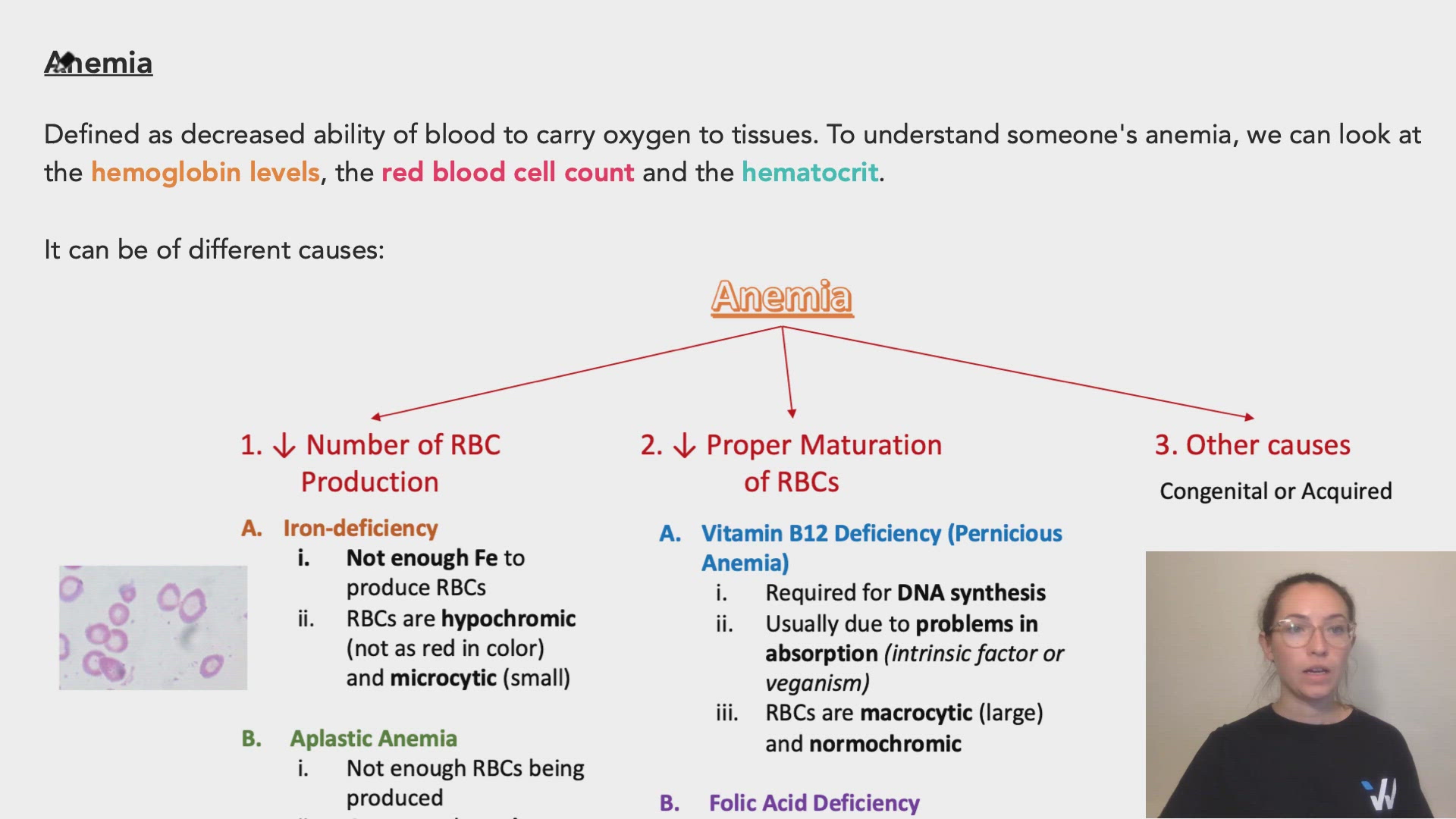
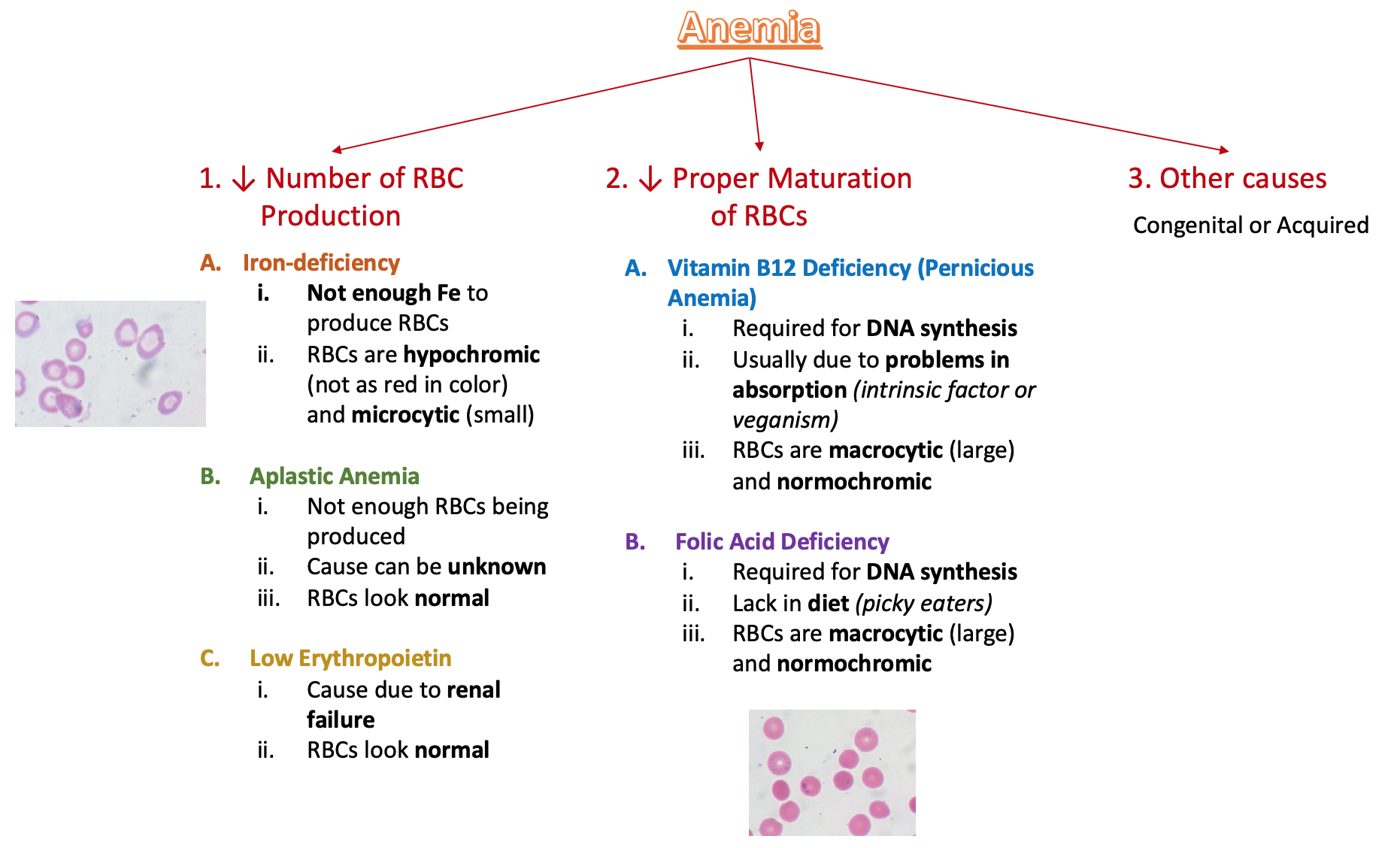
Defined as decreased ability of blood to carry oxygen to tissues. To understand someone's anemia, we can look at the hemoglobin levels, the red blood cell count and the hematocrit.
It can be of different causes:
But... is it really disease?
- Look out for other reasons that may cause Hct% to seem lower or higher than normal but are not really anemia
- Fluid retention: appears lower than normal
- Dehydration: appears higher than normal
0:00 / 0:00
Heart & Heart Rate Disorders

Hypertension: sustained high blood pressure
- When blood pressure remains high, blood vessels become weak and can eventually rupture.
- The body will attempt to repair weakened vessels, but the increased amount of connective tissue it produces cause arteries to become hard and less elastic.
- As blood pulses through these reinforced vessels, the pressure is increased even more, leading to further stress and weakening.
- Hypertension can be genetic, but diet (example: too much salt) is often a causative factor.
- There aren't usually any noticeable symptoms, which is why hypertension is known as the silent killer.
Arteriosclerosis: a group of disorders that cause the blood vessels to become thicker, more rigid, and less elastic.
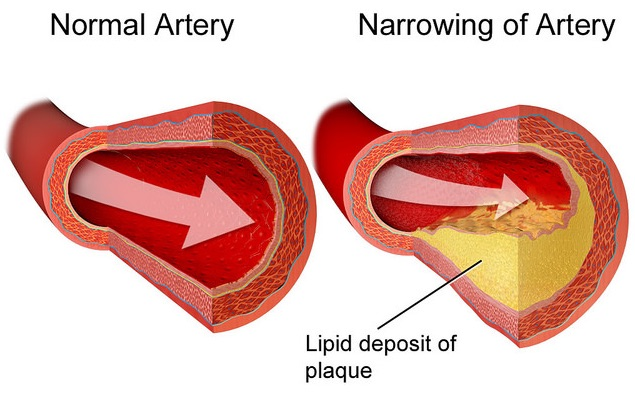
Atherosclerosis: degeneration of the blood vessel caused by the accumulation of fat along the vessel wall.
Arrhythmia: irregular heartbeat
- The blocking of the coronary artery leads to less blood being delivered to the heart muscle, causing the heart to beat in an irregular pattern.
- Poor oxygen delivery to the heart muscle leads to the buildup of toxic products that can initiate contractions of the heart muscle.
- The cells within the ventricle respond to the toxins and contract irregularly. This is called ventricular fibrillation.
- During ventricular fibrillation, the heart pushes blood back and forth.
- The heart responds by beating faster but irregularly.
- Symptoms include feeling weak and tired, dizzy or lightheaded, fainting, a rapid heartbeat, chest pressure, shortness of breath.
Heart attack: destruction of the heart muscle due to stopped blood flow to the heart muscle. Heart attacks are due to coronary artery disease (due to atherosclerosis of the coronary artery) causing the heart to stop beating.
Stroke: interrupted blood flow to the brain
Various factors contribute to the above cardiovascular disorders:
- High cholesterol
- Smoking
- Diabetes
- High blood pressure
- Lack of exercise
- Rapid changes in weight
- Genetic factors
0:00 / 0:00
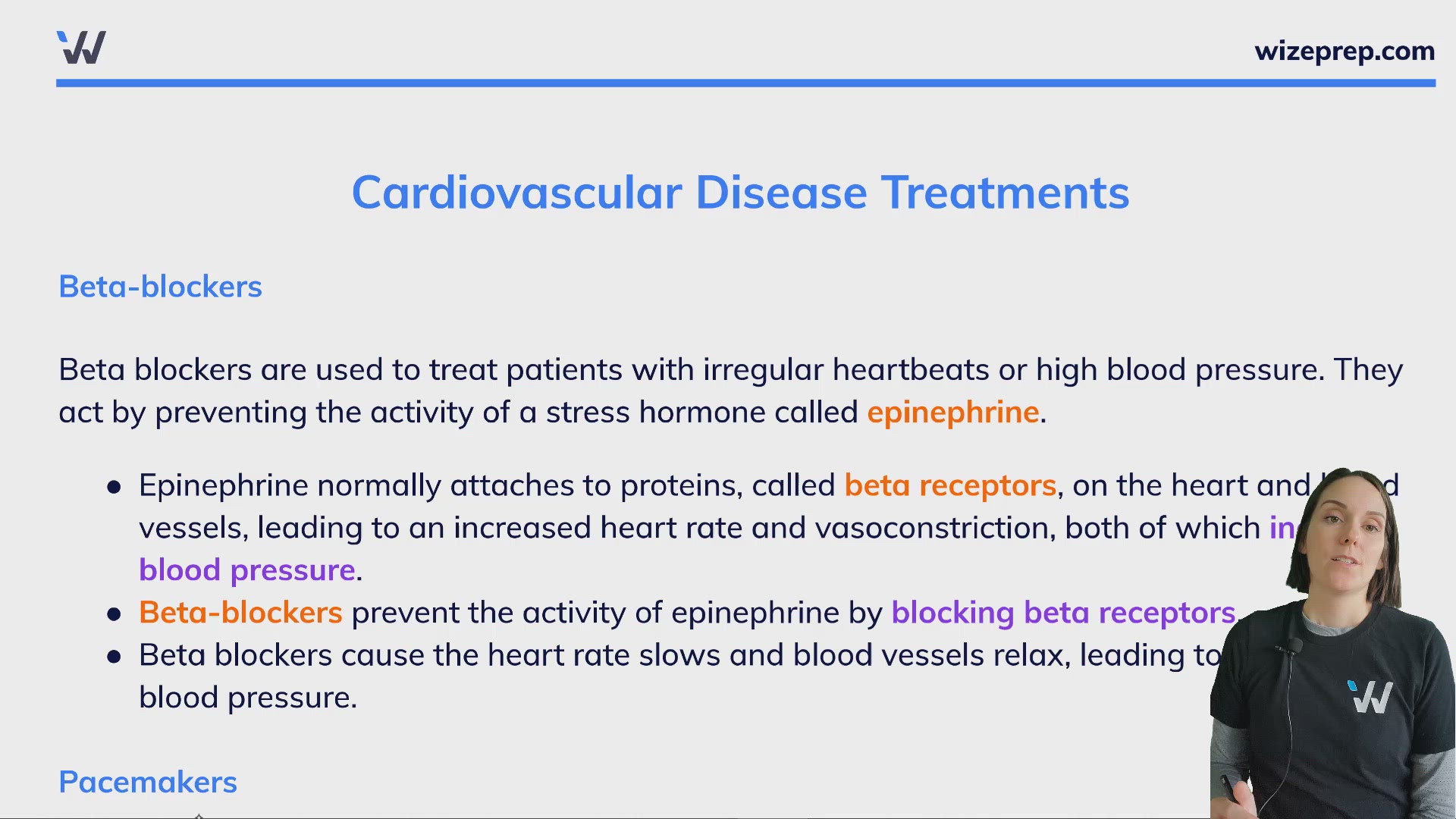
Cardiovascular Disease Treatments
Beta-blockers
Beta blockers are used to treat patients with irregular heartbeats or high blood pressure. They act by preventing the activity of a stress hormone called epinephrine.
- Epinephrine normally attaches to proteins, called beta receptors, on the heart and blood vessels, leading to an increased heart rate and vasoconstriction, both of which increase blood pressure.
- Beta-blockers prevent the activity of epinephrine by blocking beta receptors.
- Beta blockers cause the heart rate slows and blood vessels relax, leading to a reduction in blood pressure.
Pacemakers
A pacemaker is a small device that is surgically implanted in to the chest to treat some arrhythmias. Pacemakers work only when needed. For example, if the heartbeat is too slow, the pacemaker sends electrical signals to the heart to increase the heartrate.
Transplants
When other medical treatments fail, a heart transplant can be performed. This is a surgical transplant procedure performed on patients with end-stage heart failure or severe coronary artery disease.
0:00 / 0:00
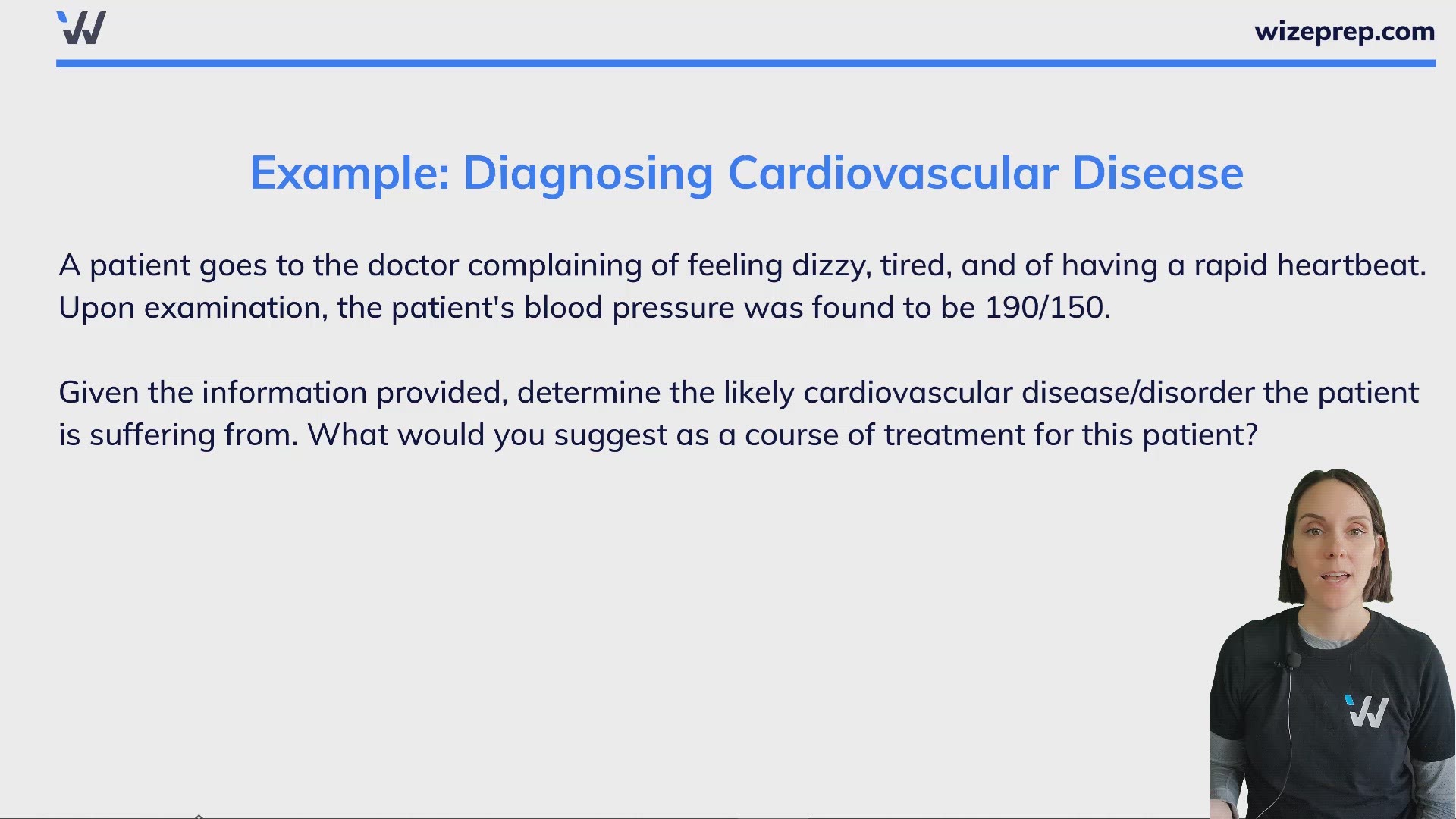
Example: Diagnosing Cardiovascular Disease
A patient goes to the doctor complaining of feeling dizzy, tired, and of having a rapid heartbeat. Upon examination, the patient's blood pressure was found to be 190/150.
Given the information provided, determine the likely cardiovascular disease/disorder the patient is suffering from. What would you suggest as a course of treatment for this patient?
The patient is displaying symptoms of arrhythmia, and their blood pressure is high. This suggests that their arteries may be blocked, including their coronary artery that delivers blood to the heart muscle. A course of treatment could include beta blockers to treat the arrhythmia and high blood pressure, along with diet and lifestyle modifications to prevent worsening of the condition.
Practice: Beta Blockers
Beta blockers can be used to treat which of the following?
Practice: Cardiovascular Disease
Which of the following can lead to narrowing of arteries?
Practice: Anemia
Which of the following can cause anemia?