Wize High School Grade 11 Biology Textbook > Human Physiology: The Motor System [Under construction]
Molecular Mechanisms of Movement

0:00 / 0:00
Structure of Muscle
- 1 muscle = several fibre bundles
- 1 bundle = several muscle fibres
- 1 muscle fibre = several myofibrils
- 1 myofibril has several actin & myosin filaments arranged in end-to-end sarcomeres


commons.wikimedia.org
Actin
- actin is the thin myofibril. It contains two main divisions:
- G-actin: the orange balls that actually do the binding to the myosin myofilaments.
- Tropomyosin: the rope structure that covers and uncovers the myosin binding sites. It is held in the "covered" position using troponin. If Ca+ is present, it inhibits troponin binding, which leaves the G-actin available for myosin binding.
- REMEMBER: the difference between G-actin and tropomyosin - Trop is a rope.

Myosin
- Myosin is the thick myofibril. It is made up of many myosin molecules.
- myosin molecules have heads that will bind to the actin and then move to contract the muscle.
- ANALOGY: just light flexing your bicep, the myosin head acts the same when doing a power stroke.
- REQUIRES ATP TO FUNCTION


0:00 / 0:00
List the following in order from largest to smallest: myofibril, muscle fiber, bundle of fibers, actin.
bundle of fibers > muscle fiber > myofibril > actin

0:00 / 0:00
Muscle Physiology
Sliding-Filament Theory
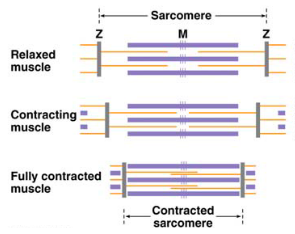
- thick filaments (myosin) move past thin filaments (actin)
- sarcomeres shorten while filaments remain same length
- requires actin-myosin binding sites, ATP and Ca2+
Role of Ca2+ in muscle contraction
- allows for myosin binding on actin, by shifting the troponin-tropomyosin complex

The actin-myosin ATP cycle
The myosin head is ready to bind actin once it has hydrolyzed ATP
- Pi is released (now, strong bond between actin and myosin is able to form - this is called a cross-bridge)
- Power stroke happens
- ADP is released
- Now, muscle is in contracted state
- ATP binds myosin again, causing release of actin ––> back to the relaxed state
- no ATP available? No relaxation. This is what happens during rigor mortis.
Wize Tip
This cycle will continue as long as Ca+ and ATP are available


Mark Yourself Question
- Grab a piece of paper and try this problem yourself.
- When you're done, check the "I have answered this question" box below.
- View the solution and report whether you got it right or wrong.
What is true about muscle contractions after death?
If an AP from an alpha motor neuron does not reach the muscle, what will happen to the actin-myosin-ATP cycle?