0:00 / 0:00
Plant Tissues
Simple Tissues

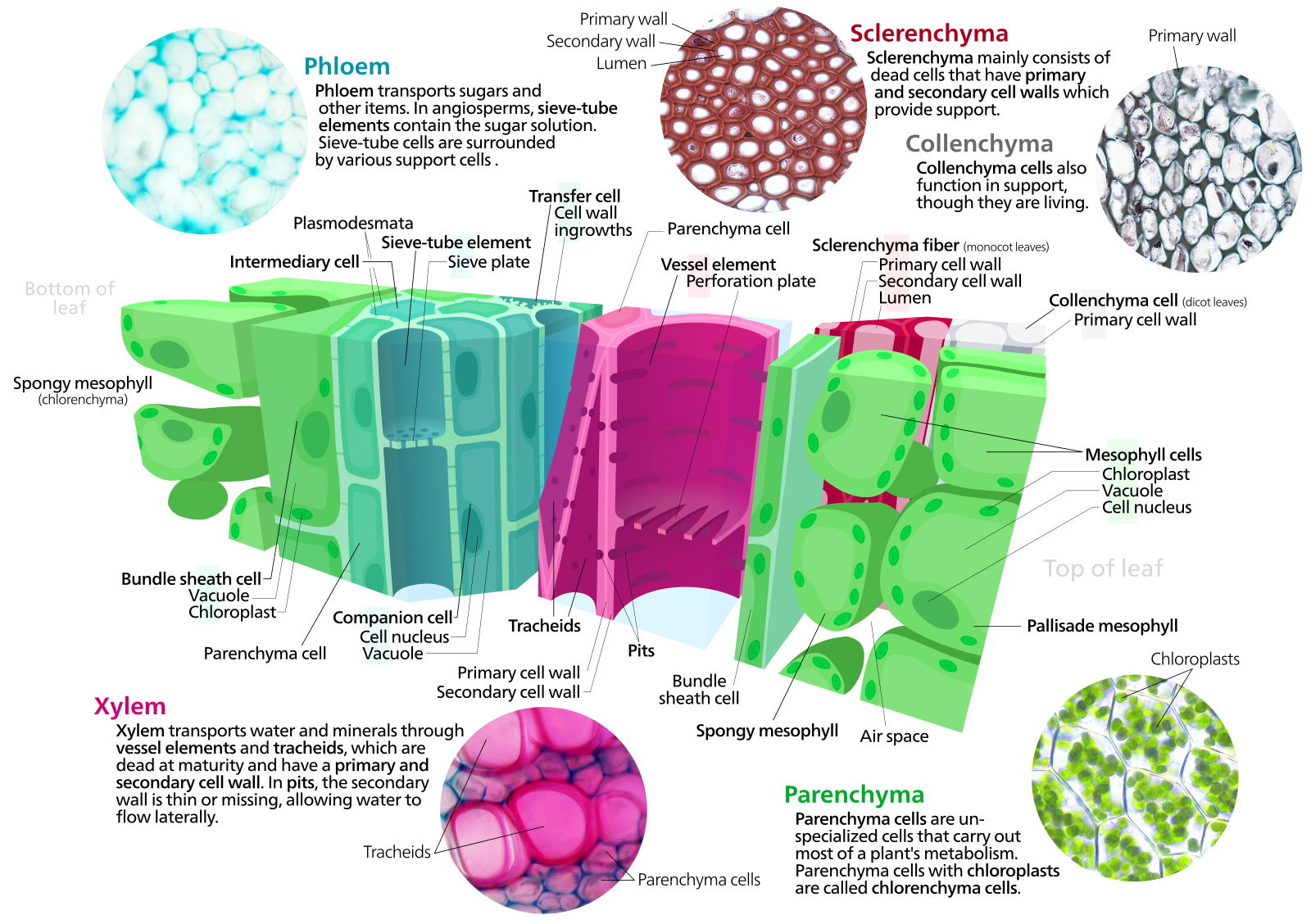
Parenchyma
- Perform most metabolic functions in the plant
- Create and store organic products Example: these cells contain the Chlorophyll in leaves Example: these cells store the starch in roots
- Thin cell wall
- Alive at maturity
- Most cells can differentiate into other types of plant cells when needed
Collenchyma
- Groups of flexible elongated cells (strands)
- Provides flexible support for young plants
Sclerenchyma
- Rigid cells that provide structural support
- Contains Lingin: strong polymer for support
- Many are dead at maturity
- Unable to grow / elongate
- Specialized cells for structural support
- Sclerids: boxy, thick and irregular
- Fibers: long slender groups of strands Example: Hemp fibers are used to make rope and clothing
Complex Tissues

Xlyem
- Water-conducting cells
- Specialized elongated cells
- Dead at maturity
- Hollow cell walls transport water throughout plant
- Tracheids: long, thin and tapered cells with pits for water to move to other cells
- Vessel elements: wider and thicker cells for long distance water transport
Phloem
- Sugar-conducting cells
- Specialized elongated cells
- Alive at maturity
- Composed of sieve-tube elements
- lack nucleus, ribosomes, vacuole and cytoskeleton
- improves movement of sugars through cell
- Sieve Plates: ends of the cells with pores to allow fluid to pass through
- Companion Cells: surround the sieve-tube elements and facilitate sugar loading

0:00 / 0:00
Tissue Systems

Dermal Tissue System
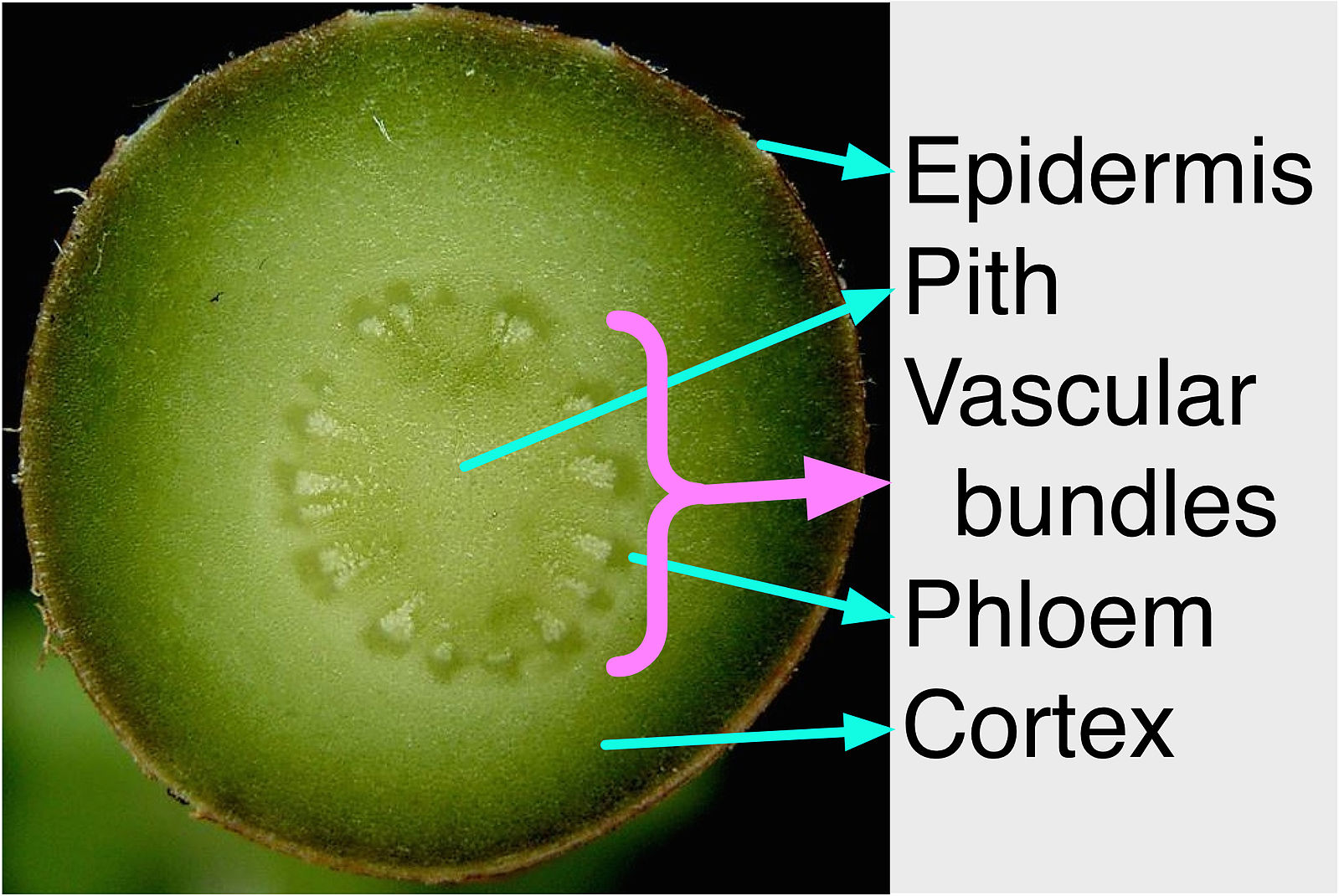
- Epidermis: outer protective layer of dense cells
- Cuticle: waxy coating on leaves and stems
- Prevents water loss
- Reduces disease transmission
- Periderm: replaces epiderm in older woody plants
- Specialized in different organs
- Example: root epidermal cells form root hairs

Vascular Tissue System
- Transport of water and nutrients through plant
- Xylem: water transport
- Phloem: nutrient transport
- Stele: vascular tissue in the roots
- Symplastic: transfer of fluids through the living cell
- Apoplastic: transfer of fluids through dead cell wall
Ground Tissue System
- Tissues that are not Dermal or Vascular
- Represents most of the plant tissues
- Parenchyma, collenchyma and sclerenchyma
- Pith: ground tissue inside vascular system
- Cortex: ground tissue outside of vascular system
- Specialized for specific functions Example: photosynthesis in the leaves or nutrient storage in the roots

0:00 / 0:00
Plant Organs
Roots

- Anchors plants to the ground
- Absorbs minerals and water
- Epidermis lacks cuticle
- Helps to absorb water
- Taproot: main vertical root
- Penetrates hard soil to access water and nutrients
- Provides strong anchor for tall plants
- Lateral Roots: branch off of taproot, absorb most water and nutrients
- Root Hairs: modified epidermis increases surface area to improve absorption
Stems
- Provides structure for leaves to attach
- Positions leaves to maximize photosynthesis
- Nodes: branches where leaves attach
- Internodes: stem sections between nodes
- Apical Bud: tip of the shoot where most growth occurs

Leaves
- Main site for photosynthesis
- Highly variable depending on which function
- Exchange gases
- Control plant temperature
- Defend plant from herbivores and diseases
- Blade: flattened part of the leaf
- Petiole: leaf stalk that attaches to the stem
- Veins: vascular tissue of the leaf
Leaves
Leaves are a specialized organ structure used by plants to generate sugars through photosynthesis. Although all serving a similar function to the plant, there are many different varieties of leaves across the plant kingdom.
Types of Leaves
- Simple leaf - a single, undivided blade
- Example: Oak
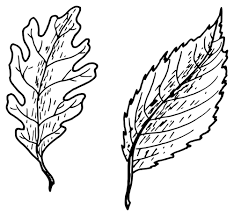
- Compound leaf - multiple blades originating from a single petiole

Leaf Structure

(CC BY 3.0)
Stomata
- Found on the lower epidermis of the leaf
- Controls CO2 intake and O2 release
- Controls the amount of transpiration occurring on the surface of the leaf
- Transpiration = the loss of water vapour through the plant epidermis
- Guard cells regulate the opening and closing of a stoma
- Low water levels = guard cells a limp, stick together and are closed
- High water levels = guard cells swell, become kidney-bean shaped and are open
- Generally stomata are open during the day to facilitate gas exchange and closed at night to conserve water
Mesophyll
Example: Plant Tissues
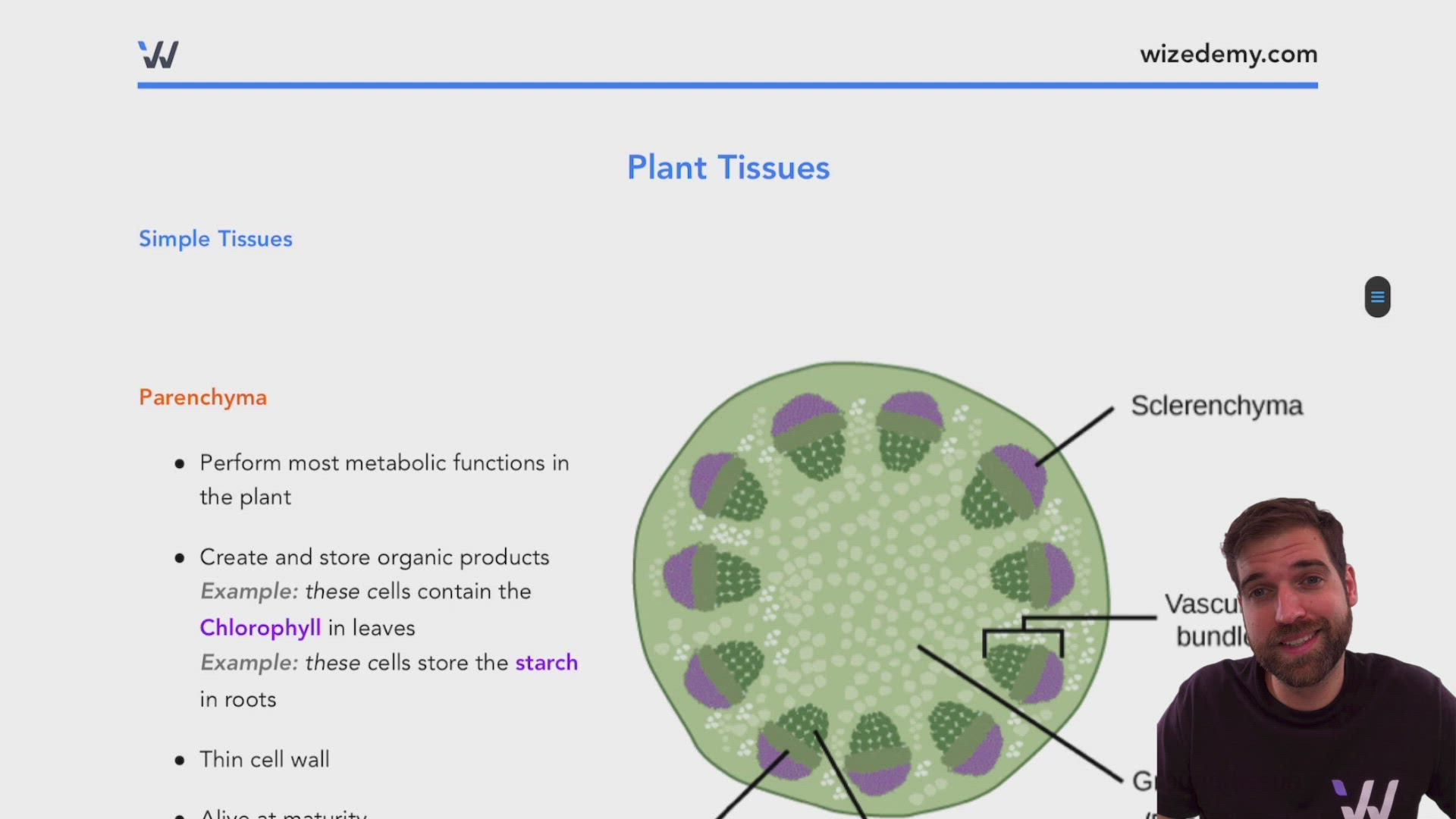
Given the provided diagram, label each of the plant tissues and describe its function.
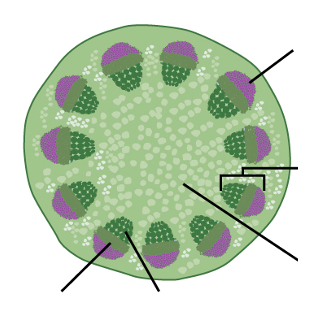
Bottom Left: Phloem - transports sugars and other molecules
Bottom Middle: Xylem - transports water
Bottom Right: Parenchyma - creates and stores organic compounds
Middle Right: Vascular Bundle - the xylem/phloem vascular structure
Top Right: Sclerenchyma - provide rigidity and structure
(CC BY 4.0)
Practice: Plant Cell Types
Sclerids and fibers are specialized ____________ cells.

Mark Yourself Question
- Grab a piece of paper and try this problem yourself.
- When you're done, check the "I have answered this question" box below.
- View the solution and report whether you got it right or wrong.
Practice: Cuticle
Describe the function of the cuticle on leaves and stems. What would happen if this were missing?
Practice: Undifferentiated Plant Cells
Which term about plants best fits the following description:
Undifferentiated cells that have the ability to become any type of cell in the plant.