Wize University Biology Textbook > Invertebrates (Part 1: Non-Molting)
Cnidarians (Jellyfish)
Popular Courses
Biology
General Course
General Biology
University Study Guides
DAT
General Course
Grade 11 Biology
Ontario High School
Grade 11 Biology
Canada High School
General Biology
University Study Guides
BIOL 108
University of Alberta
Biology 20
Alberta High School
BIOL 111
McGill University
BIOL 1201
Western University
Life Sciences 11
British Columbia High School
BIOL 1P91
Brock University
BLG 144
Toronto Metropolitan University
BIOL 1020
University of Manitoba
BIOL 331
University of Calgary
BIOA01H3
University of Toronto
BISC 102
Simon Fraser University
BI110
Wilfrid Laurier University
BIO220H1
University of Toronto
BIOL 201
University of Alberta

0:00 / 0:00
Cnidaria (Jellyfish)
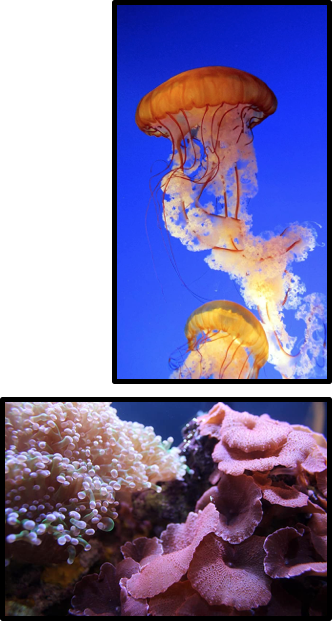
Cnidarians are both beautiful and powerful with the evolution of their harpoon-like cnidocytes that they use to capture prey. Coral reefs represent some of the most attractive and bio-rich habitats in the world.
- Eumetozoa: True differentiated tissues (muscles and nerves)
- Diploblastic
- Contains Organs: collection of specialized tissues that perform a specific task
- Radial Symmetry
- Contains Jellyfish, hydras, sea anemones and corals
- ~10,000 species
- Mostly marine
- Simple body plans
Two basic forms
- Polyp
- Sessile
- Attached to something (sand, rock etc.)
- Mouth points up
- Have gastrovascular cavity
- Medusa
- Motile
- Uses a hydrostatic skeleton
- Mouth points down
- Most transition from polyp to medusa in life cycle

Cnidocytes
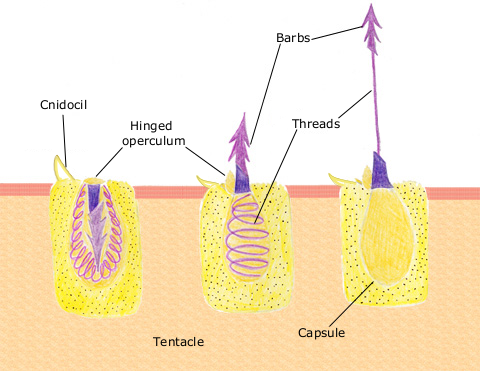
- Carnivores
- Cnidocytes: unique cells used for offense / defense
- Complex endocellular structure
- Nematocyst: most common type of cnidocyte
- Used for defense and prey capture
- Cells are activated by touch
- Nematocyst shoots out (like a spring powered harpoon!)
- Sticks, stabs and poisons prey
- Captured prey are digested in gastrovascular cavity
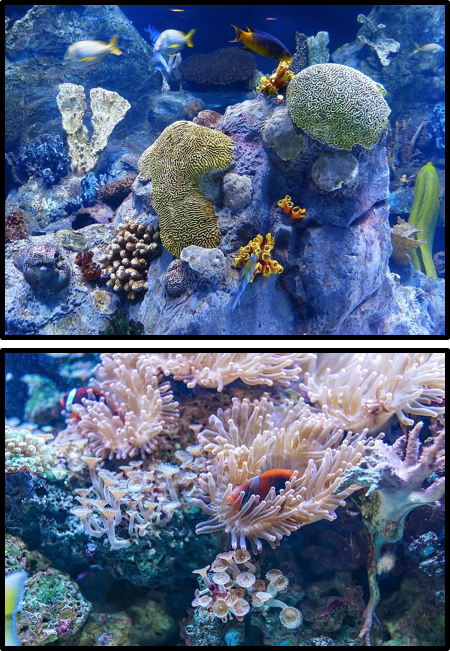
Ecological Significance
- Many host symbiotic algae (zooxanthellae)
- Predators of zooplankton and larval fish
- Some produce toxins dangerous to humans
- Some construct reefs with coral
- Used for shelter and food
- Anthozoa: Secrete calcium carbonate to form hard skeleton
- Large human tourist economy
- Coral Bleaching: ecological meltdown, mass coral die-offs
- Loose symbiotic algae and die
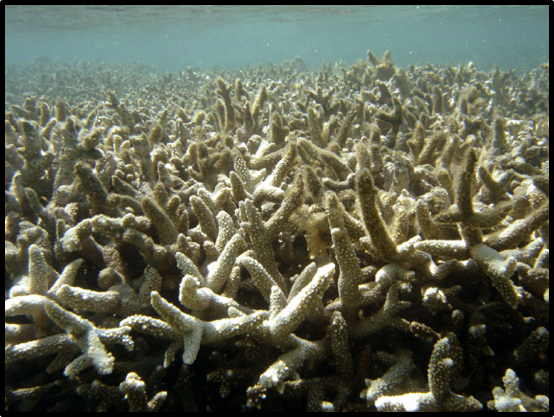
Coral Bleaching
Practice: Cnidarians
Which of the following is true about cnidarians? (select all that apply)
Practice: Cnidarians
Fill in the blanks.
______________ is a type of ______________________ which functions like a harpoon for offense and defense.