Wize University Biology Textbook > Invertebrates (Part 1: Non-Molting)
Porifera (Sponges)
Popular Courses
Biology
General Course
General Biology
University Study Guides
DAT
General Course
Grade 11 Biology
Ontario High School
Grade 11 Biology
Canada High School
General Biology
University Study Guides
BIOL 108
University of Alberta
Biology 20
Alberta High School
BIOL 111
McGill University
BIOL 1201
Western University
Life Sciences 11
British Columbia High School
BIOL 1P91
Brock University
BLG 144
Toronto Metropolitan University
BIOL 1020
University of Manitoba
BIOL 331
University of Calgary
BIOA01H3
University of Toronto
BISC 102
Simon Fraser University
BI110
Wilfrid Laurier University
BIO220H1
University of Toronto
BIOL 201
University of Alberta
0:00 / 0:00
Phylum Porifera (Sponges)
Sponges are interesting because they represent the simplest form of animal, offering insight into the evolution of animals.
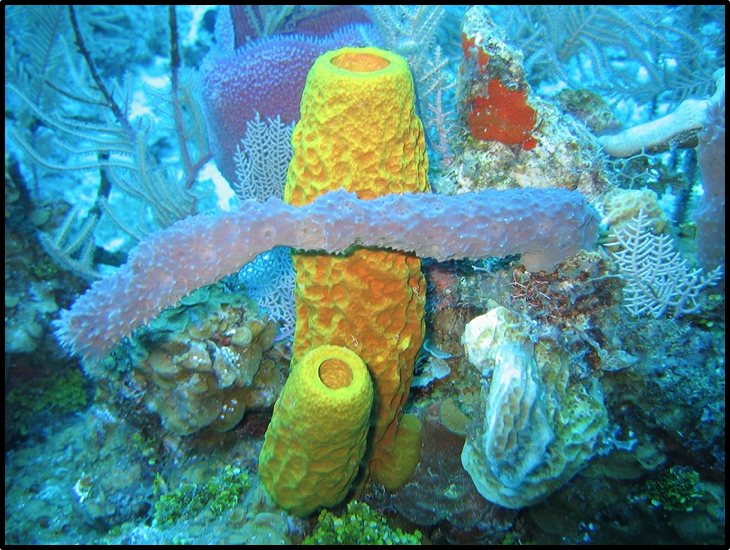
- Porifera = "pore bearer"
- Sponges
- ~8,000 species (mostly marine)
- Sessile: attached to one spot and can't move
- Larval stage is motile
- Do not have Hox Genes: genes that determine an organisms body plan
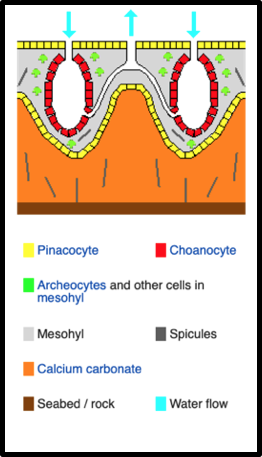
Morphology
- No obvious tissues or organs
- No gut, muscles or nerves
- Cells have specialized function, but are not tissues
- Tissues must be attached by a membrane (sponges do not have)
- Flagellum located in the middle of the sponge
- moves water in and out of the collar
- Collar and flagellum are sticky > traps bacteria
- trapped bacteria are transported to the amoebocytes
- Structural support
- Spicules: tiny hard needles / rods
- Made of calcium carbonate or silica
- Non-living
- Some sponges only have collagen for support (spongin)
- Mesohyl
- Mesohyl = "Middle stuff"
- Acellular layer: between outer skin and choanocyte layer
- Not a tissue
- Suspension Feeding
- Extract small particles from water
- Food particles are engulfed via phagocytosis at the base of the choanocyte
- Amoebocyte: transport food / nutrients from the choanocyte
- Use energy to create spicules or other structures
Exam Tip
Remember that tissues must be attached by a membrane, otherwise they are not considered tissues (like in sponges)
Reproduction
- Hermaphroditic: Male and Female parts at the same time
- Sequential hermaphrodites: Transitions from one sex to the other
- No ovaries or testies
- Amoebocytes make eggs
- Modified choanocytes make sperm
- Mostly internal fertilization
- Adults are sessile
- Ciliated larval stage is motile (dispersal stage)
Ecological Importance of Sponges
- Filter feed: cleans water column
- Symbiotic mutualism with algae and other organisms
- Some are predatory
- Used in pharmacueticals
- Antibiotics
- Cancer drugs
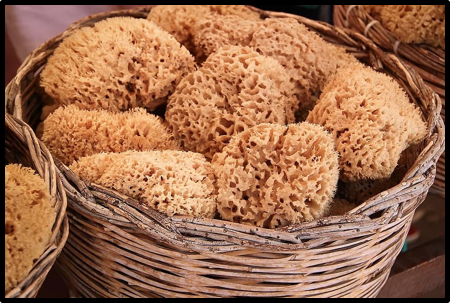
- Bath and Art sponges made from some species
Practice: Sponges
What is the name of the hard rods that provide sponges their structural support?
Practice: Sponges
Which of the following is true about sponges? (select all that apply)