Popular Courses
Biology
General Course
General Biology
University Study Guides
DAT
General Course
Grade 11 Biology
Ontario High School
Grade 11 Biology
Canada High School
General Biology
University Study Guides
BIOL 108
University of Alberta
Biology 20
Alberta High School
BIOL 111
McGill University
BIOL 1201
Western University
Life Sciences 11
British Columbia High School
BIOL 1P91
Brock University
BLG 144
Toronto Metropolitan University
BIOL 331
University of Calgary
BIOL 1020
University of Manitoba
BIOA01H3
University of Toronto
BISC 102
Simon Fraser University
BI110
Wilfrid Laurier University
BIO220H1
University of Toronto
BIOL 201
University of Alberta
0:00 / 0:00
Reptiles
Overview of Reptiles
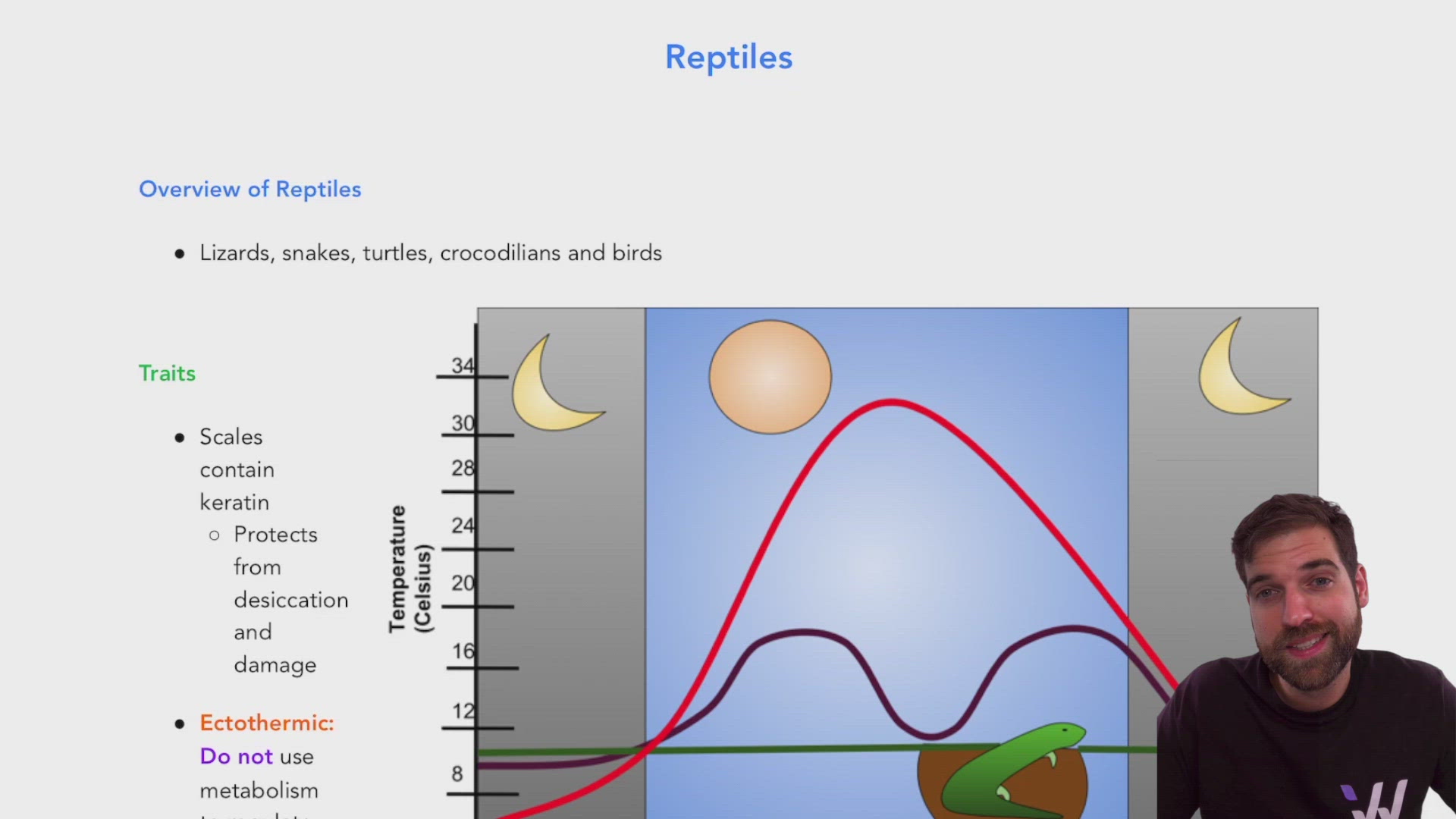
- Lizards, snakes, turtles, crocodilians and birds
Traits
- Scales contain keratin
- Protects from desiccation and damage
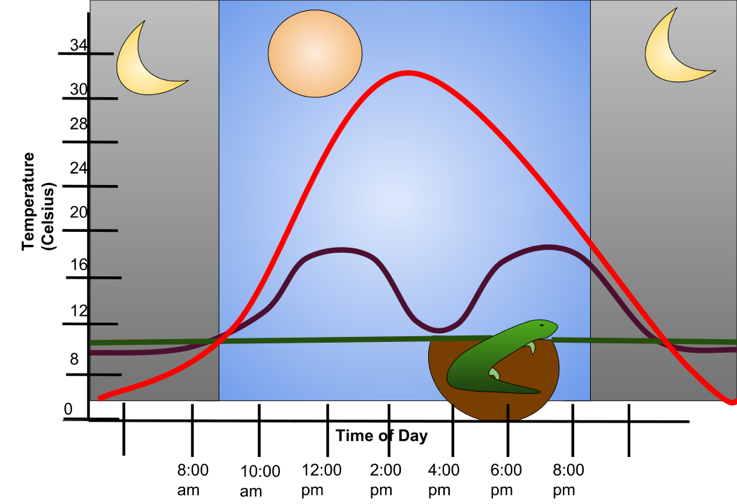
- Ectothermic: Do not use metabolism to regulate body temperature
- Most reptiles
- Behavioral thermoregulation: Move between sun and shade to maintain optimal temp
- Requires far less energy to support ectotherm (10%)
- Endothermic: Do use metabolism to regulate body temperature
- Most birds
Evolution of Reptiles
- Earliest reptiles 310 MYA
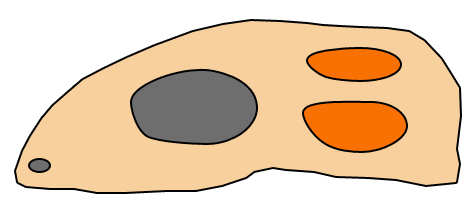
- Were Diapsid: Skulls with a pair of holes on each side of the skull
- Muscles pass through holes to attach to jaw
- Diapsids form two lineages
- Lepidosaurs: Tuataras, Lizards and Snakes
- Archosaurs: Turtles, Crocodilians, Pterosaurs and Dinosaurs
Practice: Thermoregulation
____________ organisms use their metabolism to regulate their internal temperature, where ______________ do not.
0:00 / 0:00
Diversity of Reptiles

Lepidosaurs
Tuataras
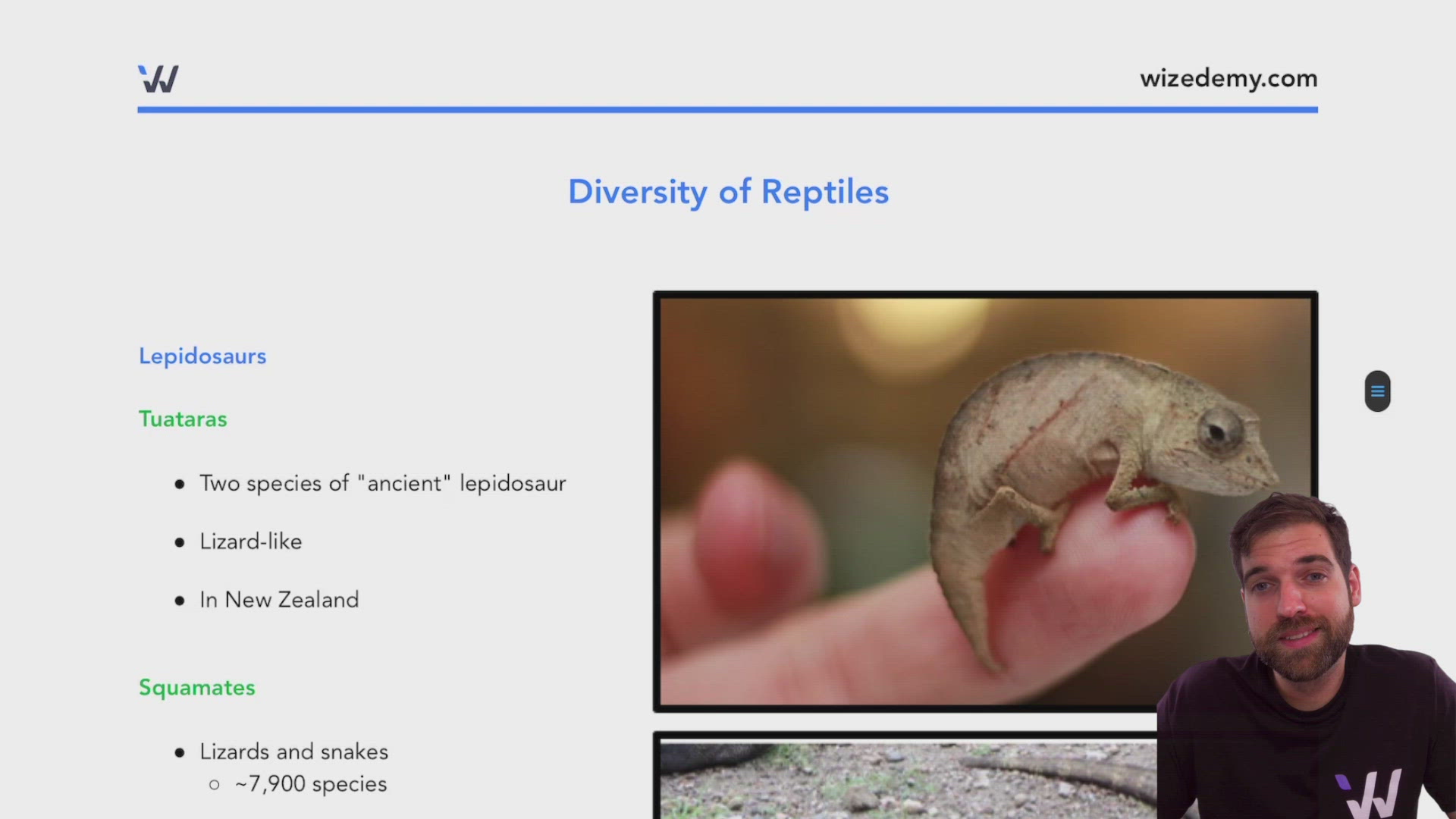
- Two species of "ancient" lepidosaur
- Lizard-like
- In New Zealand
Squamates
- Lizards and snakes
- ~7,900 species
- Range from large to small Examples: Pygmy chameleon vs Komodo Dragon
- Snakes
- Lack legs
- some retain vestigial pelvic bones
- Efficient movement on land
- Waves of lateral bends
- Can grip the ground with ventral scales
- Adaptations to being predators
- Acute chemical sensors
- Sense ground vibrations
- Pit vipers can sense heat
- Enables hunting at night
Archosaurs
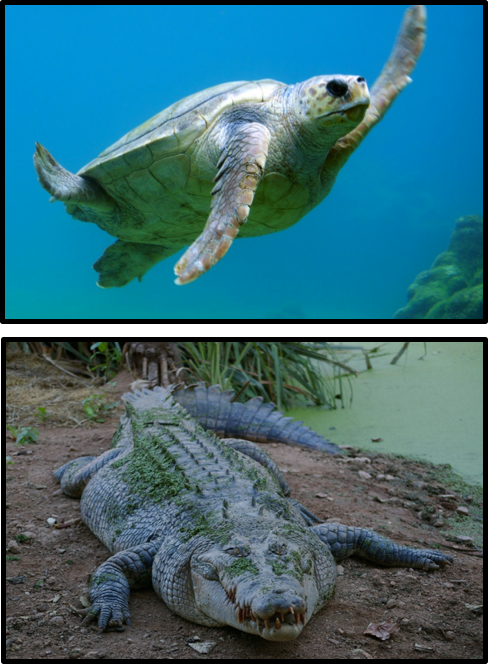
Turtles
- Have lost the two holes in skull
- But still diapsids
- Box like shell
- Upper and lower shields fused to vertebrae, clavicle and ribs
- Fossil evidence shows the shell developed in stages
- Early turtles could not retract head into shell
- 2 methods evolved: sideways and straight in
- Adaptations to Deserts (tortoise) and Sea (Sea turtles)
Crocodilians
- Alligators and Crocodiles
- Old lineage dates back to the triassic
- Adapted to aquatic habitats
- Nostrils turned up to breath while mostly submerged
Birds
- ~ 10,000 species
- Extensive adaptation to flight
- Reduced weight
- Hollow bones
- No urinary bladder
- One ovary
- Toothless
- Wings and feathers
- Feathers: made of B-keratin
- Wings: form airfoils like airplane wings
- Large pectoral muscles power wings
- Increased respiratory and circulatory systems
- Excellent vision
- Endothermic
- Flight enables
- New food sources Example: Flying insects
- Long distance migration
- Display complex behaviors Example: Breeding season courtship and display
- Fertilization is internal (due to shell)
- Evolution of birds
- Evolved from theropods Example: Archaeopteryx
- Some birds have lost flight Example: Ratites: Ostrich, kiwis, emu
- Penguins "fly" in the water
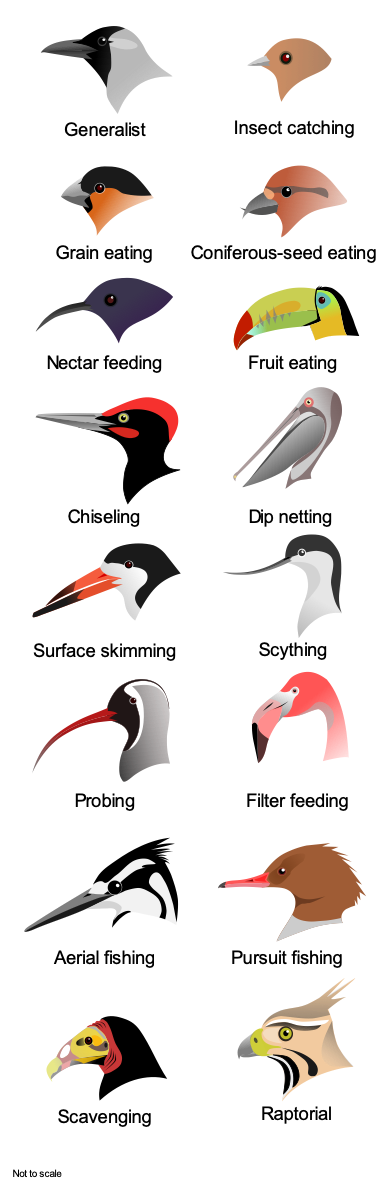
- Beaks and feet show a great deal of variation
Practice: Reptiles
What are some adaptations that snakes have to make them more efficient predators? (select all that apply)
Practice: Birds
Which of the following are adaptations that enabled birds to fly? (select all that apply)