Popular Courses
Biology
General Course
General Biology
University Study Guides
Grade 12 Biology
Canada High School
DAT
General Course
High School Biology
US High School
Grade 11 Biology
Ontario High School
Grade 11 Biology
Canada High School
BIOL 103
Queen's University
General Biology
University Study Guides
Biology 20
Alberta High School
BIOL*1070
University of Guelph
BIOL 186
University of Victoria
BIOL 1201
Western University
BISC 101
Simon Fraser University
Life Sciences 11
British Columbia High School
BIOL 1011
Dalhousie University
BIOL 1P91
Brock University
BIOLOGY 2601A/B
Western University
BIOL 1020
University of Manitoba
BIOL 331
University of Calgary
0:00 / 0:00
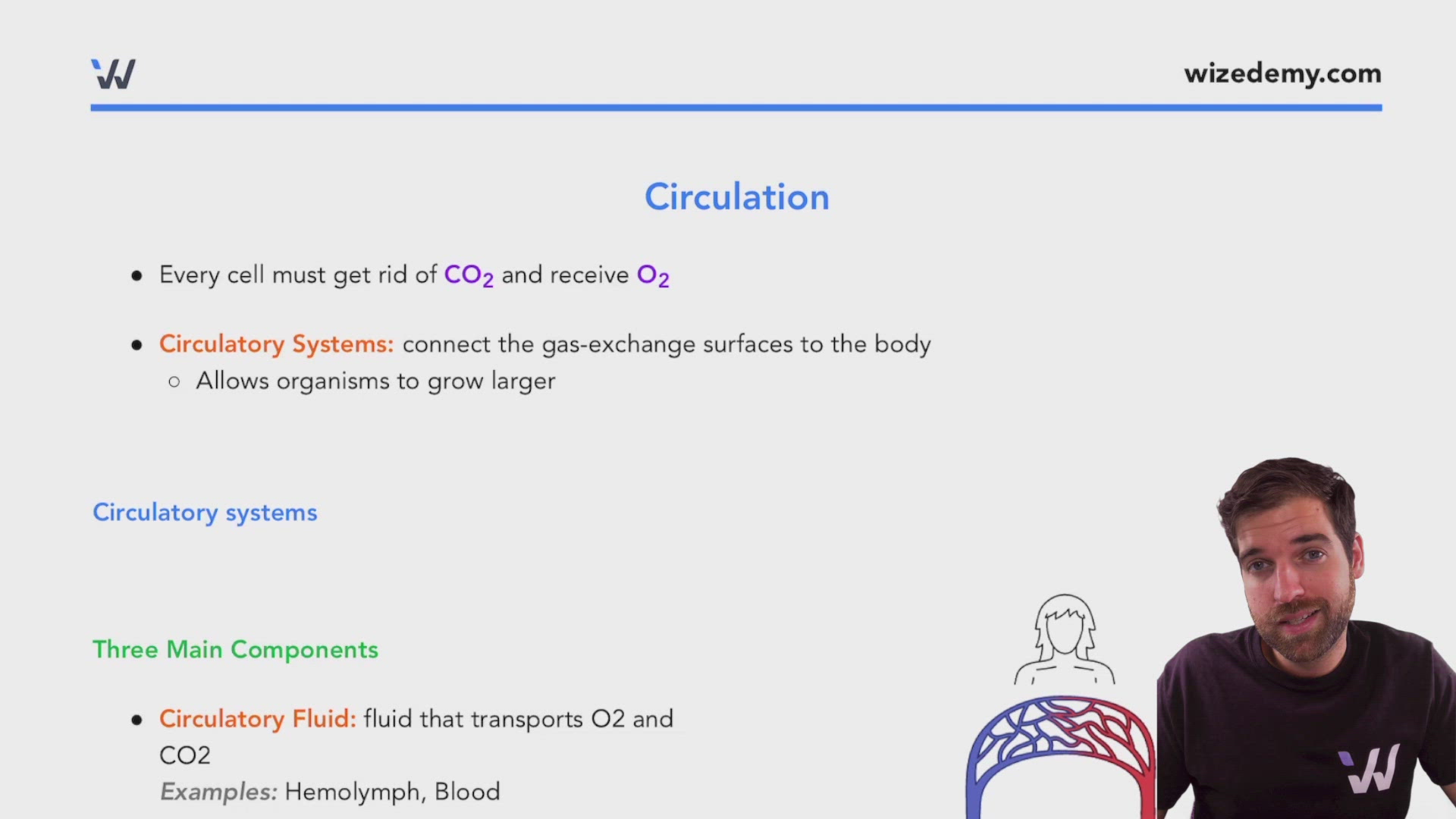
Circulation
- Every cell must get rid of CO2 and receive O2
- Circulatory Systems: connect the gas-exchange surfaces to the body
- Allows organisms to grow larger
Circulatory systems

Three Main Components
- Circulatory Fluid: fluid that transports O2 and CO2 Examples: Hemolymph, Blood
- Vessels: structure that allows the hemolymph to move throughout the body Example: Blood veins
- Muscular Pump: contracts to pump the hemolymph Example: Heart
Open vs Closed Circulatory systems
- Open Circulatory System: hemolymph pools in body cavity and contacts organs directly
- Hemolymph is pumped from the sinuses through the heart
- Hemolymph is not always in vessels! Examples: Arthropods, Clams
- Closed Circulatory System: blood remains in vessels, does not surround organs Examples: Cephalopods, all vertebrates
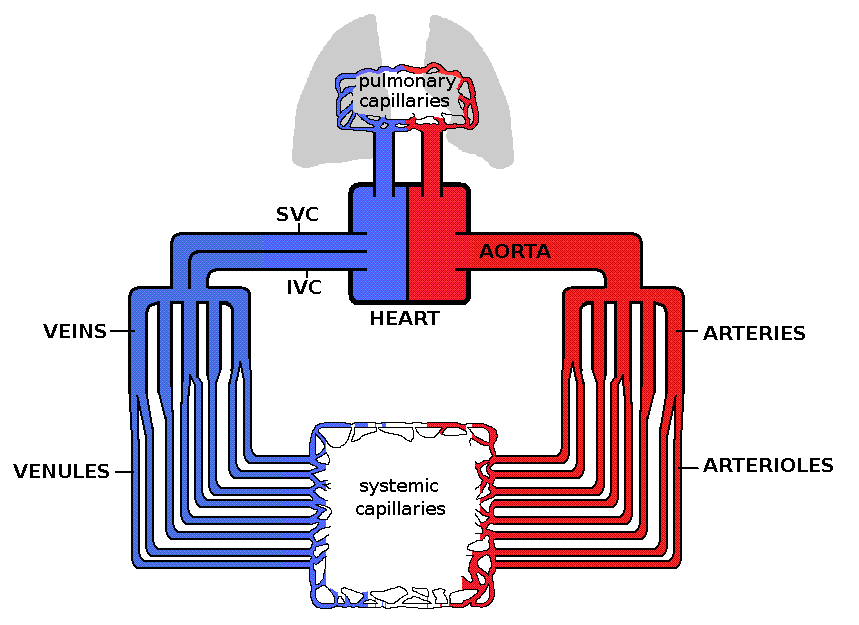
Vertebrate Circulatory Systems
- Cardiovascular system: a name for the circulatory system in humans and vertebrates
- Three types of blood vessels
- Arteries: carry blood from heart to organs
- Capillaries: thin branching veins that allow blood to enter tissues and organs
- Veins: carry blood from organs to heart
- Hearts
- Atria: chamber the receives blood into heart
- Ventricle: larger, muscular chamber, pumps blood out of heart
Single vs Double Circulation
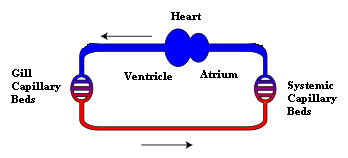
- Single Circulation:
- Heart has only 1 Atrium and 1 Ventricle
- Blood only enters heart ONCE per cycle
- Blood travels
- Heart > Gills > Body (Organs) > Heart Examples: Fish and Sharks
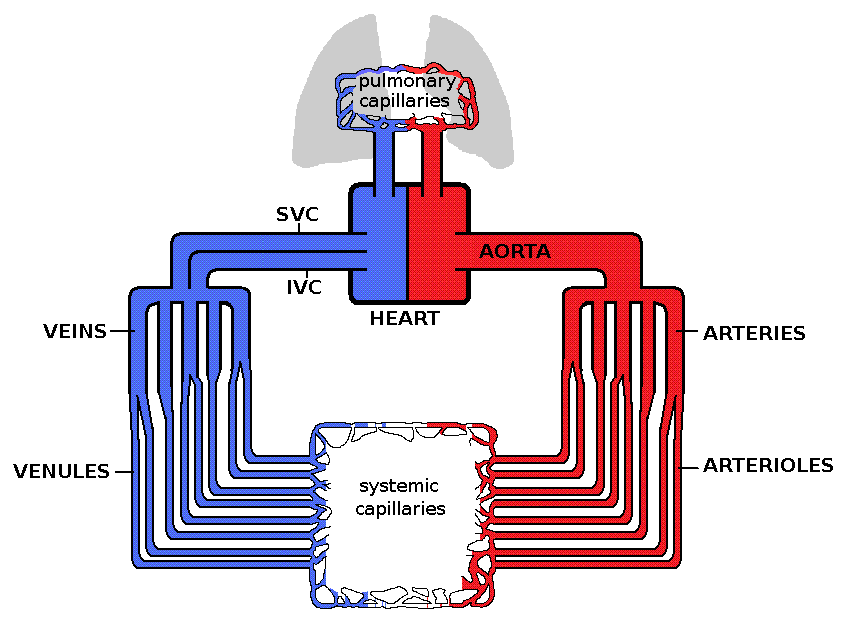
- Double Circulation:
- Heart has 2 Atria and 2 Ventricles
- Blood enters the heart TWICE per cycle
- Blood travels
- Heart > Lungs > Heart > Body > Heart Examples: Humans and Amphibians

Mark Yourself Question
- Grab a piece of paper and try this problem yourself.
- When you're done, check the "I have answered this question" box below.
- View the solution and report whether you got it right or wrong.
What are the three main components of the circulatory system?
What type of blood vessels contact the organs directly?
Mark Yourself Question
- Grab a piece of paper and try this problem yourself.
- When you're done, check the "I have answered this question" box below.
- View the solution and report whether you got it right or wrong.
Describe the main difference between Single Circulation and Double Circulation systems.