Popular Courses
Biology
General Course
General Biology
University Study Guides
Grade 12 Biology
Canada High School
DAT
General Course
High School Biology
US High School
Grade 11 Biology
Ontario High School
Grade 11 Biology
Canada High School
BIOL 103
Queen's University
General Biology
University Study Guides
Biology 20
Alberta High School
BIOL*1070
University of Guelph
BIOL 186
University of Victoria
BIOL 1201
Western University
BISC 101
Simon Fraser University
Life Sciences 11
British Columbia High School
BIOL 1011
Dalhousie University
BIOL 1P91
Brock University
BIOLOGY 2601A/B
Western University
BIOL 1020
University of Manitoba
BIOL 331
University of Calgary
0:00 / 0:00
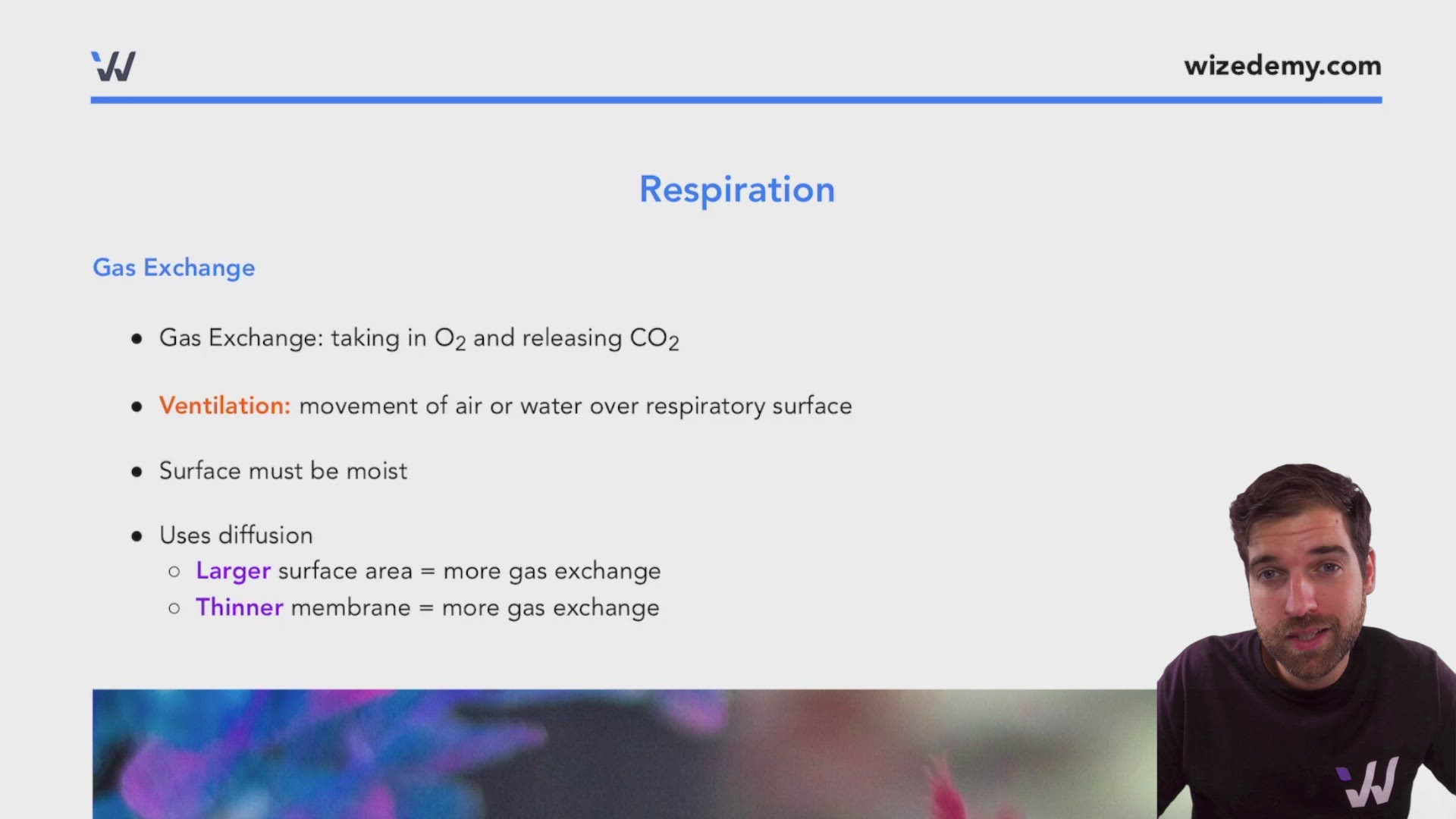
Respiration
Gas Exchange
- Gas Exchange: taking in O2 and releasing CO2
- Ventilation: movement of air or water over respiratory surface
- Surface must be moist
- Uses diffusion
- Larger surface area = more gas exchange
- Thinner membrane = more gas exchange
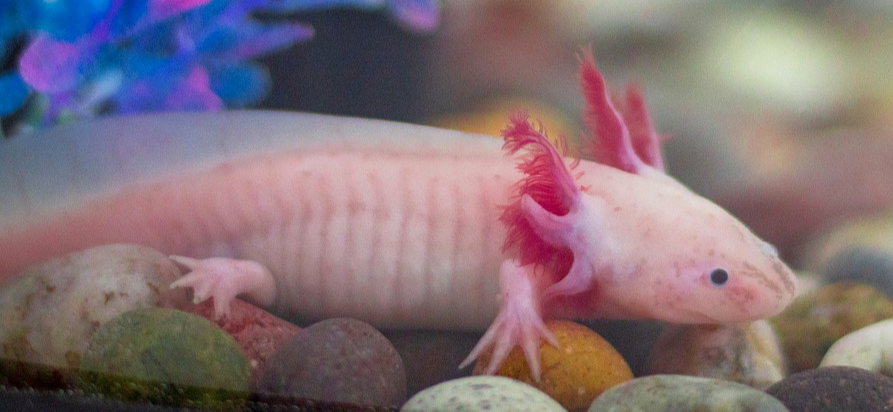
Types of Respiratory Systems
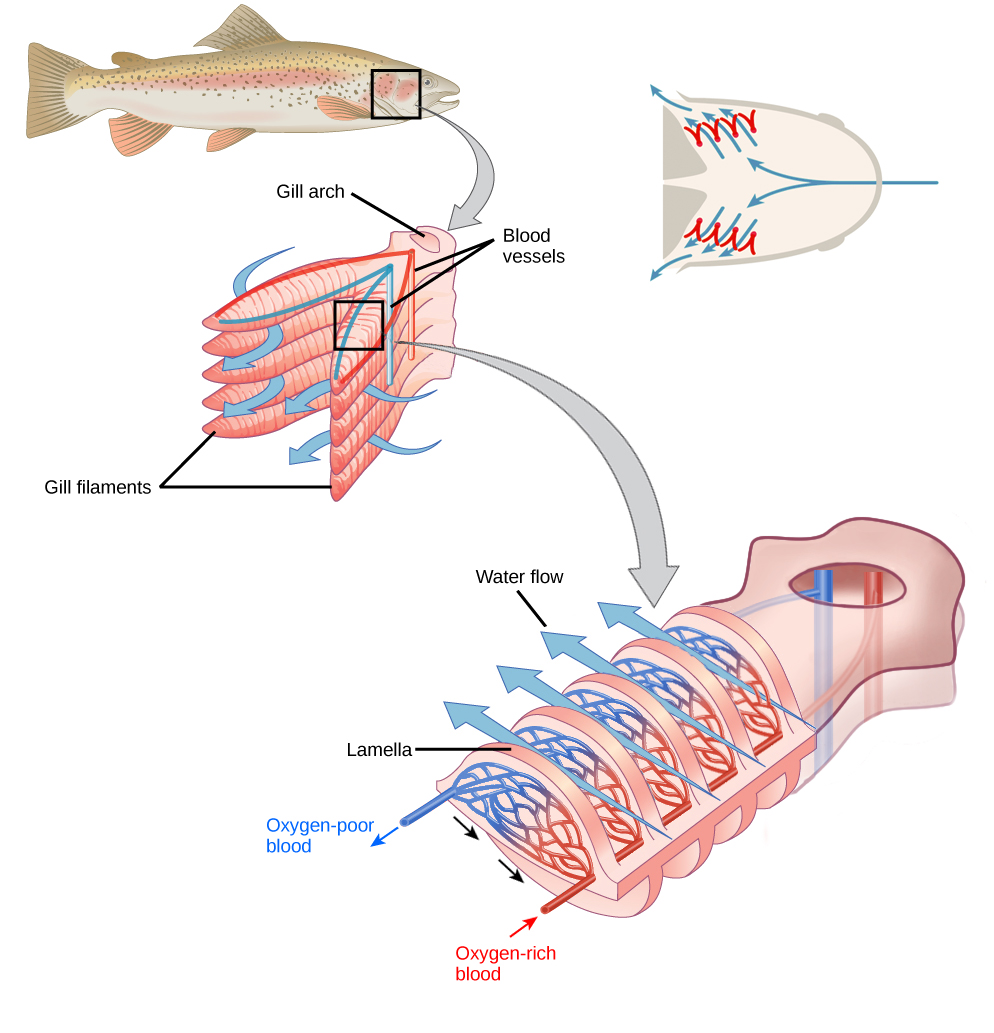
Gills
- Aquatic animals often use gills
- Countercurrent exchange: maximizes gas exchange
- Blood and water flow in opposite directions
Tracheal Systems
- Tracheal System: a network of tubes that carry air throughout the body
- Largest tube is the Trachea, which is open to air
- Insects have many trachea that contact every cell directly
- Enables expensive movements (i.e. flight)
- Most mammals use Lungs: a specialized respiratory organ
- Lungs are open to the air
- Have many pockets to increase gas exchange
- Must use circulatory system to transport O2 to the body
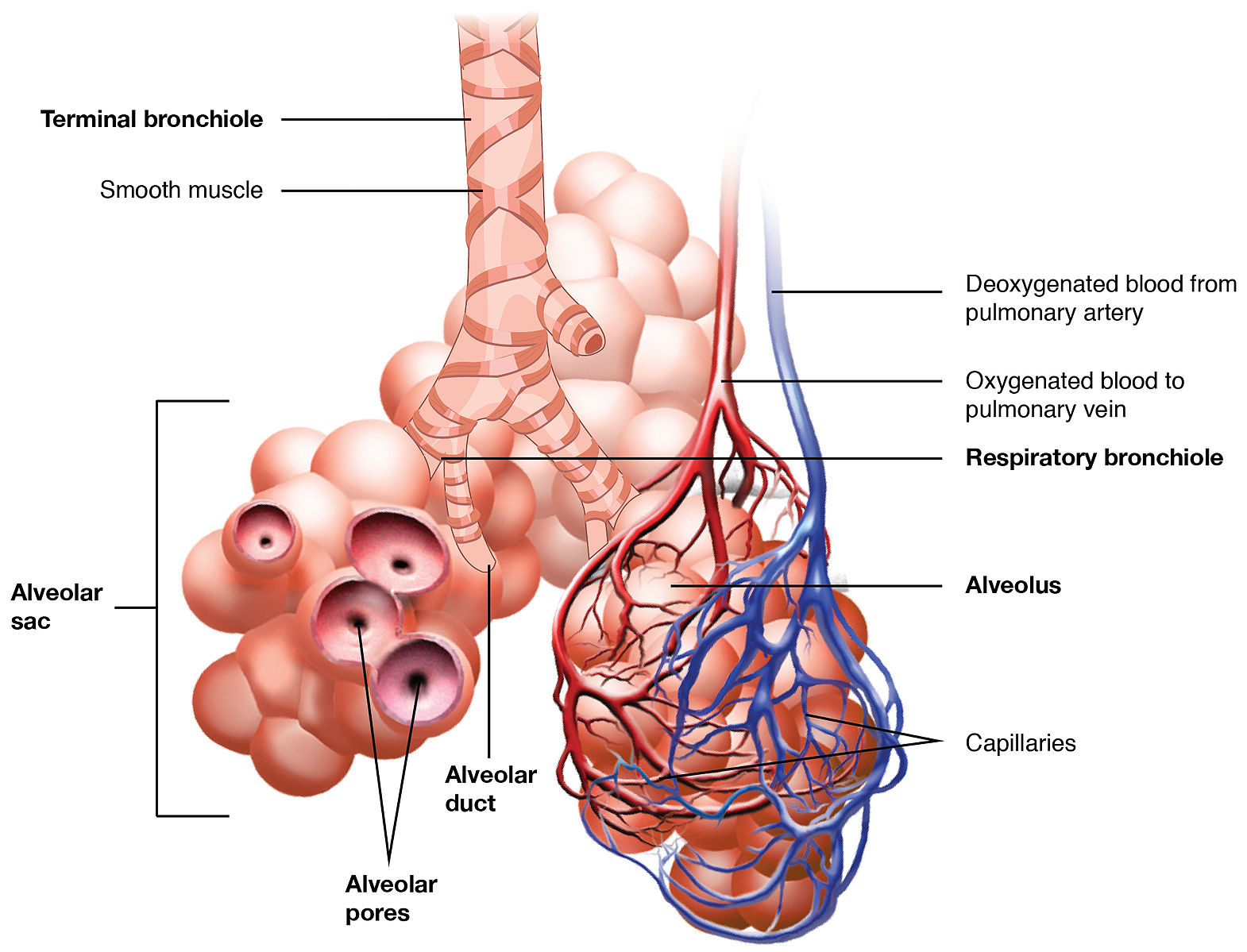
Mammalian Respiratory System
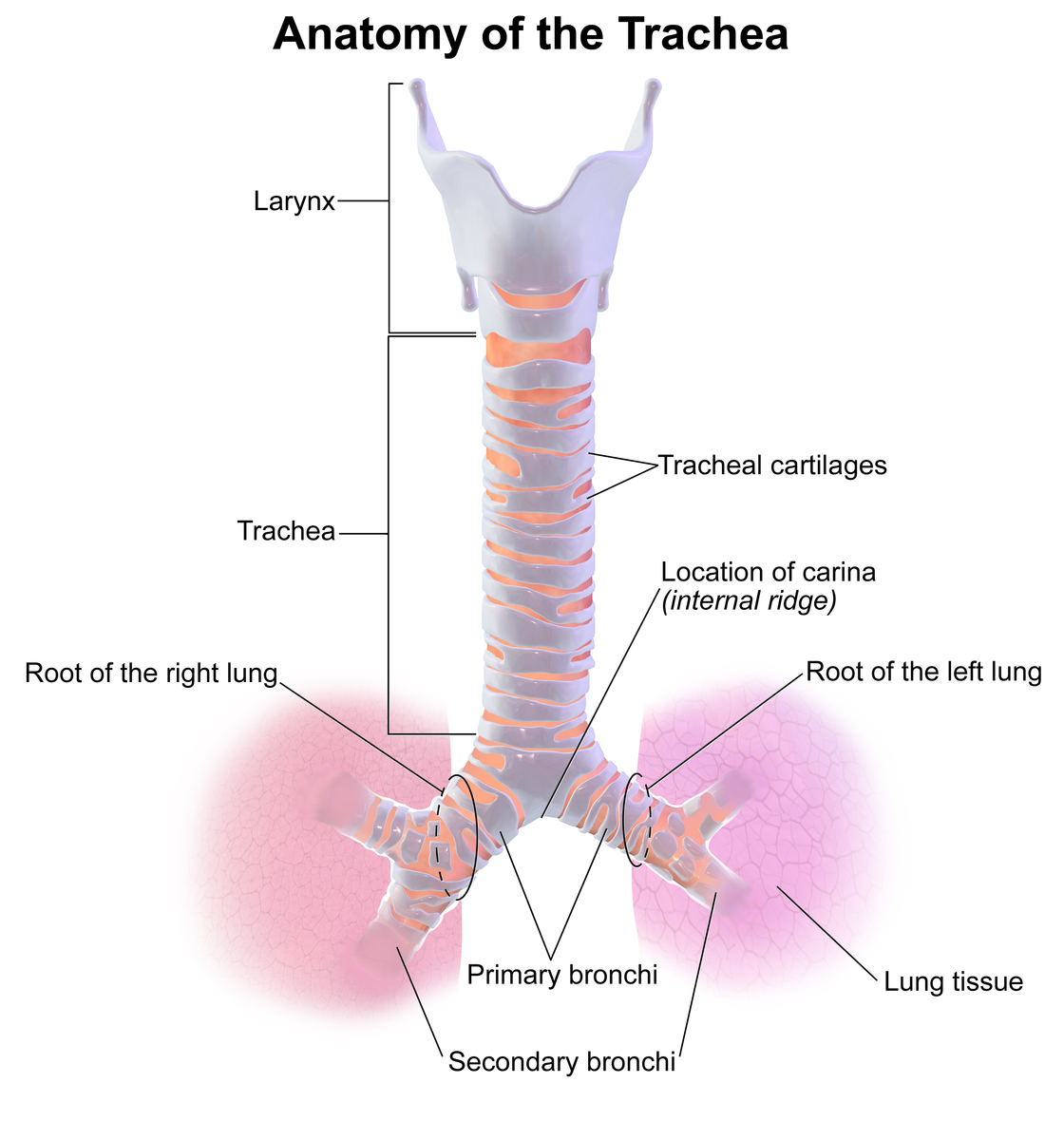
- Air enters the Trachea
- The trachea splits into Bronchi which lead into each lung
- Bronchi branch into smaller Bronchioles
- Bronchioles end in Alveoli: air sacs where gas exchange occurs
- Alveoli are covered in Surfactant: which prevents them from collapsing

Mark Yourself Question
- Grab a piece of paper and try this problem yourself.
- When you're done, check the "I have answered this question" box below.
- View the solution and report whether you got it right or wrong.
Explain how countercurrent exchange increases the rate of gas exchange in fish.
What is the order of respiratory elements from largest to smallest?