Wize University Biology Textbook > Ecology
Introduction to Ecology
Popular Courses
AP Biology Exam Prep Course
AP Exam Prep
Biology
General Course
General Biology
University Study Guides
BIOL 211
University of Calgary
Grade 12 Biology
Canada High School
High School Biology
US High School
BIOL 103
Queen's University
DAT
General Course
BIO 1131
University of Ottawa
BIOL 121
University of British Columbia
BIOLOGY 1M03
McMaster University
General Biology
University Study Guides
BIO120H1
University of Toronto
BIOL*1070
University of Guelph
SC/BIOL 1001 3.00
York University
BIOL 1201
Western University
BIOL 1011
Dalhousie University
BIOL 1P91
Brock University
BLG 144
Toronto Metropolitan University
BIOL 331
University of Calgary

0:00 / 0:00
Ecology
- Ecology: the study of organisms interacting with each other and their environment
- Ecologists study
- Distribution: where are individuals?
- Abundance: how many individuals are there?
- There are several branches of ecology:
- Organismal ecology: how individuals interact with each other and with their environment
- Population ecology: how population sizes change over time
- Community ecology: how different species interact with each other
- Ecosystem Ecology: how energy and nutrients flow through the environment
Ecosystems
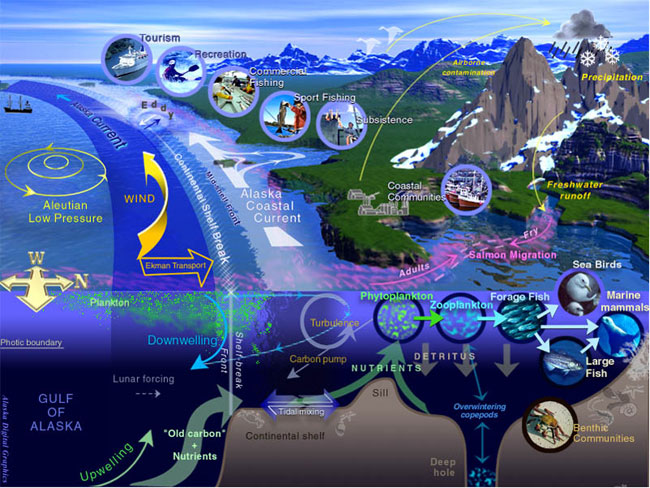
- Ecosystem: a community of organisms and the physical environment it occupies
0:00 / 0:00
Food Webs
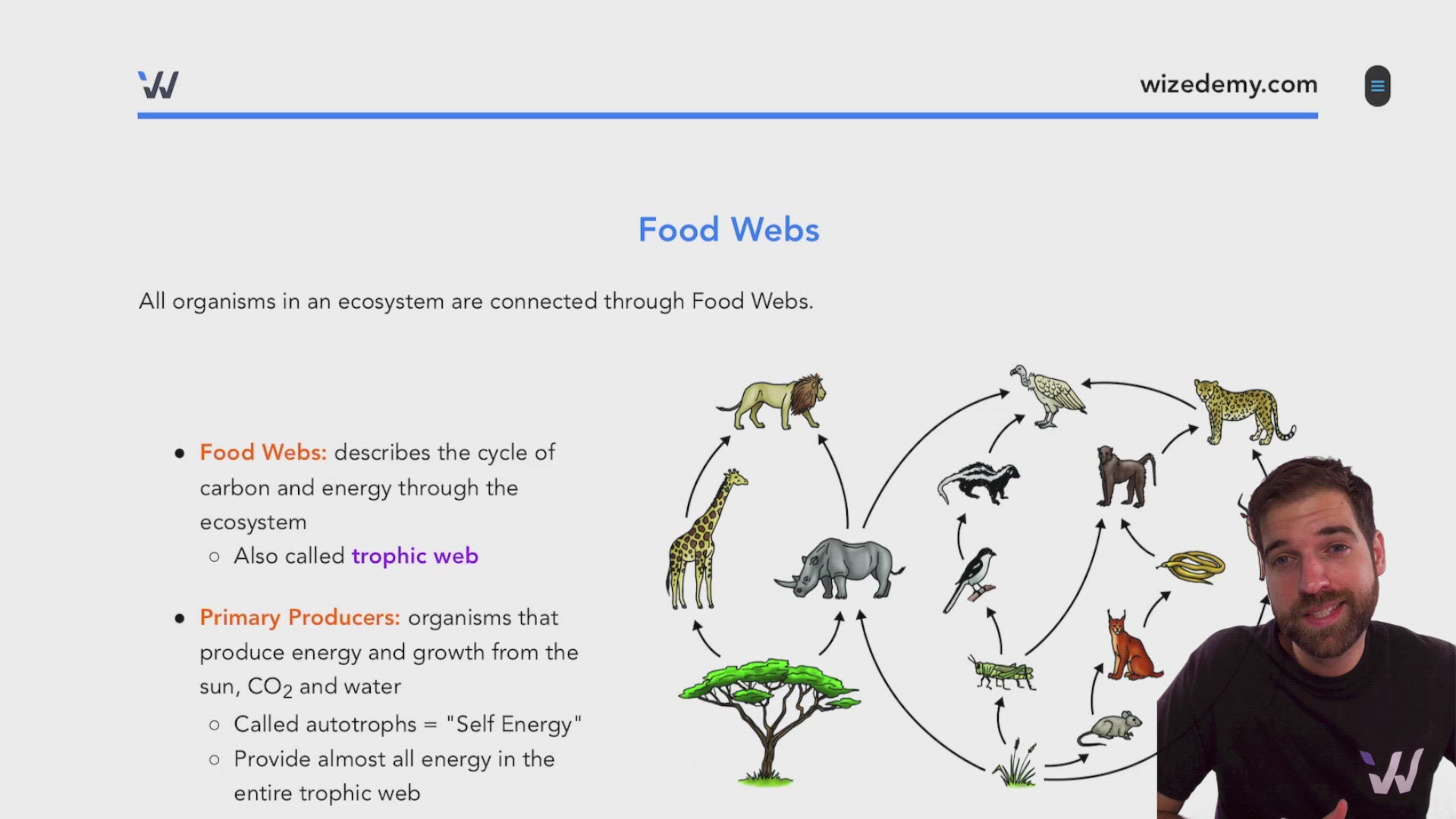
All organisms in an ecosystem are connected through Food Webs.

- Food Webs: describes the cycle of carbon and energy through the ecosystem
- Also called trophic web
- Primary Producers: organisms that produce energy and growth from the sun, CO2 and water
- Called autotrophs = "Self Energy"
- Provide almost all energy in the entire trophic web
- Consumers: organisms that gain energy and nutrients by consuming other organisms
- Herbivores: consume primary producers (primary consumer)
- Carnivore: consume non-herbivores (secondary consumer)
- Decomposers: break down producers and consumers
- Bacteria and Fungi
- Release carbon and nutrients back into environment
Trophic Structure
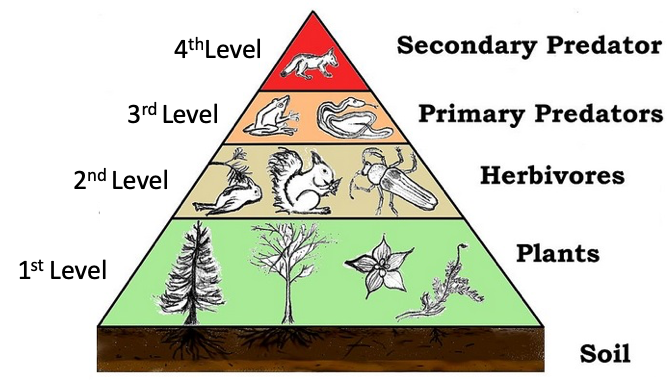
- Trophic Level: where an organism fits in the food web
- 1st Trophic level: primary producers
- 2nd Trophic level: primary consumers (herbivores)
- 3rd Trophic level: secondary consumers (carnivores)
- Can be additional levels up to the apex predator
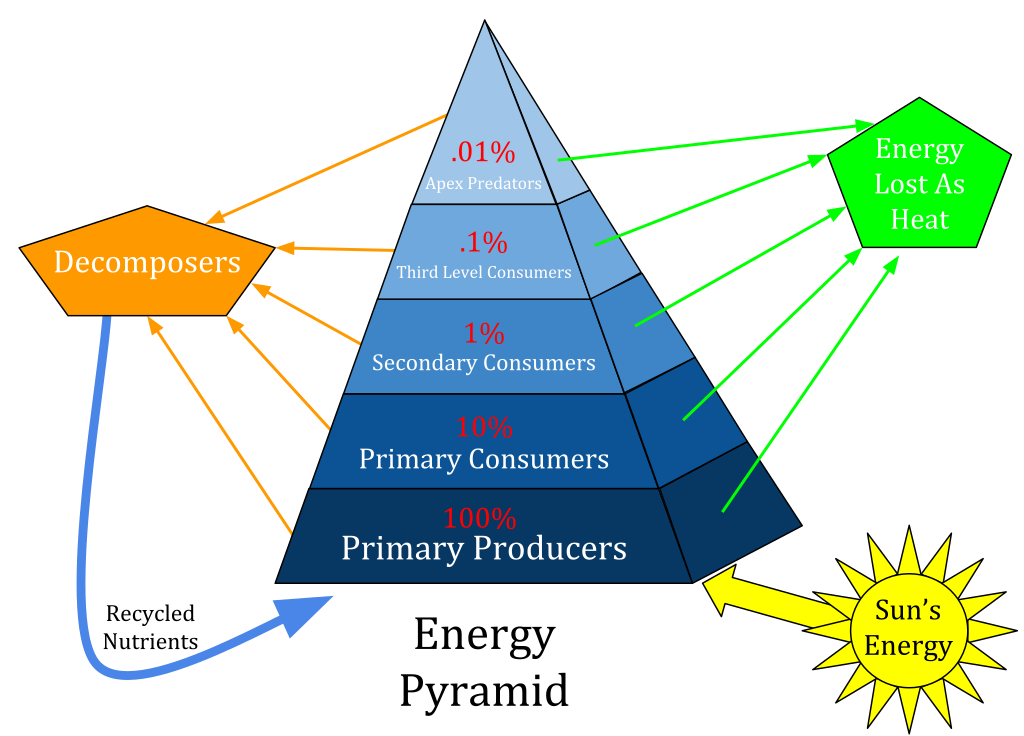
- Not all energy is transferred up to the next level
- Only about 10% is transferred up
- 90% is lost as heat (used up)
- You can estimate biomass at each level Example: If the ecosystem contains 1000 kg of grass (therefore photosynthesis), then it can support 100 kg of frogs, which will support 10 kg of snakes and 1 kg of ferrets etc.
- Bottom up ecosystems
- If you increase the primary production, all other levels increase
- Primary production is limiting factor
- Top down ecosystems
- If you decrease the top level consumers, all other levels will increase
- Predation is the limiting factor
- Trophic cascade: changes in higher levels trickle down and affect lower levels
- All ecosystems are really a combination of bottom and top control
- Keystone Species: one species that has a huge effect on the ecosystem
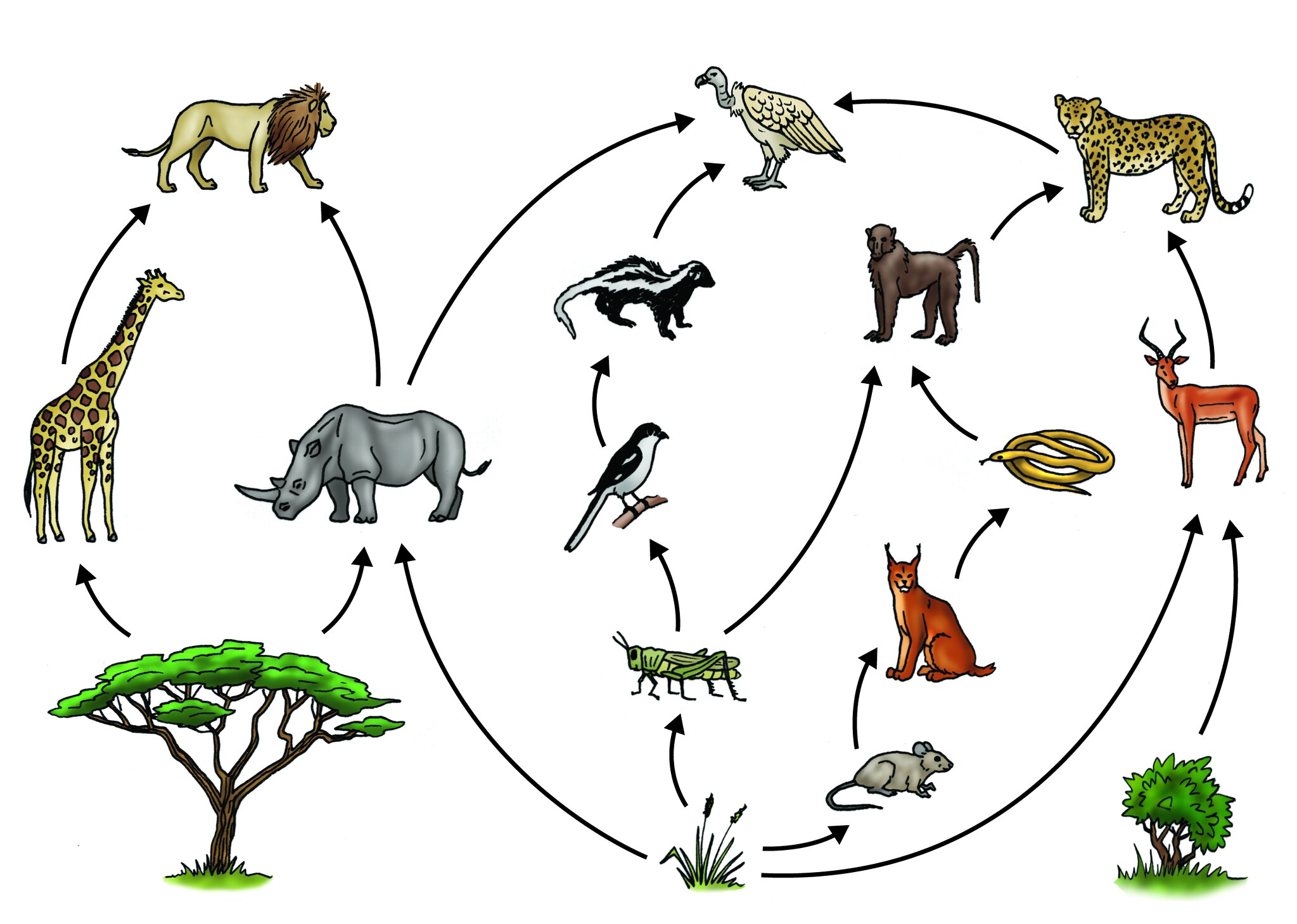
Which branch of ecology is interested in the in how individuals interact with each other and their environment?
Order these following taxa by trophic level (1st, 2nd, 3rd):
Grasshopper
Bird
Grass

Mark Yourself Question
- Grab a piece of paper and try this problem yourself.
- When you're done, check the "I have answered this question" box below.
- View the solution and report whether you got it right or wrong.
Pollution from a factory seeps into an ecosystem and kills only the grass. However, you notice that the insects, birds and even coyotes all decrease in numbers. What is true about this specific ecosystem?