Wize University Biology Textbook > Ecology
Biomes and Abiotic Factors
Popular Courses
AP Biology Exam Prep Course
AP Exam Prep
Biology
General Course
General Biology
University Study Guides
BIOL 211
University of Calgary
Grade 12 Biology
Canada High School
DAT
General Course
High School Biology
US High School
BIOL 103
Queen's University
BIO 1131
University of Ottawa
BIOL 121
University of British Columbia
BIOLOGY 1M03
McMaster University
BIO120H1
University of Toronto
General Biology
University Study Guides
BIOL*1070
University of Guelph
SC/BIOL 1001 3.00
York University
BIOL 1201
Western University
BIOL 1011
Dalhousie University
BIOL 1P91
Brock University
BLG 144
Toronto Metropolitan University
BIOL 1020
University of Manitoba
0:00 / 0:00
Biomes and Abiotic Factors
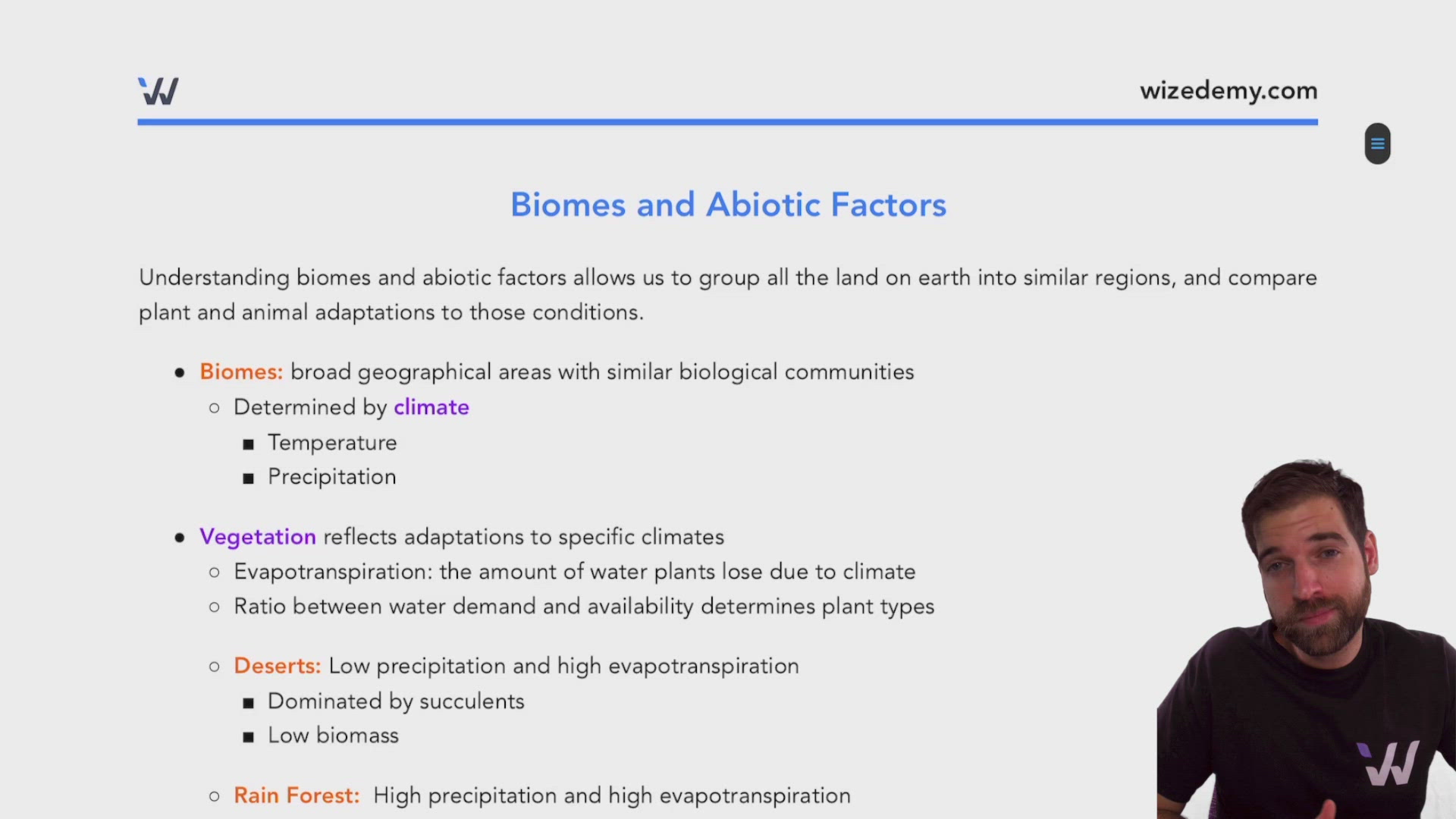
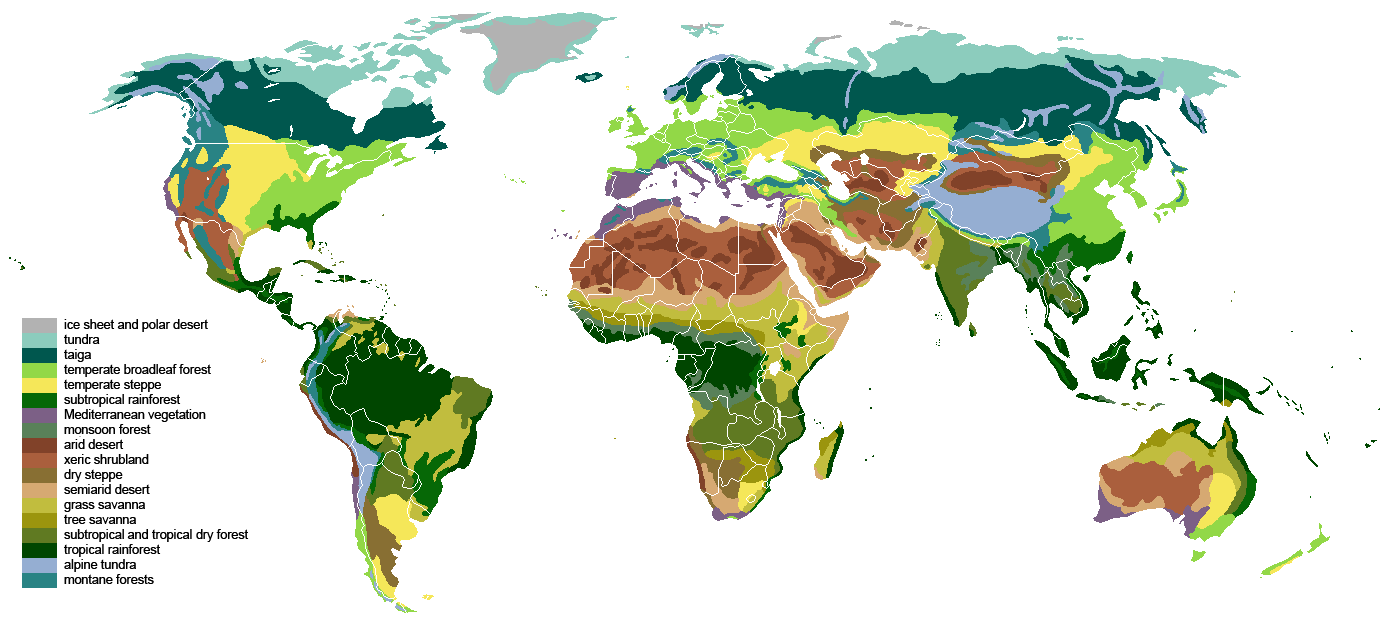
Understanding biomes and abiotic factors allows us to group all the land on earth into similar regions, and compare plant and animal adaptations to those conditions.
- Biomes: broad geographical areas with similar biological communities
- Determined by climate
- Temperature
- Precipitation
- Vegetation reflects adaptations to specific climates
- Evapotranspiration: the amount of water plants lose due to climate
- Ratio between water demand and availability determines plant types
- Deserts: Low precipitation and high evapotranspiration
- Dominated by succulents
- Low biomass
- Rain Forest: High precipitation and high evapotranspiration
- Very moist and dense vegetation
- High biomass
Convergent Evolution
Organisms in similar biomes evolve similar adaptations.
- Plants may look similar, but have different evolutionary history and mechanisms
- Plants converge in appearance and function since they are adapting to similar environments Example: Cacti from North America and Euphorbes from Africa look very similar, but have extremely different evolutionary histories and mechanisms for tolerating hot and dry conditions.

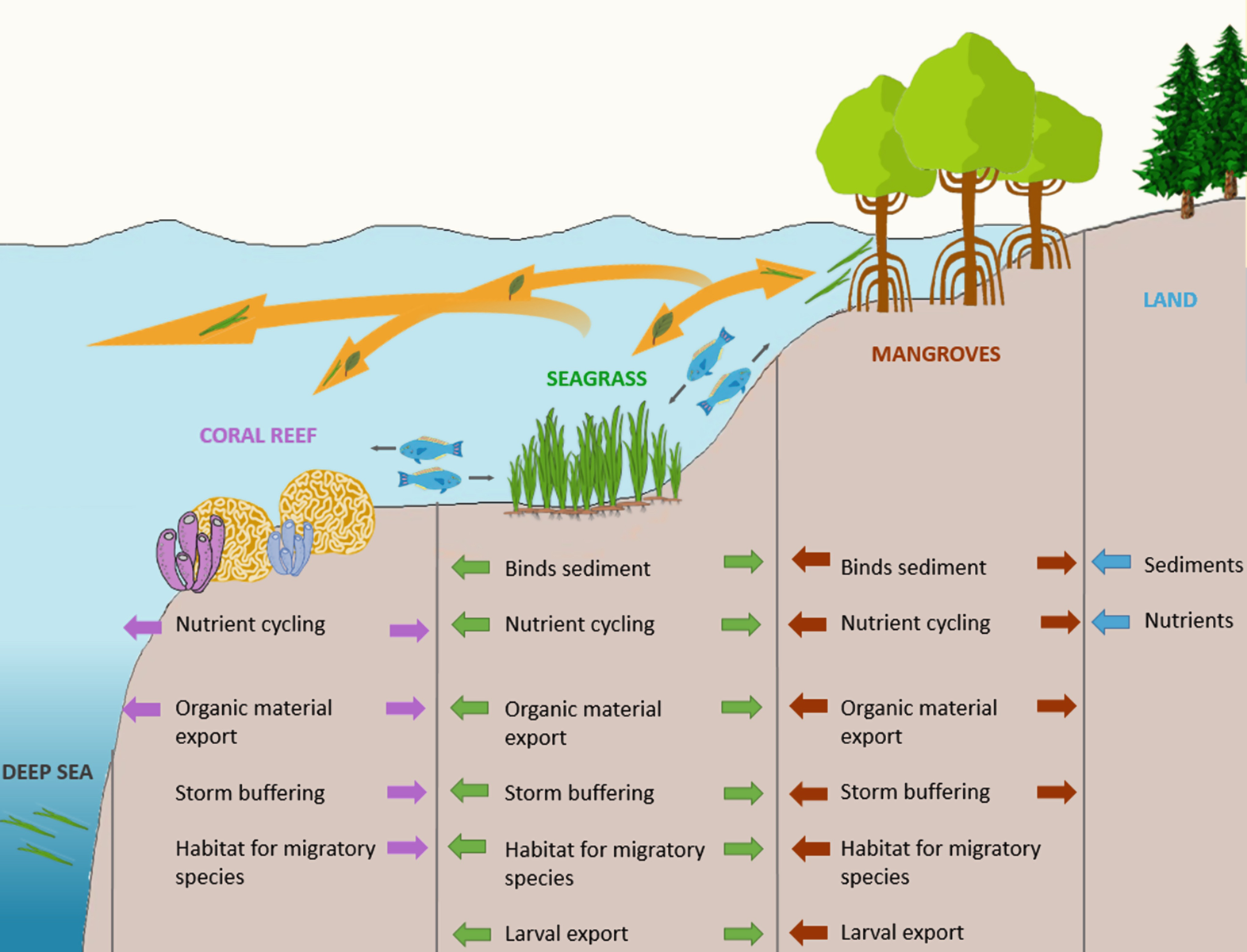
Aquatic biomes
- Shaped by
- Climate
- Nutrient availability
- Oxygen
- Sunlight
- Primary producers
- Shallow aquatic systems
- Macroscopic Algae
- Aquatic plants
- Open Ocean
- Photosynthetic microscopic organisms
- Aquatic biomes include:
- Intertidal
- Coral reefs
- Pelagic realm
- Deep sea
Desert biomes experience precipitation and evapotranspiration.

Mark Yourself Question
- Grab a piece of paper and try this problem yourself.
- When you're done, check the "I have answered this question" box below.
- View the solution and report whether you got it right or wrong.
Before the advent of modern genetics, many evolutionary trees were constructed using only morphological traits (physical traits). Why might this lead to errors in our understanding of evolutionary relationships?