Wize High School Grade 11 Biology Textbook > Biodiversity & Ecosystem Health
Classifying Organisms: Cladistics
Phylogenetic Trees
Similar Traits Within & Between Phylogenetic Groups
Dichotomous Keys
Example: Using Dichotomous Keys
Practice: Phylogenetic Trees
Example: Using Trait Tables to Build Phylogenetic Trees
Example: Phylogenetic Trees
Practice: Using Trait Tables to Build Phylogenetic Trees
Practice: Cladistics
Popular Courses
Find My Course

0:00 / 0:00
Phylogenetic Trees
Phylogenetic trees are the best way to present how all life forms on earth are related to each other.
Phylogenetic Trees: branching diagrams that show the evolutionary history of organisms
- Phylogeny: evolutionary history of a species or group
- vs. Taxonomy: groups organisms based on similarities
- Show evolutionary relationships between taxa
- Represent hypotheses about evolutionary history
- Build trees using:
- Morphology
- Behavior
- DNA
- Biochemistry
Watch Out!
More recently evolved does not mean more advanced!
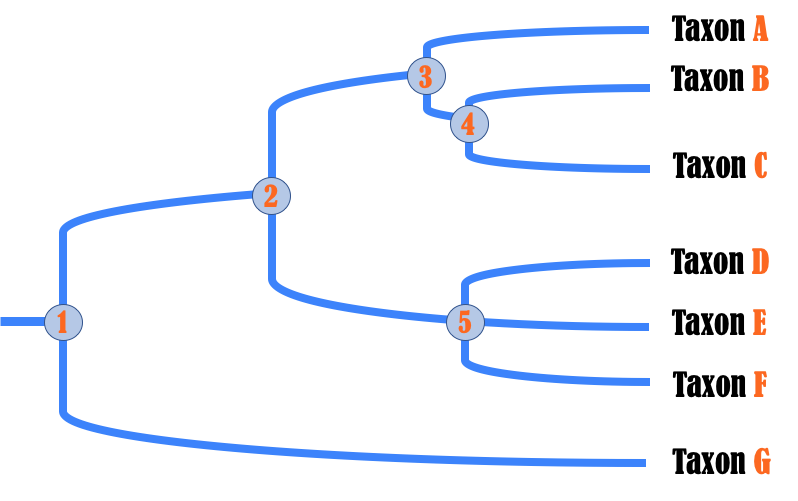
- Taxon (Taxa): the taxonomic unit at any level Example Animalia is the Kingdom taxon
- Sister taxa: Two or more taxa next to each other on the tree (i.e. closely related) Example: Taxon B and Taxon C are sister taxa
- Clade: A group of taxa that share a common ancestor Example: Taxon A, B, C form a clade
- In group: a group of interest usually the focus of a study
- Out group: one or more taxa that is distantly related to the In group
- Character: a specific characteristic Example: a wing or a tail
- State: a particular property of a character Example: the shape of the wing, or the color of the tail
Wize Tip
You can rotate any part of the tree and it doesn't change any relationships
0:00 / 0:00
Similar Traits Within & Between Phylogenetic Groups
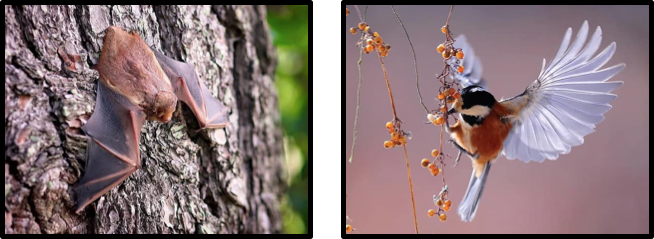
- Analogous traits: appear similar but actually evolved independently
- Convergent evolution: natural selection produces a similar trait from different starting points Example: bat and bird wings
- Homologous traits: similar due to true shared ancestry
- Descended from the same trait in a common ancestor Example: dolphin and whale flippers
0:00 / 0:00
Dichotomous Keys
Dichotomous Keys are a two-part system used to classify living things.
- The system requires there to ONLY be 2 choices at each node to take you to the next branch
- Each branch includes fewer and fewer organisms until each organism has been classified
Wize Tip
Dichotomous can be broken down into "Di" = two questions and "key" = system.
Dichotomous Key = Two Question System
Below is an example of using a dichotomous key to classify different species of tree leaves.

0:00 / 0:00
Example: Using Dichotomous Keys
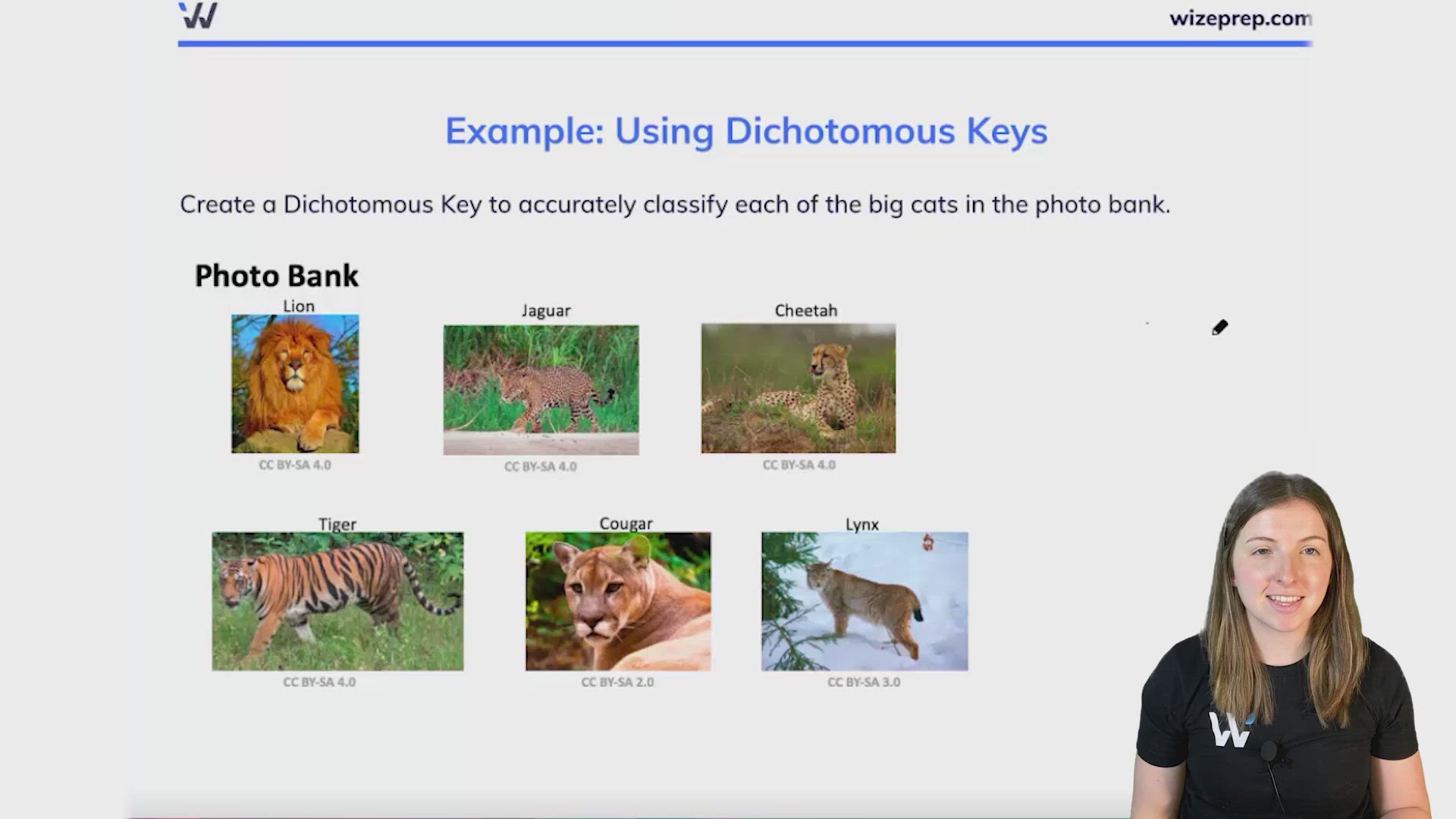
Create a Dichotomous Key to accurately classify each of the big cats in the photo bank.
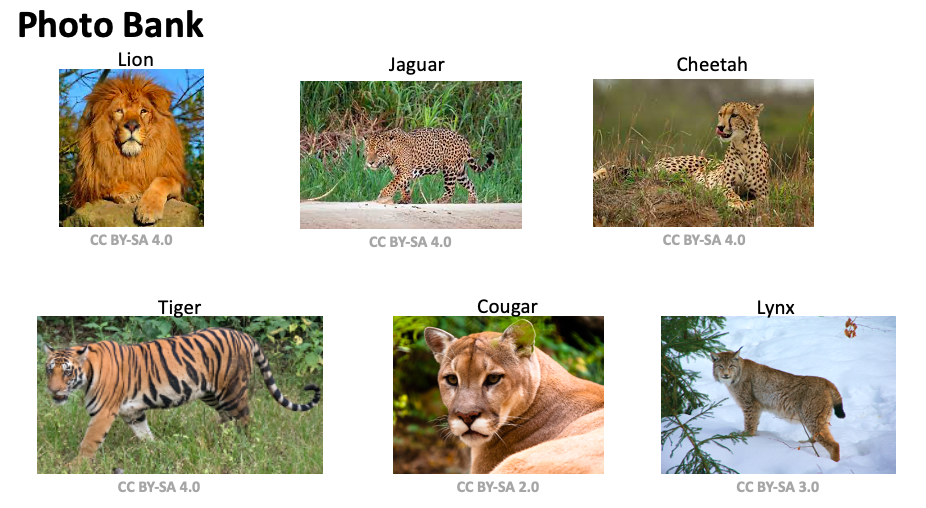
See video for solution
Practice: Phylogenetic Trees
Which of the following could NOT be used to create a phylogenetic tree?

0:00 / 0:00
Example: Using Trait Tables to Build Phylogenetic Trees
Fill in the following cladistics table with an X for a trait the organism has and leave blank if the organism does not have that trait. Then, using the filled in cladistics table build a phylogenetic tree.

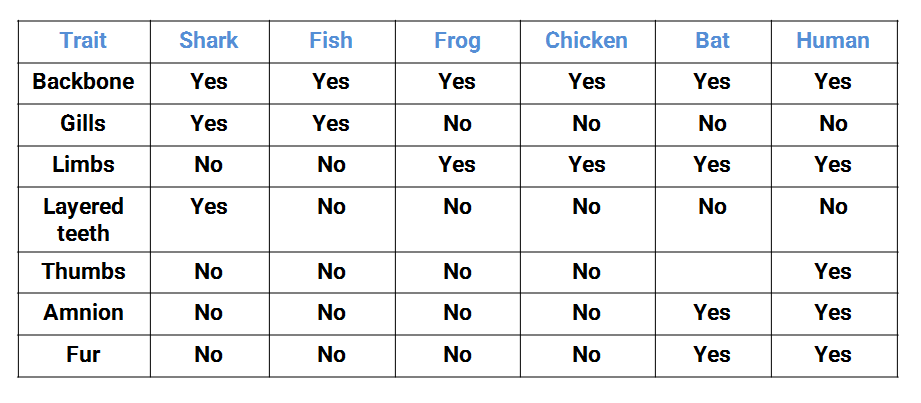
Build the tree

0:00 / 0:00
Example: Phylogenetic Trees
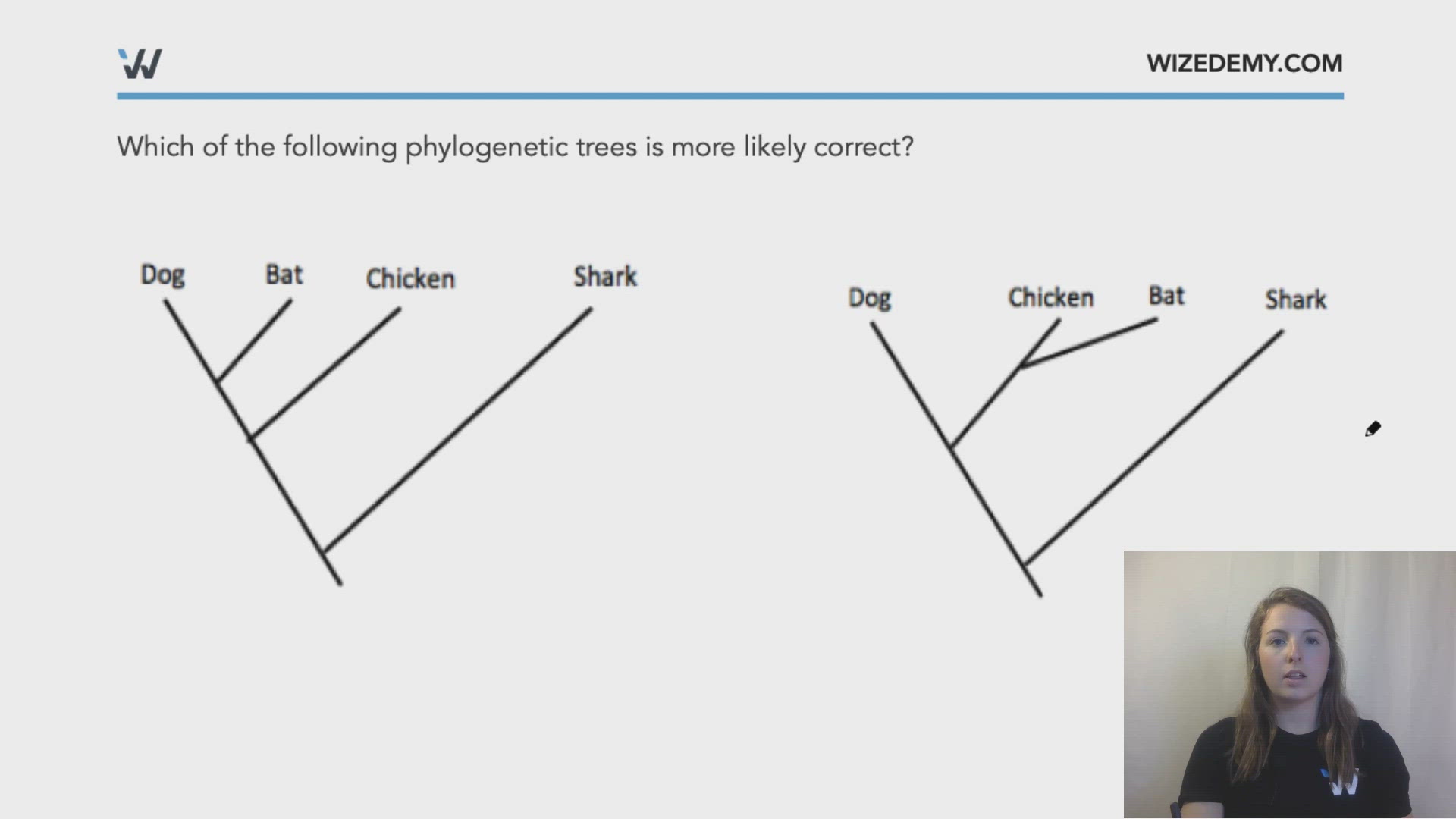
Which of the following phylogenetic trees is more likely correct? Use the following traits to help you: Wings, Fur, Gills, Live Births (Amnion)
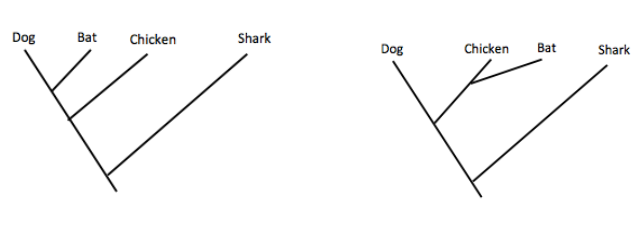
Traits to use: Fur, Wings, amnion, and gills
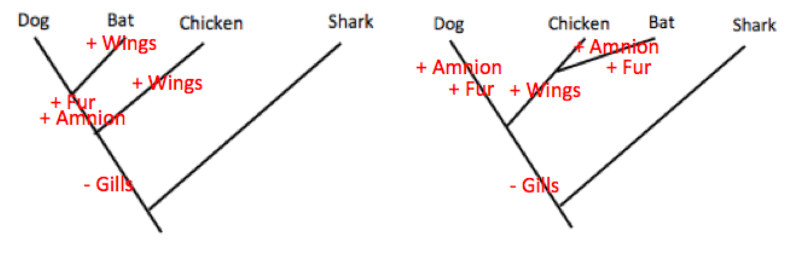
Tree on the left has 5 steps, and tree on the right has 6. According to the parsimony principle
the tree on the left is simpler than the right so is likely correct.
Practice: Using Trait Tables to Build Phylogenetic Trees
Which of the following phylogenies best represents the below trait table:

Practice: Cladistics
Which of the following statements are TRUE regarding the relationship between species I, II and III given the provided table?
