Wize High School Grade 11 Biology Textbook > Biodiversity & Ecosystem Health
Ecosystems in the Biosphere
0:00 / 0:00
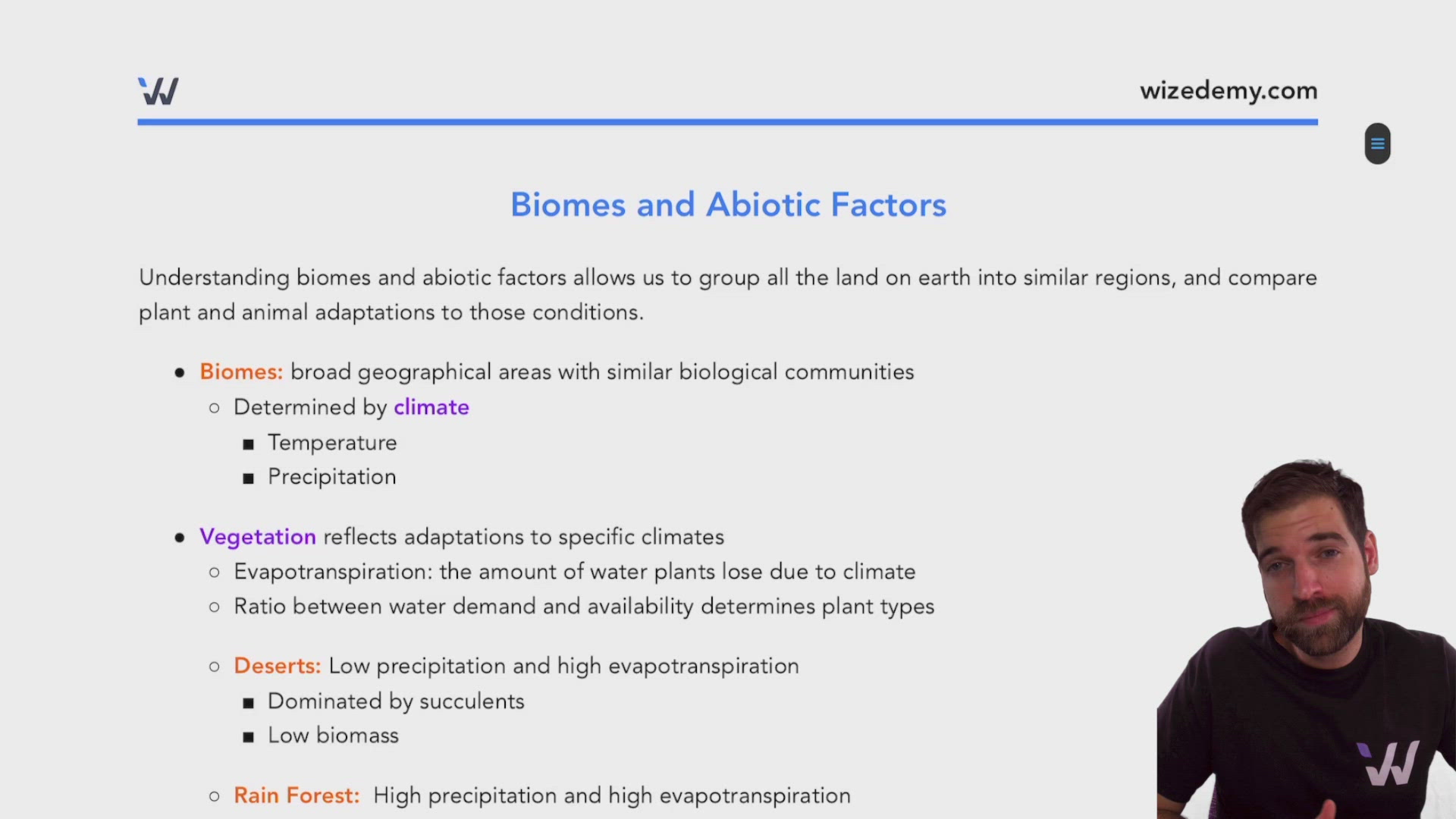
Biomes and Abiotic Factors
Understanding biomes and abiotic factors allows us to group all the land on earth into similar regions, and compare plant and animal adaptations to those conditions.
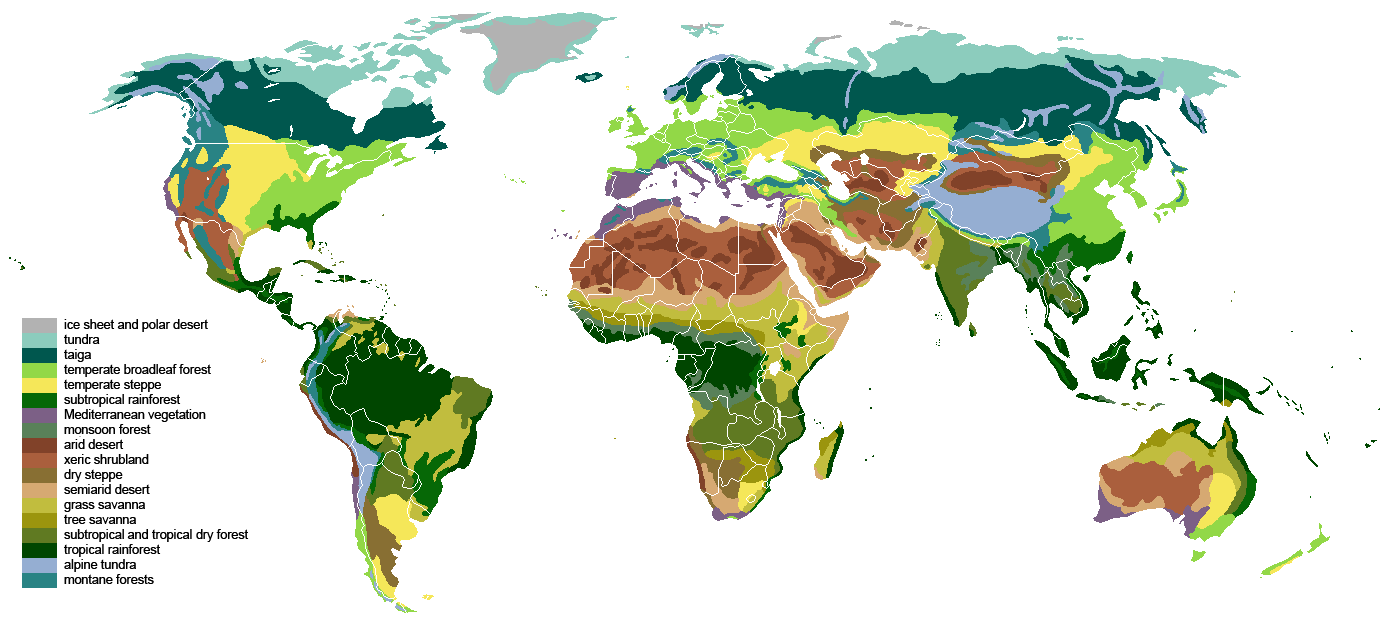
- Biomes: broad geographical areas with similar biological communities
- Determined by climate
- Temperature
- Precipitation
- Vegetation reflects adaptations to specific climates
- Evapotranspiration: the amount of water plants lose due to climate
- Ratio between water demand and availability determines plant types
- Deserts: Low precipitation and high evapotranspiration
- Dominated by succulents
- Low biomass
- Rain Forest: High precipitation and high evapotranspiration
- Very moist and dense vegetation
- High biomass
Convergent Evolution
Organisms in similar biomes evolve similar adaptations.
- Plants may look similar, but have different evolutionary history and mechanisms
- Plants converge in appearance and function since they are adapting to similar environments Example: Cacti from North America and Euphorbes from Africa look very similar, but have extremely different evolutionary histories and mechanisms for tolerating hot and dry conditions.

Aquatic biomes
- Shaped by
- Climate
- Nutrient availability
- Oxygen
- Sunlight
- Primary producers
- Shallow aquatic systems
- Macroscopic Algae
- Aquatic plants
- Open Ocean
- Photosynthetic microscopic organisms
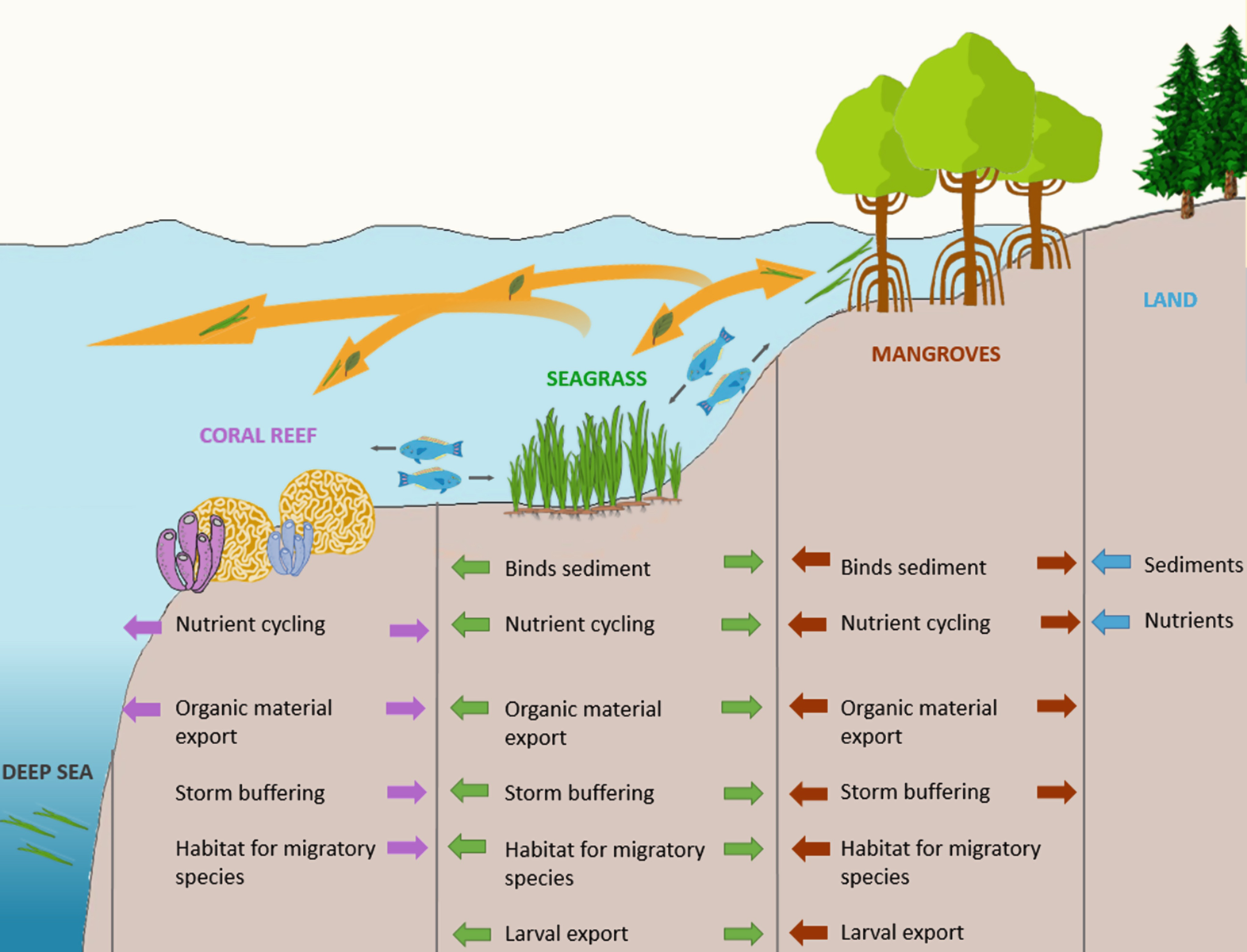
- Aquatic biomes include:
- Intertidal
- Coral reefs
- Pelagic realm
- Deep sea
0:00 / 0:00
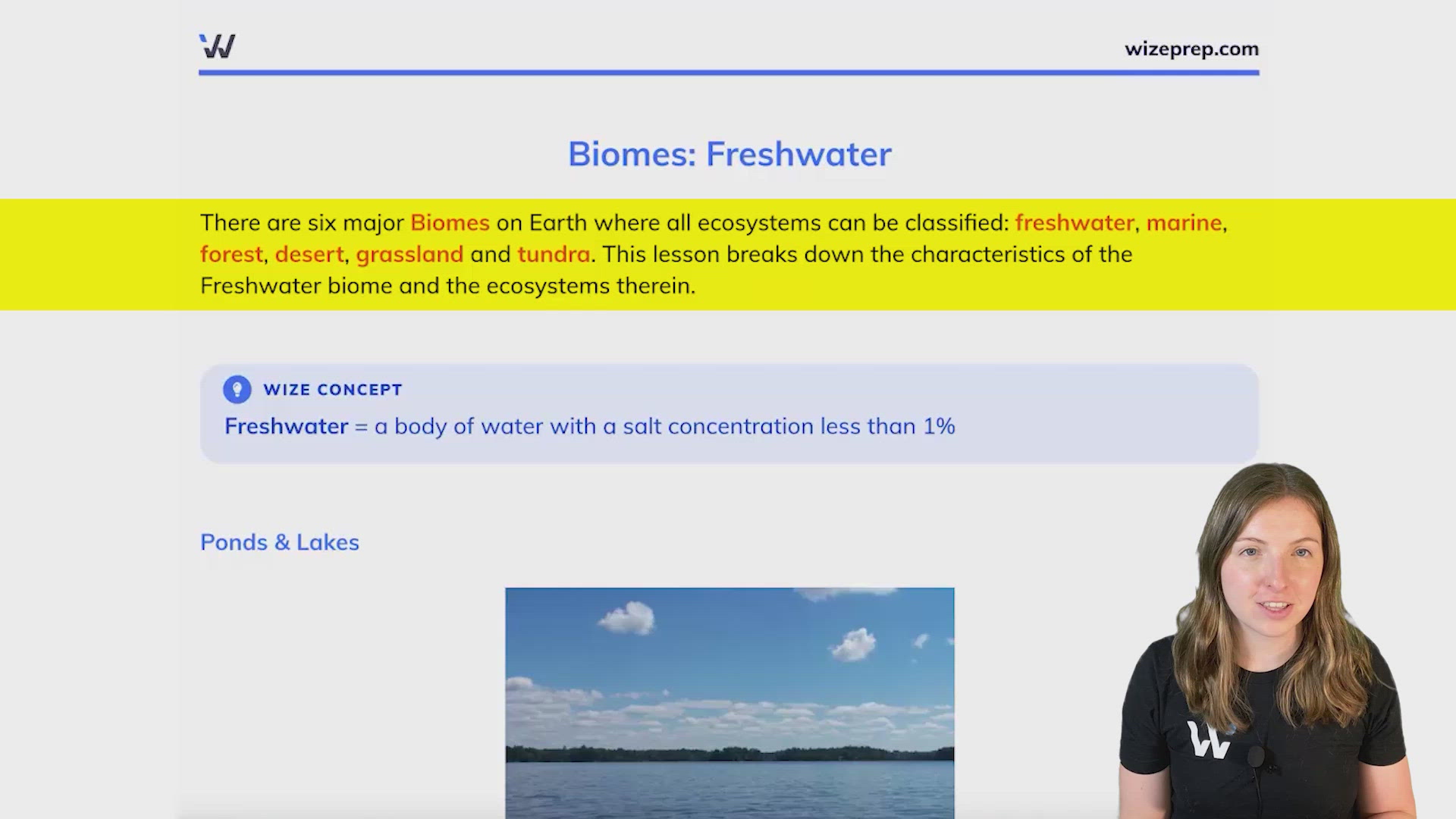
Biomes: Freshwater
There are six major Biomes on Earth where all ecosystems can be classified: freshwater, marine, forest, desert, grassland and tundra. This lesson breaks down the characteristics of the Freshwater biome and the ecosystems therein.
Wize Concept
Freshwater = a body of water with a salt concentration less than 1%
Ponds & Lakes
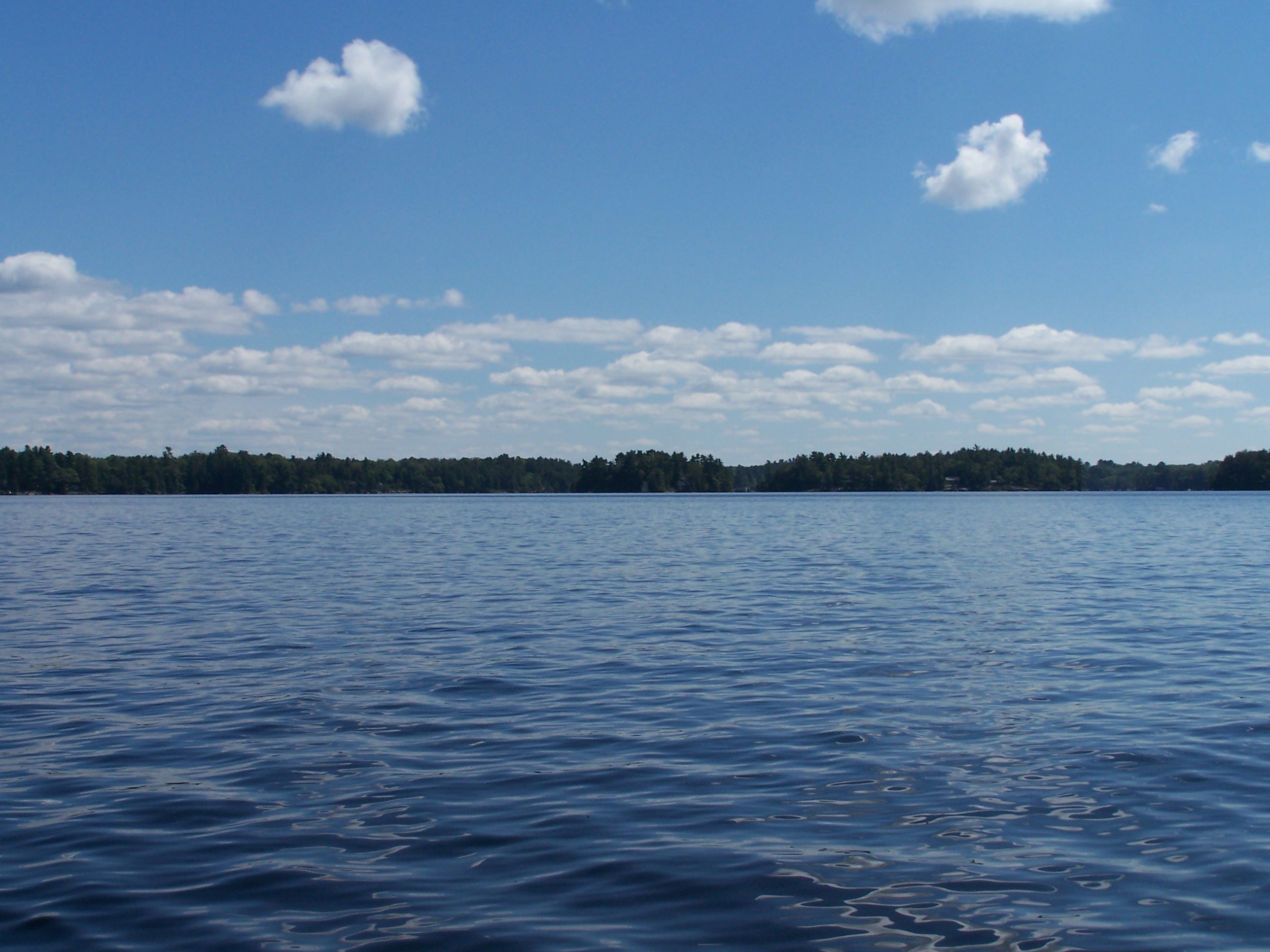
(Example: Lake Muskoka (CC BY-SA 3.0)
- Can be BIG or small
- Can be seasonal (Example: ponds) or last for hundreds to thousands of years (Example: the Great Lakes)
- Is broken down into layers:
- Littoral Zone = near the shore
- Warm temperatures in the summer, cold to frozen temperatures in the winter (depending on latitude)
- Supports: algae, aquatic plants, snails, clams, insects, crustaceans, fish and amphibians
- Organisms in this zone provide food for snakes, birds and turtles
- Limnetic Zone = open water near the surface
- Supports: plankton and some fish
- Profundal Zone = Bottom of the lake
- Cold and dense
- Little to no light = minimal if any plants

Streams & Rivers
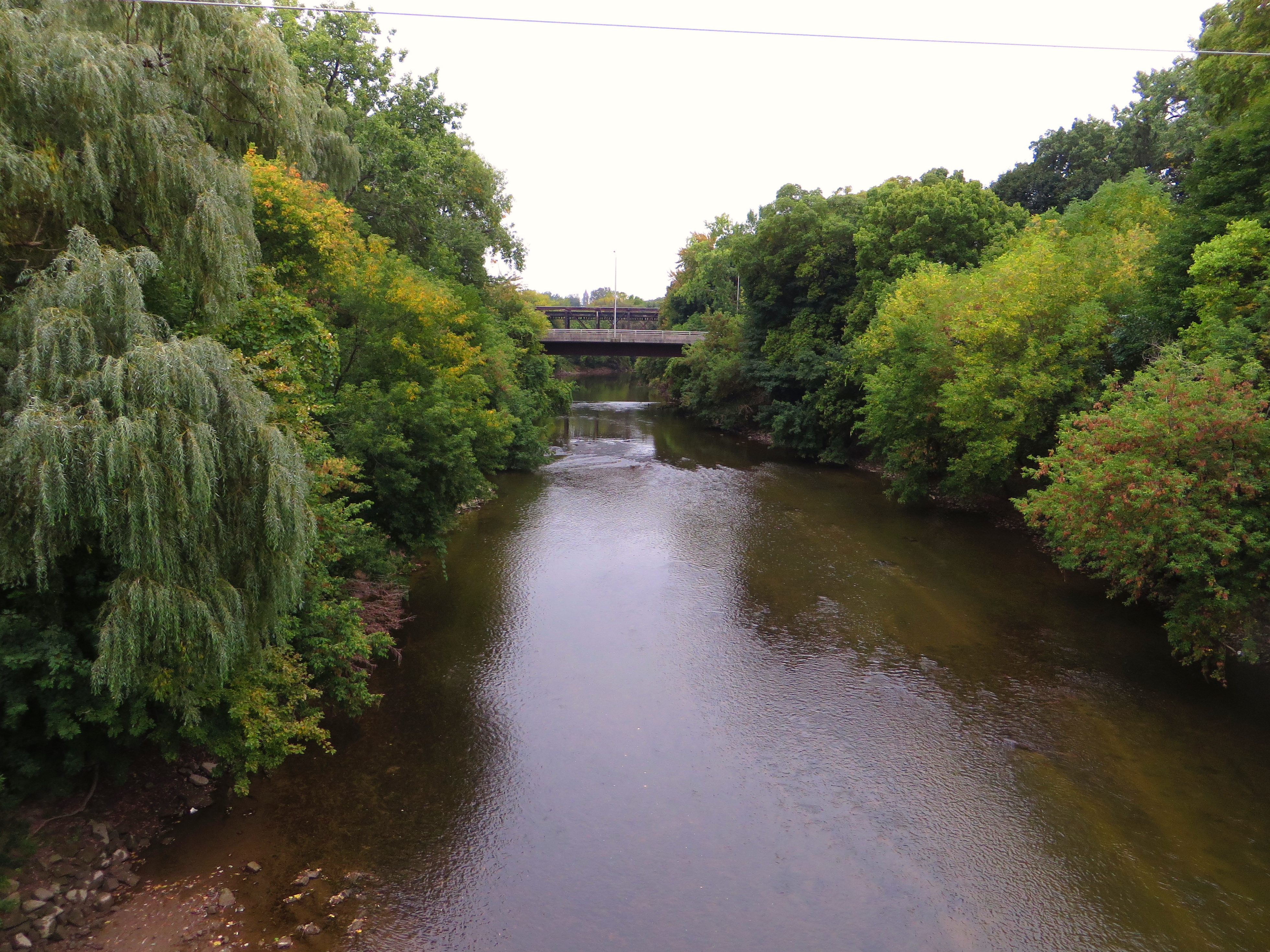
Example: Thames River, London, ON (CC BY-SA 2.0)
- Bodies of water that flow in generally one direction connecting a source/headwater (Example: snowmelt, lake, underground springs) to the mouth of another body of water (Example: lake or ocean)
- Varying levels of light and oxygen availability throughout the length of the river/stream system
- Example: lots of oxygen where the headwater enters the river but low amount of oxygen where the river meats the mouth
Wetlands
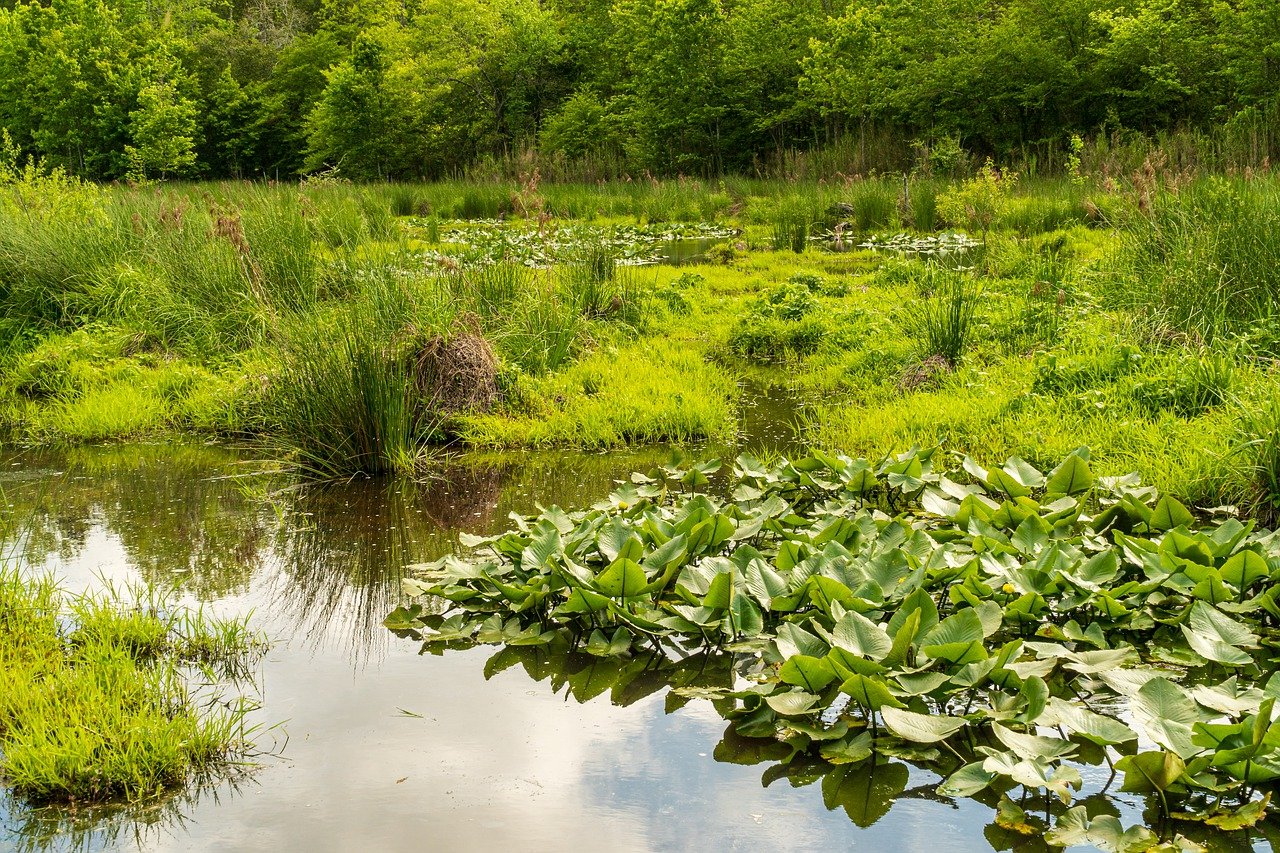
- Includes standing waters like marshes, swamps and bogs
- High species diversity
- Support: hydrophytes (lilies, cattails, black spruce), amphibians, birds, mammals and fish
0:00 / 0:00
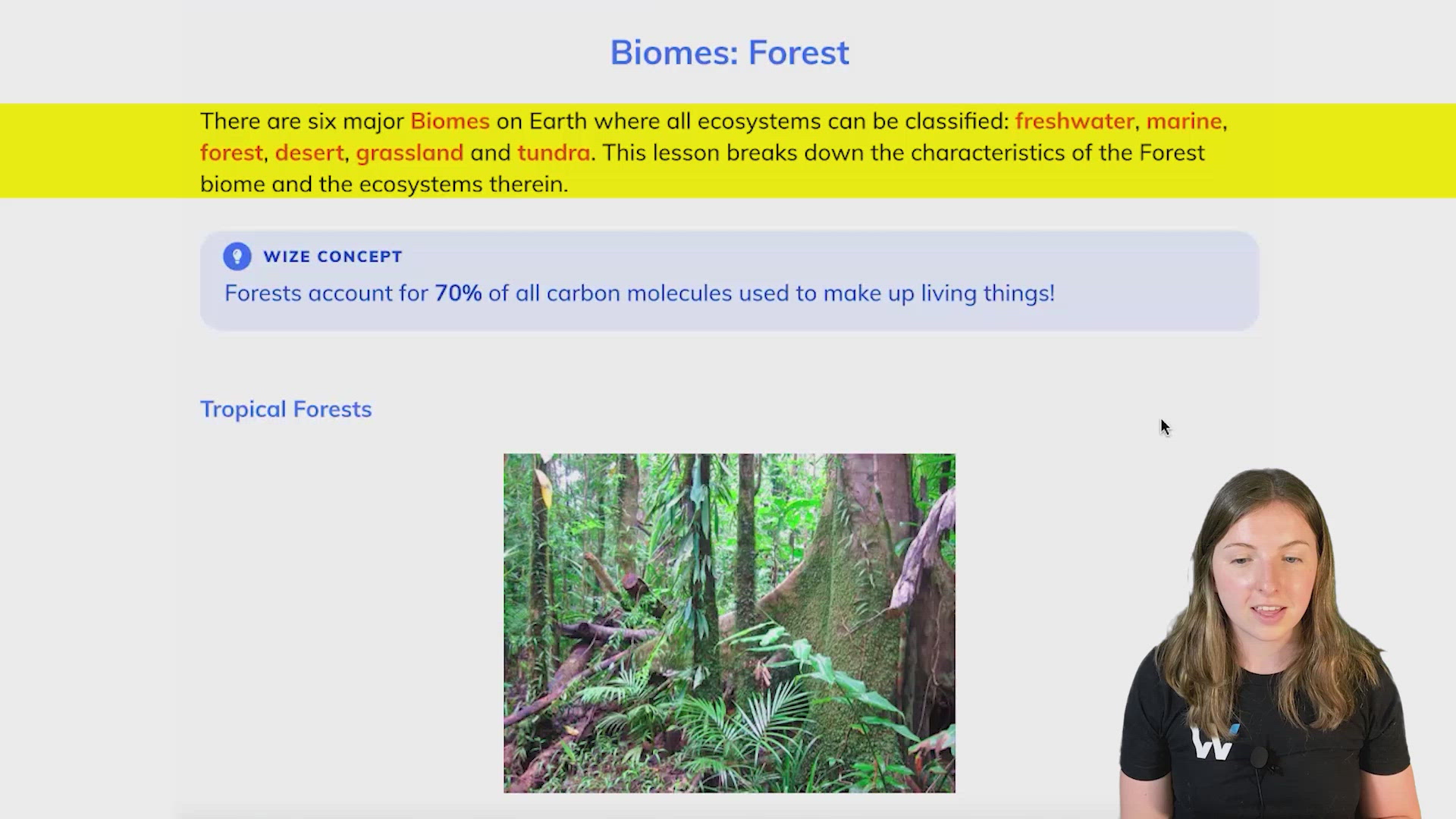
Biomes: Forest
There are six major Biomes on Earth where all ecosystems can be classified: freshwater, marine, forest, desert, grassland and tundra. This lesson breaks down the characteristics of the Forest biome and the ecosystems therein.
Wize Concept
Forests account for 70% of all carbon molecules used to make up living things!
Tropical Forests
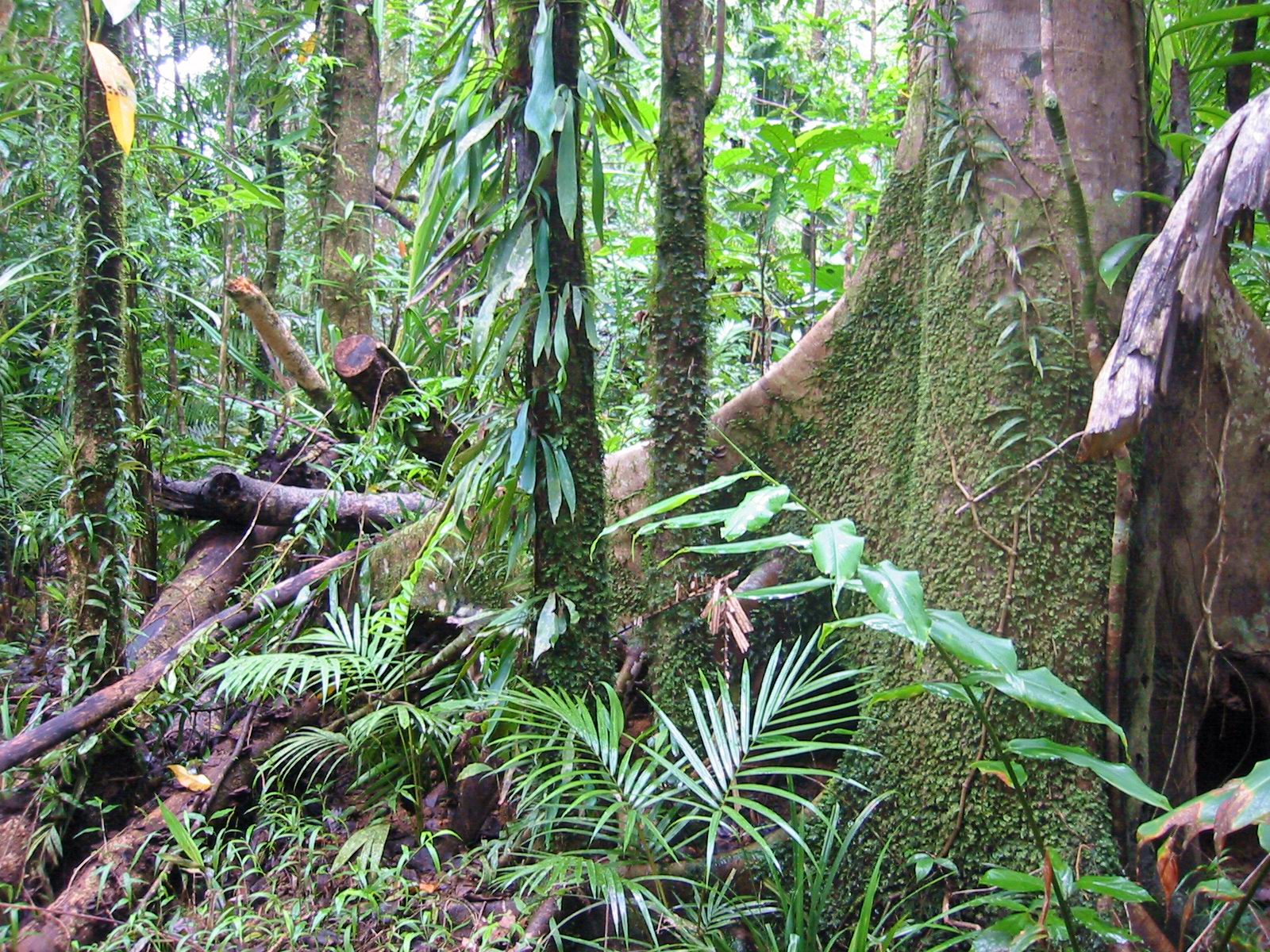
- Found at latitudes near the equator
- Has 12 hour light/dark cycles
- Does not have winter, only has the RAINY or the DRY season
- Little temperature variation, between 20-25°C all year
- Gets more than 200cm/year of rainfall
- Dense and continuous canopy causes low light conditions on the forest floor
- Supports: evergreen trees, ferns, vines, mosses, palms
- Supports: birds, bats, small mammals, insects
(CC BY-SA 2.5)
Temperate Forests
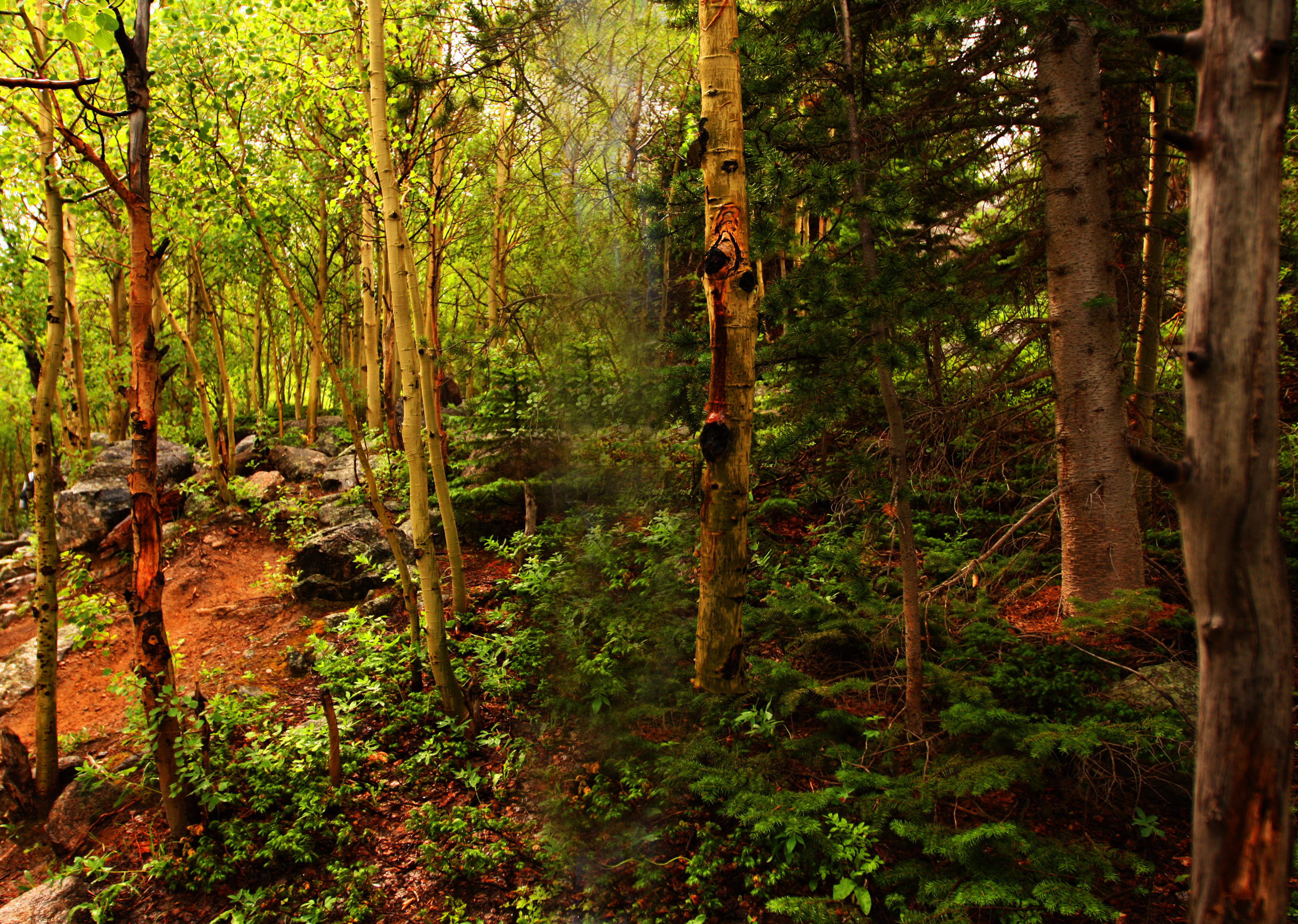
- At 25-50° latitudes in both hemispheres (United States, Europe, South America)
- Has fertile soil
- Supports: oak, hickory, beech, maple, elm, hemlock, willow (all trees that lose their leaves annually)
- Supports: skunks, squirrels, rabbits, birds, deer, cougars, lynx, wolves, foxes, bears
(CC BY-SA 2.0)
Boreal (Taiga) Forests
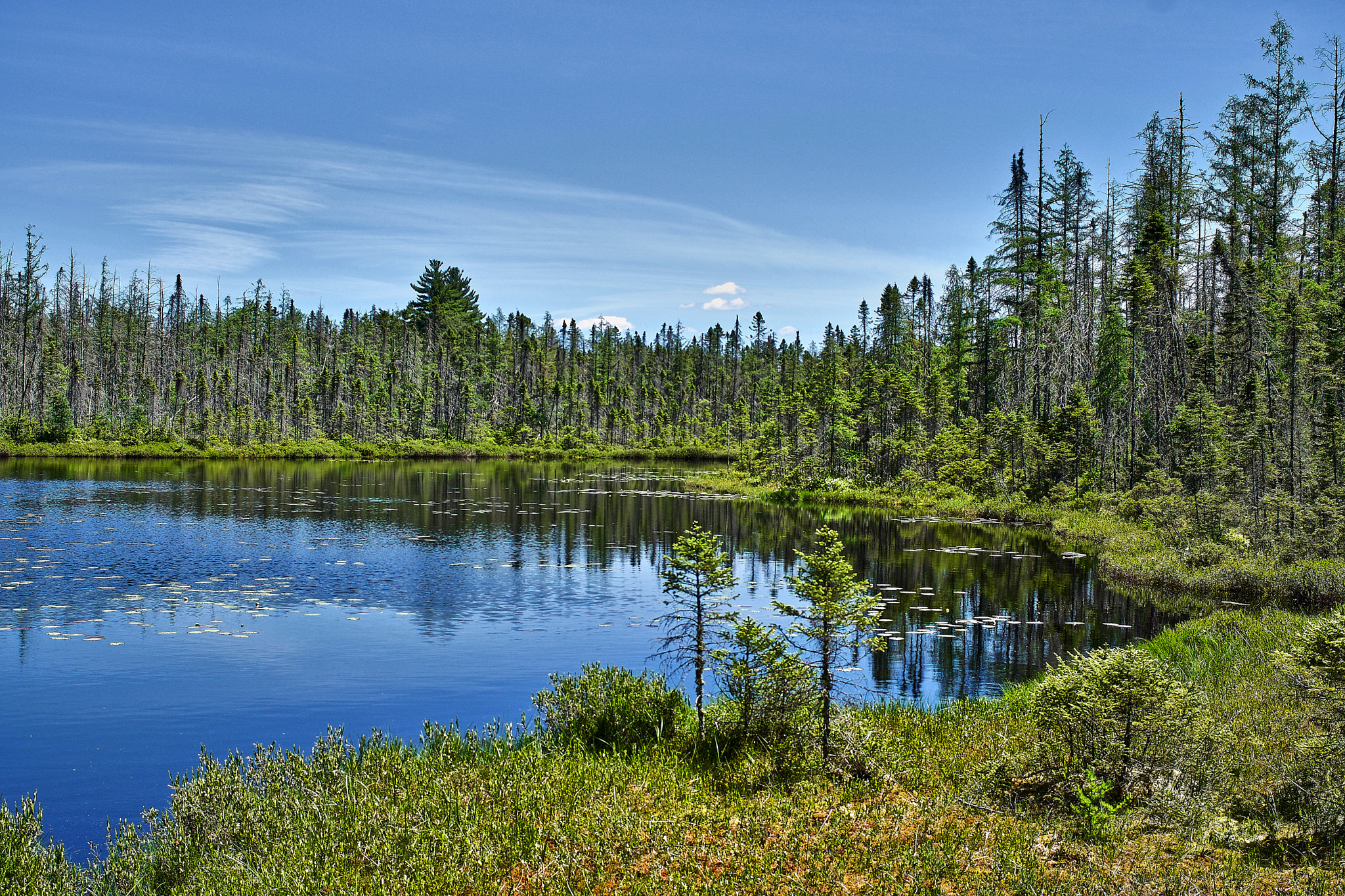
- Largest terrestrial ecosystem (Canada, Northern Europe, Russia)
- Precipitation is primarily snow
- Nutrient poor soil
- Supports: cold-tolerant evergreen trees like pine, spruce and fir
- Supports: woodpeckers, hawks, moose, bear, weasel, lynx, foxes, wolves, deer, hares, chipmunks, bats
(CC BY-SA 3.0)
0:00 / 0:00
Biomes: Marine
There are six major Biomes on Earth where all ecosystems can be classified: freshwater, marine, forest, desert, grassland and tundra. This lesson breaks down the characteristics of the Marine biome and the ecosystems therein.
Wize Concept
Marine biomes are vitally important for ALL other biomes as they supply the majority of the Earth's oxygen, take in most of the Earth's carbon dioxide and provide rain water for most land biomes!
Oceans
- Largest of all the biomes - covers the majority of the Earth's surface
- Broken down into different zones:
- Intertidal Zone = where the land and the ocean meet
- In rocky coastal regions this zone is organized vertically
- Highest region supports: algae, mollusks
- High-tide submerged region supports: snails, crabs, sea stars, small fish
- Always submerged region supports: invertebrates, fish, aquatic plants
- In sandy coastal regions less plant life is supported but does support: worms, clams, crabs, birds
- Pelagic Zone = open ocean but at the surface
- Supports: seaweed, fish, sharks, whales, dolphins, plankton
- Light continually decreases until the beginning of the benthic zone
- Benthic Zone = below the pelagic but above the abyssal zone
- Very little light and very cold
- Supports: some seaweed, bacteria, fungi, sponges, anemones, worms, sea stars and fish
- Abyssal Zone = deep ocean
- No light, very cold, high oxygen levels and high pressure
- Supports: invertebrates and fish
- Includes areas where tectonic plates meet and just above hydrothermal vents
- Chemosynthetic bacteria are found in and around hydrothermal vents and act as the autotrophs of the zone
Coral Reefs
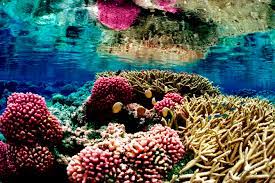
- Found in warm, shallow water in the ocean
- Dominant organism is the coral itself - coral is made up of animal polyps and algae
- Supports: microorganisms, invertebrates, fish, urchins, octopi, sea stars
(CC BY 2.0)
Estuaries
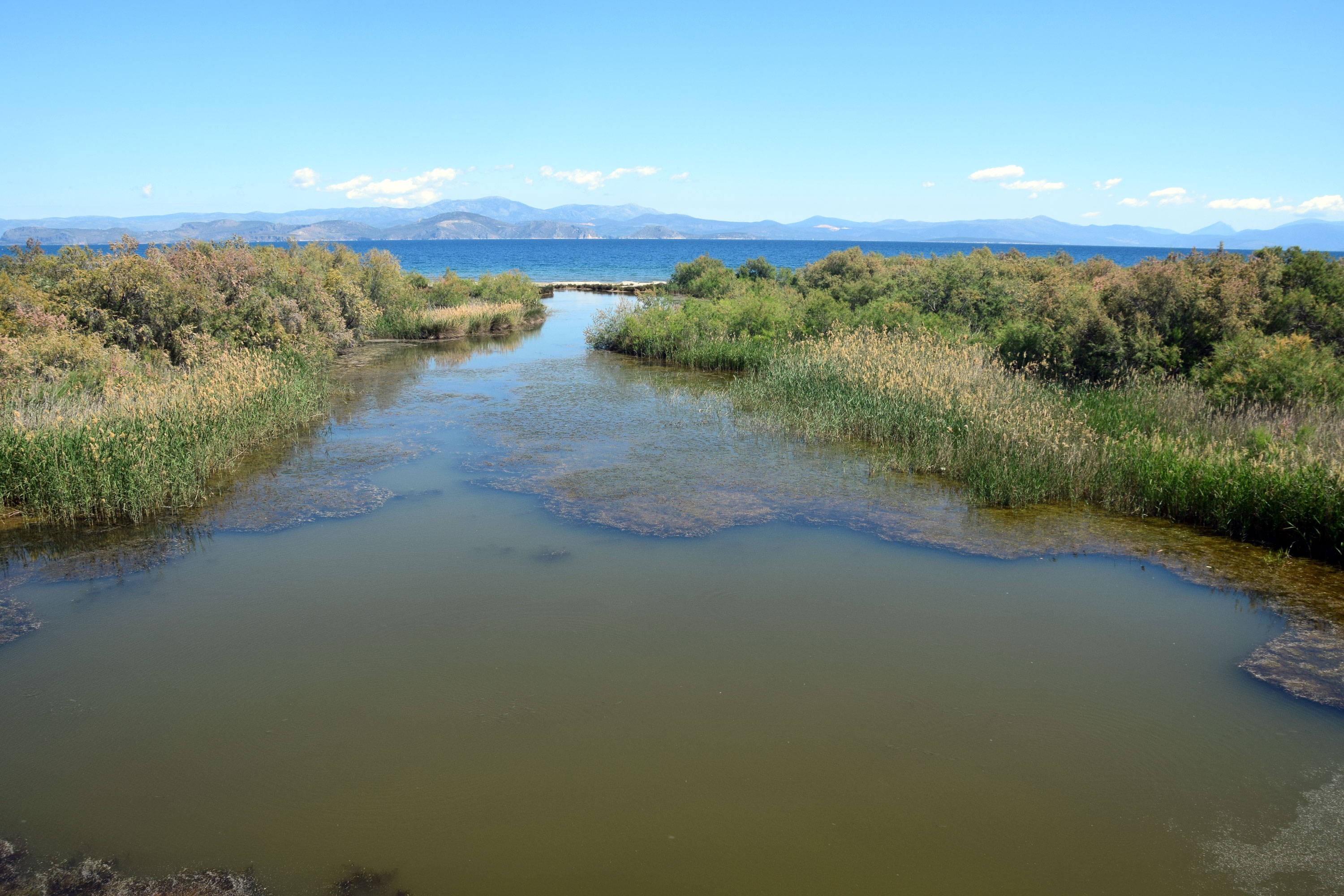
- Found where freshwater streams/rivers meath the mouth of the ocean
- Supports: algae, seaweed, grasses, mangrove trees (in tropical climates)
- Supports: worms, oysters, crabs, birds
(CC BY-SA 4.0)
0:00 / 0:00
Biomes: Desert
There are six major Biomes on Earth where all ecosystems can be classified: freshwater, marine, forest, desert, grassland and tundra. This lesson breaks down the characteristics of the Desert biome and the ecosystems therein.
Wize Concept
Not all deserts are HOT! A desert is as any ecosystem that get less than 50cm/year of rainfall
Hot and Dry Deserts
- Daily temperatures can range from sub-zero at night to 45°C during the day
- Evaporation rate is higher than rate of rainfall
- This means that when it rains, the rain has evaporated before it hits the ground!
- Often have rocky abiotic components as sand is often blown away
- Supports: ground shrubs, some waxy trees, plants with thick cuticles, plants with specialized stomata opening times, plants with specialized leaves as spines
- Supports: small carnivorous mammals, insects, spiders, reptiles and birds
- Most animals are nocturnal or crepuscular to avoid the heat
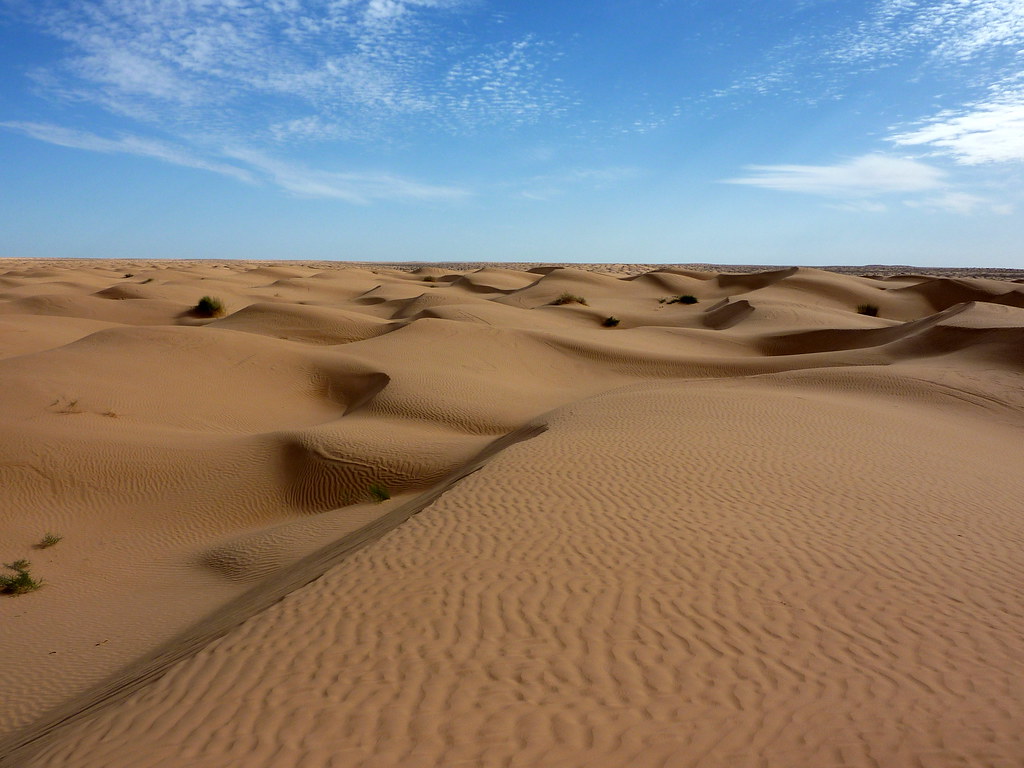
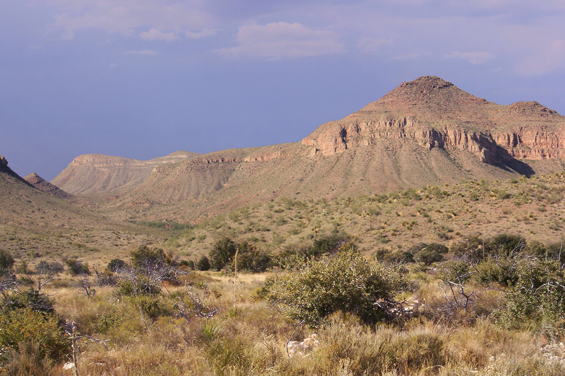
Example: Sahara Desert, Africa (CC BY 2.0) Example: Chihuahuan Desert, North America (CC BY-SA 3.0)
Semi-arid Deserts
- Have long dry summers with some rainfall in winter
- Daily temperature ranges from 21-27°C during the day to 10°C at night
- Most organisms are sustained on water from condensation rather than precipitation
- Supports: ground shrubs, plants with spines for leaves or glossy leaves
- Supports: rats, mice, rabbits, skunks, grasshoppers, ants, lizards, snakes, birds
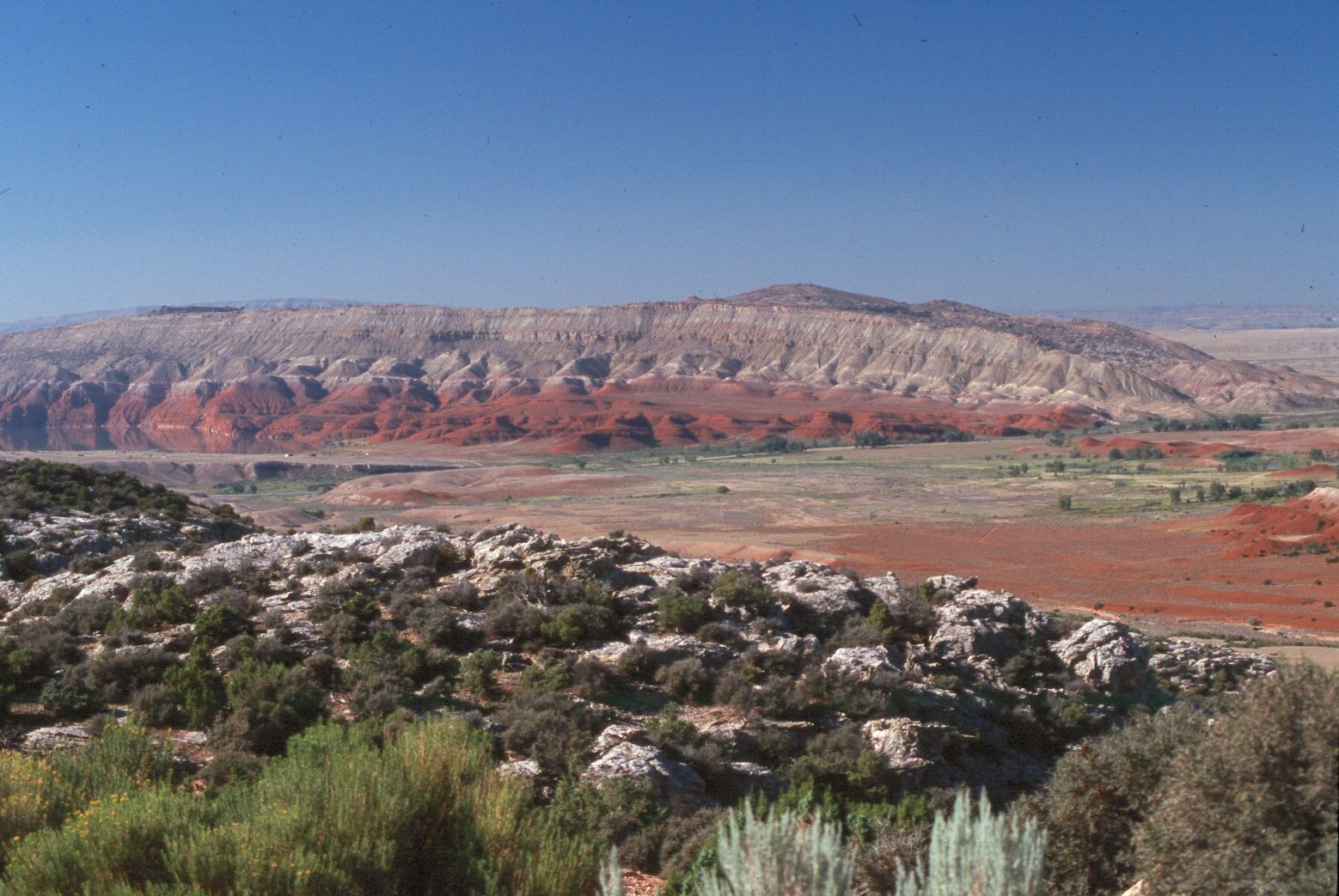
Example: The Great Basin Desert, USA (CC BY-SA 3.0)
Coastal Deserts
- Gets around 8-13cm/year of rainfall
- Supports plants that have a specialized ability to store water or to shrink/shrivel during dry times without dying
- Supports: toads, insects, coyotes, badgers, owls, eagles, lizards, snakes
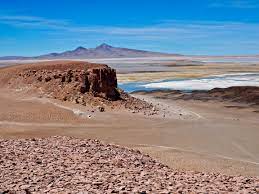
Example: Atacama Desert, South America (CC BY 4.0)
Cold Deserts
- Hot summers around 20-30°C but VERY cold winters at sub-zero temperatures
- Summers are short and moist, with long winters with 15-26cm/year of snow
- Supports plants with spiny leaves
- Supports: rabbits, rats, mice, squirrels, badgers, foxes, coyotes, lizards, deer (during the winter)
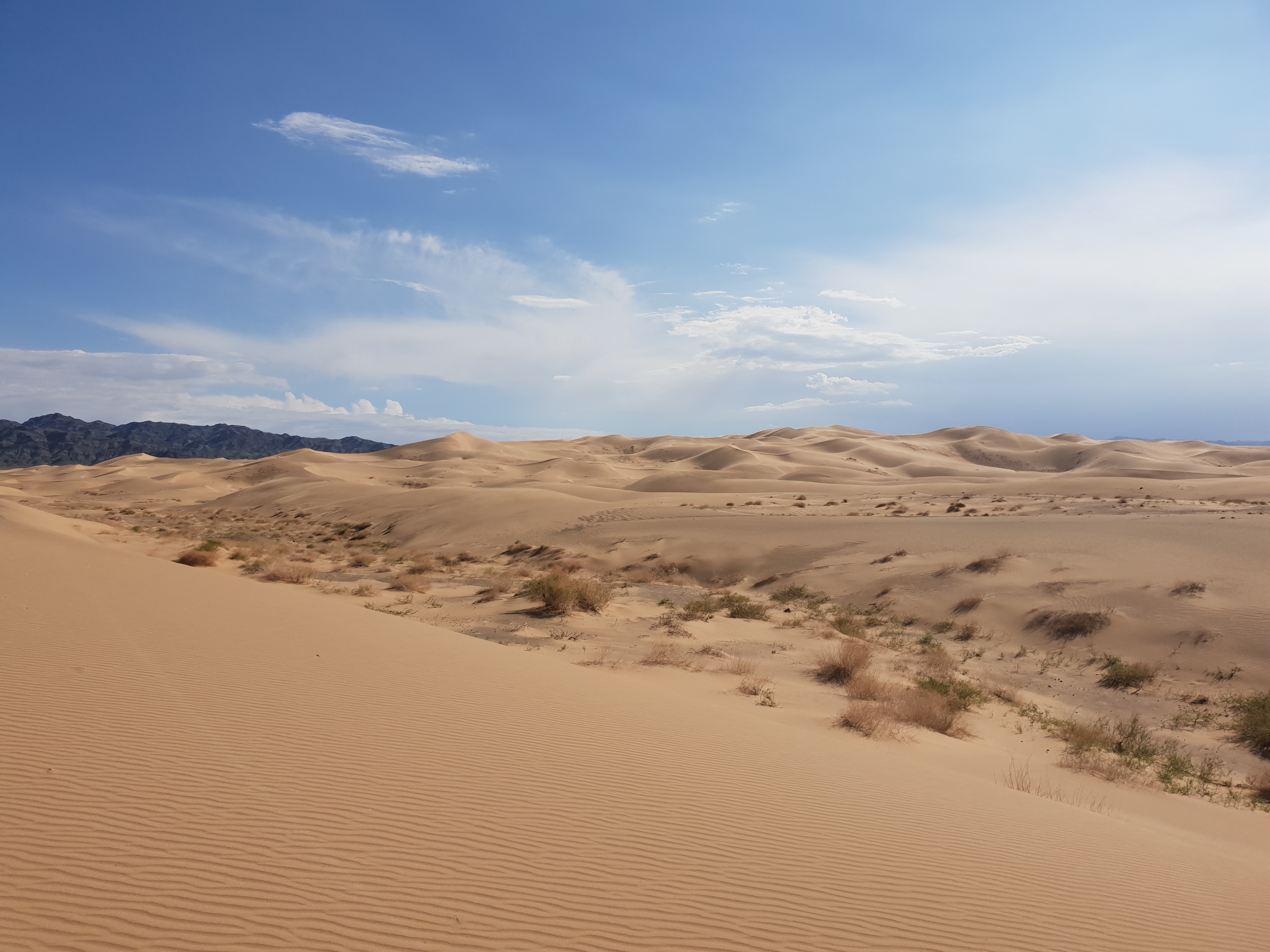
Example: Gobi Desert, Asia (CC BY 2.0)
0:00 / 0:00
Biomes: Grassland
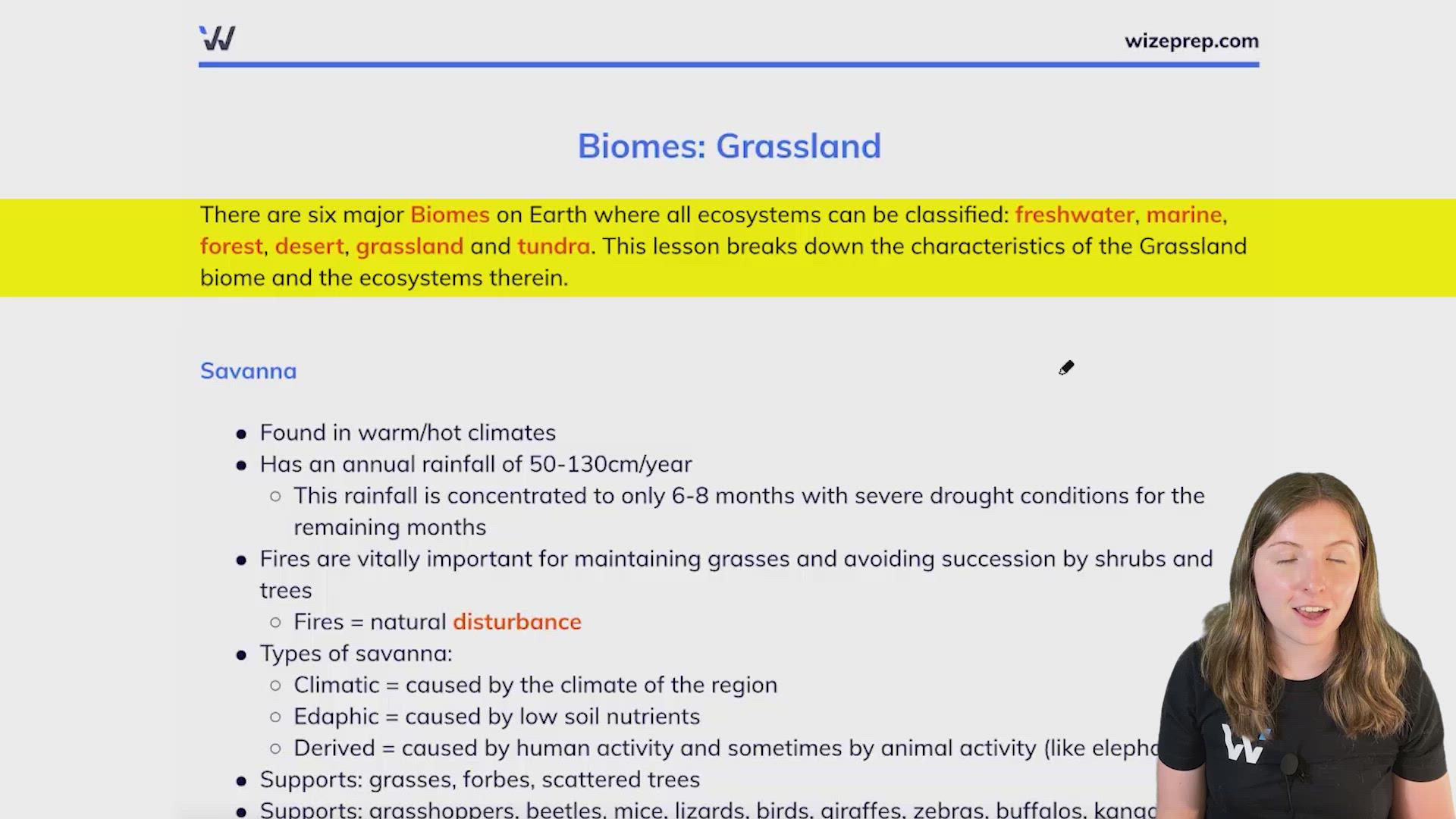
There are six major Biomes on Earth where all ecosystems can be classified: freshwater, marine, forest, desert, grassland and tundra. This lesson breaks down the characteristics of the Grassland biome and the ecosystems therein.
Savanna
- Found in warm/hot climates
- Has an annual rainfall of 50-130cm/year
- This rainfall is concentrated to only 6-8 months with severe drought conditions for the remaining months
- Fires are vitally important for maintaining grasses and avoiding succession by shrubs and trees
- Fires = natural disturbance
- Types of savanna:
- Climatic = caused by the climate of the region
- Edaphic = caused by low soil nutrients
- Derived = caused by human activity and sometimes by animal activity (like elephants)
- Supports: grasses, forbes, scattered trees
- Supports: grasshoppers, beetles, mice, lizards, birds, giraffes, zebras, buffalos, kangaroos, snakes, worms, termites, leopards, hyenas, elephants
- Not ALL of these animals are found in all savannas - it is climate and ecosystem specific
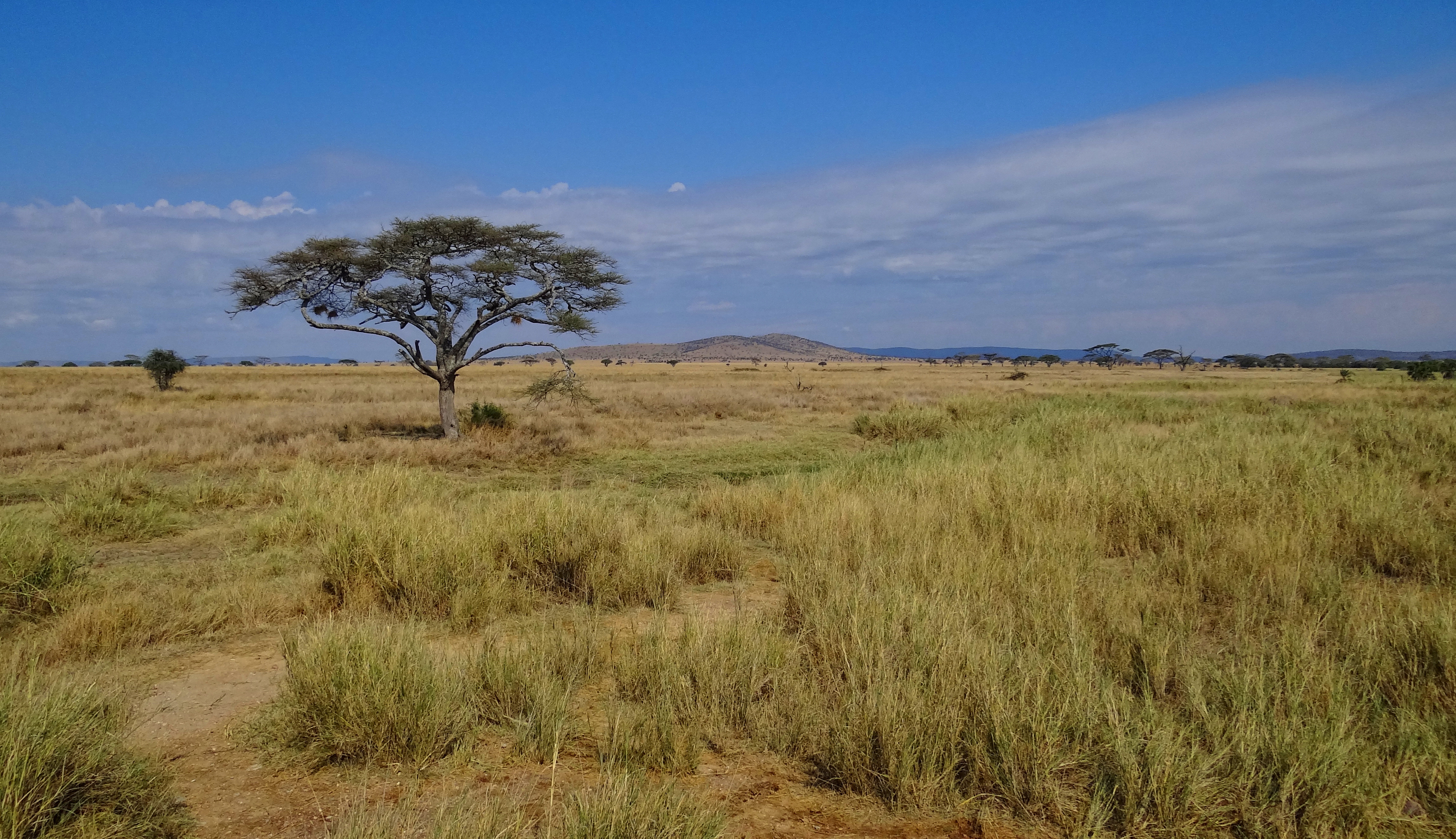
Example: Serengeti, Africa (CC BY-SA 3.0)
Temperate Grassland
- Hot summers, cold winters and has less rainfall than a savanna
- Yearly temperatures can range from -40°C to +40°C
- Supports almost no trees but does support grasses and some flowers
- Supports: gazelles, zebras, rhinoceros, horses, lions, wolves, wild dogs, rabbits, deer, mice, coyotes, foxes, skunks, badgers, sparrows, hawks, owls, spiders, grasshoppers
- Can be broken down further into prairies (tall grasses) and steppes (short grasses)
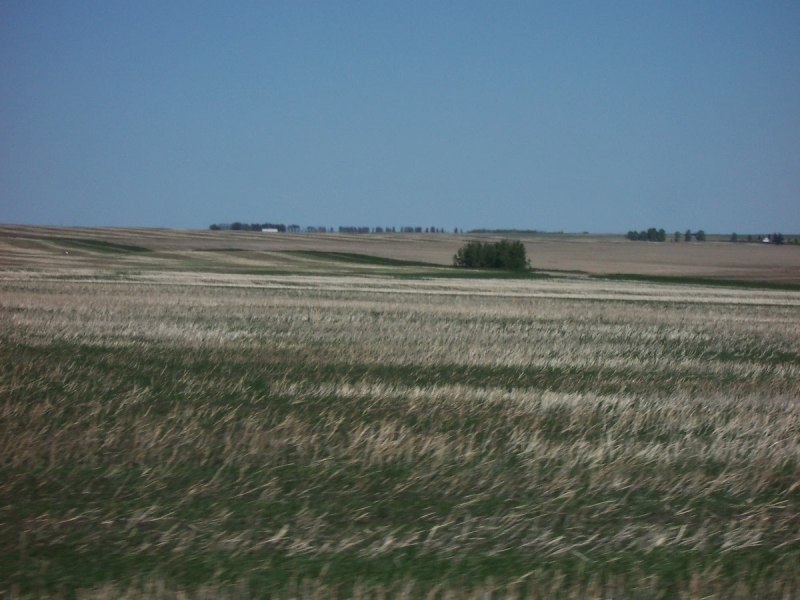
Example: Prairies, North America (CC BY-SA 3.0)
0:00 / 0:00
Biomes: Tundra
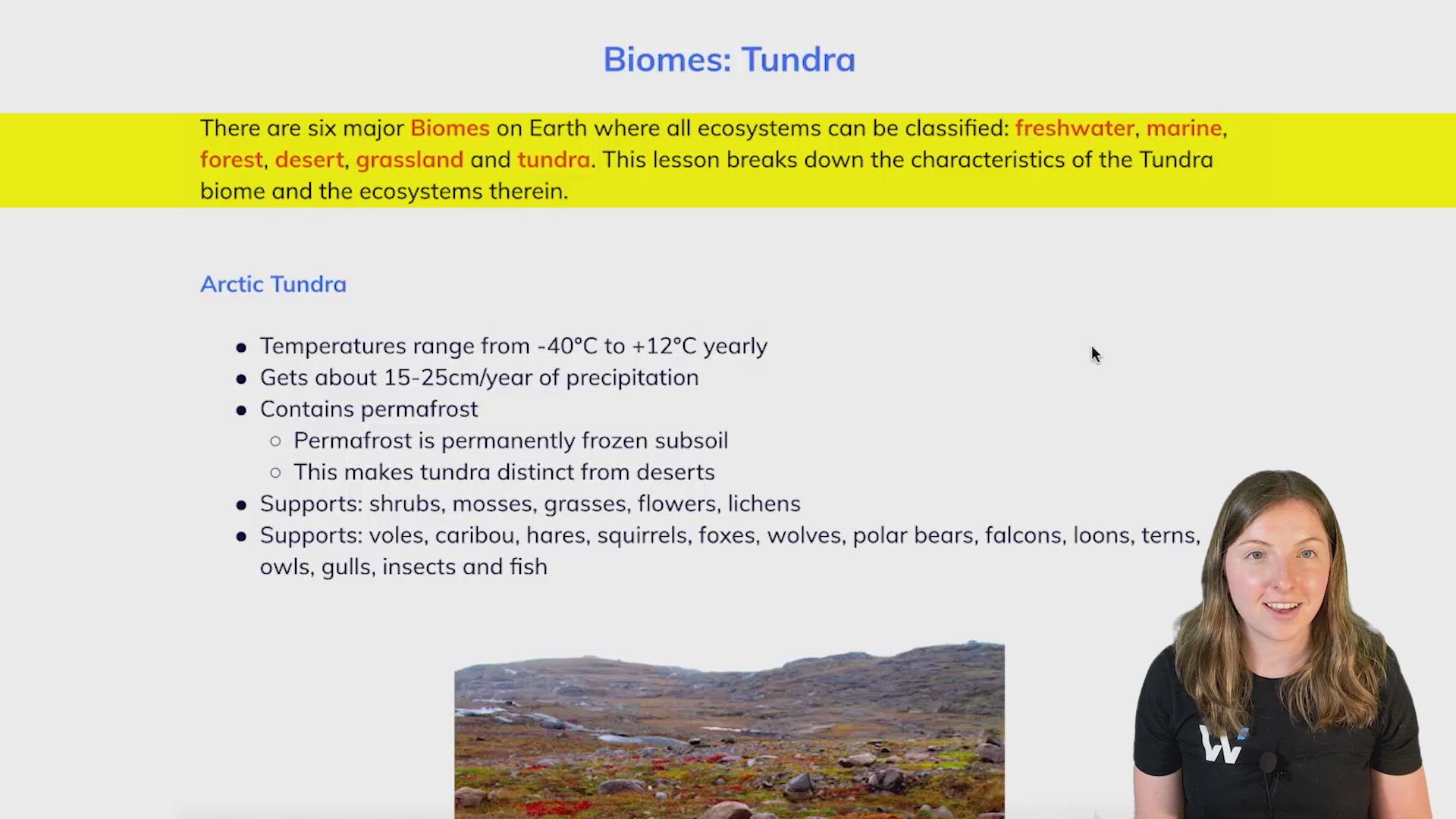
There are six major Biomes on Earth where all ecosystems can be classified: freshwater, marine, forest, desert, grassland and tundra. This lesson breaks down the characteristics of the Tundra biome and the ecosystems therein.
Arctic Tundra
- Temperatures range from -40°C to +12°C yearly
- Gets about 15-25cm/year of precipitation
- Contains permafrost
- Permafrost is permanently frozen subsoil
- This makes tundra distinct from deserts
- Supports: shrubs, mosses, grasses, flowers, lichens
- Supports: voles, caribou, hares, squirrels, foxes, wolves, polar bears, falcons, loons, terns, owls, gulls, insects and fish

Example: Nunavut, North America (CC BY 2.0)
Alpine Tundra
- Found at high altitude mountains all over the world
- Supports: grasses, dwarf trees, shrubs, heath
- Supports: pika, marmots, goats, sheep, elk, alpine birds, insects
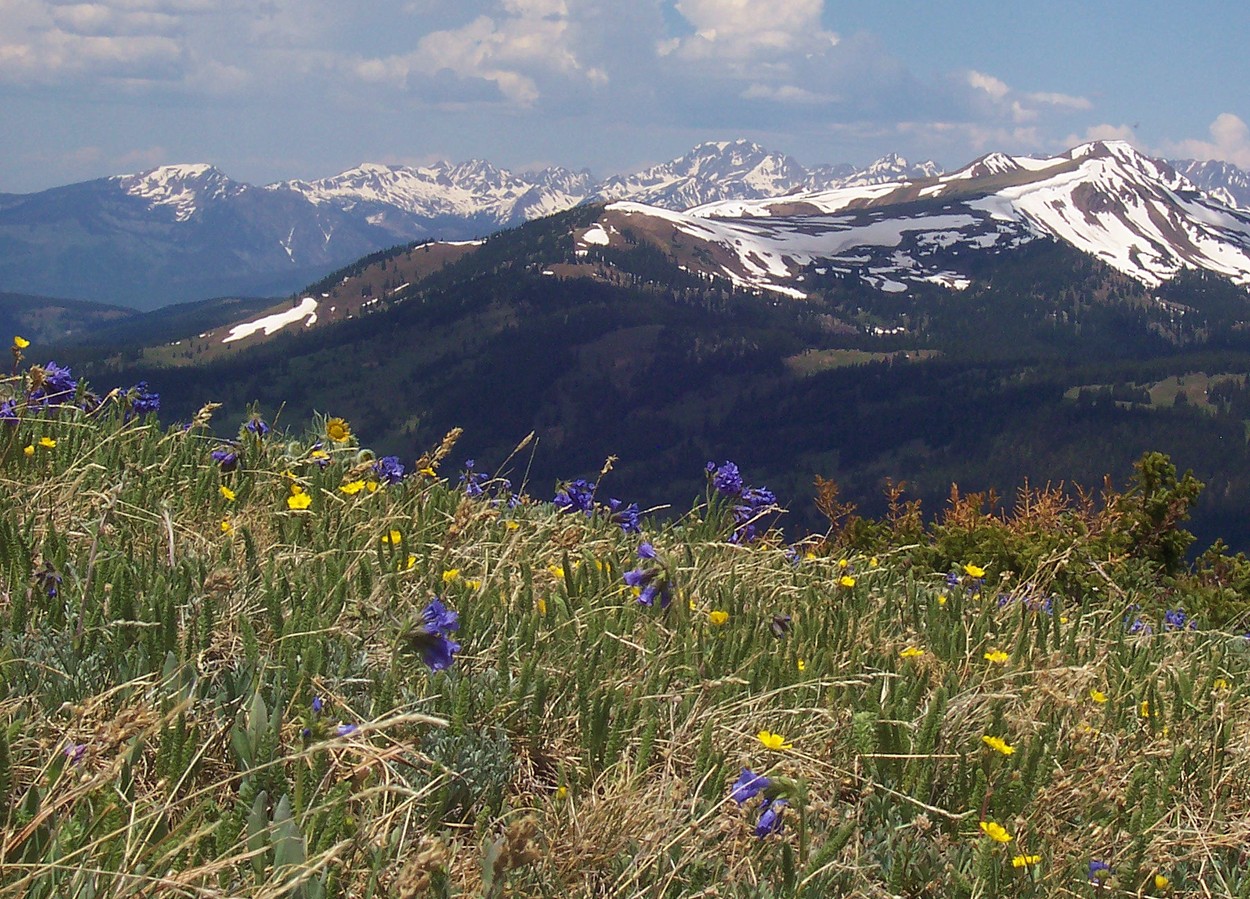
Example: Cooper Mountain, Colorado, North America (CC BY 2.0)
0:00 / 0:00
Example: Tropical Forest vs. Hot and Dry Desert
Given what you have learned about the various ecosystems and biomes of the Earth. Compare and contrast the following aspects of a tropical forest and a hot and dry desert.
Climate (Precipitation and Temperature)
Tropical Forest = between 20-25 degrees Celsius + > 200 cm/year of rainfall
Hot & Dry Deserts = between < 0-45 degrees Celsius + < 50 cm/year of rainfall
Types of Plant Species
Tropical Forest = evergreen trees, ferns, vines, mosses, palms
Hot & Dry Deserts = ground shrubs, waxy trees, specialized plants
Types of Animal Species
Tropical Forest = birds, bats, small mammals, insects
Hot & Dry Desert = small carnivorous mammals, insects, spiders, reptiles, birds
Desert biomes experience precipitation and evapotranspiration.
Practice: Biomes
"Biomes" are determined by which of the following characteristics?
Practice: Tundra vs. Desert
The Arctic Tundra and a Cold Desert both have precipitation below 50cm per year, however are classified as distinct ecosystems belonging to distinct biomes. What is a defining characteristic of the Arctic Tundra that a Cold Desert does not possess?