Wize University Physiology Textbook > Cardiovascular Physiology
Cardiac Cycle Output
Popular Courses
MCAT
General Course
DAT
General Course
Grade 11 Biology
Ontario High School
Grade 11 Biology
Canada High School
Intro to Physiology
University Study Guides
PHYSIOL 1021
Western University
Biology 20
Alberta High School
PHYSIOL 2130
Western University
Intro to Physiology
University Study Guides
PSL300H1
University of Toronto
PHYSL 210
University of Alberta
Life Sciences 11
British Columbia High School
PHGY 210
McGill University
PHGY 215
Queen's University
KNES 259
University of Calgary
PHGY 216
Queen's University
BIOL 273
University of Waterloo
BIOL 260
University of British Columbia
PHYSIOL 3120
Western University
KNES 260
University of Calgary
0:00 / 0:00
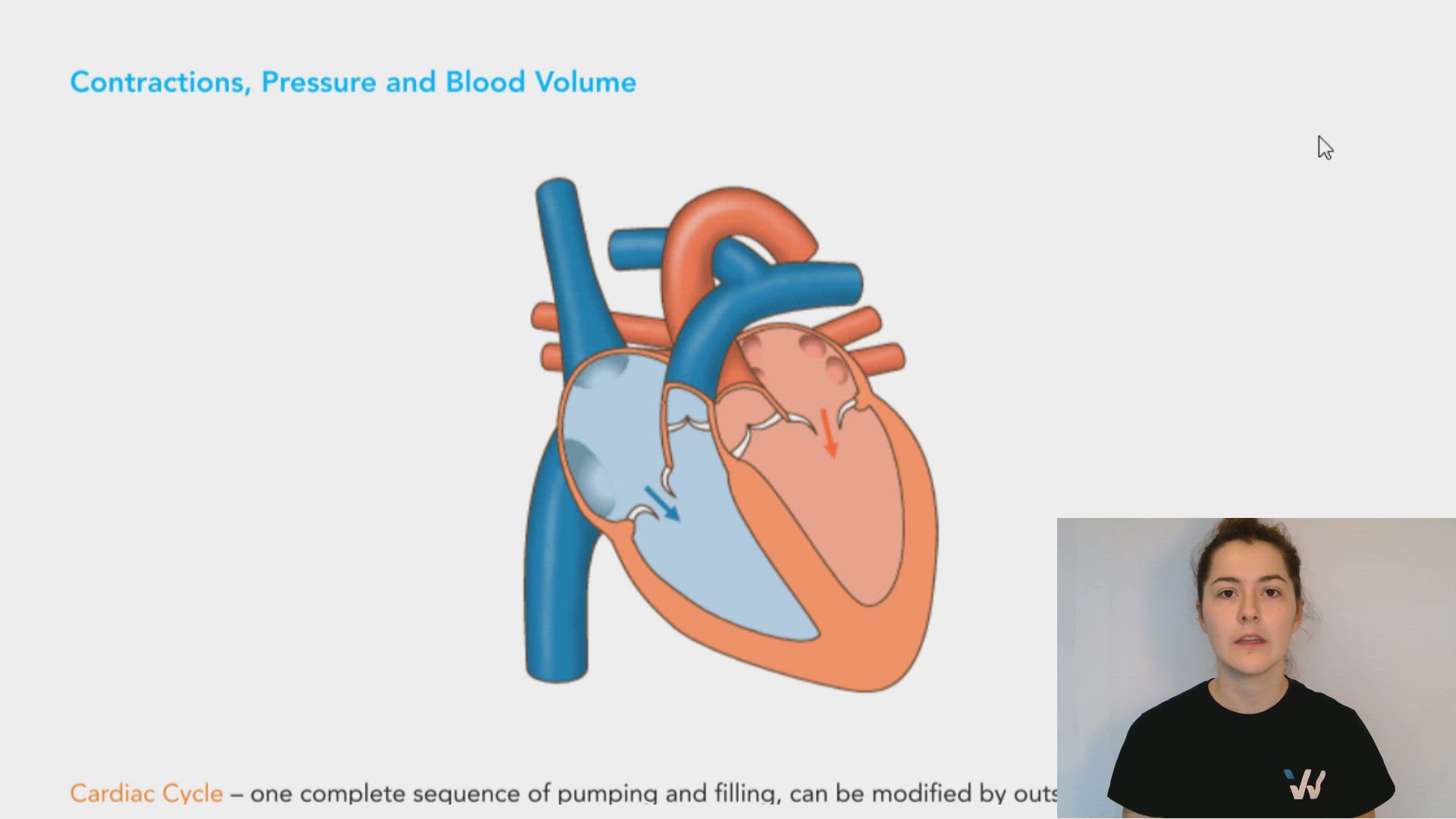
Contractions, Pressure and Blood Volume
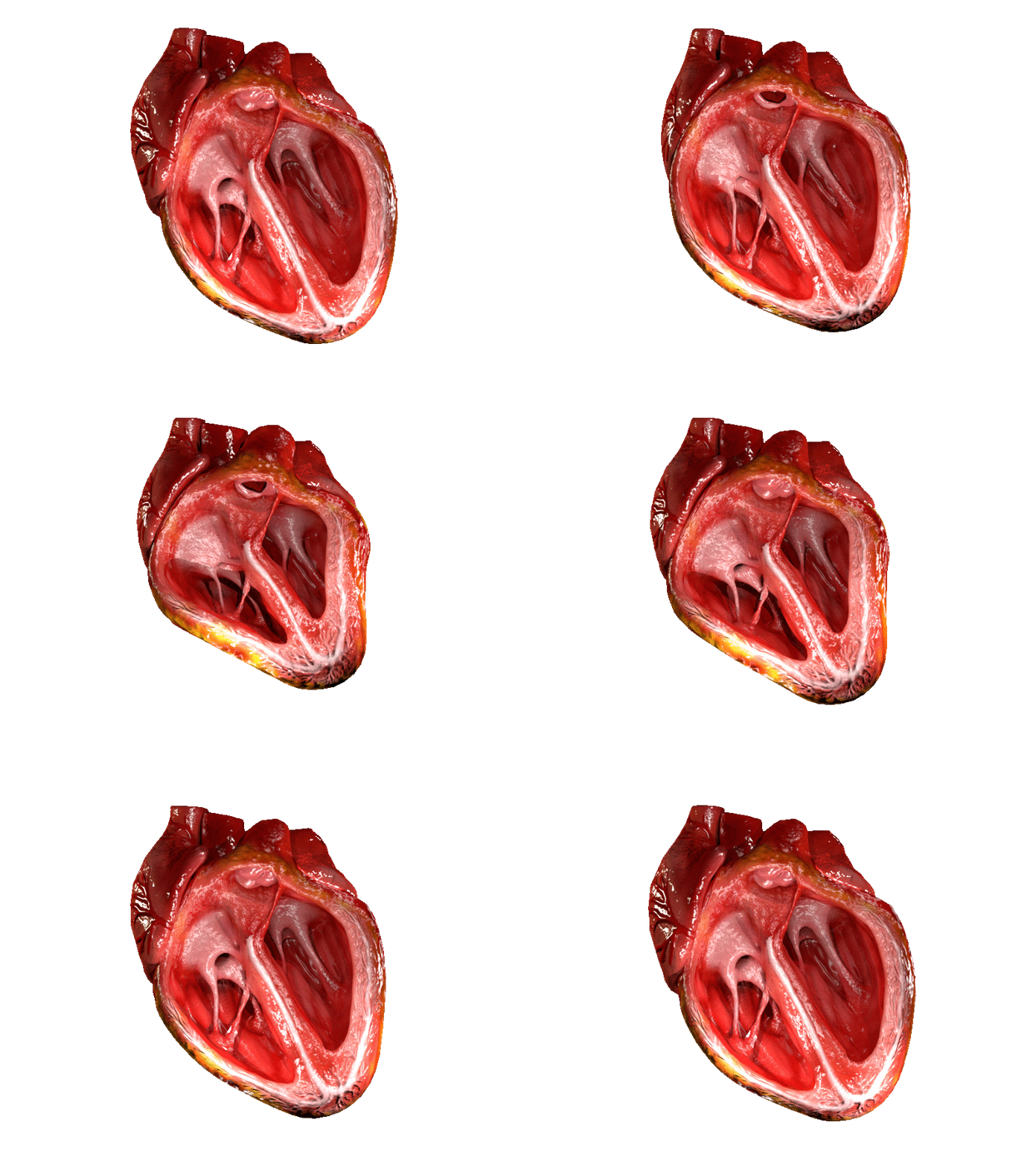
Cardiac Cycle – one complete sequence of pumping and filling. It can be modified by outside influences
- cardiac output = heart rate x stroke volume
- systole = heart contracts, chambers pump blood out
- diastole = heart relaxes, chambers fill with blood
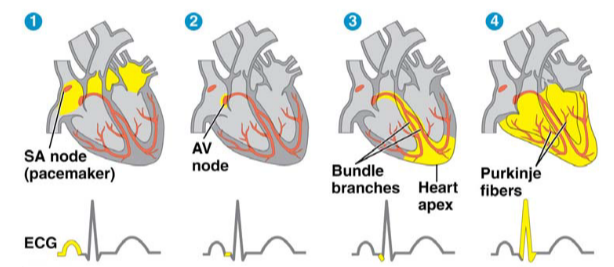
Cardiac Cycle Regulation – one complete sequence of pumping and filling is regulated by the nodes and conducting cells in the heart.
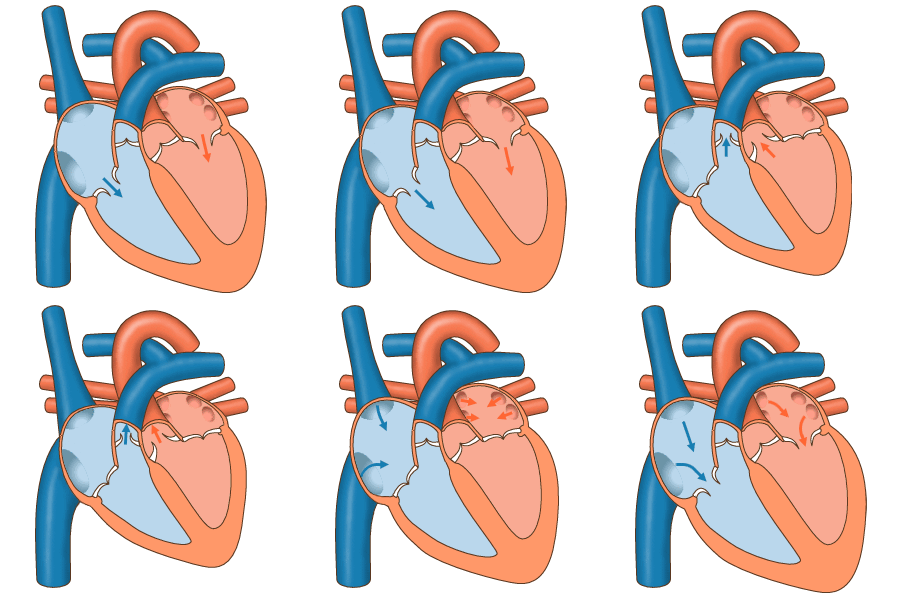
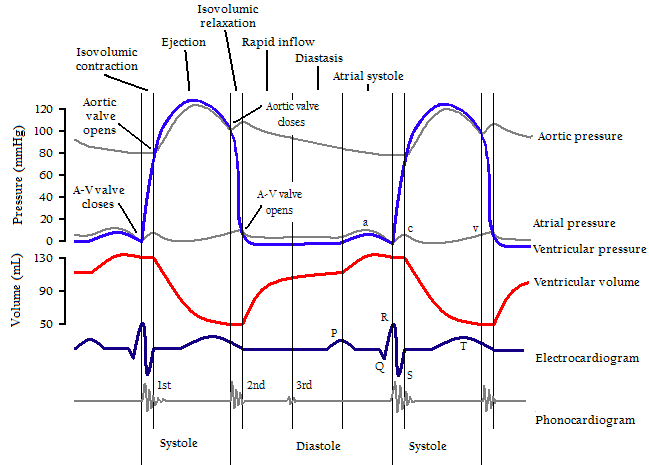
Pressure and Volume Cycle
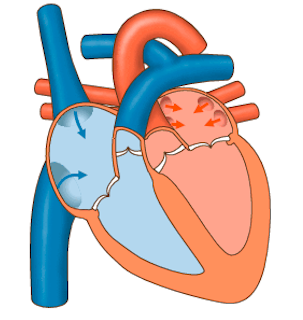
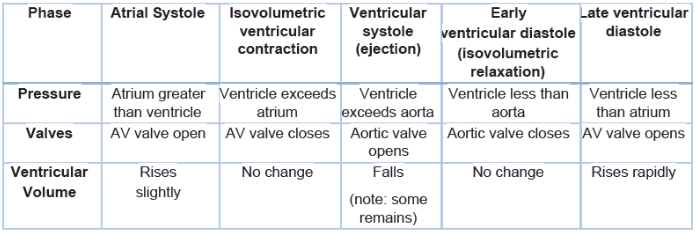
- Atrial systole: blood pushed intro ventricles. Ventricles now have 100% blood volume possible.
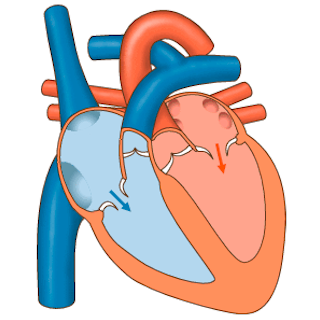
2. Early ventricular systole: valve closes between atrium and ventricle causes a huge pressure rise in the ventricle.
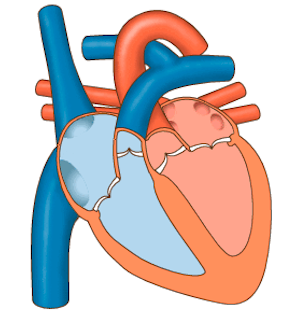
3. Ventricular systole: ejection of blood into artery. Some blood will remain in the ventricles (not complete empty after contraction)

4. Early ventricular diastole: ventricle starts to relax. Artery valves close because artery pressures are now higher than the ventricular pressure.
5. Late ventricular diastole: ventricle relaxes completely and fills with 70% of total blood volume it can hold. At this point, the entire heart is relaxed and the cycle will begin again.
Blood Vessels
- arteries (arterioles) – carry blood away from the heart towards capillaries
- capillaries – microscopic vessels penetrate tissues, single layer of cells for exchange between blood and interstitial fluid
- veins (venules) – return blood to heart from capillaries

0:00 / 0:00
Cardiac Output
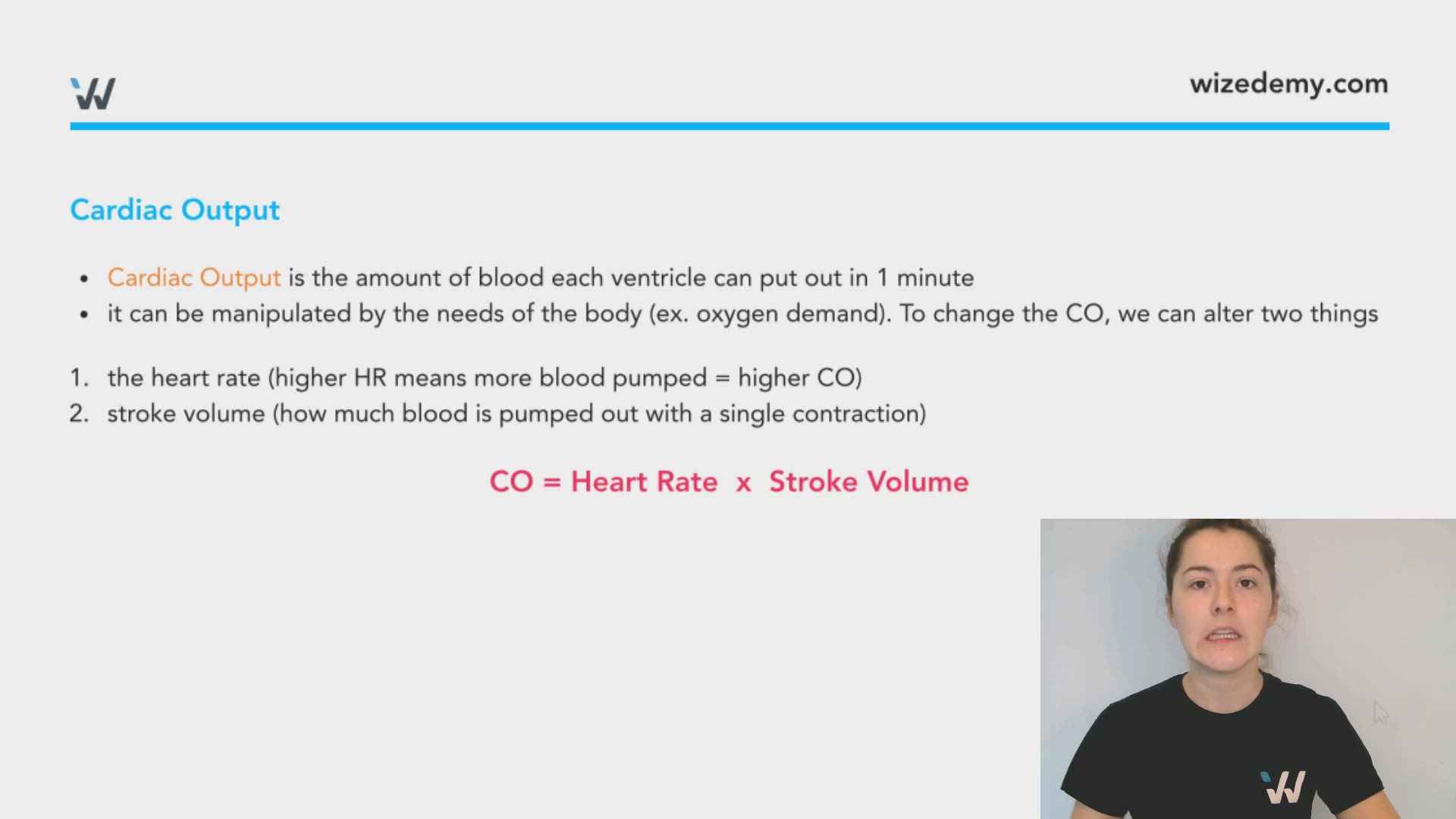
- Cardiac Output is the amount of blood each ventricle can put out in 1 minute
- it can be manipulated by the needs of the body (ex. oxygen demand). To change the cardiac output (CO), we can alter two things
- heart rate (higher HR means more blood pumped = higher CO)
- stroke volume (how much blood is pumped out with a single contraction)
CO = Heart Rate x Stroke Volume
Heart Rate Control
- the heart rate is the number of beats a heart makes in 1 minute
- resting HR is about 70 beats per minute (bpm)
- controlled by the autonomic nervous system
- Parasymathetic effects
- decreases HR
- uses vagus nerve and releases Ach on the SA and VA nodes
- Ach causes K+ channel opening and Ca++ channel closing. This causes hyperpolarization of the cell. It takes more time for a graded potential to reach the threshold, therefore there will be less beats per minute. The HR will go down.
- Sympathetic effects
- increases HR
- releases norepinephrine on SA and VA nodes AND the muscles themselves
- epinephrine causes Na+ and Ca++ channels to open. This causes depolarization of the cell (meaning it will have a higher RMP). The cells are now hypersensitive. Its very easy for the GP to reach the threshold. The GP reaches threshold more frequently, which means more beats per minute. HR goes up.

Stroke Volume Control
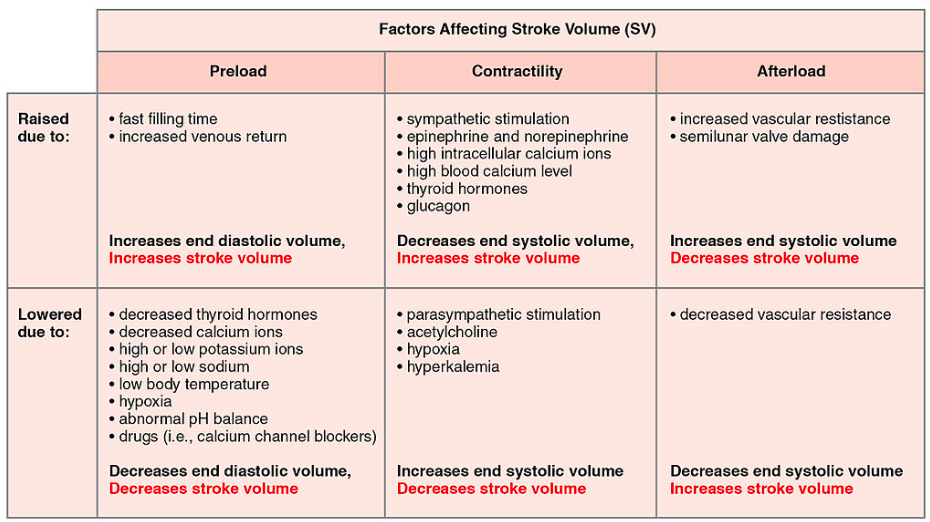
- Stroke Volume is the amount of blood pumped by each ventricle in a single contraction
- can be altered by
- ANS
- Parasympathetic effects
- decreased Ca++ channels opening ––> less Ca++ in the muscle cells ––> decreased contraction force
- ANALOGY: squeezing water out of a sponge (see video)
- Sympathetic effects
- increased Ca++ channels opening ––> more Ca++ in the muscle cells ––> increased contraction force
2. Preload volume (End diastolic volume (EDV) aka how much blood is sent out of the ventricle in a single contraction)
- increasing the EDV causes myocardial cells to stretch more. This causes muscle contraction force to increase as well, resulting in more blood being ejected.
- ANALOGY: going with our sponge analogy, increasing the preload is like increasing the amount of water the sponge can hold
- How can we increase EDV?
- by increasing the blood being pumped INTO the heart by the veins! This is done during exercise by 3 different things:
- muscle pump: by using muscles to cause 'contraction' of veins that pump blood to the heart.
- respiratory pump: decrease pressure in the chest resulting in more blood being pumped back to the heart
- sympathetic nervous system: causes venous constriction
0:00 / 0:00
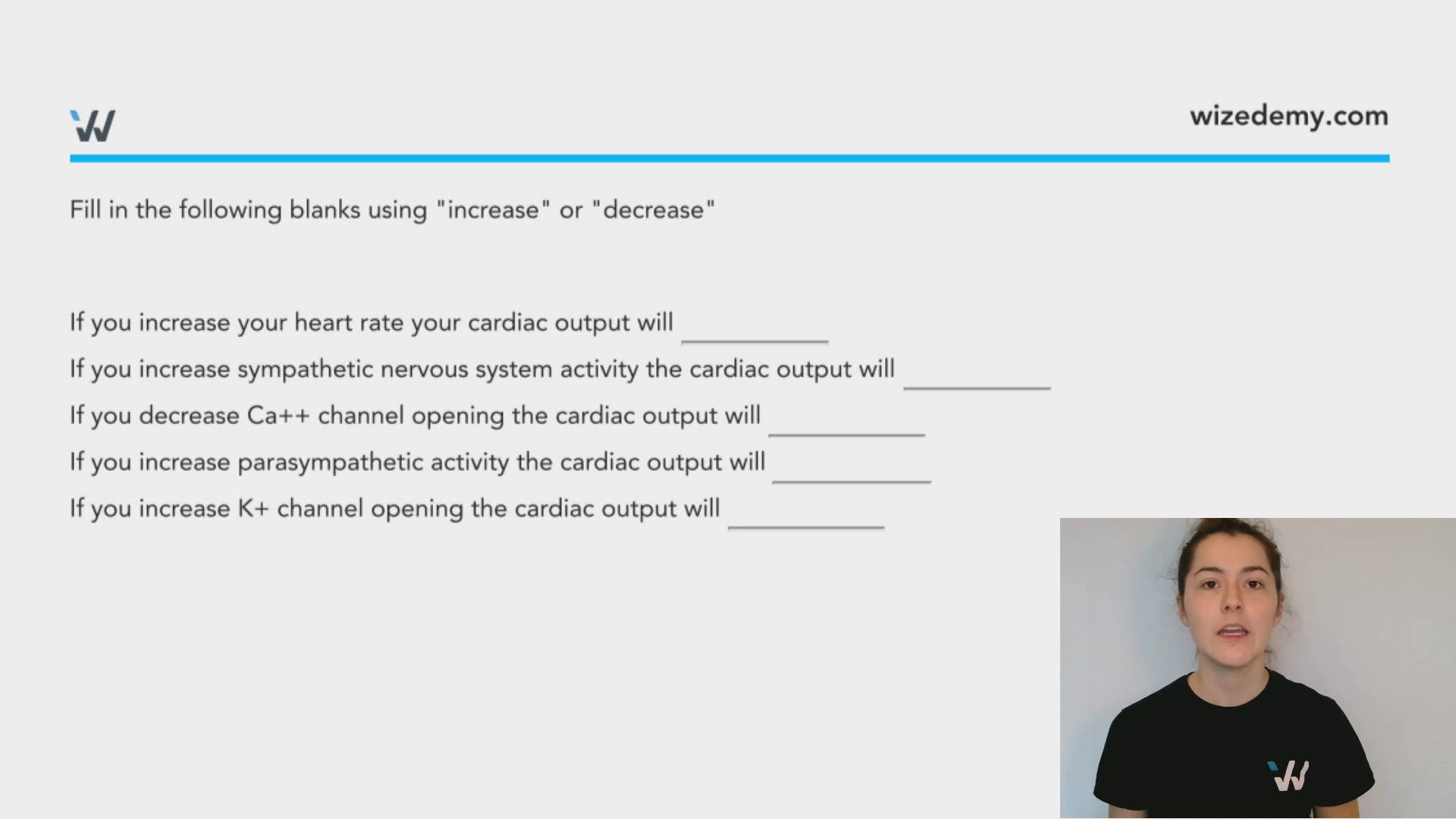
Fill in the following blanks using "increase" or "decrease"
If you increase your heart rate your cardiac output will
increase
If you increase sympathetic nervous system activity the cardiac output will
increase
If you decrease Ca++ channel opening the cardiac output will
decrease
If you increase parasympathetic activity the cardiac output will
decrease
If you increase K+ channel opening the cardiac output will
decrease
0:00 / 0:00
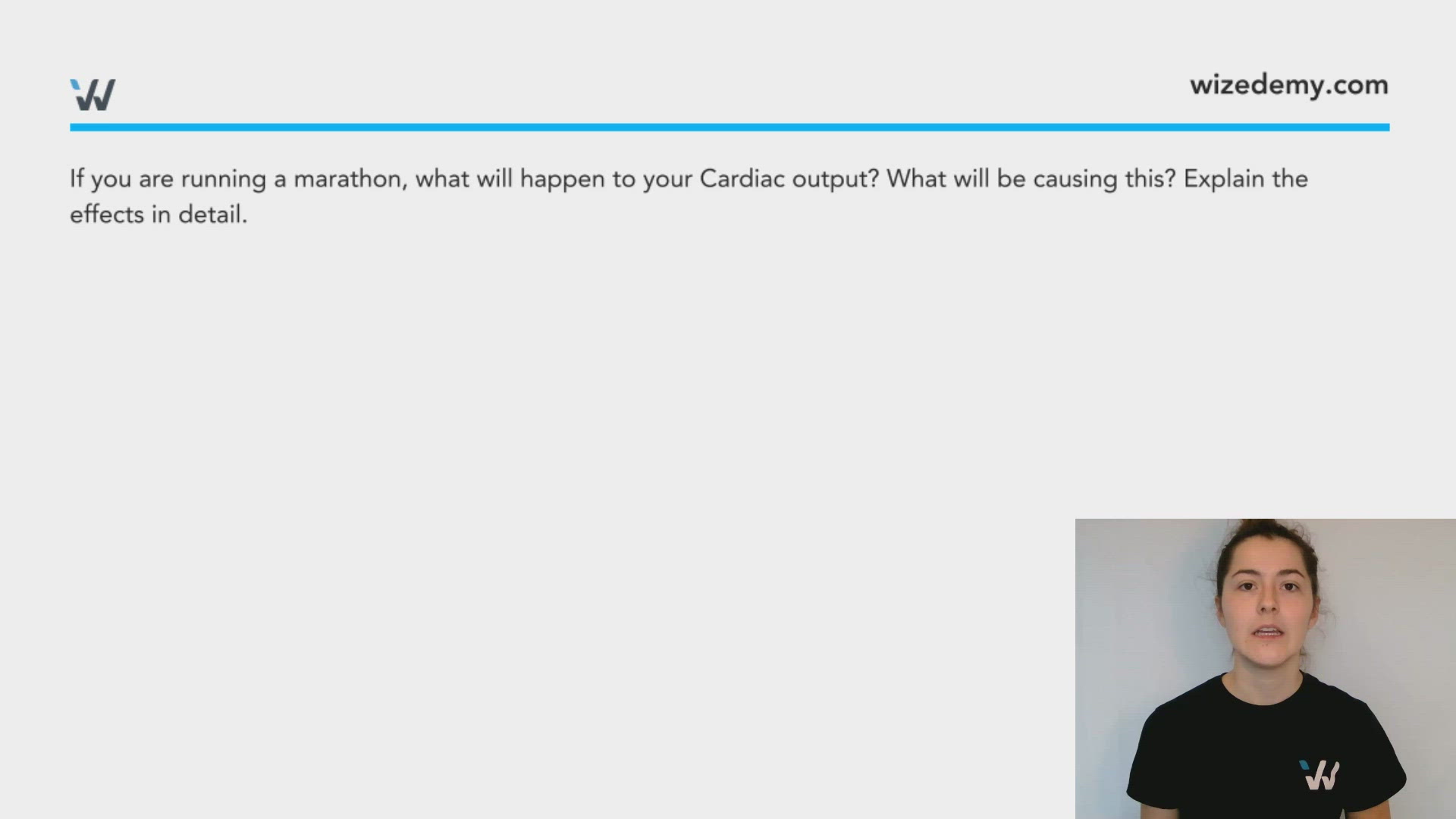
If you are running a marathon, what will happen to your Cardiac output? What will be causing this? Explain the effects in detail.
Cardiac output will increase. It is increased by 2 factors:
- increased HR using sympathetic nervous system. Sympathetic system uses norepinephrine to open Na+ channels to increase RMP. AP can then fire at a faster rate, resulting in a higher HR.
- increased stroke volume by sympathetic nervous system. Sympathetic system uses epinephrine to open Ca++ channels to increase muscle contraction. More contraction means larger stroke volume from ventricles.
Select the statement that is true in regards to cardiac output?