Popular Courses
MCAT
General Course
DAT
General Course
Intro to Physiology
University Study Guides
PHYSIOL 1021
Western University
PHYSIOL 2130
Western University
Intro to Physiology
University Study Guides
PSL300H1
University of Toronto
PHYSL 210
University of Alberta
PHGY 210
McGill University
PHGY 215
Queen's University
KNES 259
University of Calgary
PHGY 216
Queen's University
BIOL 273
University of Waterloo
BIOL 260
University of British Columbia
PHYSIOL 3120
Western University
KNES 260
University of Calgary
BIOL 116
Case Western Reserve University
PPT 301
University of North Dakota
ANAT 212
McGill University
HTHSCI 2FF3
McMaster University
0:00 / 0:00
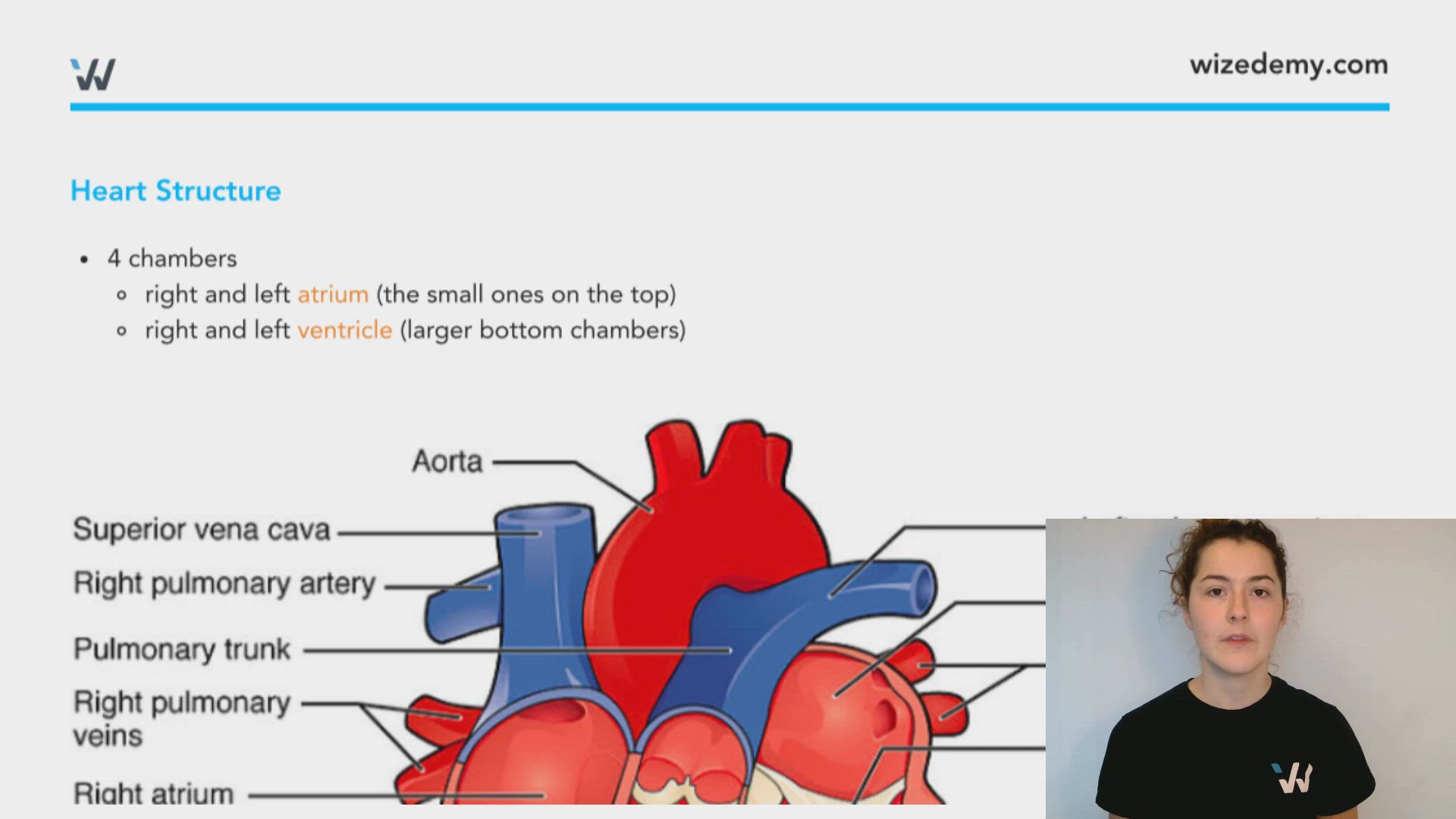
Heart Structure
- 4 chambers
- right and left atrium (the small ones on the top)
- right and left ventricle (larger bottom chambers)

commons.wikimedia.org
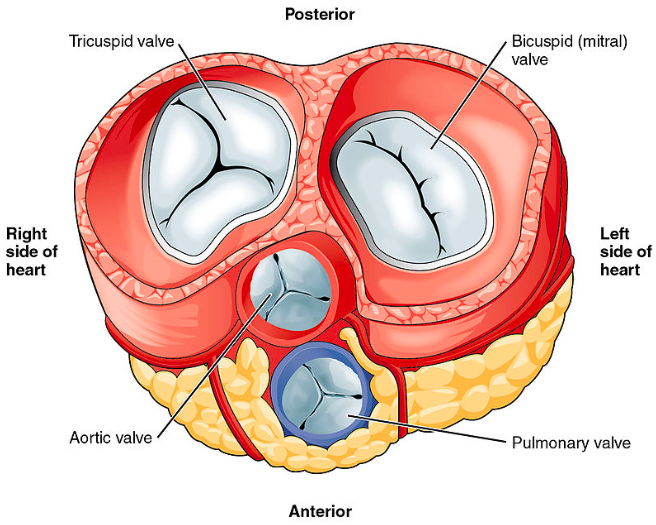
- 4 valves
- Aortic valve - leaving the ventricle, entering the aorta
- Pulmonary valve - leaving the ventricle, entering the pulmonary artery
- Tricuspid valve - between right atrium and right ventricle
- Bicuspid valve - between left atrium and left ventricle
en.wikipedia.org
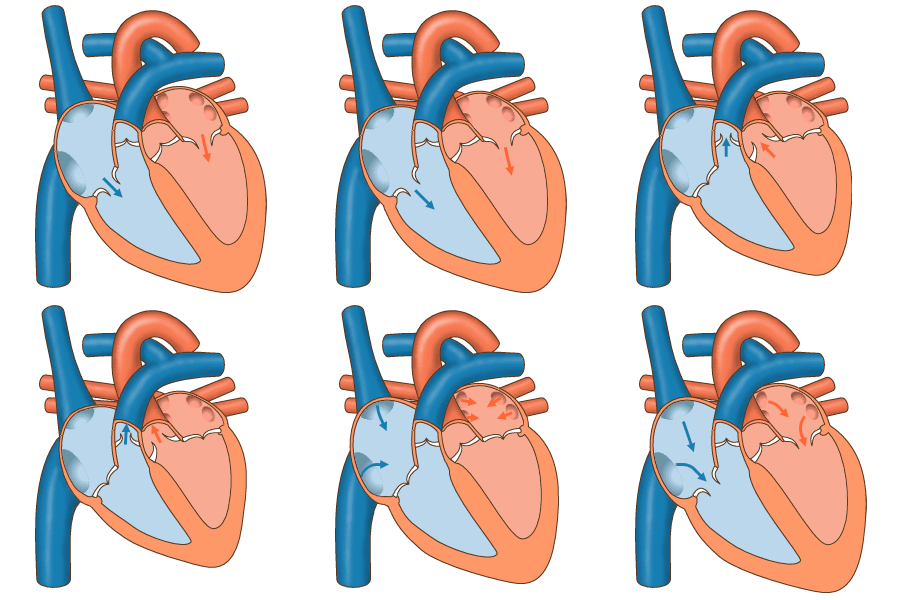
Heart Function

- Blood enters from the body in the right atrium
- Passes through the right AV (tricupsid) valve to the right ventricle
- Right ventricle contracts, and blood flows through the pulmonary valve, out the pulmonary artery (to lungs)
- Blood from the lungs enters the left atrium from the pulmonary vein
- Passes through the left AV (mitral) valve to the left ventricle
- Left ventricle contracts, and blood flows through the aortic valve, out the aorta
Wize Concept
The RIGHT side of the heart carries deoxygenated blood while the LEFT side carries oxygenated blood.
en.wikipedia.org
Practice: Blood Flow Through Heart
Select the correct flow of blood through the heart from deoxygenated blood to oxygenated blood
0:00 / 0:00
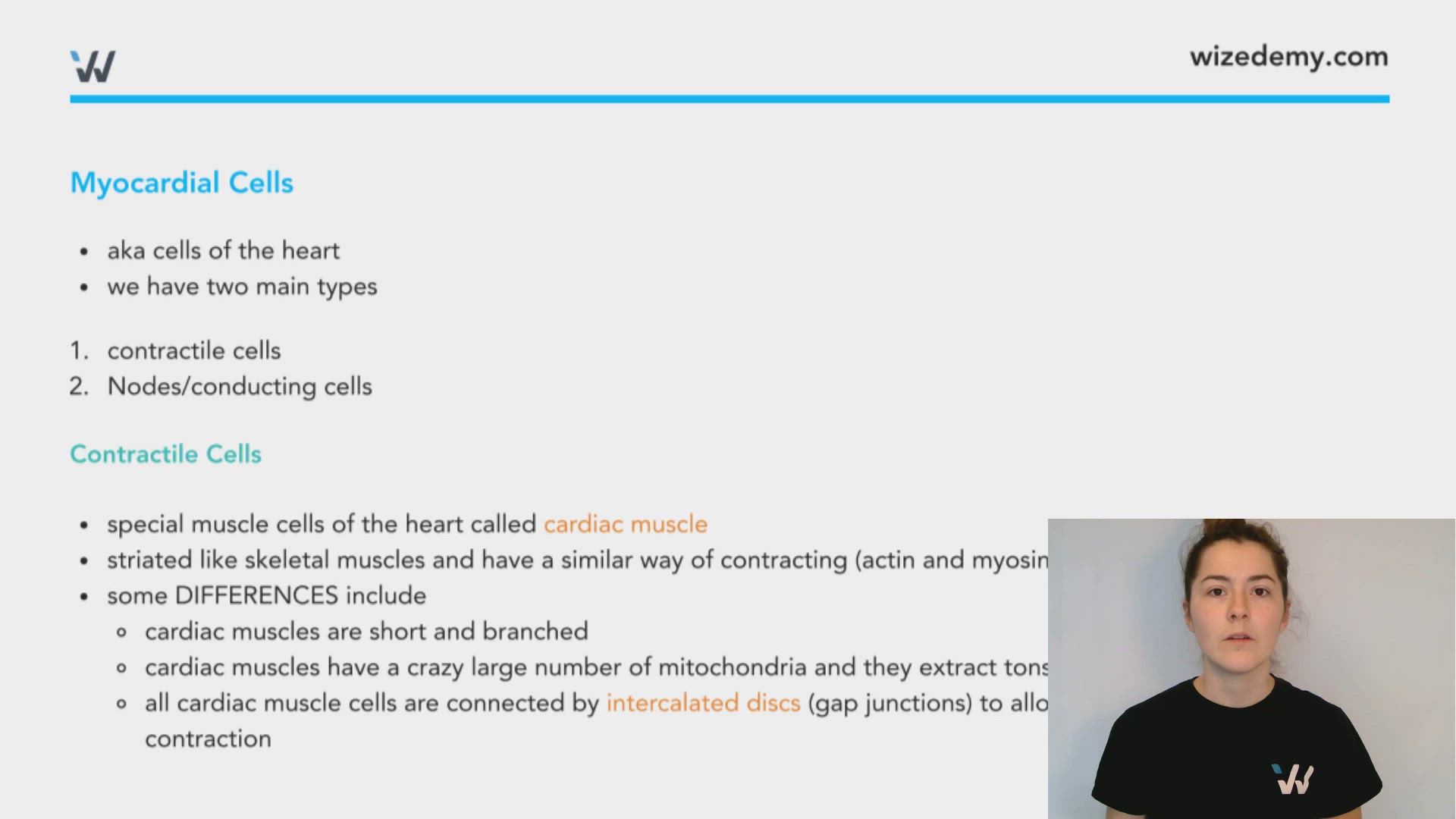
Myocardial Cells
- aka cells of the heart
- we have two main types
- contractile cells
- Nodes/conducting cells
Contractile Cells
- special muscle cells of the heart called cardiac muscle
- striated like skeletal muscles and have a similar way of contracting (actin and myosin)
- some DIFFERENCES include:
- cardiac muscles are short and branched
- cardiac muscles have a crazy large number of mitochondria and they extract tons of oxygen from the blood.
- all cardiac muscle cells are connected by intercalated discs (gap junctions) to allow unity of stimulation and contraction
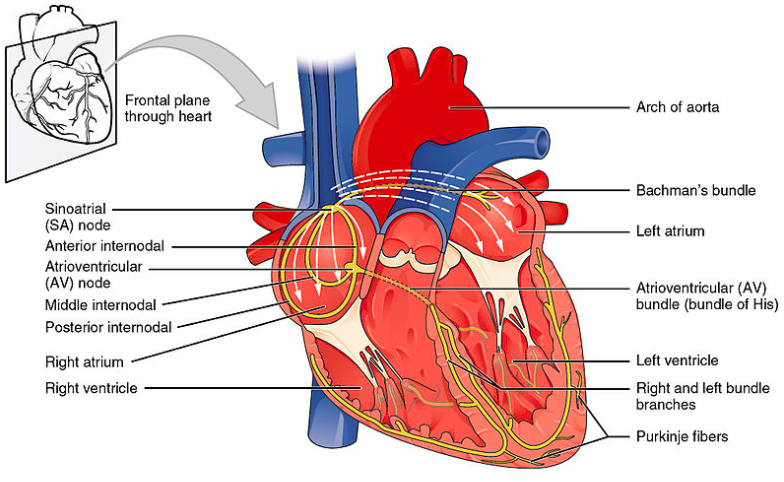
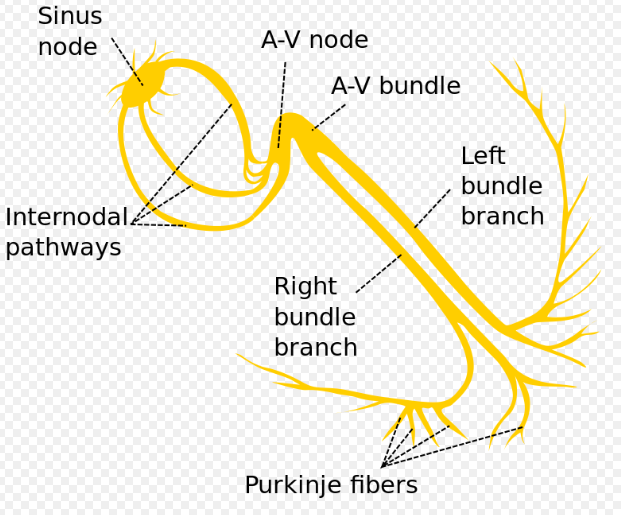
Nodes and Conducting cells
- self-excitable
- we have two main nodes
- sinoatrial (SA) node: the origin of the heart beat. Also called the "pacemaker". It can become excited without influence because it is naturally very Na+ and Ca+ permeable. This means it reaches threshold easily.
- atrioventricular (AV) node: controls the contraction of ventricular muscles by controlling the propagation of excitation through the conductor cells.
- we have two main conductors
- Bundle of His
- Purkinje Fibers
ECG
- electrodes from outside the body can pick up electrical impulses coming from the heart. From this, we can make a line graph called an ECG.
- an ECG measure the SUM of electrical events happening at any given time (addition of depolarization and repolarization)
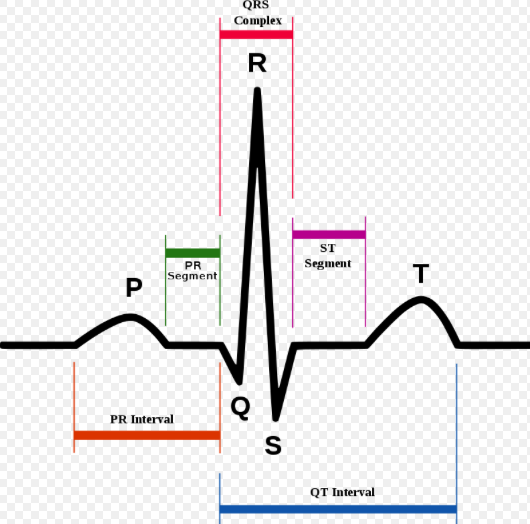
- P-wave: atriol depolarization
- QRS Complex: depolarization of ventricle muscle
- T-wave: repolarization of ventricle
- The ECG can tell us a few things about the heart
- what the heart rate is
- if there is a problem with the excitation of a part of the heart
Practice: ECG
An elderly patient of yours tells you one morning they are having heart flutters. You hook them up to an ECG machine and you notice the P wave is missing. What does this mean?